Brief Report - (2025) Volume 14, Issue 4
Received: 01-Jul-2025, Manuscript No. mcce-26-190185;
Editor assigned: 03-Jul-2025, Pre QC No. P-190185;
Reviewed: 17-Jul-2025, QC No. Q-190185;
Revised: 22-Jul-2025, Manuscript No. R-190185;
Published:
29-Jul-2025
, DOI: 10.37421/2470-6965.2025.14.419
Citation: Petrova, Elena. ”Malaria Elimination: Strategies, Innovations, and Challenges.” Malar Contr Elimination 14 (2025):419.
Copyright: © 2025 Petrova E. This is an open-access article distributed under the terms of the Creative Commons Attribution License, which permits unrestricted use, distribution and reproduction in any medium, provided the original author and source are credited.
Accelerating malaria elimination in high-burden countries represents a complex but achievable goal, necessitating integrated strategies that address multiple facets of the disease. Strengthening surveillance systems is paramount, enabling the rapid detection and response to outbreaks, thereby preventing widespread transmission. This is complemented by optimizing vector control measures, such as the widespread distribution and effective use of long-lasting insecticidal nets and the strategic implementation of indoor residual spraying. A crucial element for program success lies in robust community engagement, ensuring widespread adoption of preventive measures and timely diagnosis and treatment of cases. Furthermore, the exploration and adoption of innovative tools, including novel diagnostics, advanced vaccines, and cutting-edge gene drive technologies, hold significant promise for overcoming persistent challenges in transmission reduction. The success of these endeavors is intrinsically linked to sustained political will, which provides the necessary leadership and commitment to prioritize malaria elimination on national and international agendas. Similarly, increased and sustained funding is critical to resource the comprehensive suite of interventions required to achieve and maintain malaria-free status, covering research, implementation, and monitoring. The advent of effective malaria vaccines, such as RTS,S/AS01 and R21/Matrix-M, marks a major advancement, demonstrating significant efficacy in reducing severe malaria cases and deaths in young children. The successful rollout of these vaccines in high-burden areas will necessitate robust delivery systems and careful monitoring of their effectiveness and potential development of resistance. Integrating vaccination into routine child health services will be key to maximizing their impact on reducing the overall malaria burden. The emergence and spread of drug resistance in Plasmodium falciparum, particularly artemisinin resistance in Southeast Asia, pose a significant threat to malaria elimination efforts, demanding a multi-pronged approach that includes enhanced monitoring of drug efficacy and the development of new antimalarial drugs. Integrated vector management (IVM) remains a cornerstone of malaria control, comprising a combination of strategies including insecticide-treated nets (ITNs), indoor residual spraying (IRS), and larval source management, though challenges such as insecticide resistance and behavioral changes necessitate adaptive strategies. The role of genomic surveillance in malaria elimination is increasingly recognized, allowing for the tracking of genetic variations within parasite populations to identify emerging drug resistance, understand transmission patterns, and monitor the spread of specific parasite strains, thereby enabling more targeted interventions. The introduction of gene drive technology offers a novel and potentially transformative approach to malaria vector control, with the potential to reduce or eliminate vector populations by specifically targeting those that transmit malaria, thereby interrupting disease transmission, though ethical considerations and safety protocols require careful international deliberation. Accelerating malaria elimination in high-burden countries hinges on integrated strategies that encompass strengthening surveillance systems to rapidly detect and respond to outbreaks. This approach is complemented by optimizing vector control measures, such as the deployment of long-lasting insecticidal nets and indoor residual spraying. Community engagement is paramount for ensuring widespread adoption of preventive measures and prompt diagnosis and treatment. Innovative tools, including novel diagnostics, vaccines, and gene drive technologies, offer promising avenues for overcoming persistent challenges in transmission reduction. Sustained political will and increased funding are critical to achieving and maintaining malaria-free status. The development and deployment of effective malaria vaccines, such as RTS,S/AS01 and R21/Matrix-M, represent a major advancement, demonstrating significant efficacy in reducing severe malaria cases and deaths in young children. Their successful rollout in high-burden areas necessitates robust delivery systems and careful monitoring of effectiveness. Integrating vaccination into routine child health services is key to maximizing their impact. Drug resistance in Plasmodium falciparum, particularly artemisinin resistance, poses a significant threat, requiring enhanced monitoring of drug efficacy and the development of new antimalarial drugs. Integrated vector management (IVM), combining ITNs, IRS, and larval source management, remains a cornerstone, though challenges like insecticide resistance necessitate adaptive strategies. Genomic surveillance is crucial for tracking parasite genetic variations, identifying drug resistance, understanding transmission patterns, and monitoring strain spread, enabling targeted interventions. Gene drive technology presents a novel approach to malaria vector control, aiming to reduce or eliminate vector populations by interrupting disease transmission, with ethical considerations requiring careful deliberation. Integrated strategies are essential for accelerating malaria elimination in high-burden countries, with a focus on strengthening surveillance systems for rapid outbreak detection and response. Optimizing vector control measures, including long-lasting insecticidal nets and indoor residual spraying, is crucial. Community engagement plays a paramount role in program success, ensuring widespread adoption of preventive measures and prompt diagnosis and treatment. Innovative tools like novel diagnostics, vaccines, and gene drive technologies offer significant promise in overcoming transmission reduction challenges. Sustained political will and increased funding are critical determinants for achieving and maintaining malaria-free status. The introduction of effective malaria vaccines, such as RTS,S/AS01 and R21/Matrix-M, is a major advancement, demonstrating efficacy in reducing severe malaria and deaths in young children, requiring robust delivery systems and careful monitoring. Drug resistance in Plasmodium falciparum, especially artemisinin resistance, poses a significant threat, necessitating enhanced monitoring of drug efficacy and the development of new antimalarial drugs. Integrated vector management (IVM), comprising ITNs, IRS, and larval source management, remains a cornerstone, though challenges like insecticide resistance require adaptive strategies. Genomic surveillance is vital for tracking parasite genetic variations, identifying drug resistance, understanding transmission patterns, and monitoring the spread of specific parasite strains, allowing for targeted interventions. Gene drive technology offers a novel approach to vector control by potentially reducing or eliminating malaria-transmitting mosquito populations, interrupting transmission, though ethical considerations and safety protocols demand thorough international deliberation. The acceleration of malaria elimination in high-burden countries is fundamentally reliant on the implementation of integrated strategies. A cornerstone of this approach involves strengthening surveillance systems to ensure the rapid detection and effective response to outbreaks, thereby containing their spread. This is further supported by optimizing vector control measures, which include the strategic deployment of long-lasting insecticidal nets and the application of indoor residual spraying to reduce mosquito populations. Paramount to the success of any malaria elimination program is robust community engagement, fostering widespread adoption of preventive practices and ensuring prompt access to diagnosis and treatment. The development and integration of innovative tools, such as novel diagnostics, advanced vaccines, and emerging gene drive technologies, present significant opportunities to overcome persistent challenges in reducing malaria transmission. Crucially, sustained political will at all levels of governance is essential to champion these efforts and allocate the necessary resources. In parallel, increased and sustained funding is critical to support the comprehensive range of interventions required for elimination, from research and development to widespread implementation and long-term maintenance of malaria-free status. The advent of effective malaria vaccines, exemplified by RTS,S/AS01 and R21/Matrix-M, marks a significant stride, demonstrating considerable efficacy in curtailing severe malaria and mortality among young children, necessitating well-structured delivery systems and vigilant monitoring. Drug resistance in Plasmodium falciparum, particularly the emergence of artemisinin resistance, poses a grave threat, demanding enhanced surveillance of drug efficacy and the proactive development of novel antimalarial agents. Integrated vector management (IVM), encompassing insecticide-treated nets, indoor residual spraying, and larval source management, continues to be a foundational strategy, though adaptive approaches are needed to counter challenges such as insecticide resistance. Genomic surveillance is indispensable for tracking parasite genetic variations, pinpointing drug resistance, elucidating transmission dynamics, and monitoring the dissemination of specific parasite strains, thereby enabling more precise and effective interventions. Gene drive technology emerges as a pioneering method for vector control, with the potential to diminish or eradicate malaria-transmitting mosquito populations, thereby severing disease transmission pathways, although its deployment requires rigorous ethical considerations and international consensus. Achieving malaria elimination in high-burden nations necessitates a concerted effort through integrated strategies, beginning with the enhancement of surveillance systems for prompt outbreak detection and response. Complementing this is the optimization of vector control, employing measures like long-lasting insecticidal nets and indoor residual spraying. Paramount for program success is community engagement, which fosters the adoption of preventive measures and ensures timely diagnosis and treatment. The incorporation of innovative tools, such as novel diagnostics, vaccines, and gene drive technologies, holds substantial promise for addressing persistent transmission challenges. Sustained political will and increased financial investment are critical prerequisites for attaining and sustaining malaria-free status. The introduction of effective malaria vaccines, including RTS,S/AS01 and R21/Matrix-M, represents a significant leap forward, showing pronounced efficacy in reducing severe malaria and associated deaths in young children, necessitating robust deployment mechanisms and ongoing efficacy assessments. Drug resistance in Plasmodium falciparum, particularly artemisinin resistance, presents a formidable obstacle, requiring intensified monitoring of drug effectiveness and the exploration of new antimalarial compounds. Integrated vector management (IVM), encompassing insecticide-treated nets, indoor residual spraying, and larval source management, remains a vital strategy, though challenges posed by insecticide resistance demand adaptive approaches. Genomic surveillance is indispensable for tracking parasite genetic variations, identifying emerging drug resistance, understanding transmission dynamics, and monitoring the spread of specific parasite strains, enabling the implementation of highly targeted interventions. Gene drive technology offers a novel paradigm for vector control, with the potential to reduce or eliminate malaria-transmitting mosquito populations, thereby interrupting disease transmission, although its implementation necessitates thorough ethical review and international collaboration. To accelerate malaria elimination in high-burden countries, integrated strategies are indispensable, starting with strengthening surveillance systems to enable rapid detection and response to outbreaks. This is coupled with the optimization of vector control measures, including the use of long-lasting insecticidal nets and indoor residual spraying. Community engagement is recognized as paramount for ensuring widespread adherence to preventive measures and prompt access to diagnosis and treatment. The integration of innovative tools, such as novel diagnostics, vaccines, and gene drive technologies, presents significant opportunities to surmount persistent hurdles in reducing malaria transmission. Sustained political commitment and augmented financial resources are critical for achieving and maintaining malaria-free status. The development and deployment of effective malaria vaccines, such as RTS,S/AS01 and R21/Matrix-M, represent a major breakthrough, demonstrating substantial efficacy in reducing severe malaria cases and mortality in young children, which requires well-established delivery systems and careful monitoring. Drug resistance in Plasmodium falciparum, particularly artemisinin resistance, constitutes a substantial threat, mandating enhanced surveillance of drug efficacy and the development of new antimalarial drugs. Integrated vector management (IVM), comprising ITNs, IRS, and larval source management, remains a core strategy, though challenges like insecticide resistance necessitate adaptive approaches. Genomic surveillance plays a crucial role in tracking parasite genetic variations, identifying drug resistance, understanding transmission patterns, and monitoring the dissemination of specific parasite strains, thus facilitating targeted interventions. Gene drive technology offers a novel approach to vector control, with the potential to reduce or eliminate malaria-transmitting mosquito populations and interrupt disease transmission, subject to rigorous ethical considerations and international consensus. The global strategy for malaria elimination relies heavily on integrated approaches that address the multifaceted nature of the disease. Strengthening surveillance systems is a critical first step, allowing for the prompt identification and management of outbreaks, thus preventing their escalation. This is complemented by optimizing vector control strategies, including the widespread use of long-lasting insecticidal nets and the judicious application of indoor residual spraying. Paramount to the success of these public health interventions is effective community engagement, which ensures that preventive measures are widely adopted and that individuals seek timely diagnosis and treatment. The advent of novel tools, such as advanced diagnostics, effective vaccines, and potentially transformative gene drive technologies, offers new hope for overcoming long-standing challenges in malaria transmission reduction. Sustained political will is indispensable, providing the leadership and commitment required to prioritize malaria control and elimination efforts. Equally critical is increased and sustained funding, which underpins the research, development, and implementation of comprehensive elimination strategies. The introduction of effective malaria vaccines, such as RTS,S/AS01 and R21/Matrix-M, represents a significant achievement, demonstrating considerable impact in reducing severe malaria and mortality among young children, necessitating robust delivery infrastructure and ongoing evaluation. The growing threat of drug resistance in Plasmodium falciparum, especially artemisinin resistance, demands continuous monitoring of drug efficacy and the urgent development of novel antimalarial therapies. Integrated vector management (IVM), which combines insecticide-treated nets, indoor residual spraying, and larval source management, remains a foundational element of control, requiring adaptation to address challenges like insecticide resistance. Genomic surveillance is essential for tracking parasite genetic diversity, identifying drug resistance markers, understanding transmission dynamics, and monitoring the spread of specific parasite lineages, enabling more precise interventions. Gene drive technology presents an innovative potential solution for vector control by targeting mosquito populations, although its deployment necessitates careful ethical consideration and robust international dialogue. Accelerating malaria elimination in high-burden countries requires a robust framework of integrated strategies, beginning with the enhancement of surveillance systems to ensure rapid detection and response to outbreaks. This is intrinsically linked to optimizing vector control measures, such as the deployment of long-lasting insecticidal nets and the implementation of indoor residual spraying. Community engagement plays a paramount role in the success of these programs, fostering widespread adoption of preventive practices and ensuring prompt access to diagnosis and treatment. The development and integration of innovative tools, including novel diagnostics, vaccines, and gene drive technologies, offer significant promise in overcoming persistent challenges related to transmission reduction. Sustained political will and increased funding are identified as critical determinants for achieving and maintaining malaria-free status. The development and rollout of effective malaria vaccines, such as RTS,S/AS01 and R21/Matrix-M, are major advancements, demonstrating significant efficacy in reducing severe malaria cases and deaths in young children, requiring robust delivery systems and careful monitoring. Drug resistance in Plasmodium falciparum poses a substantial threat, particularly artemisinin resistance, necessitating enhanced monitoring of drug efficacy and the development of new antimalarial drugs. Integrated vector management (IVM), encompassing ITNs, IRS, and larval source management, remains a cornerstone, with challenges such as insecticide resistance requiring adaptive strategies. Genomic surveillance is vital for tracking parasite genetic variations, identifying drug resistance, understanding transmission patterns, and monitoring the spread of specific parasite strains, enabling targeted interventions. Gene drive technology presents a novel approach to vector control, with the potential to reduce or eliminate malaria-transmitting mosquito populations, thereby interrupting disease transmission, subject to careful ethical deliberation and safety protocols. The global push for malaria elimination hinges on the synergistic application of integrated strategies, with a primary focus on strengthening surveillance systems to enable rapid detection and response to outbreaks. This is closely followed by the optimization of vector control measures, including the consistent use of long-lasting insecticidal nets and the strategic deployment of indoor residual spraying. Community engagement is recognized as a pivotal element for program success, ensuring the widespread adoption of preventive measures and promoting prompt diagnosis and treatment seeking behaviors. The exploration and integration of innovative tools, such as novel diagnostics, effective vaccines, and emerging gene drive technologies, hold substantial promise for overcoming persistent challenges in malaria transmission reduction. Crucially, sustained political will provides the essential leadership and commitment, while increased and sustained funding is critical to adequately resource all aspects of elimination efforts, from research to widespread implementation and long-term maintenance. The development and deployment of effective malaria vaccines, like RTS,S/AS01 and R21/Matrix-M, are significant breakthroughs, demonstrating substantial efficacy in reducing severe malaria cases and mortality in young children, necessitating robust delivery systems and ongoing monitoring. The emergence of drug resistance in Plasmodium falciparum, particularly artemisinin resistance, presents a formidable challenge that requires enhanced monitoring of drug efficacy and the development of new antimalarial drugs. Integrated vector management (IVM), encompassing ITNs, IRS, and larval source management, remains a foundational strategy, though it must adapt to challenges such as insecticide resistance. Genomic surveillance is indispensable for tracking parasite genetic variations, identifying drug resistance, understanding transmission dynamics, and monitoring the spread of specific parasite strains, thereby facilitating the implementation of more targeted and effective interventions. Gene drive technology offers a novel potential pathway for vector control by targeting malaria-transmitting mosquito populations, aiming to interrupt disease transmission, though its application requires careful ethical consideration and international dialogue. Accelerating malaria elimination in high-burden countries is contingent upon the successful implementation of integrated strategies. A foundational aspect involves strengthening surveillance systems to ensure the rapid detection and response to outbreaks, thereby containing their spread. This is complemented by optimizing vector control measures, including the widespread use of long-lasting insecticidal nets and the targeted application of indoor residual spraying. Paramount to the success of these public health initiatives is effective community engagement, which fosters the widespread adoption of preventive practices and ensures timely access to diagnosis and treatment. The development and integration of innovative tools, such as novel diagnostics, effective vaccines, and emerging gene drive technologies, present significant opportunities to overcome persistent challenges in reducing malaria transmission. Sustained political will is indispensable, providing the necessary leadership and commitment, while increased and sustained funding is critical to adequately resource all aspects of elimination efforts. The development and deployment of effective malaria vaccines, such as RTS,S/AS01 and R21/Matrix-M, represent a major advancement, demonstrating significant efficacy in reducing severe malaria cases and mortality among young children, necessitating robust delivery systems and ongoing monitoring. The growing threat of drug resistance in Plasmodium falciparum, particularly artemisinin resistance, demands continuous monitoring of drug efficacy and the urgent development of novel antimalarial therapies. Integrated vector management (IVM), which combines insecticide-treated nets, indoor residual spraying, and larval source management, remains a foundational element of control, requiring adaptation to address challenges like insecticide resistance. Genomic surveillance is essential for tracking parasite genetic diversity, identifying drug resistance markers, understanding transmission dynamics, and monitoring the spread of specific parasite lineages, enabling more precise interventions. Gene drive technology presents an innovative potential solution for vector control by targeting mosquito populations, although its deployment necessitates careful ethical consideration and international dialogue.
The global effort to eliminate malaria in high-burden countries is fundamentally driven by integrated strategies that address the disease's complex transmission dynamics. A key component of these strategies involves strengthening national surveillance systems to facilitate the rapid detection and response to outbreaks, thereby preventing their widespread propagation. This is intricately linked with optimizing vector control measures, which includes the widespread distribution and effective utilization of long-lasting insecticidal nets and the strategic implementation of indoor residual spraying to reduce mosquito populations that transmit the parasite. Paramount to the success and sustainability of these programs is robust community engagement, ensuring that preventive measures are widely understood and adopted, and that individuals have prompt access to diagnosis and treatment. Furthermore, the development and integration of innovative tools, such as novel diagnostic technologies, advanced malaria vaccines, and emerging gene drive technologies, hold significant promise for overcoming persistent challenges in malaria transmission reduction. Sustained political will is an indispensable prerequisite, providing the necessary leadership and commitment to prioritize malaria elimination on national agendas and allocate resources accordingly. In parallel, increased and sustained funding is critical to support the comprehensive suite of interventions required for elimination, encompassing research, development, large-scale implementation, and long-term monitoring and surveillance. The advent of effective malaria vaccines, exemplified by RTS,S/AS01 and R21/Matrix-M, represents a major milestone, demonstrating significant efficacy in reducing severe malaria cases and mortality among young children, necessitating the establishment of robust delivery systems and careful monitoring of their real-world effectiveness and potential for resistance development. Integrating vaccination into routine child health services is vital for maximizing their population-level impact. The emergence and spread of drug resistance in Plasmodium falciparum, particularly artemisinin resistance, pose a grave threat to the efficacy of current treatment regimens and necessitate a multi-pronged approach. This includes enhanced monitoring of drug efficacy in the field, promotion of rational drug use practices, and the proactive development of new antimalarial drugs with novel mechanisms of action. Strategies to limit the spread of resistant parasites, such as timely and effective case management, are crucial to mitigate this threat. Integrated vector management (IVM) remains a cornerstone of malaria control, comprising a combination of strategies such as insecticide-treated nets (ITNs), indoor residual spraying (IRS), and larval source management. However, the effectiveness of these interventions is increasingly challenged by the development of insecticide resistance in mosquito populations and by behavioral changes that may reduce exposure to control measures. Adapting IVM strategies to specific local contexts and exploring novel vector control methods are therefore essential for sustained success. The role of genomic surveillance in malaria elimination cannot be overstated. By tracking genetic variations within parasite populations, researchers can identify emerging drug resistance, gain a deeper understanding of transmission patterns, and monitor the spread of specific parasite strains. This data-driven approach allows for the implementation of more targeted and effective interventions, ensuring that resources are directed where they are most needed to accelerate elimination efforts. The introduction of gene drive technology offers a novel and potentially transformative approach to malaria vector control. By specifically targeting mosquito populations that transmit malaria, gene drives could, in theory, reduce or eliminate these vector populations, thereby interrupting disease transmission. However, the deployment of such powerful technologies raises significant ethical considerations and requires robust international deliberation and the establishment of stringent safety protocols before widespread application. The global strategy for malaria elimination is significantly bolstered by the integration of multiple approaches, particularly in high-burden countries. Strengthening surveillance systems is a critical foundational element, enabling the rapid identification and effective management of outbreaks, thereby preventing their wider dissemination. This is complemented by the optimization of vector control measures, which involves the consistent deployment of long-lasting insecticidal nets and the strategic application of indoor residual spraying. Paramount to the success and sustainability of these initiatives is effective community engagement, ensuring that preventive measures are widely adopted and that individuals seek prompt diagnosis and treatment when necessary. The advent of novel tools, such as advanced diagnostics, effective vaccines, and potentially revolutionary gene drive technologies, offers new avenues for overcoming long-standing challenges in malaria transmission reduction. Sustained political will is indispensable, providing the necessary leadership and commitment to prioritize malaria control and elimination efforts. Equally critical is increased and sustained funding, which underpins the research, development, and implementation of comprehensive elimination strategies. The development and deployment of effective malaria vaccines, such as RTS,S/AS01 and R21/Matrix-M, represent significant breakthroughs, demonstrating considerable impact in reducing severe malaria and mortality among young children. This necessitates robust delivery infrastructure and ongoing evaluation of their effectiveness in real-world settings. The growing threat of drug resistance in Plasmodium falciparum, especially artemisinin resistance, demands continuous monitoring of drug efficacy and the urgent development of novel antimalarial therapies. Integrated vector management (IVM), which combines insecticide-treated nets, indoor residual spraying, and larval source management, remains a foundational element of control, requiring adaptation to address challenges like insecticide resistance. Genomic surveillance is essential for tracking parasite genetic diversity, identifying drug resistance markers, understanding transmission dynamics, and monitoring the spread of specific parasite lineages, enabling more precise interventions. Gene drive technology presents an innovative potential solution for vector control by targeting mosquito populations, although its deployment necessitates careful ethical consideration and international dialogue. Accelerating malaria elimination in high-burden countries necessitates a comprehensive approach that integrates various strategies. Strengthening surveillance systems is crucial for the rapid detection and response to outbreaks, thereby preventing their spread. This is closely aligned with optimizing vector control measures, such as the use of long-lasting insecticidal nets and indoor residual spraying. Community engagement is paramount for ensuring the widespread adoption of preventive measures and prompt diagnosis and treatment. The integration of innovative tools, including novel diagnostics, vaccines, and gene drive technologies, offers significant promise in overcoming persistent challenges in transmission reduction. Sustained political will and increased funding are critical for achieving and maintaining malaria-free status. The development and deployment of effective malaria vaccines, such as RTS,S/AS01 and R21/Matrix-M, are major advancements, demonstrating efficacy in reducing severe malaria cases and deaths in young children, which requires robust delivery systems and careful monitoring. Drug resistance in Plasmodium falciparum poses a substantial threat, particularly artemisinin resistance, necessitating enhanced monitoring of drug efficacy and the development of new antimalarial drugs. Integrated vector management (IVM), encompassing ITNs, IRS, and larval source management, remains a cornerstone, with challenges such as insecticide resistance requiring adaptive strategies. Genomic surveillance is vital for tracking parasite genetic variations, identifying drug resistance, understanding transmission patterns, and monitoring the spread of specific parasite strains, enabling targeted interventions. Gene drive technology offers a novel approach to vector control, with the potential to reduce or eliminate malaria-transmitting mosquito populations, thereby interrupting disease transmission, subject to careful ethical deliberation and safety protocols. The global strategy for malaria elimination relies on a synergistic combination of interventions, particularly in high-burden regions. Strengthening surveillance systems is a critical first step, enabling the rapid identification and effective management of outbreaks, thus preventing their wider dissemination. This is complemented by optimizing vector control measures, including the widespread use of long-lasting insecticidal nets and the judicious application of indoor residual spraying. Paramount to the success of these public health interventions is effective community engagement, which ensures that preventive measures are widely adopted and that individuals seek timely diagnosis and treatment. The advent of novel tools, such as advanced diagnostics, effective vaccines, and potentially transformative gene drive technologies, offers new hope for overcoming long-standing challenges in malaria transmission reduction. Sustained political will is indispensable, providing the leadership and commitment required to prioritize malaria control and elimination efforts. Equally critical is increased and sustained funding, which underpins the research, development, and implementation of comprehensive elimination strategies. The development and deployment of effective malaria vaccines, such as RTS,S/AS01 and R21/Matrix-M, represent significant breakthroughs, demonstrating considerable impact in reducing severe malaria and mortality among young children, necessitating robust delivery infrastructure and ongoing evaluation. The growing threat of drug resistance in Plasmodium falciparum, especially artemisinin resistance, demands continuous monitoring of drug efficacy and the urgent development of novel antimalarial therapies. Integrated vector management (IVM), which combines insecticide-treated nets, indoor residual spraying, and larval source management, remains a foundational element of control, requiring adaptation to address challenges like insecticide resistance. Genomic surveillance is essential for tracking parasite genetic diversity, identifying drug resistance markers, understanding transmission dynamics, and monitoring the spread of specific parasite lineages, enabling more precise interventions. Gene drive technology presents an innovative potential solution for vector control by targeting mosquito populations, although its deployment necessitates careful ethical consideration and international dialogue. Achieving malaria elimination in high-burden countries necessitates a coordinated and integrated strategy. Enhancing surveillance systems is paramount for the swift detection and response to outbreaks, thereby limiting their spread. This is supported by optimizing vector control measures, including the distribution of long-lasting insecticidal nets and the application of indoor residual spraying. Community engagement plays a vital role in program success, ensuring widespread adoption of preventive measures and prompt diagnosis and treatment. The incorporation of innovative tools, such as novel diagnostics, vaccines, and gene drive technologies, offers significant promise in overcoming persistent challenges in transmission reduction. Sustained political will and increased financial investment are crucial for the attainment and maintenance of malaria-free status. The development and deployment of effective malaria vaccines, like RTS,S/AS01 and R21/Matrix-M, are major advancements, showing efficacy in reducing severe malaria and deaths in young children, requiring robust delivery systems and careful monitoring. Drug resistance in Plasmodium falciparum poses a significant threat, especially artemisinin resistance, necessitating enhanced monitoring of drug efficacy and the development of new antimalarial drugs. Integrated vector management (IVM), comprising ITNs, IRS, and larval source management, remains a cornerstone, with challenges such as insecticide resistance requiring adaptive strategies. Genomic surveillance is vital for tracking parasite genetic variations, identifying drug resistance, understanding transmission patterns, and monitoring the spread of specific parasite strains, enabling targeted interventions. Gene drive technology offers a novel approach to vector control, with the potential to reduce or eliminate malaria-transmitting mosquito populations, thereby interrupting disease transmission, subject to careful ethical deliberation and safety protocols. The acceleration of malaria elimination in high-burden nations relies on the synergistic effect of integrated strategies. Strengthening surveillance systems is a fundamental requirement, enabling the rapid identification and management of outbreaks to prevent their escalation. This is complemented by the optimization of vector control measures, including the widespread use of long-lasting insecticidal nets and the judicious application of indoor residual spraying. Effective community engagement is paramount for program success, ensuring the widespread adoption of preventive practices and timely access to diagnosis and treatment. The development and integration of innovative tools, such as novel diagnostics, effective vaccines, and emerging gene drive technologies, hold significant promise for overcoming persistent challenges in malaria transmission reduction. Sustained political will is indispensable, providing the necessary leadership and commitment, while increased and sustained funding is critical to resource all aspects of elimination efforts. The development and deployment of effective malaria vaccines, such as RTS,S/AS01 and R21/Matrix-M, represent a major advancement, demonstrating significant efficacy in reducing severe malaria cases and mortality among young children, necessitating robust delivery systems and ongoing monitoring. The growing threat of drug resistance in Plasmodium falciparum, particularly artemisinin resistance, demands continuous monitoring of drug efficacy and the urgent development of novel antimalarial therapies. Integrated vector management (IVM), which combines insecticide-treated nets, indoor residual spraying, and larval source management, remains a foundational element of control, requiring adaptation to address challenges like insecticide resistance. Genomic surveillance is essential for tracking parasite genetic diversity, identifying drug resistance markers, understanding transmission dynamics, and monitoring the spread of specific parasite lineages, enabling more precise interventions. Gene drive technology presents an innovative potential solution for vector control by targeting mosquito populations, although its deployment necessitates careful ethical consideration and international dialogue.
Accelerating malaria elimination in high-burden countries requires a multi-pronged approach. Key strategies include strengthening surveillance systems for rapid outbreak detection and response, optimizing vector control measures like insecticide-treated nets and indoor residual spraying, and ensuring robust community engagement. Innovative tools such as new diagnostics, vaccines (RTS,S/AS01 and R21/Matrix-M), and gene drive technologies offer significant potential. Sustained political will and increased funding are critical enablers. Combating drug resistance in Plasmodium falciparum and adapting integrated vector management strategies to address insecticide resistance are ongoing challenges. Genomic surveillance plays a vital role in monitoring parasite evolution and guiding interventions.
None
None
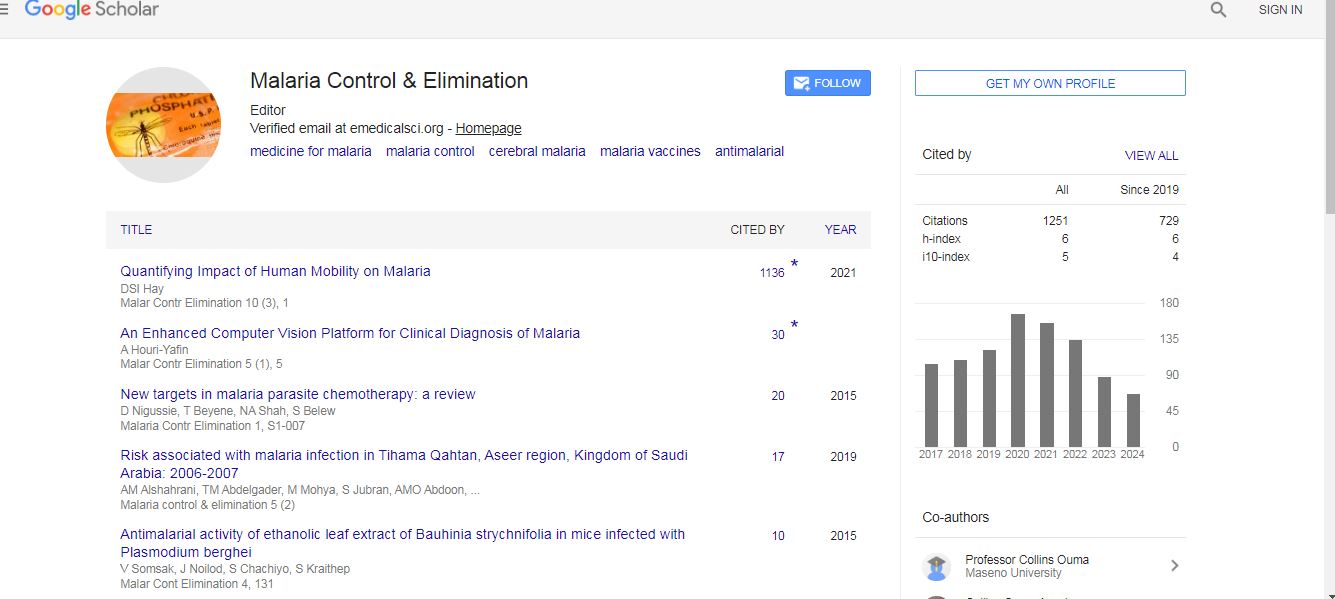
Malaria Control & Elimination received 1187 citations as per Google Scholar report