Case Report - (2025) Volume 15, Issue 6
Received: 26-Oct-2025, Manuscript No. jprm-25-172379;
Editor assigned: 28-Oct-2025, Pre QC No. P-172379;
Reviewed: 12-Nov-2025, QC No. Q-172379;
Revised: 18-Nov-2025, Manuscript No. R-172379;
Published:
25-Nov-2025
, DOI: 10.37421/2161-105X.2025.15.767
Citation: Kumar, Pranav, Somnath Sinha, Ian Migwi and Raymond Chris Aquino. "Left Lower-lobe Lung Abscess in a 25-year-old Man with Myotonic Dystrophy: Conservative Management and Comprehensive Review." J Pulm Respir Med 15 (2025): 767.
Copyright: © 2025 Kumar P, et al. This is an open-access article distributed under the terms of the Creative Commons Attribution License, which permits unrestricted use, distribution and reproduction in any medium, provided the original author and sources are credited.
Background: Lung abscess is an uncommon complication in young adults, usually associated with aspiration. Neuromuscular disorders such as Myotonic Dystrophy type 1 (DM1) predispose patients to aspiration due to bulbar weakness, ineffective cough and impaired airway clearance, thereby increasing the risk of necrotising pulmonary infection.
Case presentation: We describe a 25-year-old man with genetically confirmed DM1 who presented with productive cough, intermittent fever, malaise and pleuritic chest pain after a viral upper respiratory tract infection. Imaging revealed a thick-walled cavitary lesion with an air-fluid level in the left lower lobe, consistent with a lung abscess.
Management and outcome: The patient was managed with broad-spectrum intravenous antibiotics, intensive chest physiotherapy and aspiration-prevention strategies. He improved clinically, with resolution of fever within 72 hours and falling inflammatory markers, without requiring invasive drainage or surgical resection. At the time of writing, the patient remains admitted and continues to show progressive inpatient improvement.
Discussion: Aspiration is the leading cause of lung abscess, accounting for more than 80% of cases. DM1 represents a high-risk state due to dysphagia, weak cough and systemic complications. Most cases resolve with antibiotics, although drainage or surgery may be necessary in refractory disease.
Conclusion: This case demonstrates that even during the acute inpatient phase, conservative medical therapy can achieve significant clinical improvement in lung abscess associated with DM1, provided aspiration risk is recognised early and preventive strategies are implemented.
Lung abscess • Myotonic dystrophy • Aspiration pneumonia • Conservative management • Antibiotics • Case report
A lung abscess is defined as a circumscribed cavity within the lung parenchyma containing pus and necrotic debris, most often caused by microbial infection. Prior to the introduction of antibiotics, lung abscess was associated with mortality rates exceeding 50%. With modern antimicrobial therapy, mortality has declined to between 5% and 10%. Aspiration accounts for over 80% of cases.
Myotonic Dystrophy type 1 (DM1) is an autosomal dominant multisystem disorder caused by CTG trinucleotide repeat expansion in the DMPK gene. DM1 has systemic manifestations affecting skeletal muscle, respiratory function, gastrointestinal motility, cardiac conduction and endocrine balance. Bulbar weakness, dysphagia and ineffective cough predispose to aspiration, while respiratory muscle weakness and hypoventilation impair airway clearance. Gastroesophageal reflux and dysmotility further increase the risk of aspiration pneumonia.
This report describes a young adult with DM1 who developed a left lower-lobe lung abscess successfully managed with medical therapy alone. We then provide a comprehensive review of lung abscess with emphasis on aspiration-related mechanisms and preventive strategies.
A 25-year-old man with genetically confirmed DM1 presented to the emergency department with a three-to-four-week history of productive cough, intermittent fevers, malaise and left-sided pleuritic chest pain. These symptoms began following a self-limited rhinovirus upper respiratory tract infection. He denied smoking, alcohol abuse, or recent travel and had no history of aspiration pneumonia. On examination, his vital signs were stable with a temperature of 37.8 °C, a heart rate of 88 beats per minute, a blood pressure of 118/76 mmHg, a respiratory rate of 18 breaths per minute and oxygen saturation of 96% on room air. Chest auscultation revealed coarse crackles at the left lung base without respiratory distress.
Laboratory investigations demonstrated a white cell count of 11.8 × 10⁹/L with neutrophilia, a C-reactive protein of 63 mg/L, a haemoglobin of 100 g/L, hypoalbuminaemia at 32 g/L and mild derangement of liver enzymes. Blood cultures remained negative. Imaging with computed tomography pulmonary angiogram ruled out pulmonary embolism but showed left lower-lobe consolidation with gas lucencies (Figure 1). A subsequent CT chest confirmed a thick-walled cavitary lesion measuring 58 × 58 × 36 mm with an air-fluid level. Thoracic ultrasound confirmed a loculated fluid-gas collection without pleural effusion. Sputum culture revealed mixed oral flora including anaerobes. A follow-up CT after one week demonstrated a stable cavity with no interval enlargement or pleural involvement (Figure 2).
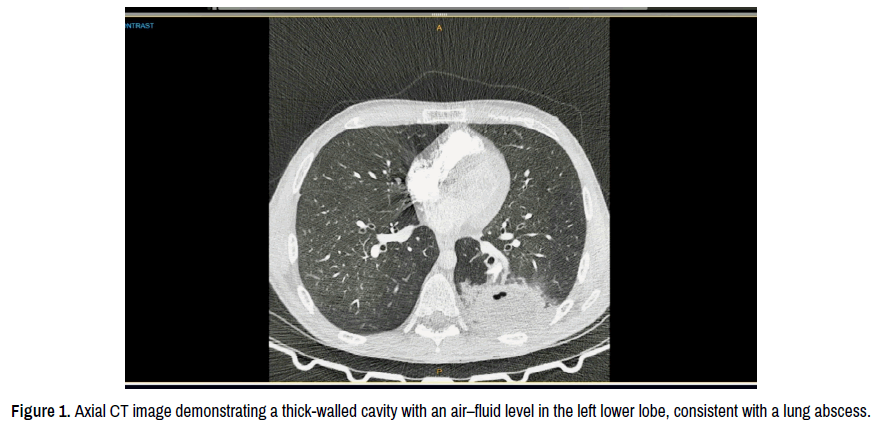
Figure 1. Axial CT image demonstrating a thick-walled cavity with an air–fluid level in the left lower lobe, consistent with a lung abscess.
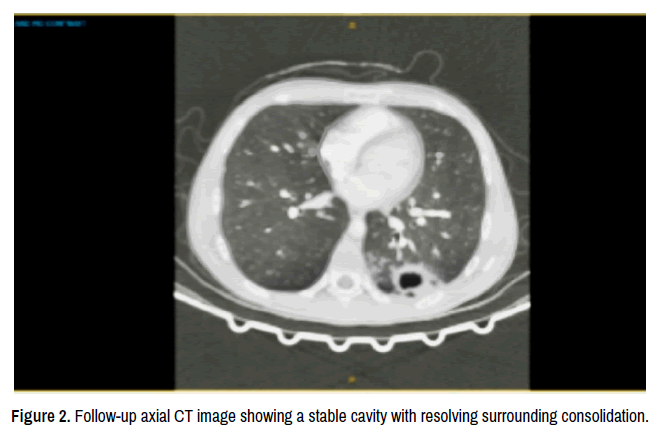
Figure 2. Follow-up axial CT image showing a stable cavity with resolving surrounding consolidation.
The patient was commenced on empirical intravenous piperacillin-tazobactam at 4.5 g every 8 hours. Supportive measures included intensive chest physiotherapy, nutritional support, upright positioning during meals, meticulous dental hygiene and swallow assessment. Predefined escalation criteria were established, including no clinical improvement within 7 to 10 days, cavity enlargement, and development of empyema, significant haemoptysis, or suspicion of malignancy. The patient improved clinically with resolution of fever within 72 hours, reduction in sputum production and declining inflammatory markers. By day seven, the C-reactive protein had decreased to 12 mg/L and decreased to normal 5mg/L by day 10. Repeat imaging confirmed stability of the cavity without complications. He was transitioned to oral amoxicillin-clavulanate 875/125mg BD for 2 weeks + Amoxicillin 250mg TDS for two weeks and discharged home (Table 1).
| Timepoint | Clinical/Imaging Findings | Management | Outcome |
|---|---|---|---|
| Admission | Fever, productive cough, elevated inflammatory markers; CT: Consolidation with evolving cavity | IV piperacillin-tazobactam, supportive measures | Stable |
| Day 2 | CT: thick-walled cavitary lesion with air-fluid level; US confirmed fluid-gas cavity | Continued antibiotics and physiotherapy | Stable |
| Day 7 | Afebrile, CRP reduced to 12 mg/L; sputum decreased | Continued IV antibiotics | Improved |
| Current Status Day 11 | Improving clinically, stable cavity on imaging | Changed to PO antibiotics | Discharge for follow up with serial imaging in 4 weeks |
Table 1. Timeline of clinical course.
Follow up plan
While our patient continues to improve with inpatient conservative management, long-term follow-up remains essential. Serial imaging will be required to confirm complete radiological resolution at 3-4 weeks post discharge, as residual cavities can predispose to chronic infection or bronchiectasis. Given the systemic nature of DM1, multidisciplinary input should extend beyond the acute admission. Swallowing rehabilitation and dietary modification are crucial to minimise recurrent aspiration. Respiratory physiotherapy and, where indicated, mechanical insufflation-exsufflation devices may improve cough effectiveness. Cardiac surveillance is also important, as conduction abnormalities and arrhythmias in DM1 may complicate recovery during systemic infection. Vaccination against influenza and pneumococcus should be prioritised to reduce the burden of preventable respiratory infections. Finally, structured long-term care involving respiratory physicians, neurologists, cardiologists and allied health professionals is recommended to improve quality of life and reduce morbidity in this high-risk population.
Lung abscess is rare in healthy young adults, with an estimated incidence of 1 to 2 per 100,000 individuals annually. Risk factors include aspiration, obstructive lesions, septic emboli and post-viral pneumonia. Aspiration remains the most common cause, particularly in patients with neuromuscular disorders such as DM1. The pathophysiology of aspiration pneumonia includes two main syndromes: chemical pneumonitis due to gastric acid (Mendelson’s syndrome) and bacterial aspiration pneumonia caused by macroaspiration of contaminated oropharyngeal contents. In susceptible individuals, bacterial pneumonia can progress to necrosis, cavitation and abscess formation. In DM1, dysphagia, ineffective cough and weakened respiratory musculature contribute to aspiration and impaired clearance.
Aspiration-related pathophysiology
Aspiration syndromes represent a continuum from chemical pneumonitis due to direct gastric acid injury (which can progress to severe inflammation and acute respiratory distress syndrome) to bacterial aspiration pneumonia following macroaspiration of oropharyngeal or gastric contents. Neuromuscular conditions such as myotonic dystrophy type 1 (DM1), as in our patient, markedly increase aspiration risk due to bulbar weakness, poor airway clearance and gastro-oesophageal dysmotility. Other recognised risk factors include stroke, impaired consciousness, alcohol use, poor dentition, reflux disease and the post-extubation state.
Microbiology of aspiration-related lung abscess
Lung abscesses secondary to aspiration are typically polymicrobial.
• Anaerobes: Prevotella, Fusobacterium, Bacteroides, Peptostreptococcus - isolated in up to 90% of aspiration abscesses.
• Aerobes: Streptococcus pneumoniae, Staphylococcus aureus (including MRSA), Klebsiella pneumoniae, Escherichia coli and Haemophilus influenzae.
• Hospital-acquired organisms: Pseudomonas aeruginosa and Acinetobacter baumannii.
• Mixed infections are common and anaerobes are isolated in up to 90% of aspiration-related abscesses.
This microbiological spectrum aligns with guideline-directed empiric regimens such as β-lactam/β-lactamase inhibitor combinations, with step-down to oral therapy once improvement occurs (Table 2).
| Antibiotic Regimen | Target Organisms | Duration | Notes |
|---|---|---|---|
| Ampicillin-sulbactam IV (3 g q6h) | Anaerobes, Gram-positives, some Gram-negatives | 4-6 weeks (switch to oral after improvement) | Preferred inpatient choice |
| Piperacillin-tazobactam IV (4.5 g q8h) | Broad-spectrum incl. Pseudomonas | 4-6 weeks | Severe cases, hospital-acquired risk |
| Clindamycin IV/PO (600 mg IV q8h → 300 mg PO q6h) | Anaerobes, Gram-positive cocci | 4-6 weeks | Useful if β-lactam allergy |
| Amoxicillin-clavulanate PO (875/125 mg bid) | Anaerobes, Gram-positives, some Gram-negatives | 4-8 weeks (step-down therapy) | Often used for continuation after IV therapy |
| Metronidazole + Penicillin G | Anaerobes + Streptococcus | 4-6 weeks | Combination option; less preferred now |
| Linezolid or Vancomycin | MRSA coverage | ≥ 4 weeks | Only if MRSA suspected/confirmed |
Table 2. Recommended antibiotic regimens for lung abscess.
Clinical features and diagnosis
Clinical features typically include subacute onset of fever, productive cough, foul-smelling sputum, night sweats, malaise, chest pain and weight loss. Hemoptysis occurs in 10 to 20% of cases. Investigations include laboratory studies, chest radiography, computed tomography and microbiological cultures. Bronchoscopy may be warranted if an obstructing lesion or malignancy is suspected.
The clinical presentation varies according to the type of aspiration injury:
• Chemical pneumonitis: abrupt dyspnoea, hypoxaemia, tachycardia.
• Bacterial aspiration pneumonia: fever, pleuritic chest pain, productive cough with foul-smelling sputum, which may progress to cavitary abscess formation.
Imaging typically demonstrates gravity-dependent infiltrates or cavitary lesions with air–fluid levels. Microbiological confirmation is pursued with sputum and blood cultures and bronchoscopy is warranted when endobronchial obstruction is suspected.
Management principles
Antibiotic therapy remains the cornerstone of treatment, with beta-lactam/beta-lactamase inhibitor combinations considered first line. Therapy is continued for four to six weeks or until radiographic resolution is achieved. Supportive care with physiotherapy, nutrition and aspiration-prevention strategies is crucial. Drainage procedures may be required for refractory or complicated cases: percutaneous drainage for peripheral abscesses larger than six centimetres, bronchoscopic catheter drainage for centrally located cavities and surgical resection for refractory disease or suspicion of malignancy. With adequate therapy, 80 to 90% of patients recover without invasive procedures (Table 3).
| Strategy | Indications | Notes |
|---|---|---|
| Medical therapy (antibiotics, physiotherapy, aspiration prevention) | First-line for most cases | 80-90% effective |
| Percutaneous drainage | Large, peripheral, refractory abscesses | Minimally invasive |
| Bronchoscopic drainage | Centrally located cavities | Requires experienced operator |
| Surgical resection (lobectomy/segmentectomy) | Refractory cases, massive haemoptysis, suspected malignancy | Last resort |
Table 3. Management strategies.
Prevention of recurrence
Long-term outcomes in patients with neuromuscular disorders such as DM1 depend on prevention of recurrent aspiration. Preventive strategies include upright positioning during meals, reflux management, dental care, swallowing assessment, physiotherapy and involvement of a multidisciplinary team. In refractory high-risk cases, Percutaneous Endoscopic Gastrostomy (PEG) feeding may be necessary to reduce aspiration risk.
Prevention is particularly important in DM1 and other neuromuscular conditions. Strategies include upright positioning during meals, swallowing rehabilitation, oral hygiene optimisation, management of gastroesophageal reflux, respiratory physiotherapy, vaccination and multidisciplinary care.
Patient perspective
The patient expressed relief that his condition improved with antibiotics alone, without the need for invasive drainage or surgery. He acknowledged the importance of aspiration-prevention strategies and felt motivated to maintain upright feeding posture, good dental hygiene and engagement with physiotherapy [1-24].
This case highlights the strong association between aspiration and lung abscess in neuromuscular disorders such as DM1. Conservative inpatient management with antibiotics, supportive measures and predefined escalation criteria has so far achieved excellent progress. Ongoing monitoring and follow-up are essential to confirm full resolution and prevent recurrence. Prevention of aspiration is critical in reducing recurrence and improving quality of life in this patient population.
Key Learning Points
1. Aspiration is the predominant cause of lung abscess, particularly in neuromuscular disorders.
2. DM1 predisposes to aspiration pneumonia through dysphagia, weak cough and respiratory muscle weakness.
3. Conservative therapy with antibiotics and supportive measures is effective in most cases.
4. Invasive procedures should be reserved for refractory or complicated disease.
5. Preventive and multidisciplinary approaches are critical for long-term management in DM1.
None.
There is no conflict of interest in this study.
Google Scholar, Cross Ref, Indexed at
Google Scholar, Cross Ref, Indexed at
Google Scholar, Cross Ref, Indexed at
Google Scholar, Cross Ref, Indexed at
Google Scholar, Cross Ref, Indexed at
Google Scholar, Cross Ref, Indexed at
Pulmonary & Respiratory Medicine received 1690 citations as per Google Scholar report