Commentary - (2025) Volume 14, Issue 6
Received: 02-Nov-2025, Manuscript No. iem-26-179845;
Editor assigned: 04-Nov-2025, Pre QC No. P-179845;
Reviewed: 16-Nov-2025, QC No. Q-179845;
Revised: 23-Nov-2025, Manuscript No. R-179845;
Published:
30-Nov-2025
, DOI: 10.37421/2169- 0316.2025.14.328
Citation: Lewandowski, Tomasz. âKey Performance Metrics: Driving Business Success Across Industries.â J Ind Eng Manag 14 (2025):328.
Copyright: © 2025 Lewandowski T. This is an open-access article distributed under the terms of the Creative Commons Attribution License, which permits unrestricted use, distribution and reproduction in any medium, provided the original author and source are credited.
The critical role of Key Performance Metrics (KPMs) in industrial engineering is underscored by their necessity for process optimization, efficiency gains, and informed decision-making across various sectors. These metrics are instrumental in translating strategic objectives into measurable operational targets, thereby driving continuous improvement initiatives in manufacturing and service industries alike. The careful selection and application of KPMs are paramount to achieving organizational goals and fostering a culture of ongoing enhancement. [1] The implementation of KPMs within complex supply chains presents a significant challenge, particularly in selecting metrics that accurately reflect performance across multiple stakeholders. Effective monitoring of these metrics necessitates robust data analytics and visualization tools, which are crucial for proactive management of disruptions and bolstering overall supply chain resilience. [2] In lean manufacturing environments, KPMs serve as the bedrock for identifying and eliminating waste. Metrics such as cycle time, first-pass yield, and equipment effectiveness are fundamental to adhering to the core principles of lean production and driving operational excellence. [3] For small and medium-sized enterprises (SMEs), the influence of KPMs on organizational performance is substantial. Tailored KPMs, aligned with specific business objectives, can significantly enhance productivity and profitability, especially in resource-constrained settings. [4] The automotive industry heavily relies on KPMs for effective quality management. Metrics focused on defect rates, customer satisfaction, and process capability are vital for ensuring high product quality and meeting the stringent standards characteristic of this sector. [5] Within the logistics and transportation sectors, KPMs play a pivotal role in improving operational efficiency. Key metrics like on-time delivery, transportation cost per unit, and fleet utilization are essential for optimizing operations and reducing overall costs. [6] The advent of Industry 4.0 necessitates the strategic alignment of KPMs with evolving business objectives. Digital technologies facilitate the real-time collection and analysis of data for KPMs, enabling agile decision-making and enhancing competitiveness in the contemporary industrial landscape. [7] In the realm of service engineering, KPMs are particularly important for focusing on customer-centric aspects. Metrics such as service response time, customer satisfaction scores, and first contact resolution are critical for ensuring high service quality and fostering customer loyalty. [8] The impact of KPMs on employee motivation and engagement in industrial settings is a significant consideration. Clearly defined and communicated KPMs, coupled with performance feedback and recognition, can cultivate a more productive and motivated workforce. [9] Challenges and best practices associated with selecting and implementing KPMs in project management within industrial engineering are frequently addressed. Stakeholder involvement, data accuracy, and regular review are highlighted as critical for project success and continuous improvement. [10]
Key Performance Metrics (KPMs) are indispensable in industrial engineering, serving as the cornerstone for process optimization, efficiency enhancements, and informed strategic decision-making across a multitude of industries. By meticulously defining and utilizing KPMs, organizations can effectively translate high-level strategic goals into tangible, measurable operational targets, thereby fostering a culture of continuous improvement that permeates both manufacturing and service environments. The judicious selection of these metrics is crucial for steering progress and achieving desired outcomes. [1] The successful implementation of KPMs within the intricate network of supply chains requires a nuanced approach to metric selection, ensuring that chosen indicators accurately reflect performance across diverse stakeholder groups. Furthermore, the effective monitoring of these KPMs is heavily reliant on advanced data analytics and sophisticated visualization tools, which empower organizations to proactively manage potential disruptions and cultivate enhanced resilience throughout the supply chain. [2] In the context of lean manufacturing, KPMs are fundamental to the core philosophy of waste reduction and process streamlining. Essential metrics such as cycle time, first-pass yield, and overall equipment effectiveness are paramount for identifying inefficiencies and driving the relentless pursuit of operational excellence that defines lean principles. [3] For small and medium-sized enterprises (SMEs), the strategic deployment of KPMs can be a powerful catalyst for organizational growth and improved performance. When KPMs are carefully aligned with the unique business objectives of an SME, they can yield significant improvements in productivity and profitability, particularly within environments characterized by limited resources. [4] The automotive sector places a strong emphasis on KPMs as a means to achieve superior quality management. Metrics pertaining to defect rates, customer satisfaction levels, and process capability are critical for upholding the high product quality standards and meeting the rigorous regulatory requirements characteristic of the automotive industry. [5] Operational efficiency in the logistics and transportation sectors is significantly influenced by the effective use of KPMs. Metrics such as on-time delivery rates, the cost of transportation per unit, and the overall utilization of fleet assets are identified as key drivers for optimizing logistical operations and achieving substantial cost reductions. [6] As industries embrace the transformative potential of Industry 4.0, the strategic alignment of KPMs with dynamic business objectives becomes increasingly vital. The integration of digital technologies enables the real-time collection and analysis of data for KPMs, facilitating agile and responsive decision-making processes that are essential for maintaining a competitive edge in the modern industrial landscape. [7] Within service engineering, the focus of KPMs is often directed towards customer-centric outcomes. Metrics that measure service response times, customer satisfaction scores, and the effectiveness of first contact resolution are crucial for ensuring a high standard of service quality and cultivating strong customer loyalty. [8] The impact of KPMs on the motivation and engagement of employees within industrial settings is a well-documented phenomenon. When KPMs are clearly defined, effectively communicated, and linked to tangible performance feedback and recognition systems, they can contribute to a more productive and motivated workforce. [9] Addressing the inherent challenges and establishing best practices for the selection and implementation of KPMs in project management are critical within industrial engineering. Emphasizing stakeholder involvement, ensuring data accuracy, and conducting regular reviews of KPMs are recognized as essential elements for achieving project success and driving ongoing improvement. [10]
This compilation of research highlights the multifaceted importance of Key Performance Metrics (KPMs) across various industrial and business contexts. KPMs are essential for process optimization, efficiency gains, and informed decision-making in industrial engineering, manufacturing, and service industries. In supply chains, they aid in monitoring performance and enhancing resilience through data analytics. Lean manufacturing relies on KPMs to identify and eliminate waste, driving operational excellence. SMEs leverage tailored KPMs to boost productivity and profitability. The automotive industry uses KPMs for quality management, focusing on defect rates and customer satisfaction. Logistics and transportation benefit from KPMs in optimizing operations and reducing costs. Industry 4.0 environments utilize KPMs with digital technologies for agile decision-making. Service engineering emphasizes customer-centric KPMs to improve service quality and loyalty. Furthermore, KPMs significantly impact employee motivation and engagement when clearly defined and linked to feedback and recognition. Effective KPM selection and implementation in project management are crucial for success.
None
None
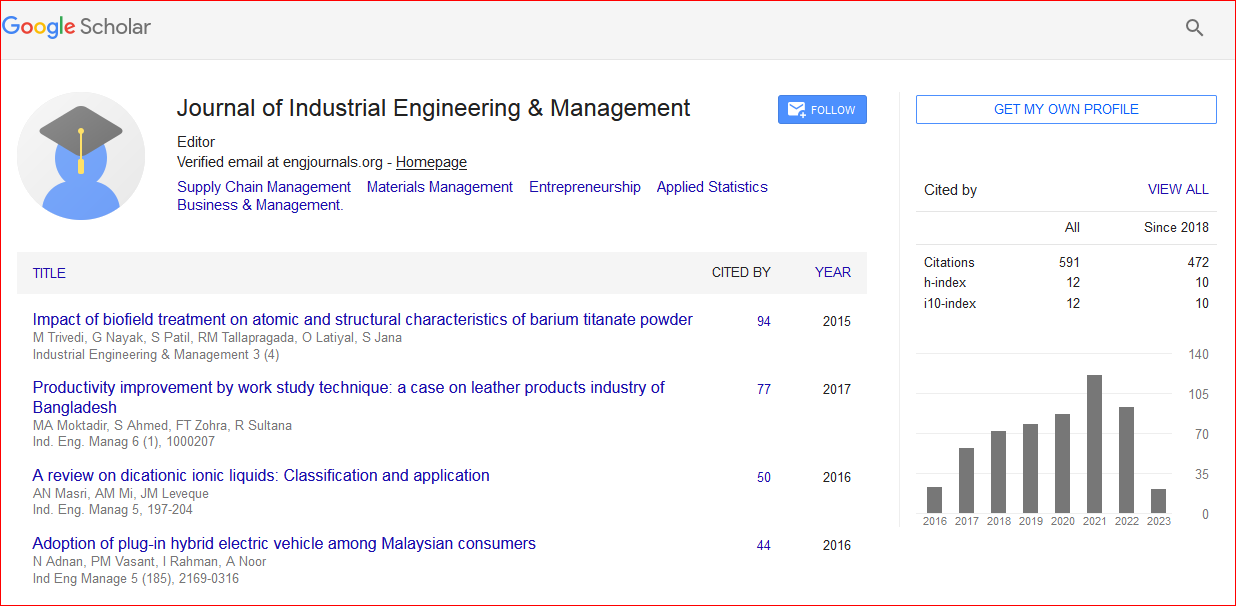
Industrial Engineering & Management received 739 citations as per Google Scholar report