Short Communication - (2025) Volume 14, Issue 2
Received: 01-Mar-2025, Manuscript No. aim-25-177345;
Editor assigned: 03-Mar-2025, Pre QC No. P-177345;
Reviewed: 17-Mar-2025, QC No. Q-177345;
Revised: 24-Mar-2025, Manuscript No. R-177345;
Published:
31-Mar-2025
, DOI: 10.37421/2427-5162.2025.14.565
Citation: Dorjee, Lhamo. ”Integrative Nutrition: Personalized, Holistic Health Care.” Alt Integr Med 14 (2025):566.
Copyright: © 2025 Dorjee L. This is an open-access article distributed under the terms of the Creative Commons Attribution License, which permits unrestricted use, distribution and reproduction in any medium, provided the original author and source are credited.
Nutritional interventions are increasingly recognized as a crucial component in the comprehensive management of chronic pain within integrative medicine. These approaches involve diverse dietary strategies and the strategic use of specific nutrients, demonstrating a significant potential to mitigate inflammation and modulate complex pain pathways. This perspective underscores nutrition as an invaluable, yet frequently underutilized, modality in holistic pain care [1].
The expansive role of integrative nutrition in managing chronic diseases has been thoroughly explored in systematic reviews, consolidating evidence on its efficacy. These reviews highlight how meticulously tailored dietary regimens, which often blend traditional wisdom with contemporary nutritional science, can substantially improve health outcomes across a spectrum of persistent conditions, offering a robust foundation for improved patient well-being [2].
Integrative nutrition, complemented by lifestyle interventions, presents a promising avenue for addressing anxiety. Narrative reviews on this topic discuss the profound impact of strategic dietary modifications and broader lifestyle adjustments on brain health and the intricate processes of mood regulation. This combination offers a holistic and multifaceted approach to the effective management of anxiety, fostering overall mental resilience [3].
The gut microbiome plays a pivotal role in the paradigm of personalized nutrition, with emerging evidence underscoring its significance. Review articles in this domain elucidate how an individual's unique microbial profile can precisely inform and customize dietary recommendations. This understanding is critical for developing more accurate and potent nutritional strategies within the framework of integrative medicine, optimizing patient-specific outcomes [4].
Integrative nutrition offers substantial support within the challenging landscape of cancer care, as detailed in comprehensive reviews. These analyses encompass a wide array of nutritional strategies, ranging from ensuring optimal macro- and micronutrient balance to implementing specific dietary patterns. The overarching goal is to enhance patient outcomes, alleviate treatment-related side effects, and markedly improve overall quality of life during and after therapy [5].
Systematic reviews and meta-analyses investigating integrative nutritional strategies for autoimmune diseases have yielded compelling findings. These studies indicate that particular dietary patterns and targeted supplementation can effectively modulate immune responses and reduce inflammatory markers. This evidence positions nutrition as a significant supportive element in the long-term management of various autoimmune conditions, promoting disease remission and symptom control [6].
The impact of nutritional interventions within integrative medicine for individuals afflicted with metabolic syndrome is a critical area of research. Articles in this field emphasize how precisely targeted dietary alterations and specific nutritional supplements can lead to significant improvements in key metabolic markers, including blood sugar levels, lipid profiles, and blood pressure, thereby contributing to enhanced overall health and reduced disease progression [7].
Current perspectives on mind-body nutrition within integrative health emphasize the intricate interplay between psychological factors, eating behaviors, and nutrient intake. Research in this area proposes vital directions for future investigation and clinical application, acknowledging the profound and complex relationship that exists between an individual's diet, their mood, and their overarching mental well-being, fostering a more holistic approach to health [8].
A personalized nutrition approach is increasingly advocated for the management of inflammatory bowel disease (IBD), promoting an integrative strategy. Articles on this subject highlight the necessity of tailoring dietary interventions based on the unique needs of each patient and the specific characteristics of their disease. This bespoke approach aims to effectively manage symptoms and significantly improve gut health, offering hope for better patient outcomes [9].
Dietary interventions for children diagnosed with autism spectrum disorder (ASD) are a significant focus of integrative reviews. These reviews synthesize a broad spectrum of evidence concerning how specific diets and carefully considered nutritional factors can profoundly influence behavioral, gastrointestinal, and developmental outcomes in this vulnerable population. Such insights are invaluable for developing truly integrated and compassionate care plans [10].
Chronic pain management benefits significantly from the integration of nutritional strategies, a growing area of focus in modern medicine. Researchers have meticulously detailed how particular dietary choices and nutrient supplements can actively diminish inflammatory processes and beneficially alter the complex pathways responsible for pain perception. This systematic integration offers a proactive and often underutilized avenue for comprehensive patient care [1]. Integrative nutrition stands as a cornerstone in the management of chronic diseases, as elucidated by rigorous systematic reviews. These studies aggregate a wealth of data demonstrating how bespoke dietary approaches, synthesizing both ancient wisdom and contemporary scientific understanding, are instrumental in achieving superior health outcomes across a diverse array of persistent medical conditions, advocating for personalized care models [2]. For individuals struggling with anxiety, integrative nutrition coupled with mindful lifestyle interventions provides a robust management framework. Narrative reviews articulate how specific dietary shifts, when combined with broader changes in daily habits, exert a powerful influence on neurological function and emotional equilibrium. This combined approach represents a comprehensive and natural strategy for mitigating anxiety symptoms [3]. The profound influence of the gut microbiome on personalized nutrition is a subject of intense scientific inquiry and growing clinical relevance. Recent review articles underscore how the distinct microbial fingerprint within an individualâ??s gut can serve as a precise guide for crafting highly effective dietary recommendations. This paves the way for a more targeted and impactful nutritional therapy within integrative medicine [4]. Integrative nutrition plays a critical supportive role in the intricate journey of cancer care, as evidenced by comprehensive reviews. These analyses explore a variety of nutritional tactics, including achieving optimal nutrient intake and adopting specific dietary patterns, all aimed at improving the prognosis, reducing the burden of treatment side effects, and significantly enhancing the overall quality of life for cancer patients [5]. Autoimmune diseases, characterized by complex immune dysregulation, can be positively influenced by integrative nutritional strategies, according to systematic reviews and meta-analyses. These investigations reveal that carefully chosen dietary patterns and specific supplemental regimens are capable of modulating the immune system and decreasing markers of inflammation, thereby offering a valuable adjunctive therapy in managing these chronic conditions [6]. Metabolic syndrome, a cluster of conditions increasing heart disease risk, can be effectively addressed through nutritional interventions in an integrative medicine context. Articles highlight how precise dietary adjustments and the incorporation of key nutritional supplements can lead to marked improvements in critical metabolic indicators, such as glycemic control, lipid profiles, and blood pressure, fostering long-term health benefits [7]. The emerging field of mind-body nutrition within integrative health recognizes the bidirectional relationship between mental states and dietary habits. Contemporary papers explore how psychological factors shape eating behaviors and nutrient absorption, and conversely, how nutrition impacts mood and cognitive function. This understanding informs future research and clinical practices that embrace the holistic connection between food and psychological well-being [8]. Inflammatory bowel disease (IBD) necessitates a highly individualized nutritional strategy, a concept increasingly embraced within integrative approaches. Research emphasizes the critical importance of customizing dietary interventions to align with each patientâ??s unique physiological responses and the specific manifestations of their disease. This personalized care is essential for symptom management and fostering improved gut health outcomes [9]. Children diagnosed with autism spectrum disorder can potentially benefit from tailored dietary interventions, a topic explored in integrative reviews. These reviews compile existing evidence on how particular diets and specific nutritional considerations can positively affect behavioral patterns, alleviate gastrointestinal issues, and support developmental milestones in this population, facilitating a more integrated approach to their care [10].
Integrative nutrition offers a holistic and personalized approach to managing a wide array of health conditions. Research consistently demonstrates its utility across various clinical domains, including chronic pain, anxiety, and the broad spectrum of chronic diseases. Key strategies involve tailored dietary patterns, specific nutrient supplementation, and consideration of individual factors like the gut microbiome. This approach has shown promise in modulating inflammation, improving metabolic markers, supporting cancer care by enhancing outcomes and reducing side effects, and managing autoimmune conditions. Furthermore, integrative nutrition extends to specialized populations, such as children with autism spectrum disorder and individuals with inflammatory bowel disease, where personalized interventions are crucial for improving behavioral, gastrointestinal, and developmental outcomes. The mind-body connection in nutrition highlights the importance of psychological factors and eating behaviors for overall mental well-being. Collectively, these studies underscore nutrition as a fundamental, often overlooked, component of comprehensive health care, moving towards more precise and effective patient-centered strategies.
None
None
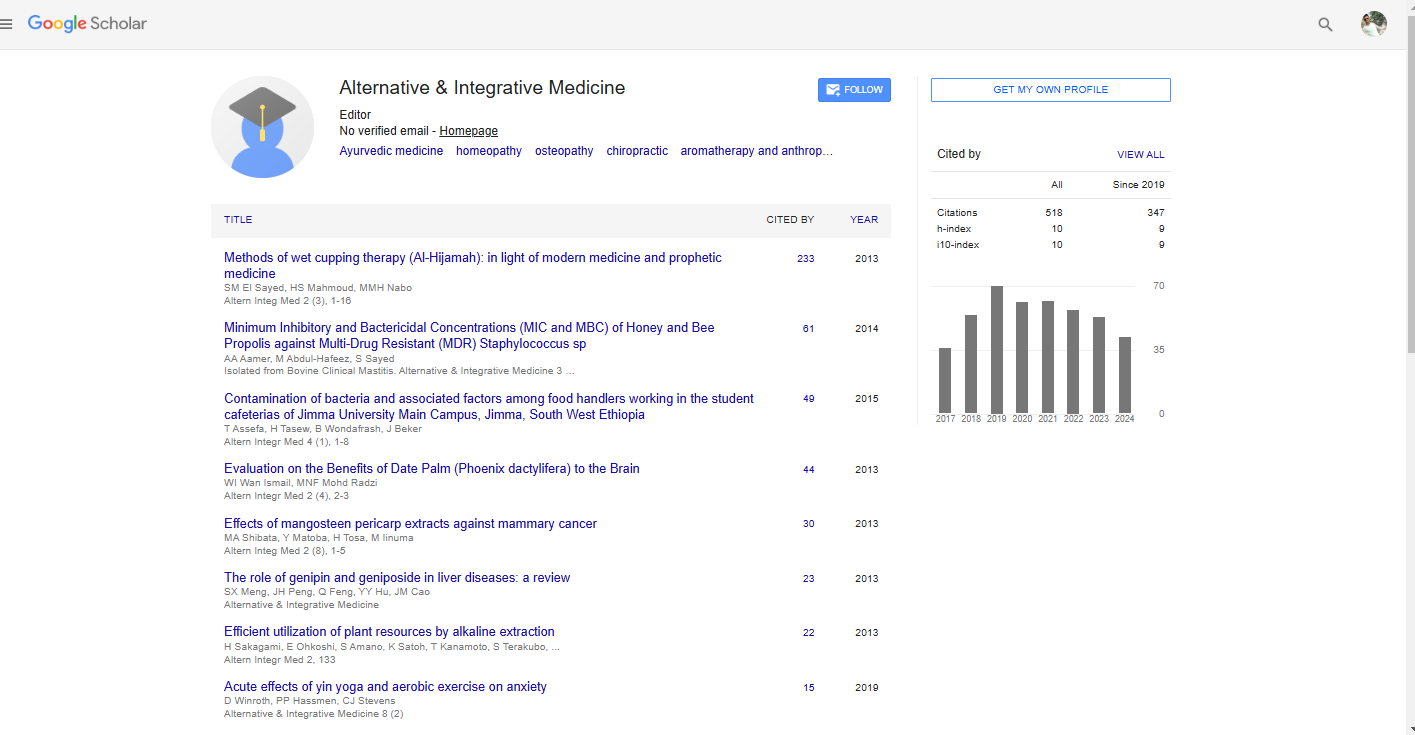
Alternative & Integrative Medicine received 476 citations as per Google Scholar report