Short Communication - (2025) Volume 14, Issue 3
Received: 02-May-2025, Manuscript No. aim-25-177355;
Editor assigned: 05-May-2025, Pre QC No. P-177355;
Reviewed: 19-May-2025, QC No. Q-177355;
Revised: 23-May-2025, Manuscript No. R-177355;
Published:
30-May-2025
, DOI: 10.37421/2427-5162.2025.14.576
Citation: Ali, Noura Ben. ”Integrative Medicine: Empowering Patients for Whole Health.” Alt Integr Med 14 (2025):576.
Copyright: © 2025 Ali B. Noura This is an open-access article distributed under the terms of the Creative Commons Attribution License, which permits unrestricted use, distribution and reproduction in any medium, provided the original author and source are credited.
Integrative medicine significantly enhances quality of life and alleviates symptoms for individuals with chronic illnesses. A systematic review and meta-analysis confirmed that integrated approaches improve patient well-being and symptom management compared to conventional care. This underscores the value of a holistic treatment strategy, combining various therapeutic elements for comprehensive, sustained positive outcomes [1].
Introducing integrative health into primary care settings demonstrably improves patient experience. A qualitative study showed participants felt more heard and valued, benefiting from a holistic approach and gaining self-care understanding. This highlights the critical importance of patient-centered communication in fostering trust and engagement within this healthcare model [2].
Shared decision-making (SDM) in integrative oncology is valued, yet practical implementation faces hurdles. A scoping review noted variations in practice, often due to time and resource constraints. The review advocates for improved tools and training to empower patients in making informed choices about integrative cancer treatments, ensuring true partnership [3].
Patient education within an integrative medicine framework is effective for chronic pain management. A randomized controlled trial showed structured education enhances patients' understanding of their condition and treatment options. This knowledge leads to improved self-management and reduced pain interference, underscoring education's crucial role in patient empowerment and better outcomes [4].
Patient-reported outcomes (PROs) are essential in integrative health models. A qualitative study with patients and clinicians revealed PROs help tailor care plans and highlight multidimensional well-being. This suggests PROs are vital for capturing unique benefits of integrative approaches from the patient's perspective, ensuring comprehensive therapeutic assessment [5].
Patient engagement in primary care can be significantly boosted through integrative medicine principles. An article suggests focusing on the whole person, fostering open communication, and providing diverse therapeutic options empowers patients. This active participation leads to improved adherence, greater satisfaction, and better health outcomes, promoting a proactive role [6].
"Whole person care" for chronic conditions, from a patient perspective, extends beyond medical symptoms. A study found patients value emotional support, comprehensive lifestyle advice, and a strong sense of partnership with providers. This holistic approach, integrating various dimensions of well-being, significantly enhances their quality of life [7].
Mindfulness-based interventions are effective and feasible within integrative health settings. Research demonstrated these interventions significantly improve patient outcomes related to stress, pain, and emotional regulation. High patient acceptance and adherence further establish their value as a core component of patient-centered integrative care for comprehensive healing [8].
Patient satisfaction remains consistently high in integrative medicine clinics. A cross-sectional study highlighted particular satisfaction regarding communication with providers, the personalized nature of care, and the wide range of available treatment options. This suggests the inherent patient-centered approach of integrative medicine profoundly contributes to positive patient experiences [9].
Integrative care models positively influence patient activation. A prospective cohort study indicated that patients receiving integrative care showed significantly higher activation, feeling more confident and engaged in managing their health. This highlights integrative approaches' potential to foster greater patient self-efficacy and promote proactive health behaviors [10].
This systematic review and meta-analysis evaluated integrative medicine's role in improving quality of life and alleviating symptoms for chronic illness patients. Findings consistently showed integrated approaches significantly enhance patient well-being and symptom management compared to conventional care, underscoring the value of holistic treatment strategies for better outcomes [1]. A qualitative study explored patient experiences with integrative health in primary care. Participants reported feeling heard, valued, and receiving holistic approaches to health, gaining better self-care understanding. This study highlights the critical importance of patient-centered communication in this model, fostering engagement and improved perception of care [2]. This scoping review investigated shared decision-making in integrative oncology. While valued, practical implementation varies due to time and resource limitations. The review emphasized the need for better tools and training to empower patients in making informed choices about their integrative cancer treatments, ensuring active participation [3]. A randomized controlled trial assessed a patient education program within an integrative medicine framework for chronic pain management. Findings indicated structured education improved patients' understanding of their condition and treatment options, leading to better self-management and reduced pain interference, highlighting knowledge's role in empowerment [4]. A qualitative study explored patient and clinician perspectives on patient-reported outcomes (PROs) in integrative health models. Both groups stressed PROs' utility in tailoring care plans and capturing multidimensional well-being. This suggests PROs are vital for expressing the unique benefits of integrative approaches from the patient's viewpoint [5]. An article discussed strategies to enhance patient engagement in primary care using integrative medicine principles. It suggests focusing on the whole person, fostering open communication, and providing diverse therapeutic options empowers patients. This active role leads to better adherence and satisfaction, driving improved health outcomes [6]. A study investigated "whole person care" from the perspective of chronic illness patients. They emphasized emotional support, lifestyle advice, and partnership with providers. This highlighted that care extending beyond medical symptoms significantly enhances quality of life, validating comprehensive and compassionate approaches to health [7]. This research explored the effectiveness and feasibility of incorporating mindfulness-based interventions into integrative health settings. It demonstrated significant improvements in patient outcomes related to stress, pain, and emotional regulation, with high patient acceptance and adherence. This positions mindfulness as a valuable component of patient-centered integrative care [8]. A cross-sectional study investigated patient satisfaction levels in integrative medicine clinics. High satisfaction was found, particularly concerning communication with providers, personalized care, and diverse treatment options. This suggests the patient-centered approach inherent in integrative medicine significantly contributes to positive patient experiences [9]. A prospective cohort study evaluated how integrative care models influence patient activation levels. Results indicated patients receiving integrative care demonstrated significantly higher activation, feeling more confident and engaged in managing their health. This highlights the potential of integrative approaches to foster greater patient self-efficacy [10].
Integrative medicine consistently demonstrates significant improvements in patient quality of life and symptom management, particularly for chronic illnesses, by offering holistic treatment strategies that surpass conventional care alone. Its implementation in primary care fosters patient engagement, making individuals feel more heard and valued while improving self-care understanding through patient-centered communication. Within specialized fields like oncology, shared decision-making is critical, though its execution requires better tools and resources to empower patients. Patient education is also vital, enhancing understanding of conditions like chronic pain and promoting self-management. The effectiveness of integrative models is further supported by high patient satisfaction, attributed to personalized care, open communication, and diverse therapeutic options. Patient-reported outcomes are essential for tailoring care plans and capturing the multidimensional aspects of well-being. Furthermore, mindfulness-based interventions show promise in stress, pain, and emotional regulation. Overall, integrative care models actively boost patient activation and self-efficacy, empowering individuals to take a more confident and engaged role in their health journey, thereby fostering "whole person care" that extends beyond just medical symptoms.
None
None
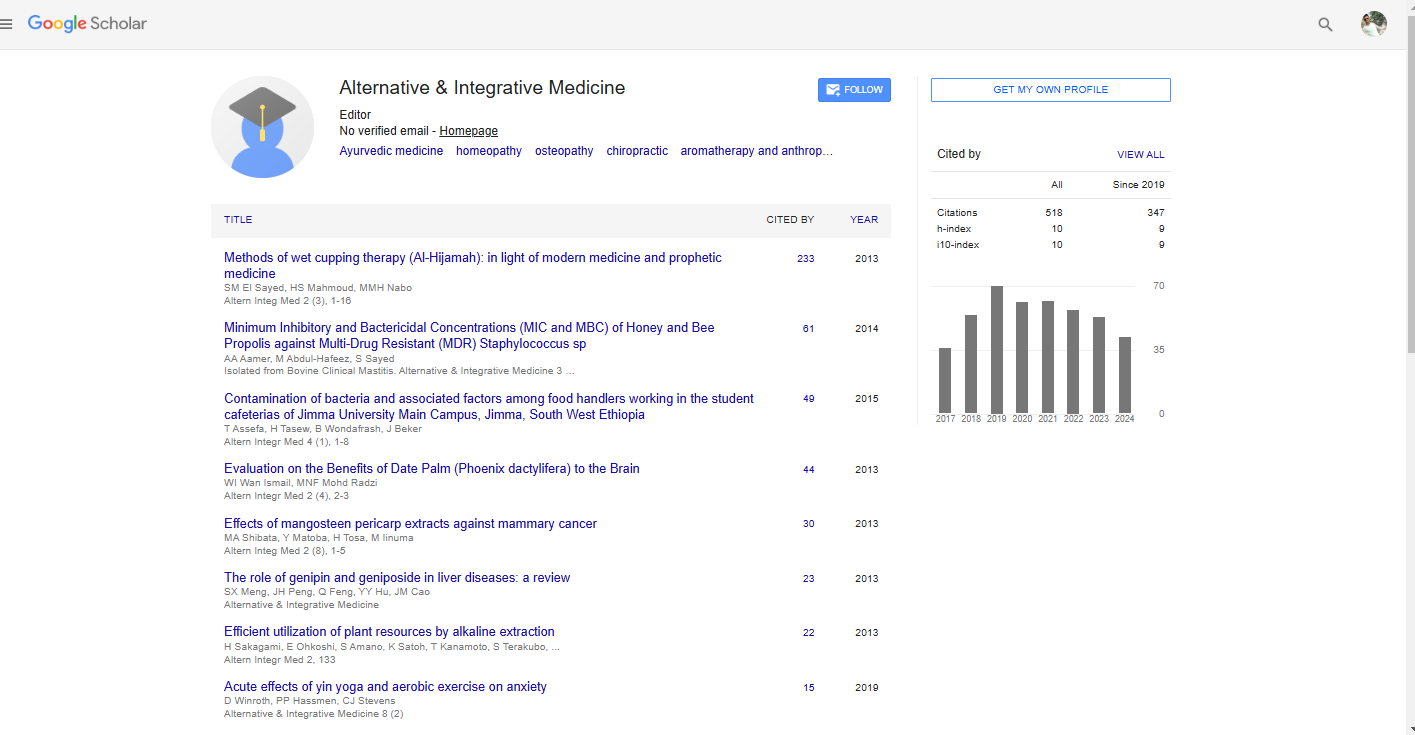
Alternative & Integrative Medicine received 476 citations as per Google Scholar report