Opinion - (2025) Volume 14, Issue 2
Received: 01-Mar-2025, Manuscript No. aim-25-177340;
Editor assigned: 03-Mar-2025, Pre QC No. P-177340;
Reviewed: 17-Mar-2025, QC No. Q-177340;
Revised: 24-Mar-2025, Manuscript No. R-177340;
Published:
31-Mar-2025
, DOI: 10.37421/2427-5162.2025.14.560
Citation: Yamamoto, Hiroshi. ”Integrative Medicine: Comprehensive Care for Holistic Well-being.” Alt Integr Med 14 (2025):561.
Copyright: © 2025 Yamamoto H. This is an open-access article distributed under the terms of the Creative Commons Attribution License, which permits unrestricted use, distribution and reproduction in any medium, provided the original author and source are credited.
Integrative medicine has emerged as a crucial approach in contemporary healthcare, seeking to combine conventional medical treatments with complementary therapies to provide comprehensive patient care. This holistic paradigm recognizes that patient needs often extend beyond what traditional medicine can address alone, prompting an exploration into more integrated models of care delivery. Understanding the effectiveness, patterns, and patient experiences associated with these approaches is vital for their broader implementation and acceptance within established healthcare systems. The following paragraphs delve into various facets of integrative medicine, from its application in primary care to specific therapeutic modalities and educational advancements, highlighting its evolving landscape and profound implications for global health. The effectiveness and operational patterns of integrative medicine consultations within a primary care setting have been rigorously examined, revealing their significant potential to address complex patient needs that might not be fully met by conventional medical approaches. Such consultations demonstrate a capacity to improve patient outcomes by offering alternative or supplementary treatments, thereby enhancing overall well-being. Insights derived from retrospective analyses in this area often highlight common referral patterns and specific patient demographics that benefit most from these integrated services, providing valuable data for optimizing future care delivery models [1].
Mind-body therapies represent a cornerstone of integrative medicine, particularly in managing psychological distress in vulnerable populations. A systematic review and meta-analysis provided compelling evidence for their effectiveness in reducing anxiety among cancer patients. These therapies, which include practices such as meditation, yoga, and guided imagery, are shown to significantly improve psychological well-being, acting as a valuable adjunct to conventional cancer treatments. The integration of such approaches offers patients a pathway to better coping mechanisms and enhanced quality of life throughout their arduous treatment journeys [2].
Within the specialized field of oncology, dietary and nutritional interventions play an indispensable role in a truly integrative framework. A comprehensive review elucidated how personalized nutrition strategies can profoundly support cancer patients by effectively managing treatment side effects, thereby improving their overall quality of life. Furthermore, these carefully tailored interventions potentially influence disease outcomes, underscoring the critical importance of a holistic approach to cancer care that extends beyond pharmacotherapy to encompass fundamental lifestyle elements like diet [3].
Acupuncture, an ancient healing modality, continues to gain recognition as an effective treatment for chronic pain. An updated review of research evidence and clinical guidelines firmly supports its efficacy. This article meticulously clarifies the underlying mechanisms by which acupuncture exerts its therapeutic effects and delineates its clinical effectiveness, positioning it as a highly valuable non-pharmacological option within contemporary pain management strategies. Its adoption provides patients with an alternative to opioid-based treatments, addressing concerns regarding long-term medication use and potential side effects [4].
Herbal medicine, with its rich historical roots, is increasingly integrated into modern healthcare systems globally. An insightful article offers a worldwide perspective on this evolving role, meticulously examining its growing acceptance and the concomitant challenges of ensuring quality control and regulatory oversight. The urgent need for evidence-based practice is emphasized to guarantee both the safety and efficacy of herbal remedies, fostering a balanced view for their appropriate clinical utilization and promoting responsible integration into patient care [5].
The broader context of global health challenges underscores the critical importance of integrative medicine. A compelling call for action advocates for its central role in addressing these widespread issues. The article explicitly outlines the necessity for enhanced collaboration among healthcare providers, intensified research efforts, and robust policy support. These measures are essential to effectively leverage integrative approaches in preventive care, chronic disease management, and the pursuit of health equity worldwide, ensuring that diverse populations benefit from comprehensive and culturally sensitive healthcare solutions [6].
Patient experiences are paramount in evaluating the success of integrative care models. A qualitative study meticulously investigated patient encounters with integrative medicine services within a hospital setting. The findings consistently revealed the profound value patients ascribe to holistic care, personalized attention, and the empowering sense of active participation in their own healing journeys. This research unequivocally emphasizes the critical importance of transparent communication and mutual trust as foundational pillars in effective integrative care models, enhancing patient satisfaction and adherence [7].
Managing chronic conditions like hypertension often benefits from a multi-faceted approach. A comprehensive review explored various integrative strategies for hypertension management, including evidence-based dietary modifications, stress reduction techniques, and targeted herbal remedies, alongside conventional pharmacological treatments. This work highlights the significant potential for these combined strategies to deliver personalized and highly effective blood pressure control, ultimately improving patient outcomes and substantially reducing cardiovascular risk factors through a synergistic therapeutic approach [8].
The gut microbiome's profound impact on human health and disease has fundamentally shifted paradigms within integrative medicine. An influential article presented this area as a foundational change, exploring how judiciously modulating the microbiome through specific dietary interventions, prebiotics, and probiotics can unlock novel therapeutic avenues for a wide spectrum of conditions. This research strongly emphasizes a whole-system approach, recognizing the intricate connections between gut health and overall physiological balance, thereby offering innovative treatment perspectives [9].
Innovations in teaching integrative medicine are crucial for preparing future clinicians. A narrative review meticulously surveyed current curricular trends and identified best practices in integrating mind-body techniques, nutrition education, and complementary therapies into health professions education. The review underscored the growing imperative for medical training to adopt a more holistic perspective, ensuring that future clinicians are equipped with the knowledge and skills to provide comprehensive, patient-centered care that embraces both conventional and integrative modalities [10].
Integrative medicine represents a dynamic and evolving field within healthcare, characterized by its emphasis on treating the whole person by combining conventional Western medicine with evidence-informed complementary therapies. This comprehensive approach aims to optimize health and healing by addressing physical, mental, emotional, spiritual, and environmental aspects of a patientâ??s life. The following detailed descriptions illuminate various studies and reviews that underscore the diverse applications, benefits, and foundational principles guiding the practice and development of integrative medicine in contemporary clinical settings. A retrospective analysis offered significant insights into the integration of complementary therapies within primary care by examining the efficacy and referral patterns of integrative medicine consultations. This study highlighted how such consultations effectively address patient needs that might not be fully met through conventional interventions alone. It also provided crucial data on typical patient profiles and referral reasons, demonstrating the practical application and impact of integrative approaches in enhancing comprehensive primary care services and improving patient satisfaction with their healthcare options [1]. In the realm of supportive cancer care, a systematic review and meta-analysis conclusively established the strong effectiveness of mind-body therapies in mitigating anxiety among cancer patients. This rigorous scientific assessment showcased the substantial benefits of techniques such as meditation, yoga, and mindfulness for psychological well-being. These integrative strategies serve as valuable adjuncts to standard oncological treatments, offering patients robust tools to manage treatment-related stress and improve their overall mental health during a challenging period of their lives [2]. An extensive review emphasized the vital contribution of dietary and nutritional interventions within the specialized framework of integrative oncology. This publication detailed how personalized nutritional strategies are instrumental in supporting cancer patients. These strategies help manage debilitating side effects of cancer treatments, significantly improve patients' quality of life, and potentially exert a positive influence on disease progression and long-term outcomes. The review strongly advocated for integrating these nutritional components into a truly holistic cancer care plan, recognizing food as medicine [3]. For individuals grappling with chronic pain, an updated review provided a thorough examination of the research evidence and clinical guidelines supporting acupuncture as an efficacious treatment modality. This comprehensive article elucidated the neurophysiological mechanisms underpinning acupuncture's pain-relieving effects and affirmed its clinical utility. It firmly established acupuncture as a credible and valuable non-pharmacological alternative within modern pain management protocols, offering a safe and effective option to reduce reliance on potentially addictive pharmaceutical interventions [4]. The global landscape of healthcare increasingly recognizes the importance of herbal medicine, as detailed in an article that explored its evolving role. This piece examined the growing worldwide adoption of herbal remedies while also addressing the significant challenges associated with ensuring product quality control and robust regulatory frameworks. The authors stressed the critical need for evidence-based research to validate the safety and efficacy of herbal preparations, advocating for a balanced and informed approach to their integration into mainstream clinical practice [5]. Addressing pressing global health challenges necessitates a paradigm shift, which an article effectively articulated as a compelling call to action for integrative medicine. This publication highlighted the indispensable role integrative approaches can play in global health initiatives. It emphasized the urgent need for greater international collaboration, expanded research funding, and supportive policy development to fully leverage these methods in areas such as preventive care, chronic disease management, and the crucial pursuit of global health equity and accessibility [6]. Understanding the patient perspective is fundamental to refining healthcare delivery. A qualitative study extensively investigated patient experiences with integrative medicine services delivered within a tertiary hospital setting. The research uncovered that patients highly value the holistic nature of care, the personalized attention they receive, and the profound sense of empowerment derived from actively participating in their healing journey. The studyâ??s findings unequivocally underscored the paramount importance of effective communication and the establishment of trust within successful integrative care models [7]. The management of hypertension, a prevalent chronic condition, can be significantly enhanced by integrative approaches. A detailed review outlined various strategies, including specific dietary modifications, proven stress reduction techniques, and carefully selected herbal remedies, used in conjunction with conventional medical treatments. This article highlighted the collective potential of these combined therapies to offer individualized and highly effective blood pressure control, leading to improved patient outcomes and a substantial reduction in associated cardiovascular risks [8]. The human gut microbiome has emerged as a central focus in health research, and an article explored its profound influence on health and disease, presenting it as a foundational paradigm shift for integrative medicine. This work discussed how intentional modulation of the microbiome through interventions such as targeted dietary changes, prebiotics, and probiotics can open innovative therapeutic pathways for a wide array of conditions, emphasizing a whole-system perspective that connects gut health to systemic well-being [9]. To ensure the future of integrative healthcare, the education of health professionals is paramount. A narrative review critically analyzed current curricular trends and innovative teaching methodologies in integrative medicine across various health professions education programs. This review identified exemplary practices for incorporating mind-body techniques, comprehensive nutrition education, and complementary therapies into medical training, stressing the increasing necessity for future clinicians to adopt a holistic and patient-centered approach to care [10].
Integrative medicine is gaining recognition for its comprehensive approach to patient care, combining conventional treatments with complementary therapies to address holistic patient needs. Retrospective analyses reveal the effectiveness of integrative consultations in primary care, demonstrating their potential to fulfill unmet patient needs and improve outcomes. Mind-body therapies are proven to significantly reduce anxiety in cancer patients, enhancing psychological well-being as an adjunct to conventional care. Similarly, dietary and nutritional interventions are crucial in integrative oncology for managing treatment side effects and improving quality of life. Acupuncture is a well-supported non-pharmacological option for chronic pain management, while herbal medicine continues to integrate globally, albeit with challenges in regulation and quality control. The field is also advocating for its role in addressing global health challenges through collaboration and policy support, emphasizing its potential in preventive care and chronic disease management. Patient experiences highlight the value of holistic, personalized care and the importance of communication and trust. Integrative strategies, including diet and stress reduction, show promise in managing conditions like hypertension. Furthermore, the gut microbiome is identified as a fundamental area for therapeutic intervention within integrative medicine. Finally, curricular innovations in health professions education are focusing on teaching integrative approaches, preparing future clinicians for holistic patient care.
None
None
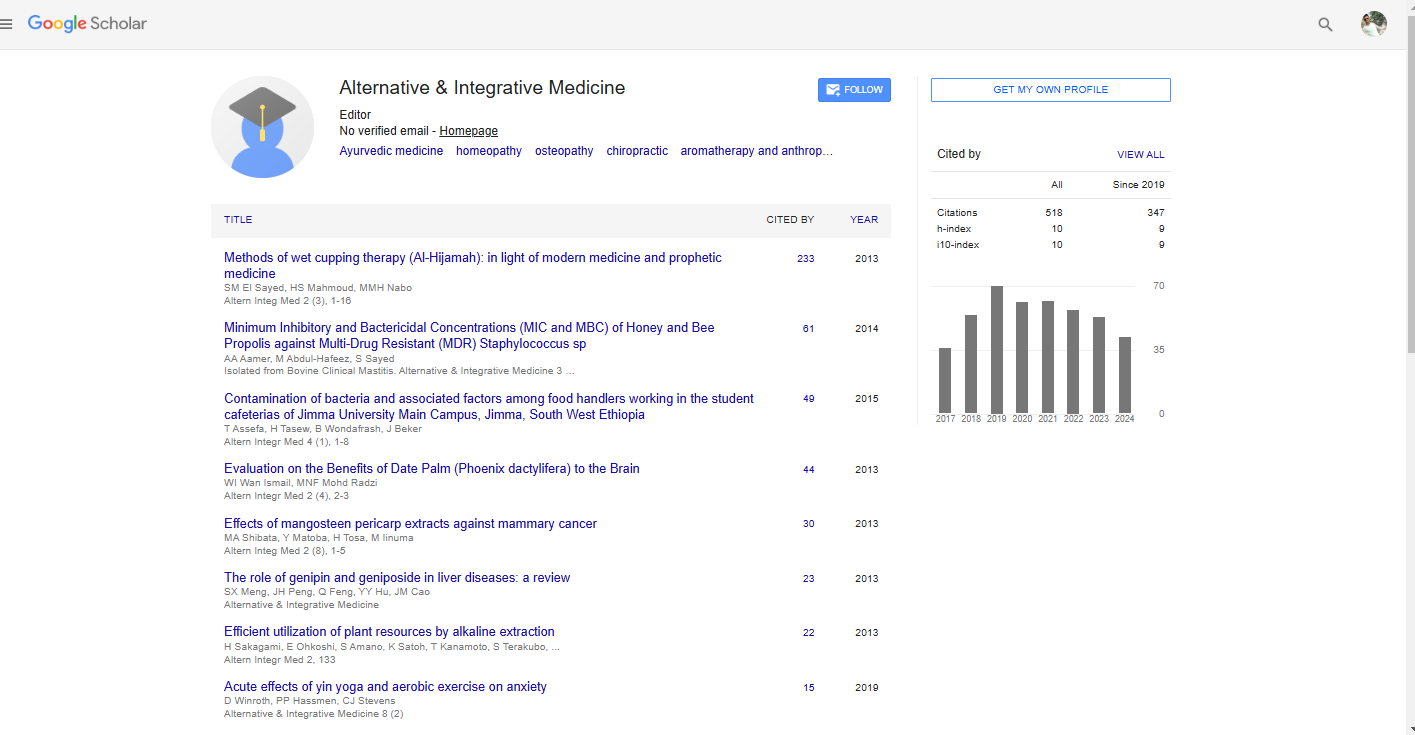
Alternative & Integrative Medicine received 476 citations as per Google Scholar report