Commentary - (2025) Volume 14, Issue 2
Received: 01-Mar-2025, Manuscript No. aim-25-177336;
Editor assigned: 03-Mar-2025, Pre QC No. P-177336;
Reviewed: 17-Mar-2025, QC No. Q-177336;
Revised: 24-Mar-2025, Manuscript No. R-177336;
Published:
31-Mar-2025
, DOI: 10.37421/2427-5162.2025.14.557
Citation: Sharma, Anil.” Integrative Medicine: A Whole-person Health Paradigm.” Alt Integr Med 14 (2025):557.
Copyright: © 2025 Sharma A. This is an open-access article distributed under the terms of the Creative Commons Attribution License, which permits unrestricted use, distribution and reproduction in any medium, provided the original author and source are credited.
Integrative medicine represents a comprehensive approach to healthcare, effectively blending conventional treatments with evidence-based complementary therapies. This methodology is distinctly patient-centered, placing significant emphasis on holistic well-being, which includes crucial lifestyle adjustments and the treatment of the individual in their entirety. A fundamental understanding of the existing scientific evidence and the strategic integration of these diverse practices into clinical environments are identified as pivotal foundational elements for its success and efficacy. This ensures that interventions are both sound and tailored to specific patient needs, moving beyond a symptomatic focus towards root causes [1].
The development of an integrative medicine model within primary care settings is a complex but vital endeavor, as highlighted by qualitative research. Successful integration inherently relies on the cultivation of robust patient-provider relationships, fostering clear and effective communication pathways, and achieving a collective understanding of the various treatment modalities available. Ultimately, the bedrock of integrative care in primary care is established through collaborative relationships and a deeply holistic perspective concerning patient health requirements, facilitating a more coordinated and comprehensive care delivery system [2].
The landscape of integrative medicine is continuously evolving, a trajectory well-documented by recent narrative reviews. This evolution signifies a pronounced shift towards a more comprehensive and nuanced understanding of health and illness, purposefully transcending the conventional disciplinary boundaries that have historically segregated medical approaches. Projections for future development indicate a stronger imperative for enhanced patient engagement and the implementation of highly personalized health strategies, thereby cementing integrative medicine's increasingly essential role within the broader modern healthcare paradigm [3].
Integrative health coaching is a foundational component in empowering individuals to actively participate in their own well-being within an integrative framework. A thorough concept analysis reveals that coaching functions as a collaborative and client-centered process, specifically designed to support individuals in achieving their health objectives. This is accomplished by effectively leveraging their inherent personal resources, fostering self-efficacy, and promoting sustainable behavioral changes that contribute significantly to long-term health maintenance and improvement [4].
The foundational principles of lifestyle and integrative medicine are critical for optimizing health outcomes, a theme thoroughly explored in various reviews. These principles underscore the paramount importance of personalized care, proactive disease prevention, and substantial lifestyle modifications. Such modifications encompass essential elements like dietary adjustments, regular physical activity, and effective stress management techniques. At its core, these fields aim to equip individuals with the necessary tools for sustainable health, extending beyond the mere alleviation of symptoms to address underlying determinants of well-being [5].
Implementing integrative medicine within existing healthcare systems presents both formidable practical challenges and significant opportunities. While there is a demonstrably growing patient demand for these holistic approaches, the landscape is often hindered by persistent structural and financial barriers. To effectively solidify integrative medicine's position and surmount these obstacles, there is an urgent need for enhanced interprofessional collaboration and the establishment of robust, effective outcome measurement methodologies, ensuring its value is clearly demonstrated and recognized [6].
An introduction to the fundamental concepts of evidence-based practice within integrative health is crucial for establishing credibility and effectiveness. This framework meticulously outlines the process for critically appraising research findings, judiciously integrating expert clinical knowledge, and thoughtfully incorporating patient preferences and values into therapeutic decision-making. Fundamentally, this approach establishes the essential groundwork for guaranteeing that all integrative therapies offered are not only safe but also demonstrably effective, thereby upholding stringent scientific rigor in their application [7].
A critical appraisal of the philosophy and evolution of integrative health provides invaluable insight into its theoretical underpinnings. This examination meticulously traces the intellectual lineage of holistic approaches to healthcare, concurrently evaluating their contemporary influence and impact on modern medical practice. A profound understanding of these deep philosophical foundations is deemed indispensable for steering the direction of future research endeavors and guiding clinical applications in a manner that is both meaningful and ethically sound, promoting continued advancement in the field [8].
Defining integrative health precisely is a crucial step towards its consistent application and advancement. A systematic review and meta-synthesis of existing conceptualizations illuminates common, recurring themes. These include the overarching concept of whole-person care, a focus on healing-oriented medicine, and the astute, judicious integration of both conventional and complementary therapeutic interventions. This collective effort provides a clearer, more unified conceptual framework for what integrative health genuinely encompasses, forming a fundamental basis for its widespread adoption and continued refinement [9].
The global healthcare landscape is currently experiencing a significant paradigm shift towards integrative medicine. This international movement involves an in-depth exploration of how diverse cultures and varied healthcare systems are increasingly adopting and strategically adapting integrative approaches. The growing acknowledgment of individual patient preferences and a broader, more expansive understanding of health and well-being are key indicators that this global trajectory is actively reshaping the future modalities and delivery mechanisms of healthcare worldwide [10].
Integrative medicine, as explored in a foundational review, systematically bridges the gap between conventional medical practices and a spectrum of evidence-based complementary therapies. This comprehensive model prioritizes patient-centered care, emphasizing the profound impact of lifestyle adjustments and treating the individual as a cohesive entity rather than focusing solely on isolated symptoms. The successful application of integrative medicine critically depends on a robust understanding of current scientific findings and the practical implementation of these diverse modalities within clinical settings, thereby ensuring therapeutic efficacy and safety [1]. Establishing an effective integrative medicine model within primary care environments requires careful consideration of interpersonal dynamics and communication strategies. A qualitative study underscores that successful integration is built upon strong, empathetic patient-provider relationships, characterized by open dialogue and a mutual appreciation for various treatment philosophies. This collaborative foundation, rooted in a holistic understanding of patient needs, is essential for truly embedding integrative care into primary healthcare delivery, fostering trust and comprehensive well-being [2]. The continuous evolution of integrative medicine signifies a profound transformation in healthcare, moving towards a more integrated and holistic perspective. A narrative review illustrates this progression, highlighting a deliberate departure from the fragmented approaches of conventional medicine. This shift promotes a more nuanced comprehension of health and disease, advocating for future strategies that include heightened patient engagement and highly individualized health plans, which are crucial for cementing integrative medicineâ??s pivotal role in contemporary medical practice [3]. Integrative health coaching is a dynamic and essential intervention within the broader integrative health paradigm. A concept analysis elucidates its core components, defining it as a highly collaborative, client-focused process designed to empower individuals. Through this process, clients are guided to harness their inherent internal resources to achieve their personal health goals. This proactive and supportive approach is a critical element in fostering patient autonomy and encouraging active participation in one's own health journey, leading to more sustainable outcomes [4]. Reviews concerning lifestyle and integrative medicine articulate core principles vital for enhancing overall health outcomes. These foundational tenets emphasize personalized care plans, rigorous preventative measures, and significant lifestyle modifications. Such interventions routinely include optimizing diet, engaging in regular physical exercise, and employing effective stress management techniques. The essence of these medical fields lies in equipping individuals with enduring strategies for health, thereby extending therapeutic efforts beyond superficial symptom management to address comprehensive wellness [5]. The integration of integrative medicine into established healthcare systems presents a dichotomy of notable challenges and promising opportunities. Despite a clear and increasing public demand for integrative approaches, widespread adoption is frequently hampered by entrenched structural and financial obstacles. Overcoming these barriers necessitates robust interprofessional collaboration among healthcare providers and the rigorous implementation of objective outcome measurement tools to validate efficacy and demonstrate tangible benefits, thereby justifying its broader inclusion [6]. Fundamental concepts of evidence-based practice are indispensable for legitimizing integrative health interventions. An introductory paper details how practitioners must critically assess research, synthesize their clinical expertise, and respectfully integrate patient values and preferences into treatment plans. This systematic approach forms the essential framework for ensuring that all recommended integrative therapies are not only grounded in scientific evidence but also demonstrate a high degree of safety and clinical effectiveness, fostering public trust and professional accountability [7]. Examining the philosophy and historical evolution of integrative health offers crucial insights into its conceptual bedrock. A critical appraisal traces the origins of holistic healthcare models and assesses their contemporary influence on medical practice. The authors contend that a deep comprehension of these underlying philosophical tenets is fundamental for strategically guiding subsequent research initiatives and ensuring that clinical applications are both relevant and profoundly impactful, thereby advancing the field responsibly [8]. A precise and universally accepted definition of integrative health is paramount for its consistent development and implementation. A systematic review and meta-synthesis reveal recurrent conceptualizations, including tenets such as whole-person care, a focus on intrinsic healing processes, and the judicious, evidence-informed application of both conventional and complementary therapies. This comprehensive synthesis offers a clearer, harmonized understanding of the multifaceted nature of integrative health, serving as a critical guide for its future trajectory [9]. Globally, a distinct paradigm shift towards integrative medicine is underway, reflecting a broader recognition of diverse health needs and cultural contexts. This article investigates how various international healthcare systems are progressively embracing and adapting integrative methodologies. The growing recognition of patient autonomy and an expansive conceptualization of health are significant indicators that this global movement is actively reconfiguring future healthcare delivery models and fostering a more inclusive approach to wellness worldwide [10].
Integrative medicine is characterized by its holistic, patient-centered approach, combining conventional treatments with evidence-based complementary therapies. Key principles include lifestyle adjustments, prevention, and personalized care, aimed at treating the whole person. Successful integration into primary care relies on strong patient-provider relationships, effective communication, and a shared understanding of diverse treatment methods. The field is continuously evolving, moving towards greater patient engagement and personalized health strategies, transcending traditional medical silos. Integrative health coaching plays a vital role by empowering individuals to achieve health goals through collaborative, client-centered processes. Challenges in implementing integrative medicine within healthcare systems include structural and financial barriers, emphasizing the need for interprofessional collaboration and robust outcome measurement. The importance of evidence-based practice is underscored, ensuring therapies are safe, effective, and align with patient values and clinical expertise. Philosophical underpinnings of holistic approaches guide future research and applications. Defining integrative health consistently highlights themes of whole-person care, healing-oriented medicine, and the judicious use of both conventional and complementary interventions. This global paradigm shift reflects increasing recognition of patient preferences and a broader understanding of health, reshaping future healthcare delivery.
None
None
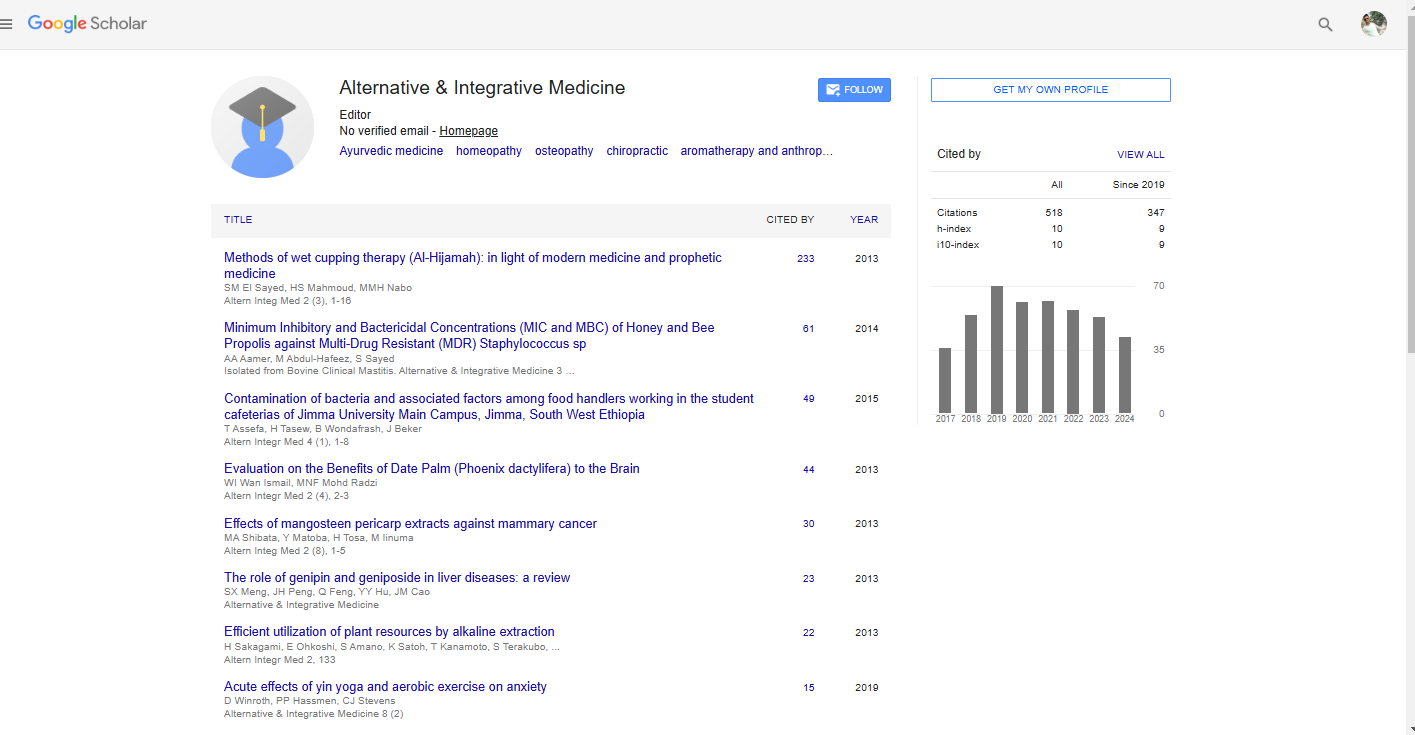
Alternative & Integrative Medicine received 476 citations as per Google Scholar report