Opinion - (2025) Volume 14, Issue 6
Received: 03-Nov-2025, Manuscript No. aim-25-178060;
Editor assigned: 05-Nov-2025, Pre QC No. P-178060;
Reviewed: 19-Nov-2025, QC No. Q-178060;
Revised: 24-Nov-2025, Manuscript No. R-178060;
Published:
29-Nov-2025
, DOI: 10.37421/2427-5162.2025.14.603
Citation: Carter, Emily J.. ”Integrative Lifestyles for Diabetes and Metabolic Health.” Alt Integr Med 14 (2025):603.
Copyright: © 2025 Carter J. Emily This is an open-access article distributed under the terms of the Creative Commons Attribution License, which permits unrestricted use, distribution and reproduction in any medium, provided the original author and source are credited.
Integrative medicine offers a comprehensive approach to diabetes management, integrating both conventional and complementary therapies to optimize patient outcomes. This holistic model has demonstrated effectiveness in improving blood sugar control and various metabolic health markers, advocating for a broader perspective on chronic disease care [1].
The potential of herbal medicine in preventing and managing type 2 diabetes has been extensively investigated, with an umbrella review consolidating evidence that points to specific herbs as beneficial for glycemic control and metabolic health. Critical to their integration is rigorous scientific validation and a steadfast focus on patient safety [2].
Mind-body interventions, including practices such as meditation and yoga, represent a significant non-pharmacological strategy for individuals with type 2 diabetes. These practices have been shown to considerably enhance glycemic control, primarily by alleviating stress and promoting overall well-being, thereby supporting a more integrated management plan [3].
The Mediterranean diet stands out as a crucial lifestyle intervention for managing type 2 diabetes, with systematic reviews confirming its efficacy. This dietary pattern, characterized by its abundance of fruits, vegetables, whole grains, and beneficial fats, substantially improves glycemic control and mitigates the risk of associated complications, establishing it as a fundamental component of diabetes care [4].
Acupuncture has emerged as a promising complementary therapy for addressing insulin resistance and managing type 2 diabetes. Comprehensive reviews of clinical trials suggest that acupuncture interventions can effectively enhance insulin sensitivity, presenting an additional therapeutic option for patients seeking multifaceted approaches to their care [5].
Beyond its general wellness benefits, yoga has been specifically identified through meta-analyses as a valuable tool for individuals with type 2 diabetes. Regular engagement in yoga practices contributes to substantial improvements in glucose control and insulin sensitivity, offering a practical and accessible method for enhancing diabetes management strategies [6].
The intricate relationship between the gut microbiome and type 2 diabetes presents novel therapeutic opportunities. Research indicates that intentional modulation of gut bacteria, achievable through dietary adjustments or probiotic supplementation, may play a pivotal role in both preventing and managing the disease, paving the way for innovative integrative strategies centered on gut health [7].
Dietary fiber intake is recognized as a critical nutritional component in the effective management of type 2 diabetes. A recent meta-analysis emphatically confirms that augmenting fiber consumption leads to significant enhancements in glucose control and insulin sensitivity, thereby reinforcing the indispensable role of diet in chronic disease management [8].
Intermittent fasting has garnered attention for its metabolic advantages, particularly in the context of diabetes and insulin resistance. Systematic reviews reveal that structured, timed eating patterns can yield considerable improvements in insulin sensitivity and glucose regulation, positioning intermittent fasting as a compelling dietary intervention within an integrative healthcare framework [9].
The utility of chromium supplementation in type 2 diabetes management has been assessed, with findings indicating a modest but measurable improvement in both glucose and lipid metabolism. While not a standalone cure, chromium can serve as a supportive adjunct within a comprehensive integrative management plan, contributing to overall metabolic balance [10].
A systematic review and meta-analysis published in 2023 meticulously evaluated the impact of integrative medicine approaches on diabetes management. This study underscored the significant benefits derived from combining conventional therapies with complementary methods, leading to improved glycemic control and better overall health markers for individuals with diabetes. The evidence strongly supports a more holistic and patient-centered model of care [1]. In 2022, an umbrella review provided a comprehensive synthesis of existing systematic reviews and meta-analyses concerning herbal medicine in type 2 diabetes. This extensive analysis highlighted the potential of specific herbal interventions to enhance glycemic control and metabolic health, while simultaneously emphasizing the crucial need for robust scientific validation and stringent safety assessments before widespread application [2]. Research in 2021 specifically addressed the role of mind-body interventions in glycemic control among patients with type 2 diabetes. This systematic review and meta-analysis of randomized controlled trials concluded that practices such as meditation and yoga are effective in lowering blood sugar levels. These non-pharmacological tools are valuable for stress reduction and fostering overall well-being, contributing positively to diabetes management [3]. The Mediterranean dietâ??s influence on type 2 diabetes outcomes was the subject of a systematic review and meta-analysis in 2021. This research affirmed that adherence to a diet rich in plant-based foods, whole grains, and healthy fats demonstrably improves glycemic control and substantially lowers the risk of diabetes-related complications. Consequently, this dietary pattern is considered a fundamental strategy in lifestyle-based diabetes care [4]. A systematic review and meta-analysis from 2020 investigated acupuncture as a treatment for insulin resistance. The collective evidence from various randomized controlled trials suggested that acupuncture has the capacity to improve insulin sensitivity. This finding positions acupuncture as a viable complementary therapy, potentially enhancing the management strategies for individuals experiencing insulin resistance and type 2 diabetes [5]. The specific effects of yoga on glucose control and insulin resistance in type 2 diabetes were analyzed in a 2019 systematic review and meta-analysis. This investigation demonstrated that regular yoga practice leads to significant enhancements in both glucose metabolism and insulin sensitivity. These findings position yoga as an accessible and effective adjunctive therapy for supporting diabetes management and improving metabolic health [6]. In 2023, a narrative review explored the intricate connection between the gut microbiome and type 2 diabetes, proposing therapeutic avenues through microbial modulation. The review posited that strategies like dietary interventions and probiotic supplementation, aimed at altering gut bacterial composition, could be instrumental in both the prevention and management of type 2 diabetes, introducing new paradigms for integrative care [7]. A recent systematic review and meta-analysis published in 2024 meticulously examined the impact of dietary fiber on glucose homeostasis and insulin sensitivity in individuals with type 2 diabetes. The study conclusively showed that increased fiber intake significantly improves both glucose control and insulin sensitivity, thereby solidifying the critical role of nutritional intervention in effective diabetes care [8]. Intermittent fasting as a metabolic intervention was comprehensively reviewed in 2021. This systematic review of clinical trials illustrated that adopting strategically timed eating patterns can result in notable improvements in insulin sensitivity and glucose regulation. These findings suggest that intermittent fasting represents a promising dietary approach to be considered within broader integrative strategies for diabetes and insulin resistance management [9]. The efficacy of chromium supplementation for patients with type 2 diabetes was assessed in a 2020 systematic review and meta-analysis. This research indicated that chromium supplementation could provide modest improvements in both glucose and lipid metabolism. While not a primary treatment, chromium is highlighted as a supportive element within a comprehensive integrative management plan, contributing to metabolic balance [10].
This collection of systematic reviews and meta-analyses provides robust evidence for various integrative and lifestyle-based interventions in managing type 2 diabetes and insulin resistance. The research collectively demonstrates that holistic approaches, including the integration of conventional and complementary therapies, lead to improved glycemic control and overall metabolic health. Specific dietary interventions such as the Mediterranean diet, increased dietary fiber intake, and intermittent fasting patterns are consistently shown to enhance glucose regulation and insulin sensitivity. Mind-body practices like meditation and yoga also offer significant benefits in glycemic control by reducing stress and improving well-being. Furthermore, the role of specific complementary therapies, including herbal medicine and acupuncture, is highlighted for their potential in improving metabolic markers, although emphasizing the need for safety and validation. Emerging research on gut microbiome modulation also suggests new avenues for prevention and management. Even micronutrient supplementation, such as chromium, can play a supportive role in enhancing glucose and lipid metabolism. Together, these findings advocate for a comprehensive, multi-faceted approach to diabetes care that extends beyond pharmacological interventions, focusing on sustainable lifestyle changes and complementary strategies to improve patient outcomes and quality of life.
None
None
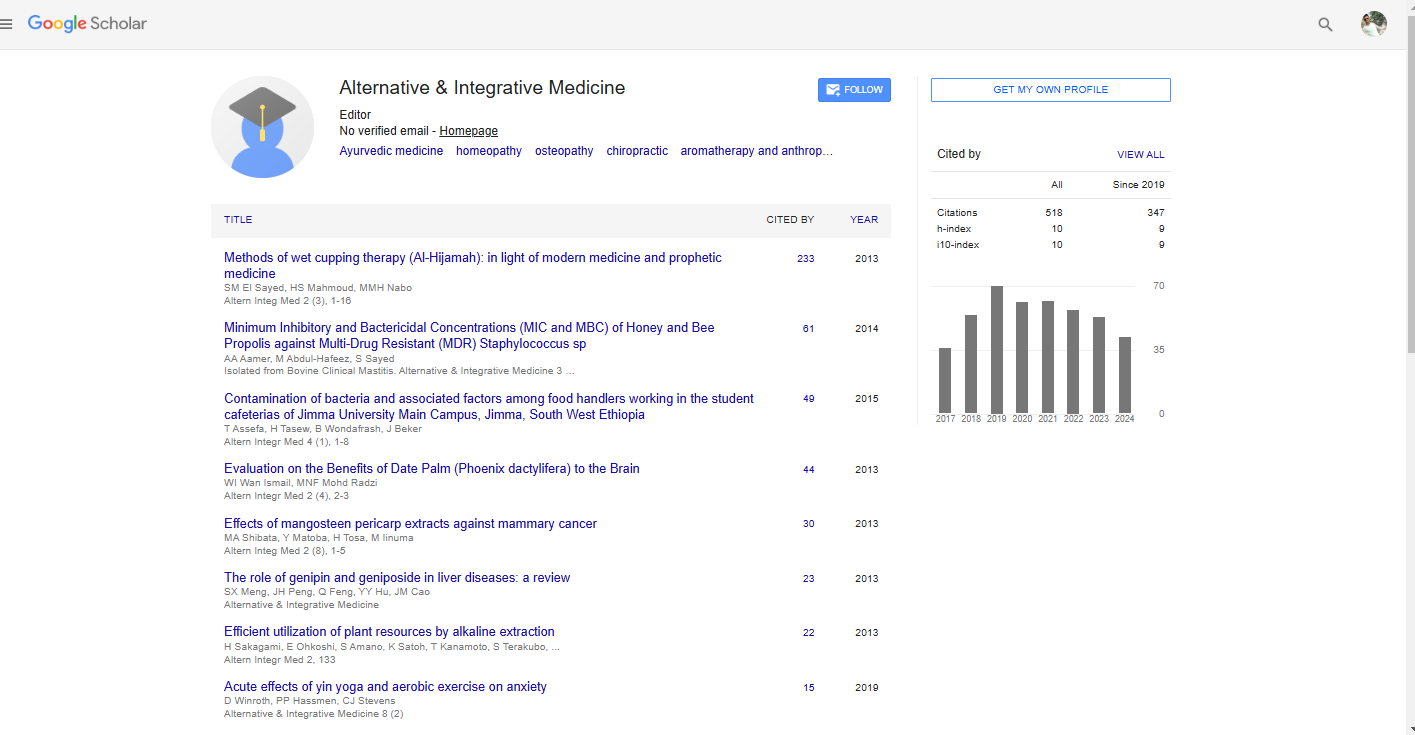
Alternative & Integrative Medicine received 476 citations as per Google Scholar report