Perspective - (2025) Volume 14, Issue 5
Received: 01-Sep-2025, Manuscript No. aim-25-177777;
Editor assigned: 03-Sep-2025, Pre QC No. P-177777;
Reviewed: 17-Sep-2025, QC No. Q-177777;
Revised: 22-Sep-2025, Manuscript No. R-177777;
Published:
29-Sep-2025
, DOI: 10.37421/2427-5162.2025.14.595
Citation: Rivera, Carlos. ”Integrative Cancer Care: Improving Symptoms and Well-being.” Alt Integr Med 14 (2025):595.
Copyright: © 2025 Rivera C. This is an open-access article distributed under the terms of the Creative Commons Attribution License, which permits unrestricted use, distribution and reproduction in any medium, provided the original author and source are credited.
Acupuncture has emerged as a significant non-pharmacological intervention, offering a viable therapeutic pathway for individuals experiencing cancer-related fatigue. A comprehensive systematic review and meta-analysis of randomized controlled trials demonstrated that this ancient practice substantially contributes to fatigue reduction, thereby enhancing the overall quality of life for patients undergoing or recovering from various cancer treatments. This evidence positions acupuncture as a highly promising and valuable addition to contemporary supportive care regimens, providing a complementary approach to conventional oncology treatments [1].
Mindfulness-based interventions represent another crucial area of supportive care, particularly concerning the psychological well-being of cancer patients and survivors. A robust meta-analysis underscored the profound efficacy of practices such as meditation and yoga in mitigating psychological distress. These interventions consistently reduced anxiety, depression, and stress, highlighting their critical role in enabling patients to effectively cope with the considerable emotional challenges inherent to a cancer diagnosis and its subsequent treatment phases [2].
Yoga, as a mind-body practice, offers substantial and multifaceted benefits for managing a wide array of cancer-related symptoms and mitigating treatment-induced side effects. An extensive umbrella review meticulously compiled evidence demonstrating yoga's effectiveness in diminishing fatigue levels, markedly improving the quality and duration of sleep, alleviating chronic pain, and significantly enhancing patients' overall quality of life. Consequently, yoga stands as an invaluable integrative therapy within comprehensive cancer care frameworks [3].
Music therapy constitutes a beneficial and accessible intervention, particularly within the sensitive domain of palliative cancer care. Empirical findings consistently suggest that engaging with music can provide profound comfort and contribute significantly to the improvement of patient well-being during advanced stages of illness. This therapeutic modality effectively reduces anxiety, lessens the perception of pain, and elevates mood, thus offering a gentle yet powerful means of support for individuals navigating the complexities of advanced cancer [4].
Investigating the role of dietary supplements and botanicals reveals their potential in alleviating the burdensome side effects associated with cancer treatments. A systematic review indicated that certain natural compounds exhibit demonstrable efficacy in managing common issues such as nausea, persistent fatigue, and treatment-induced neuropathy. However, the review prudently emphasizes the imperative for meticulous selection and highly individualized, patient-specific guidance to ensure both safety and optimal therapeutic outcomes [5].
Massage therapy stands as a particularly valuable complementary approach within cancer patient care, with a strong evidence base demonstrating its efficacy. A meta-analysis confirmed that this gentle intervention demonstrably reduces experiences of pain, alleviates anxiety, and markedly improves the quality of sleep among patients. These findings establish massage therapy as a gentle yet profoundly effective method for enhancing both physical comfort and psychological well-being throughout the challenging journey of cancer treatment and recovery [6].
Aromatherapy, utilizing the therapeutic properties of essential oils, offers a non-invasive and soothing option for symptom management in cancer patients. Scientific evidence suggests that this olfactory-based intervention can effectively contribute to reducing episodes of nausea, improving the overall quality of sleep, and significantly easing feelings of anxiety. As such, aromatherapy serves as a comforting and valuable addition to the broader spectrum of supportive care strategies implemented in oncology settings [7].
Ancient mind-body practices such as Tai Chi and Qigong are increasingly recognized for their effectiveness in managing a diverse range of cancer-related symptoms. This comprehensive review highlighted their capacity to reduce debilitating fatigue, improve sleep patterns, lower levels of distress, and significantly boost overall physical function. These gentle yet profound practices offer potent mind-body support, contributing meaningfully to patient resilience and recovery [8].
Hypnosis emerges as a beneficial and powerful psychological intervention for the comprehensive management of various symptoms experienced by cancer patients. A significant meta-analysis demonstrated its efficacy in addressing pain, anxiety, and nausea. The evidence strongly indicates that hypnosis can substantially enhance patient comfort and bolster their coping mechanisms, providing a valuable tool to navigate the demanding periods of cancer treatment and recovery [9].
Integrative nutrition strategies play a pivotal and increasingly recognized role in supporting cancer survivors throughout their post-treatment journey. This review meticulously outlined how specific, evidence-based dietary interventions and tailored nutritional guidance can collectively contribute to improved treatment outcomes, a reduction in adverse side effects, and a substantial enhancement of long-term health and overall well-being for individuals managing life after cancer [10].
Acupuncture offers a compelling non-pharmacological strategy for managing cancer-related fatigue, a pervasive and debilitating symptom among cancer patients. A systematic review and meta-analysis of randomized controlled trials provided robust evidence that acupuncture significantly reduces fatigue and improves the quality of life for individuals undergoing or recovering from oncology treatments. This highlights its potential as an integral component of comprehensive supportive care [1]. Mindfulness-based interventions, encompassing practices like meditation and yoga, are proven effective in fostering psychological well-being among cancer patients and survivors. A meta-analysis confirmed their positive impact in alleviating anxiety, depression, and stress, which are crucial factors in a patient's capacity to cope with the profound emotional challenges posed by cancer. Such interventions are vital for holistic patient support [2]. Yoga, as a holistic therapeutic modality, delivers significant benefits in addressing various cancer-related symptoms and mitigating treatment side effects. An umbrella review underscored its effectiveness in reducing fatigue, improving sleep quality, easing pain, and generally enhancing the patient's quality of life. These findings position yoga as a profoundly valuable integrative therapy within the multidisciplinary approach to cancer care [3]. Music therapy presents itself as a profoundly beneficial tool within the context of palliative cancer care, primarily focused on providing comfort and enhancing patient well-being. Research indicates its capacity to significantly reduce anxiety, ameliorate pain perception, and improve mood, thus offering a gentle, non-pharmacological, and accessible method to support patients confronting advanced stages of cancer [4]. Certain dietary supplements and botanicals exhibit considerable promise in attenuating the adverse effects associated with cancer treatments. A systematic review highlighted their efficacy in managing common issues such as nausea, persistent fatigue, and neuropathy. The review carefully emphasized the critical importance of judicious selection and highly personalized guidance to ensure patient safety and optimize therapeutic benefits [5]. Massage therapy serves as a highly beneficial complementary approach for cancer patients, demonstrably contributing to the reduction of pain and anxiety, alongside improvements in sleep quality. A comprehensive meta-analysis affirmed its role as a gentle yet remarkably effective method for enhancing both physical comfort and psychological well-being during the challenging phases of cancer treatment and subsequent recovery [6]. Aromatherapy, particularly the application of essential oils, provides a non-invasive and soothing option for alleviating specific symptoms experienced by cancer patients. Evidence suggests its potential to reduce nausea, improve sleep quality, and diminish anxiety, making it a valuable and comforting addition to the array of supportive care strategies employed in oncology settings [7]. Mind-body practices such as Tai Chi and Qigong are recognized for their efficacy in managing a spectrum of cancer-related symptoms. A systematic review revealed their capacity to reduce fatigue, enhance sleep, alleviate distress, and improve overall physical function. These practices offer gentle, yet powerful, support for both the mind and body, promoting resilience and recovery [8]. Hypnosis stands out as a beneficial and potent psychological intervention for managing diverse symptoms in cancer patients, including intractable pain, anxiety, and nausea. A meta-analysis affirmed its significant role in improving patient comfort and strengthening coping mechanisms, thereby offering a valuable adjunctive therapy during the rigorous course of cancer treatment [9]. Integrative nutrition strategies play an essential role in bolstering the health and recovery of cancer survivors. This review illuminated how targeted dietary interventions and evidence-based nutritional guidance can lead to improved treatment outcomes, a reduction in problematic side effects, and a sustained enhancement of long-term health and overall well-being for patients post-treatment [10].
This collection of systematic reviews and meta-analyses collectively highlights the increasing evidence supporting the efficacy of various integrative therapies in managing cancer-related symptoms and improving patient well-being. Non-pharmacological interventions such as acupuncture, mindfulness-based practices including meditation and yoga, music therapy, and massage therapy are shown to significantly reduce common issues like fatigue, anxiety, depression, pain, and improve sleep quality and overall quality of life. Additionally, practices like Tai Chi and Qigong offer comprehensive mind-body support. The role of natural compounds, including dietary supplements and botanicals, as well as integrative nutrition strategies, demonstrates promise in alleviating treatment side effects and enhancing long-term health. Hypnosis and aromatherapy also emerge as valuable options for symptom management. Collectively, these studies underscore the importance of integrating complementary approaches into standard oncology care to provide holistic support for cancer patients and survivors.
None
None
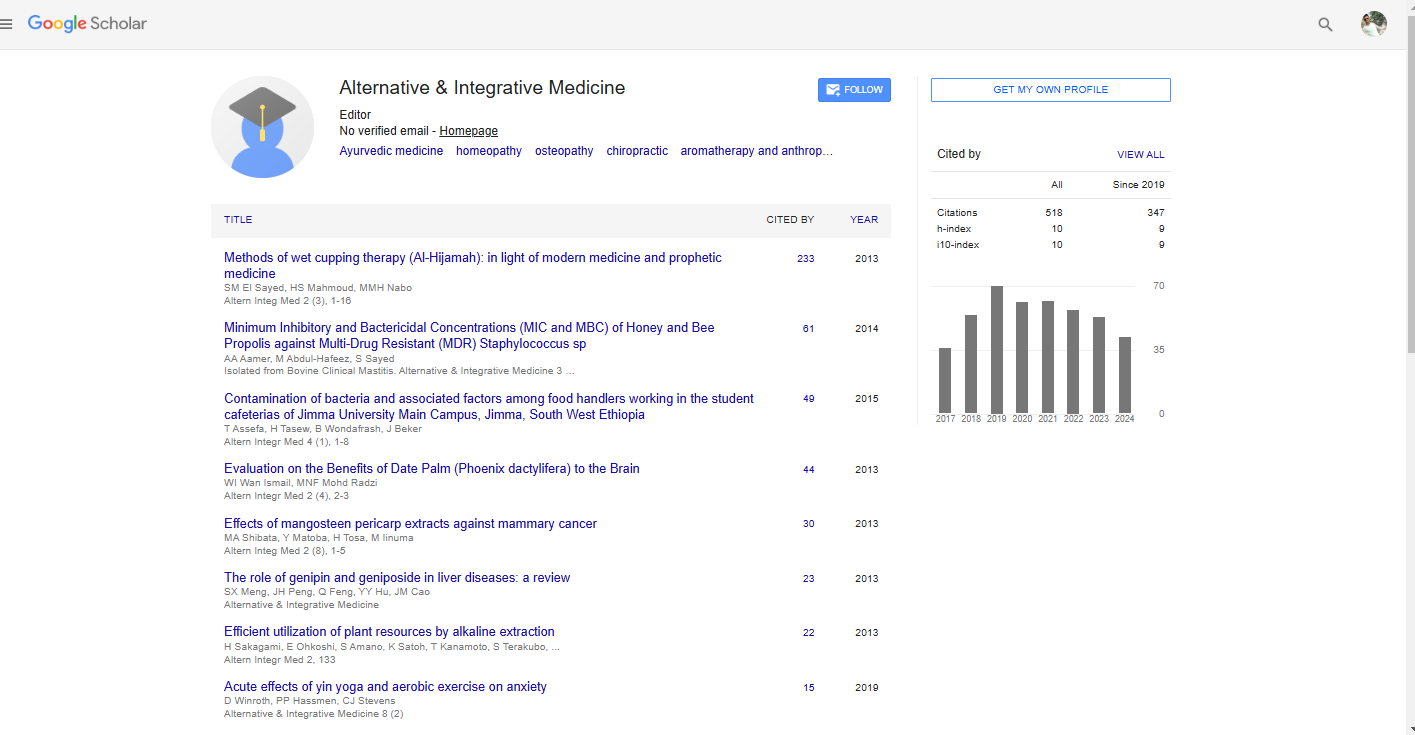
Alternative & Integrative Medicine received 476 citations as per Google Scholar report