Commentary - (2025) Volume 14, Issue 4
Received: 01-Jul-2025, Manuscript No. aim-25-177758;
Editor assigned: 03-Jul-2025, Pre QC No. P-177758;
Reviewed: 17-Jul-2025, QC No. Q-177758;
Revised: 22-Jul-2025, Manuscript No. R-177758;
Published:
29-Jul-2025
, DOI: 10.37421/2427-5162.2025.14.578
Citation: Thompson, Michael. ”Integrative Approaches for Chronic Pain Management.” Alt Integr Med 14 (2025):578.
Copyright: © 2025 Thompson M. This is an open-access article distributed under the terms of the Creative Commons Attribution License, which permits unrestricted use, distribution and reproduction in any medium, provided the original author and source are credited.
The management of chronic pain is a complex challenge, often necessitating diverse and individualized approaches beyond conventional pharmacological interventions. Recent research has shed light on the efficacy of various non-pharmacological strategies, highlighting the importance of holistic and patient-centered care. For instance, integrative health coaching has been identified as a significant factor in improving both pain intensity and functional capacity among individuals grappling with chronic pain. This approach emphasizes personalized, patient-centered strategies that incorporate motivational interviewing and goal setting, effectively bridging the gap between clinical recommendations and personal self-management, thereby serving as a valuable complement to established medical care [1].
Further expanding the repertoire of non-pharmacological interventions, Mindfulness-Based Stress Reduction (MBSR) has been shown to offer meaningful reductions in pain intensity and interference for those experiencing chronic pain. This methodology extends beyond mere relaxation techniques, actively fostering a modified relationship with pain through a focus on present-moment awareness and acceptance. As such, MBSR emerges as a powerful psychological adjunct that can significantly enhance traditional pain management strategies [2].
In a broader context, a systematic review has synthesized clinical practice guidelines concerning nonpharmacological approaches to chronic musculoskeletal pain. This comprehensive analysis underscored the critical role of exercise, patient education, and various psychological therapies. The findings advocate for a fundamental shift towards active, self-management strategies, often recommending their integration alongside or even as a preliminary step to pharmacological interventions to achieve superior long-term outcomes [3].
The exploration of natural remedies also presents a promising avenue in pain management. A scoping review delved into the emerging evidence for botanical and nutritional interventions, identifying areas where supplements like curcumin or specific dietary patterns demonstrate potential benefits. This review emphasizes the necessity of carefully considered, evidence-based integration of these natural products, which can effectively complement conventional pharmacological treatments while potentially minimizing adverse effects, although the call for more robust clinical trials remains paramount [4].
Acupuncture, a traditional therapeutic method, has garnered significant evidence supporting its role in chronic pain relief. Specifically, a meta-analysis confirmed its effectiveness in alleviating chronic low back pain, positioning it as a viable non-pharmacological treatment option. This ancient practice has been demonstrated to improve pain levels and functional outcomes, providing a valuable alternative or adjunctive therapy for patients who may not respond adequately to conventional treatments or who prefer to reduce their reliance on medication [5].
Yoga, another ancient mind-body practice, has also shown considerable promise in the sphere of chronic pain management. A systematic review and meta-analysis concluded that yoga serves as an effective intervention for decreasing pain and enhancing functional ability in individuals suffering from chronic non-specific low back pain. By integrating physical postures, controlled breathing exercises, and meditation, yoga offers a holistic approach that can effectively complement physical therapy and other conventional treatments, thereby fostering greater self-efficacy in pain management [6].
Cognitive Behavioral Therapy (CBT) stands out as a foundational psychological intervention with strong empirical support for chronic pain. This therapy systematically addresses the cognitive, emotional, and behavioral dimensions of pain experience. CBT empowers patients to reframe their relationship with pain and cultivate robust coping skills, making it an indispensable component of any truly integrative pain management program. Its implementation often serves to amplify the benefits derived from physical and pharmacological treatments [7].
The application of integrative medicine extends to specialized areas such as palliative care. A systematic review elucidated the utility of integrative medicine approaches, including acupuncture, massage, and various mind-body therapies, in managing pain within this sensitive setting. These modalities are recognized for their capacity to provide comfort and symptom alleviation, ultimately enhancing the quality of life for patients experiencing severe or refractory pain. They frequently work synergistically with conventional pain medications, contributing to more comprehensive care [8].
Traditional Chinese mind-body practices like Tai Chi and Qigong also offer significant benefits for chronic pain sufferers. A systematic review and meta-analysis indicated that these practices are beneficial across various chronic pain conditions, leading to improvements in both pain intensity and physical function. Characterized by gentle movements and a focus on breath, Tai Chi and Qigong represent low-impact, accessible complementary therapies that actively support self-management and overall well-being when integrated alongside standard medical care [9].
Finally, the efficacy of integrative care models is heavily contingent on patient-centered design and delivery. A scoping review investigated the essential elements of patient-centered integrated care models for chronic pain, highlighting the critical roles of shared decision-making and multidisciplinary team approaches. This review underscored that effective integrative care transcends mere combination of therapies; it necessitates a structured healthcare delivery system that genuinely involves the patient in their treatment plan, ensuring that both conventional and complementary methods are meticulously tailored to individual needs and preferences [10].
The present body of evidence comprehensively explores a variety of non-pharmacological and integrative strategies crucial for the effective management of chronic pain conditions. A prominent finding reveals that integrative health coaching markedly improves outcomes for individuals suffering from chronic pain, specifically in terms of reducing pain intensity and enhancing functional capacity. This method stands out by offering a highly personalized, patient-centered framework that incorporates motivational interviewing and goal setting, thereby effectively bridging the gap between clinical guidelines and a patient's self-management capabilities, making it a valuable adjunct to standard medical interventions [1]. In another significant development, studies have demonstrated that Mindfulness-Based Stress Reduction (MBSR) programs can lead to substantial reductions in both the intensity and interference of chronic pain. The core mechanism behind MBSR's effectiveness lies not simply in relaxation, but in its ability to foster a fundamentally different relationship with pain itself through cultivating present-moment awareness and acceptance. This approach serves as a potent psychological complement to existing pain management protocols, offering deeper engagement with the pain experience [2]. A comprehensive systematic review meticulously evaluated clinical practice guidelines pertaining to nonpharmacological approaches for chronic musculoskeletal pain. This review conclusively emphasized that interventions such as exercise, patient education, and various psychological therapies are paramount. It highlighted a crucial paradigm shift towards active, self-management strategies, asserting that these should often be integrated alongside, or even precede, pharmacological treatments to achieve more favorable and sustainable long-term outcomes [3]. Beyond conventional therapies, a scoping review explored the burgeoning evidence surrounding botanical and nutritional interventions in pain management. This review identified specific natural products, such as curcumin, and particular dietary patterns that show considerable promise. It underscored the importance of integrating these natural approaches thoughtfully and based on robust evidence, as they can serve to complement conventional pharmacological treatments while potentially mitigating unwanted side effects. However, the review also stressed the ongoing need for more rigorous clinical trials to solidify these findings [4]. Acupuncture, an ancient healing art, has been rigorously assessed for its efficacy in chronic pain conditions, with a meta-analysis confirming its significant role in ameliorating chronic low back pain. This treatment modality has demonstrated clear potential as a non-pharmacological option capable of improving both pain levels and functional ability. It presents a valuable alternative or an effective adjunctive therapy, particularly for patients who may not achieve sufficient relief from conventional treatments or who are seeking to lessen their dependence on pain medications [5]. Furthermore, the practice of yoga has been recognized through systematic review and meta-analysis as an efficacious intervention for individuals experiencing chronic non-specific low back pain. Yoga's multifaceted approach, which harmonizes physical postures, controlled breathing exercises, and meditative practices, provides a holistic mind-body pathway. This approach effectively complements traditional physical therapy and other conventional treatments, significantly empowering individuals in their journey towards effective pain management and improved self-efficacy [6]. Cognitive Behavioral Therapy (CBT) consistently emerges as a core psychological intervention strongly supported by evidence for chronic pain management. CBT operates by directly addressing the intricate cognitive, emotional, and behavioral factors that contribute to the pain experience. Its unique power lies in empowering patients to constructively reframe their relationship with pain and to develop practical, resilient coping skills, establishing it as an indispensable element within any truly integrative pain management program and often enhancing the efficacy of concurrent physical and pharmacological therapies [7]. The reach of integrative medicine extends significantly into palliative care, as demonstrated by a systematic review that outlined the profound utility of diverse integrative approachesâ??including acupuncture, massage, and various mind-body therapiesâ??for managing pain in this critical context. These therapies are pivotal in offering comfort and tangible symptom relief, thereby markedly improving the quality of life for patients contending with severe or intractable pain. They frequently act synergistically with conventional pain medications, contributing to a more comprehensive and compassionate care model [8]. Traditional Asian practices like Tai Chi and Qigong have also shown considerable therapeutic value for a range of chronic pain conditions. A systematic review and meta-analysis affirmed their beneficial impact, noting improvements in both pain intensity and physical function. These mind-body practices, characterized by their gentle, flowing movements and emphasis on breath, offer a low-impact and readily accessible complementary therapy that significantly aids in self-management and fosters overall well-being when used in conjunction with standard medical care [9]. Finally, the effective implementation of integrative care for chronic pain is profoundly influenced by its structure and delivery, particularly the emphasis on patient-centered models. A scoping review systematically examined the essential components of such models, stressing the critical importance of shared decision-making and multidisciplinary team collaborations. The review elucidated that genuine integrative care is not merely about combining different therapies, but about fundamentally structuring healthcare delivery to actively involve the patient in every aspect of their treatment plan, ensuring that both conventional and complementary methods are precisely tailored to their unique needs and personal preferences [10].
The provided literature collectively highlights the substantial benefits of various non-pharmacological and integrative approaches in managing chronic pain. Integrative health coaching, Mindfulness-Based Stress Reduction (MBSR), and Cognitive Behavioral Therapy (CBT) consistently demonstrate efficacy in reducing pain intensity, improving functional capacity, and enhancing coping skills by fostering a patient-centered approach and addressing psychological factors. Exercise, education, and other psychological therapies are identified as foundational elements for chronic musculoskeletal pain management, often recommended prior to or alongside pharmacological interventions. Traditional mind-body practices such as acupuncture, yoga, Tai Chi, and Qigong offer valuable alternatives or adjunctive therapies, providing holistic benefits for diverse chronic pain conditions including low back pain, and are particularly useful for self-management and reducing medication reliance. Furthermore, emerging evidence supports the careful integration of botanical and nutritional interventions. Across all these modalities, the importance of patient-centered integrated care models, shared decision-making, and multidisciplinary teams is underscored, emphasizing personalized treatment plans that combine conventional and complementary methods for optimal long-term outcomes, even extending to palliative care settings.
None
None
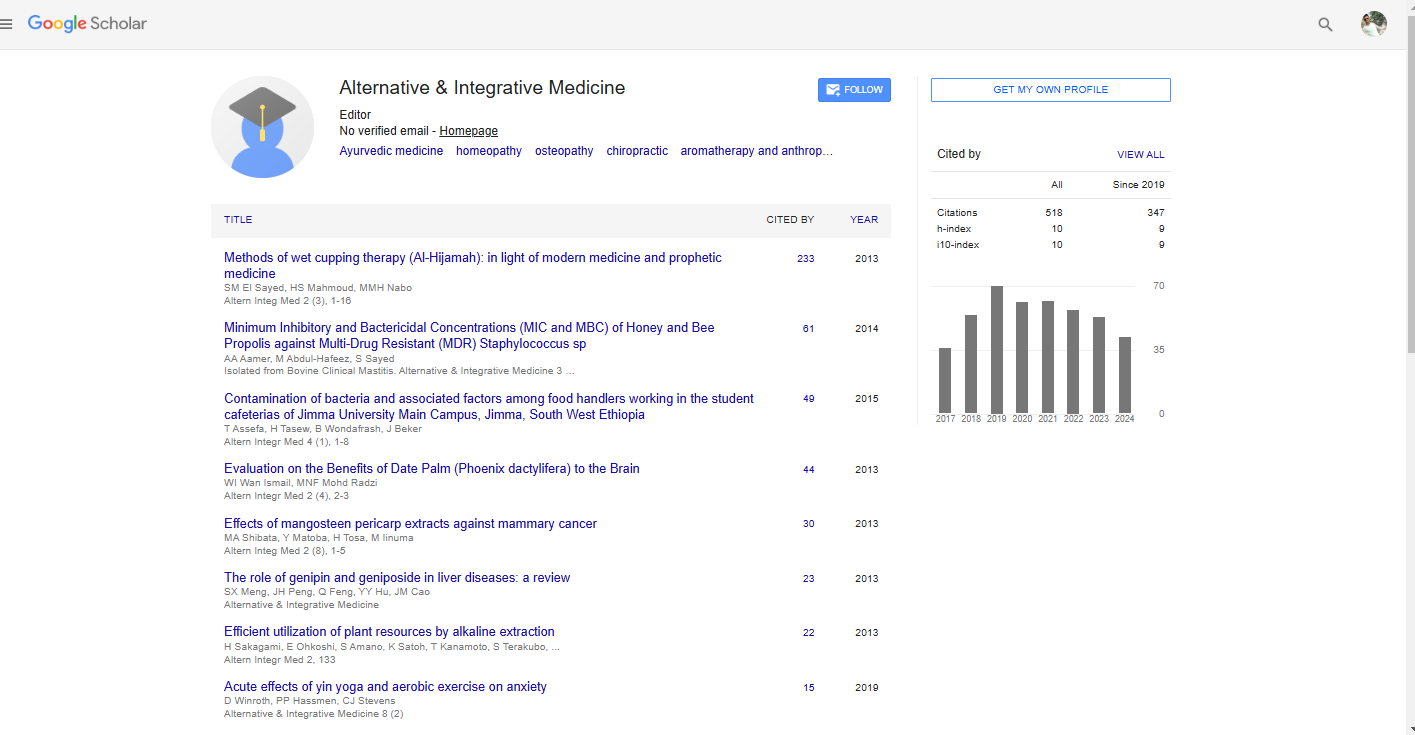
Alternative & Integrative Medicine received 476 citations as per Google Scholar report