Brief Report - (2025) Volume 16, Issue 4
Received: 02-Aug-2025, Manuscript No. jvst-26-188038;
Editor assigned: 04-Aug-2025, Pre QC No. P-188038;
Reviewed: 18-Aug-2025, QC No. Q-188038;
Revised: 25-Aug-2025, Manuscript No. R-188038;
Published:
01-Sep-2025
, DOI: 10.37421/2157-7579.2025.16.307
Citation: Yılmaz, Mehmet. ”Integrated Poultry Parasite Management:
Biosecurity, Deworming, and Sustainability.” J Vet Sci Techno 16
(2025):307.
Copyright: © 2025 Yılmaz M. This is an open-access article distributed under the terms of the Creative Commons Attribution License, which permits unrestricted use,
distribution and reproduction in any medium, provided the original author and source are credited.
The effective management of parasitic diseases in poultry flocks is a critical concern for the sustainability and profitability of the industry. Integrated strategies that combine various control measures are essential for mitigating the impact of these infections. These strategies encompass a multi-faceted approach to disease prevention and control. One of the foundational elements of such an approach is robust biosecurity. Implementing stringent biosecurity protocols helps to prevent the introduction and spread of parasites within a poultry operation.
This includes measures such as restricting access to the farm, proper sanitation, and maintaining a clean environment. Following closely behind biosecurity is the implementation of strategic deworming programs. Rather than routine, broad-spectrum treatments, deworming should be guided by epidemiological data and parasite prevalence to maximize efficacy and minimize the development of resistance. This targeted approach ensures that antiparasitic drugs are used judiciously. Environmental hygiene is another cornerstone of effective parasite control. Maintaining a clean and dry living environment for poultry is paramount, as it disrupts the life cycles of many parasites. This involves proper litter management, adequate ventilation, and timely removal of waste materials. Diagnostic monitoring plays a vital role in early detection and prompt treatment of parasitic infections. By regularly assessing flock health and identifying the presence of parasites, producers can take timely action to minimize economic losses. Advances in diagnostic techniques, including molecular methods, offer improved sensitivity and specificity for detecting parasites. These sophisticated tools allow for earlier identification of infections, enabling more precise and effective treatment regimens. The economic implications of parasitic diseases in poultry are substantial. These infections can lead to reduced feed conversion efficiency, slower growth rates, decreased egg production, and increased mortality, all of which negatively impact profitability. Therefore, effective parasite management is directly linked to improved economic returns and enhanced animal welfare. Sustainable approaches to parasite control are increasingly being explored. These include investigating natural antiparasitic agents, such as plant extracts and essential oils, which can complement conventional treatments. Such alternatives offer a more environmentally friendly and potentially cost-effective solution. Furthermore, improving feed formulations to bolster poultry immunity is a key aspect of sustainable parasite management. A strong immune system can help birds resist parasitic infections more effectively. The role of the gut microbiome in poultry parasite resistance is also gaining recognition. A healthy and diverse gut microbiome, supported by probiotics and prebiotics, can enhance the bird's innate immunity and reduce its susceptibility to parasitic infections. Nutritional strategies are crucial for supporting and maintaining gut health. The challenge of anthelmintic resistance in poultry nematodes is a significant concern globally. Monitoring resistance patterns and ensuring the judicious use of approved anthelmintics are vital to preserve the effectiveness of these drugs. Exploring alternative control methods, such as vaccination and biological control agents, holds promise for sustainable parasite management in the face of growing resistance. Ultimately, understanding the complex interactions between poultry, parasites, and their environment is fundamental to developing truly sustainable control measures. Integrated parasite management, which combines multiple control tactics, offers the most robust and enduring solution to the persistent challenges posed by parasitic diseases in poultry production systems. Effective management of parasitic diseases in poultry flocks hinges on integrated strategies encompassing biosecurity, strategic deworming, environmental hygiene, and diagnostic monitoring [1].Early detection and prompt treatment are crucial to minimize economic losses and ensure flock health. Sustainable approaches also explore natural antiparasitic agents and improved feed formulations to bolster poultry immunity [1].
Anthelmintic resistance is a significant challenge in poultry parasitology. Monitoring resistance patterns and judicious use of approved anthelmintics are vital [2].
Exploring alternative control methods, including vaccination and biological control agents, offers promise for sustainable parasite management [2].
The role of gut health in poultry parasite resistance is increasingly recognized. A healthy gut microbiome, supported by probiotics and prebiotics, can enhance the bird's innate immunity and reduce susceptibility to parasitic infections [3].
Nutritional strategies are key to bolstering these defenses. Understanding the gut microbiome's impact on poultry health and disease resistance is crucial for effective management [3].
Diagnostic techniques for poultry parasites are evolving. Molecular methods, alongside traditional parasitological examinations, offer improved sensitivity and specificity for early detection [4].
This enables timely intervention and more targeted treatment regimens. Advances in diagnostic methods are critical for efficient parasite control [4].
Biosecurity remains the cornerstone of parasitic disease prevention in commercial poultry operations. Strict adherence to hygiene protocols, including proper manure management and rodent control, significantly reduces parasite transmission [5].
Environmental management plays a critical role in breaking the life cycles of many poultry parasites. Maintaining dry litter and ensuring adequate ventilation are essential to minimize parasite egg survival and larval development [6].
The effective management of parasitic diseases in poultry production necessitates a comprehensive and integrated approach. This includes the strategic implementation of biosecurity measures to prevent the introduction and spread of parasites onto farms. Such measures are fundamental to maintaining flock health and preventing economic losses.
Biosecurity measures for the prevention and control of poultry diseases are paramount. Strict adherence to hygiene protocols, including proper manure management, rodent control, and limiting access to the farm, significantly reduces parasite transmission [5].Beyond physical barriers and sanitation, strategic deworming programs are crucial. These programs should be based on epidemiological data and parasite prevalence, rather than routine, blanket treatments. This approach optimizes the use of antiparasitic drugs and minimizes the risk of resistance development. Strategic anthelmintic treatment in poultry optimizes efficacy and minimizes resistance. Basing programs on epidemiological data and parasite prevalence is more effective than routine treatments, reducing drug exposure and resource allocation [8].
Environmental management is another critical component in breaking the life cycles of numerous poultry parasites. Maintaining optimal environmental conditions within poultry houses plays a direct role in inhibiting parasite survival and reproduction. Environmental factors influencing parasite transmission in poultry production systems highlight the importance of maintaining dry litter, ensuring adequate ventilation, and proper disposal of bedding material. These practices are essential to minimize parasite egg survival and larval development [6].
Diagnostic monitoring is vital for the early detection and prompt treatment of parasitic infections. The ability to accurately identify the presence and type of parasites allows for timely intervention, thereby minimizing economic losses. Advances in diagnostic methods for poultry parasites are continually being made. Molecular methods, alongside traditional parasitological examinations, offer improved sensitivity and specificity for early detection, enabling timely intervention and more targeted treatment regimens [4].
The role of gut health in poultry parasite resistance is increasingly recognized as a significant factor. A healthy gut microbiome can enhance the bird's innate immunity, making them less susceptible to parasitic challenges. Gut microbiome modulation and its impact on poultry health and disease resistance are critical. A healthy gut microbiome, supported by probiotics and prebiotics, can enhance the bird's innate immunity and reduce susceptibility to parasitic infections [3].
Anthelmintic resistance poses a significant challenge to the effective management of parasitic diseases in poultry globally. Addressing this requires careful monitoring of resistance patterns and judicious use of available treatments. Anthelmintic resistance in poultry nematodes presents a global perspective. Monitoring resistance patterns and judicious use of approved anthelmintics are vital. Exploring alternative control methods, including vaccination and biological control agents, offers promise for sustainable parasite management [2].
Sustainable approaches are essential for long-term parasite control. This includes exploring natural antiparasitic agents and optimizing feed formulations to improve the birds' natural defenses. Natural antiparasitic compounds, such as essential oils and plant extracts, are gaining traction as complementary treatments. These agents can exhibit anthelmintic, insecticidal, and immunomodulatory properties, offering a more sustainable approach to parasite control [7].
The economic impact of parasitic diseases on the poultry industry is substantial, affecting various aspects of production and overall profitability. Effective management directly contributes to improved economic outcomes and animal welfare. The economic impact of parasitic infections on the poultry industry is significant, affecting feed conversion, growth rates, egg production, and mortality. Effective management directly contributes to improved profitability and animal welfare [10].
Ultimately, integrated parasite management, combining multiple control tactics, provides the most robust and enduring solution to parasitic disease challenges in poultry production systems. Integrated control of parasitic diseases in poultry represents a paradigm shift towards sustainability. Understanding the complex interactions between poultry, parasites, and the environment is key to developing sustainable control measures [9].
Effective management of parasitic diseases in poultry relies on integrated strategies including biosecurity, targeted deworming, environmental hygiene, and diagnostic monitoring. Early detection and prompt treatment are crucial to prevent economic losses and maintain flock health. Sustainable approaches involve exploring natural antiparasitic agents and enhancing poultry immunity through improved feed formulations. Anthelmintic resistance is a significant concern, necessitating careful monitoring and judicious drug use, alongside the exploration of alternative control methods like vaccination. Gut health, supported by probiotics and prebiotics, plays a key role in enhancing a bird's natural resistance to parasites, with nutritional strategies being vital. Diagnostic techniques are advancing, offering greater sensitivity and specificity for earlier detection and more precise treatment. Biosecurity remains a cornerstone, with strict hygiene protocols reducing transmission. Environmental management, such as maintaining dry litter and good ventilation, disrupts parasite life cycles. Strategic deworming, based on epidemiological data, is more effective than blanket treatments, reducing resistance risks. Ultimately, integrated parasite management, combining various tactics, offers the most resilient solution to parasitic disease challenges, considering the economic impact and the need for sustainable practices.
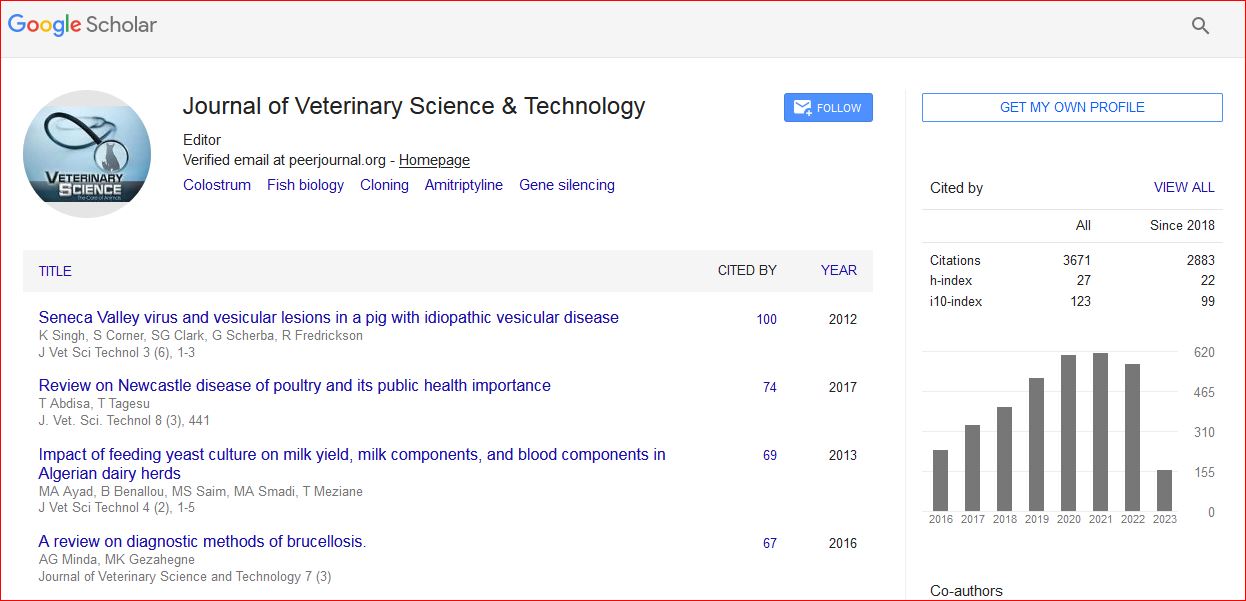
Veterinary Science & Technology received 4472 citations as per Google Scholar report