Short Communication - (2025) Volume 13, Issue 6
Received: 03-Nov-2025, Manuscript No. economics-26-186087;
Editor assigned: 05-Nov-2025, Pre QC No. P-186087;
Reviewed: 19-Nov-2025, QC No. Q-186087;
Revised: 24-Nov-2025, Manuscript No. R-186087;
Published:
01-Dec-2025
, DOI: 10.37421/2375-4389.2025.13.560
Citation: Lawson, Rebecca. ”Social Protection: A Vital Investment
For Inclusive Growth.” J Glob Econ 13 (2025):560.
Copyright: © 2025 Lawson R. This is an open-access article distributed under the terms of the Creative Commons Attribution License, which permits unrestricted use,
distribution and reproduction in any medium, provided the original author and source are credited.
The multifaceted impact of social protection programs on poverty alleviation in developing economies is a critical area of research, with well-designed cash transfer programs, especially those with conditionalities such as school enrollment or health check-ups, demonstrating significant potential to break intergenerational poverty cycles. Inclusive program design that specifically reaches marginalized groups, including women and ethnic minorities, is vital to ensure equitable development outcomes and address systemic inequalities. [1] Social safety nets play a crucial role in mitigating the economic shocks experienced by vulnerable populations, with evidence suggesting that structured unemployment benefits and food security programs can effectively prevent households from descending into extreme poverty during economic downturns. The fiscal sustainability of these vital programs and the exploration of innovative financing mechanisms are key considerations for their long-term viability. [2] The connection between social protection policies and human capital development emerges as a significant strategy for poverty alleviation. Investments in child grants and early childhood education programs have been shown to lead to improved health outcomes, higher school attainment, and increased future earning potential for disadvantaged children, underscoring the developmental benefits of a rights-based approach. [3] Adaptive social protection schemes are increasingly recognized for their role in building resilience to climate change and natural disasters in agrarian societies. Programs that can scale up benefits in response to shocks, such as droughts or floods, are effective in preventing households from losing their assets and falling into poverty, highlighting the importance of integrated disaster risk management. [4] Social pensions are proving to be an effective tool in reducing old-age poverty and enhancing the well-being of elderly individuals in low- and middle-income countries. Universal social pensions have demonstrated a capacity to boost consumption, improve health outcomes, and foster social inclusion for older populations, making their expansion a key strategy for poverty alleviation. [5] Public works programs serve as a valuable instrument for poverty reduction, particularly in post-crisis contexts. Well-managed initiatives offering temporary employment and fair wages can provide immediate income support, stimulate local economies, and contribute to the development of essential infrastructure, although challenges in design and implementation persist. [6] The gendered impacts of social protection are profound, with programs that target women through cash transfers often enhancing their bargaining power within households, improving their access to resources, and increasing their agency. Such initiatives can effectively address gender-specific vulnerabilities and promote women's economic participation, fostering greater equality. [7] Social protection is increasingly viewed as a catalyst for inclusive economic growth. By reducing poverty and inequality, these programs foster a more stable and dynamic economic environment, which in turn boosts domestic demand and strengthens human capital, positioning social protection as a critical investment rather than mere expenditure. [8] The interplay between social protection, migration, and remittances reveals that robust social safety nets can reduce distress migration by providing a buffer against economic shocks. Furthermore, effective social protection can facilitate safer migration and enhance the productive use of remittances, benefiting both origin and destination areas. [9] Integrating social protection with other development interventions, such as healthcare and education services, presents significant opportunities for synergistic impact. A holistic approach where social protection complements and reinforces other services leads to more sustainable poverty reduction and improved overall well-being, necessitating better coordination and policy coherence. [10]
Examining the multifaceted impact of social protection programs on poverty alleviation in developing economies, this research highlights how well-designed cash transfer programs, when coupled with conditionalities like school enrollment or health check-ups, can significantly disrupt intergenerational poverty cycles. The emphasis on inclusive program design, ensuring that marginalized groups such as women and ethnic minorities are reached, is crucial for achieving equitable development outcomes. [1] This study investigates the pivotal role of social safety nets in shielding vulnerable populations from economic shocks. The findings underscore that well-structured unemployment benefits and food security programs can act as a protective buffer, preventing households from succumbing to extreme poverty during periods of economic instability. Moreover, the paper addresses the critical aspect of fiscal sustainability for these programs and proposes innovative financing strategies to ensure their enduring effectiveness. [2] The connection between social protection policies and human capital development is explored as a pathway to long-term poverty reduction. The research indicates that targeted investments in child grants and early childhood education programs yield significant improvements in health outcomes, educational attainment, and future earning potential for disadvantaged children, advocating for a rights-based framework that recognizes these developmental gains. [3] This paper analyzes the effectiveness of adaptive social protection schemes in bolstering resilience against climate change and natural disasters within agrarian societies. It demonstrates how programs designed to scale up benefits in response to environmental shocks, such as prolonged drought or devastating floods, are instrumental in safeguarding household assets and preventing descent into poverty, emphasizing the integration of disaster risk management. [4] An evaluation of social pensions in low- and middle-income countries reveals their substantial impact on reducing old-age poverty and enhancing the well-being of elderly individuals. The evidence suggests that universal social pensions can significantly increase consumption levels, improve health indicators, and promote social inclusion among older adults, advocating for their expanded coverage as a core poverty alleviation strategy. [5] Public works programs are examined for their efficacy in poverty reduction, particularly in post-crisis scenarios. The research indicates that meticulously managed public works initiatives, which offer temporary employment and equitable wages, can provide immediate income support to vulnerable households, stimulate local economies, and foster the development of essential infrastructure, while also acknowledging implementation challenges. [6] This study delves into the gendered impacts of social protection, focusing on its role in empowering women and advancing gender equality. It highlights how cash transfers specifically directed towards women can amplify their bargaining power within households, increase their access to vital resources, and enhance their overall agency. The article further explores how social protection mechanisms can address gender-specific vulnerabilities and foster greater economic participation for women. [7] The role of social protection as a catalyst for inclusive economic growth is a central argument. By effectively reducing poverty and inequality, social protection programs contribute to a more stable and dynamic economic landscape, leading to increased domestic demand and improved human capital. This perspective reframes social protection as a crucial investment in sustainable development. [8] This research assesses the intricate relationship between social protection and migration patterns, including the flow of remittances. It posits that the existence of comprehensive social safety nets can mitigate distress migration by offering a crucial cushion against economic volatility. Conversely, well-executed social protection can also facilitate safer migration pathways and encourage the productive reinvestment of remittances upon return, thereby contributing to poverty reduction. [9] This article explores the opportunities and challenges associated with integrating social protection with other essential development interventions, such as healthcare and education services. It advocates for a holistic approach where social protection complements and reinforces existing services, leading to more enduring poverty reduction and improved overall well-being, stressing the necessity of enhanced coordination and policy coherence across sectors. [10]
This compilation of research highlights the multifaceted role of social protection programs in poverty alleviation and fostering inclusive development. Key findings emphasize the effectiveness of well-designed cash transfers, social safety nets, and public works programs in mitigating economic shocks, breaking poverty cycles, and improving human capital. Adaptive social protection is crucial for climate resilience, while social pensions address old-age poverty. The gendered impacts are significant, empowering women and promoting equality. Integrating social protection with other services like healthcare and education enhances overall well-being and sustainable development. Social protection is presented not just as welfare but as a vital investment for inclusive economic growth.
None
None
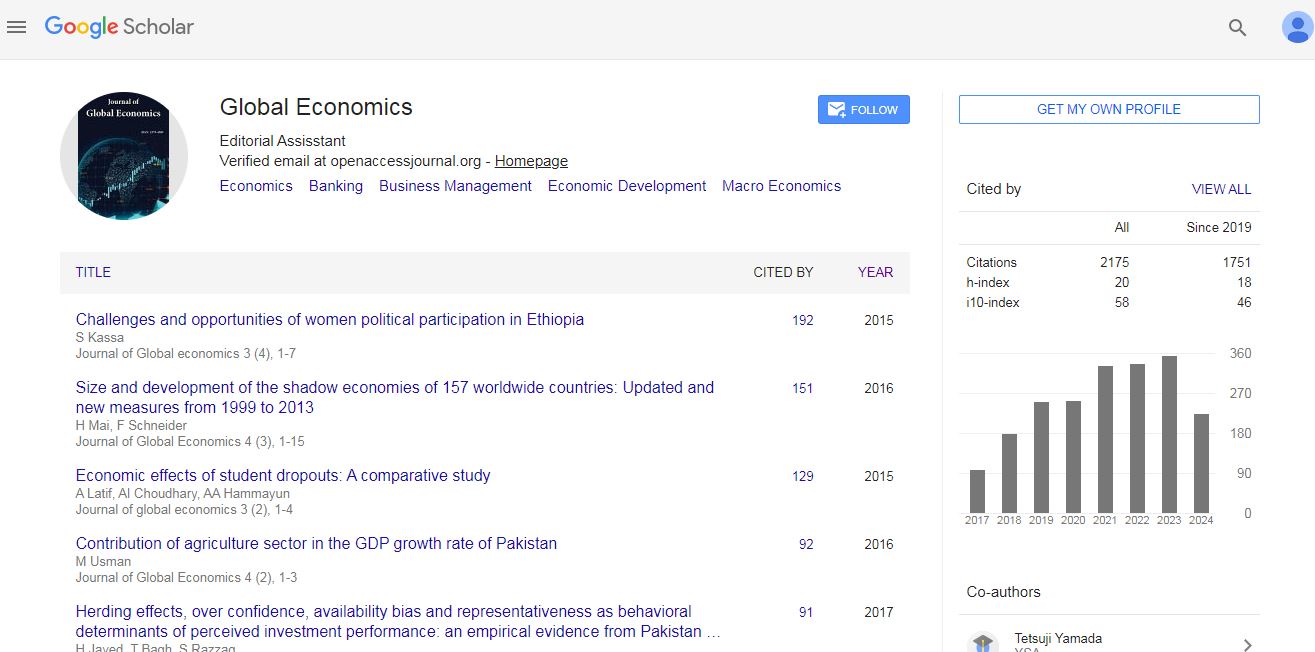
Journal of Global Economics received 2175 citations as per Google Scholar report