Commentary - (2025) Volume 14, Issue 2
Received: 01-Apr-2025, Manuscript No. jeom-26-188161;
Editor assigned: 03-Apr-2025, Pre QC No. P-188161;
Reviewed: 17-Apr-2025, QC No. Q-188161;
Revised: 22-Apr-2025, Manuscript No. R-188161;
Published:
29-Apr-2025
, DOI: 10.37421/2169-026X.2025.14.524
Citation: Rahman, Aisha. ”Innovation Management: SME Growth and Survival Strategies.” J Entrepren Organiz Manag 14 (2025):524.
Copyright: © 2025 Rahman A. This is an open-access article distributed under the terms of the Creative Commons Attribution License, which permits unrestricted use, distribution and reproduction in any medium, provided the original author and source are credited.
Innovation management within Small and Medium-sized Enterprises (SMEs) is paramount for their sustained viability and expansion, despite inherent complexities. Agile methodologies and digital tools offer practical avenues for SMEs to cultivate an innovative culture, emphasizing leadership commitment and employee involvement for successful initiatives in resource-constrained settings [1].
Open innovation strategies play a significant role in bolstering the innovative capabilities of SMEs. Collaboration with external entities, such as academic institutions and other businesses, demonstrably enhances SMEs' access to vital knowledge and resources, thereby fostering more effective product and process innovations. Strategic engagement in external networks is therefore highly advocated [2].
Digital transformation serves as a principal catalyst for innovation in SMEs. The adoption of digital technologies facilitates streamlined operations, enhanced customer engagement, and the development of novel business models. This necessitates a well-defined digital strategy and the cultivation of digital literacy among the workforce [3].
The influence of entrepreneurial orientation on the innovation performance of SMEs is a subject of considerable interest. Research indicates that firms exhibiting higher degrees of innovativeness, a greater propensity for risk-taking, and proactive behaviors are more likely to successfully develop and introduce new products and services. Embedding these traits within the organizational culture is crucial [4].
Human capital is intrinsically linked to the ability of SMEs to foster innovation. Investments in employee training, skill enhancement, and the creation of supportive work environments are fundamental for both the generation of new ideas and their effective implementation. The interplay between talent management and innovation success is thus interconnected [5].
The landscape of innovation financing for SMEs presents both challenges and opportunities. A variety of funding mechanisms, including venture capital, angel investors, and government grants, impact the innovation process. The development of tailored financial strategies is essential to adequately support innovation activities within SMEs [6].
Leadership styles exert a considerable influence on innovation management within the SME context. Transformational leadership, in particular, is identified as a key factor in cultivating an environment that encourages creativity, idea generation, and the adoption of new approaches. Leaders are encouraged to inspire and empower their teams [7].
Organizational culture is closely associated with innovation performance in SMEs. A culture that actively promotes experimentation, facilitates learning from failures, and encourages open communication is strongly correlated with elevated levels of innovation. Practical insights for nurturing such a culture are readily available [8].
The utilization of innovation management tools and techniques within SMEs warrants careful consideration. The effectiveness of various methods, including stage-gate processes, design thinking, and lean startup principles, in supporting product and service development is evaluated. SMEs must select tools that are congruent with their specific requirements and available resources [9].
External knowledge acquisition significantly impacts the innovation capabilities of SMEs. The proactive seeking and integration of knowledge from diverse external sources, such as customers, suppliers, and research institutions, demonstrably enhances an SME's innovative capacity. Effective knowledge management strategies are thus suggested [10].
The imperative for SMEs to manage innovation effectively for survival and growth is underscored, despite inherent challenges. Embracing agile methodologies and digital tools can foster an innovative culture, with leadership commitment and employee engagement being vital for successful innovation, particularly in resource-limited scenarios [1].
Open innovation represents a potent strategy for SMEs to enhance their innovative capacity. Collaboration with external partners, including universities and other enterprises, is shown to significantly improve access to knowledge and resources, leading to more effective product and process innovations. Strategic participation in external networks is therefore encouraged [2].
Digital transformation is recognized as a primary driver of innovation for SMEs. The adoption of digital technologies enables streamlined operations, improved customer engagement, and the development of new business models, necessitating a clear digital strategy and a digitally literate workforce [3].
The impact of entrepreneurial orientation on SME innovation performance is a critical area of study. Findings suggest that businesses with higher levels of innovativeness, risk tolerance, and proactivity are more likely to succeed in launching new products and services, highlighting the importance of embedding these characteristics into the organizational fabric [4].
Human capital is fundamental to innovation within SMEs. Investments in employee training, skill development, and the creation of supportive work environments are essential for generating and implementing new ideas. The relationship between talent management and innovation outcomes is deeply interconnected [5].
Navigating the complexities of innovation financing is crucial for SMEs. The article explores various funding avenues, such as venture capital, angel investors, and government grants, and their influence on the innovation process. The development of bespoke financial strategies is key to supporting SME innovation [6].
Leadership styles critically influence innovation management in SMEs. Transformational leadership, in particular, is highlighted as instrumental in fostering environments conducive to creativity, idea generation, and the implementation of new strategies. Leaders are advised to inspire and empower their teams [7].
Organizational culture is strongly linked to innovation performance in SMEs. Cultures that champion experimentation, learning from failures, and open communication are associated with higher innovation outcomes. The paper offers practical guidance for developing such a culture [8].
The application of innovation management tools and techniques in SMEs is examined. The effectiveness of different methods, such as stage-gate processes and lean startup, for product and service development is assessed, emphasizing the need for SMEs to adopt tools suitable for their specific needs and resources [9].
External knowledge acquisition plays a pivotal role in enhancing SME innovation capabilities. The active pursuit and integration of knowledge from external sources, including customers, suppliers, and research bodies, significantly boosts an SME's innovation potential. Strategies for effective knowledge management are thus proposed [10].
SMEs require robust innovation management for growth and survival. Key strategies include adopting agile methodologies, leveraging digital tools, and fostering an innovative culture through leadership and employee engagement. Open innovation, through external collaborations, enhances access to knowledge and resources. Digital transformation, entrepreneurial orientation, and human capital development are crucial drivers. Effective innovation financing, appropriate leadership styles, and a supportive organizational culture are essential for success. Utilizing suitable innovation management tools and actively acquiring external knowledge further contribute to an SME's innovation capabilities.
None
None
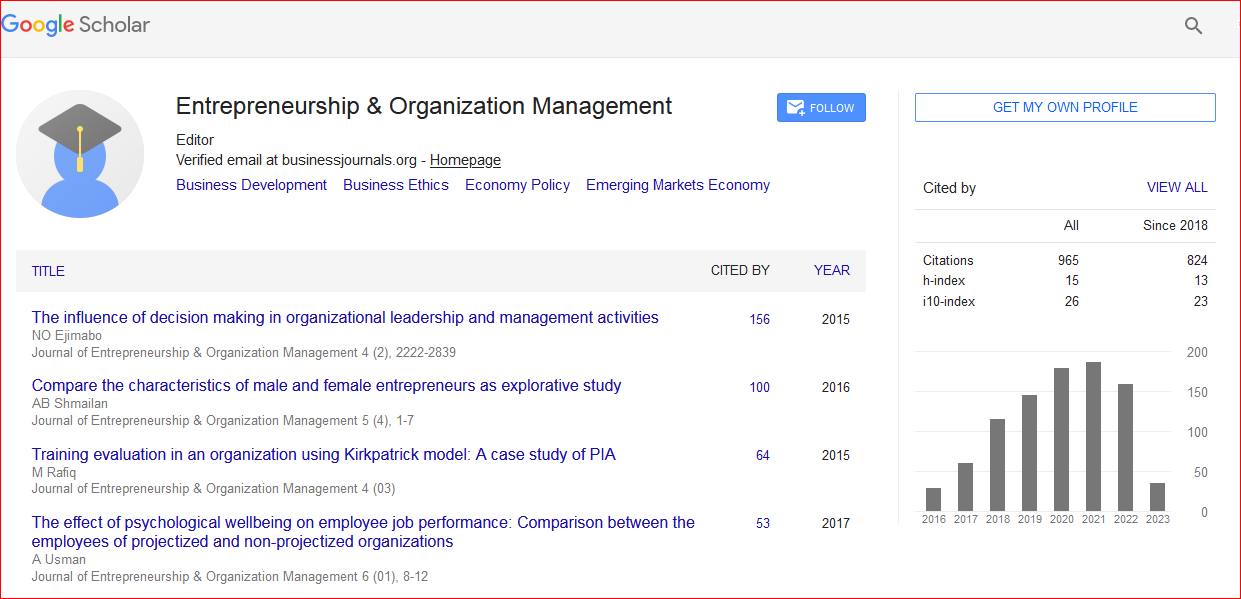
Entrepreneurship & Organization Management received 1115 citations as per Google Scholar report