Commentary - (2025) Volume 14, Issue 5
Received: 01-Oct-2025, Manuscript No. jbfa-25-176827;
Editor assigned: 03-Oct-2025, Pre QC No. P-176827;
Reviewed: 17-Oct-2025, QC No. Q-176827;
Revised: 22-Oct-2025, Manuscript No. R-176827;
Published:
29-Oct-2025
, DOI: 10.37421/2161-0673.2025.14.552
Citation: Clarke, Jonathan. ”Inflation: Interconnected Factors, Policy Challenges.” J Bus Fin Aff 14 (2025):552.
Copyright: © 2025 Clarke J. This is an open-access article distributed under the terms of the Creative Commons Attribution License, which permits unrestricted use, distribution and reproduction in any medium, provided the original author and source are credited.
Research examines the role of global factors in driving inflation across different economies, highlighting how synchronized global shocks, like those seen post-pandemic, can lead to persistent domestic inflation even when local demand signals might suggest otherwise. This perspective emphasizes the interconnectedness of international markets and the significant challenges this poses for national monetary policy in maintaining price stability [1].
Understanding how people expect inflation to behave is crucial for central banks. Other research investigates the formation of inflation expectations, showing how they are influenced by recent economic shocks, central bank communication, as well as social media sentiment. This work suggests that well-anchored expectations are a key component in preventing spiraling price increases and maintaining economic stability [2].
One study analyzes how different monetary policy regimes impact inflation volatility and the effectiveness of interest rate adjustments. It argues that forward guidance and clear communication from central banks can significantly reduce economic uncertainty, leading to more stable inflation outcomes, especially during periods of high economic stress and market turbulence [3].
Supply chain disruptions have become a primary driver of recent inflation. A study quantifies the impact of these bottlenecks, showing how factory closures, shipping delays, and labor shortages in one part of the world can propagate rapidly, creating significant upward pressure on consumer prices globally, affecting a wide range of goods and services [4].
One paper explores the intricate relationship between digitalization and inflation. It argues that while technological advancements can initially depress prices through increased efficiency and competition, they can also contribute to 'digitally driven' inflation in sectors like services, especially when demand for digital goods outpaces supply or platform monopolies emerge, altering market dynamics [5].
Energy prices have always been a major factor in inflation, but a study quantifies their recent outsized role. It demonstrates how crude oil and natural gas price surges, often exacerbated by geopolitical events, flow through the entire economy, affecting transportation costs, manufacturing expenses, and ultimately the prices of consumer goods [6].
This analysis focuses on the interplay between labor market tightness and wage-price spirals. It finds that unusually low unemployment rates and strong wage growth, especially in service sectors, can contribute significantly to persistent core inflation, challenging the view that labor market pressures alone are not inflationary in modern economies [7].
Large-scale fiscal expansions, particularly unfunded ones, can fuel inflation by significantly increasing aggregate demand. Research models the long-term inflationary consequences of various fiscal stimulus packages, showing that while they might provide short-term economic relief, they can complicate central banks' efforts to maintain price stability and lead to long-term fiscal challenges [8].
This study offers a comprehensive look at inflation dynamics in emerging market economies (EMEs). It finds that EMEs are particularly vulnerable to global commodity price shocks and exchange rate fluctuations, which often translate more directly into domestic inflation due to less anchored expectations and shallower financial markets, making them susceptible to external pressures [9].
This paper dissects the unique features of post-pandemic inflation, distinguishing between transient supply-side shocks and more persistent demand-driven pressures. It highlights the role of shifting consumer preferences, unprecedented fiscal support, and rapid global re-opening in creating a complex inflationary environment not seen in decades, necessitating a multifaceted policy response [10].
Understanding the multifaceted nature of inflation requires examining various economic forces. Research highlights how global factors, such as synchronized shocks observed post-pandemic, can drive persistent domestic inflation, even when local demand indicators might suggest otherwise [1]. This underscores the deeply interconnected nature of international markets and poses significant challenges for national monetary policy frameworks. Crucially, the formation of inflation expectations plays a pivotal role for central banks; these expectations are shaped by recent economic shocks, central bank communication, and even social media sentiment [2]. Maintaining well-anchored expectations is seen as essential for preventing runaway price increases. In this context, different monetary policy regimes and their impact on inflation volatility are also extensively studied. Forward guidance and transparent communication from central banks are argued to significantly reduce economic uncertainty, contributing to more stable inflation outcomes, especially during periods of elevated economic stress [3].
Recent inflationary pressures have been significantly amplified by supply chain disruptions. Studies quantify the profound impact of these bottlenecks, demonstrating how factory closures, shipping delays, and labor shortages globally can rapidly propagate, exerting substantial upward pressure on consumer prices worldwide [4]. Concurrently, energy prices have always been a critical inflationary factor, but their recent outsized role is particularly notable. Surges in crude oil and natural gas prices, frequently exacerbated by geopolitical events, are shown to cascade through the entire economy, directly affecting transportation costs, manufacturing expenses, and ultimately the cost of consumer goods [6]. The evolving relationship between digitalization and inflation also presents a nuanced picture. While technological advancements initially tend to depress prices through increased efficiency and competition, they can also contribute to 'digitally driven' inflation in service sectors, especially when demand for digital goods outpaces supply or when platform monopolies emerge [5].
Further complicating the inflation landscape are labor market dynamics and fiscal policy decisions. Analyses reveal a significant interplay between labor market tightness and potential wage-price spirals. Unusually low unemployment rates coupled with strong wage growth, particularly within service sectors, can contribute substantially to persistent core inflation, challenging the conventional view that labor market pressures alone are not inflationary in modern economies [7]. Furthermore, large-scale fiscal expansions, especially those that are unfunded, have the potential to fuel inflation by significantly increasing aggregate demand. Research models the long-term inflationary consequences of various fiscal stimulus packages, indicating that while such measures might offer short-term relief, they can complicate central banks' mandates to maintain price stability over the longer term [8]. Emerging Market Economies (EMEs) exhibit unique vulnerabilities in this regard. These economies are particularly susceptible to global commodity price shocks and exchange rate fluctuations, which often translate more directly into domestic inflation due to factors such as less anchored expectations and shallower financial markets [9].
The post-pandemic era has introduced a distinctive set of inflationary characteristics. Research dissects this period, distinguishing between transient supply-side shocks and more enduring demand-driven pressures [10]. Key contributing factors include radical shifts in consumer preferences, unprecedented levels of fiscal support injected into economies, and the rapid global re-opening, all converging to create a complex inflationary environment unprecedented in recent decades. This scenario necessitates a comprehensive understanding of both traditional and novel drivers to formulate effective policy responses for sustained price stability.
Recent research highlights the diverse and interconnected factors driving inflation across economies. Global factors, like synchronized shocks post-pandemic, can cause persistent domestic inflation despite local demand signals, underscoring market interconnectedness and challenges for monetary policy. Inflation expectations are crucial for central banks; they are shaped by economic shocks, central bank communication, and even social media sentiment. Well-anchored expectations prevent spiraling price increases. Monetary policy regimes influence inflation volatility, with forward guidance and clear central bank communication stabilizing outcomes during stress. Supply chain disruptions, including factory closures and labor shortages, are a primary driver, propagating global price pressure. Energy prices, particularly crude oil and natural gas surges due to geopolitical events, significantly impact the entire economy. The relationship between digitalization and inflation is complex; efficiency gains can depress prices, but demand for digital goods or platform monopolies can lead to 'digitally driven' inflation. Labor market tightness, evidenced by low unemployment and strong wage growth, contributes to persistent core inflation. Fiscal expansions, especially unfunded ones, can fuel inflation by increasing aggregate demand, complicating central bank efforts. Emerging Market Economies (EMEs) are particularly vulnerable to global commodity price shocks and exchange rate fluctuations, which often translate more directly into domestic inflation due to less anchored expectations. Post-pandemic inflation is unique, marked by transient supply shocks, persistent demand, shifting consumer preferences, unprecedented fiscal support, and rapid global re-opening.
None
None
Indexed at, Google Scholar, Crossref
Indexed at, Google Scholar, Crossref
Indexed at, Google Scholar, Crossref
Indexed at, Google Scholar, Crossref
Indexed at, Google Scholar, Crossref
Indexed at, Google Scholar, Crossref
Indexed at, Google Scholar, Crossref
Indexed at, Google Scholar, Crossref
Indexed at, Google Scholar, Crossref
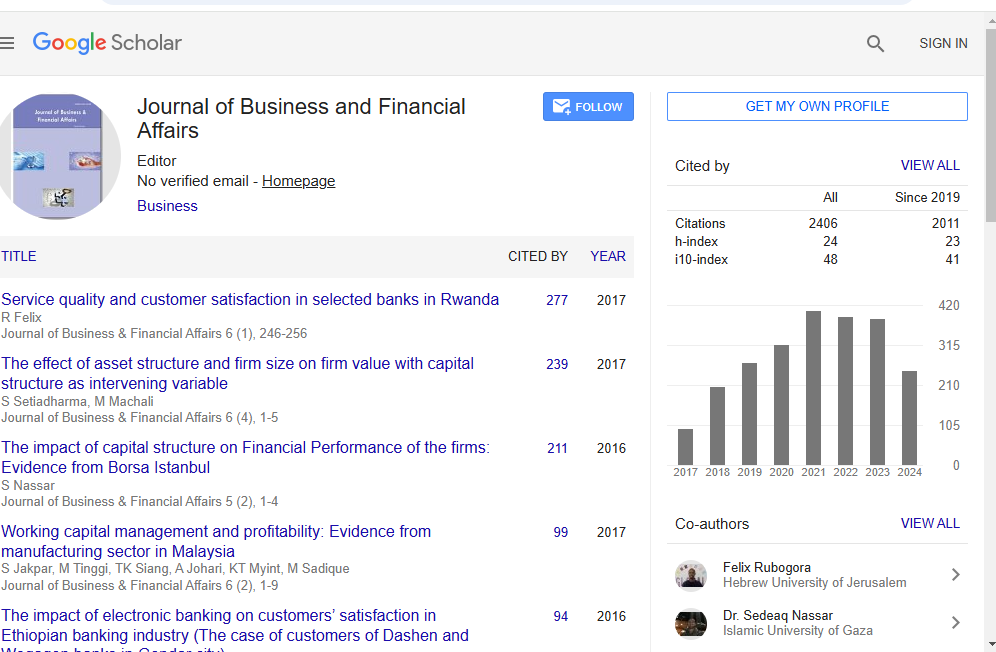
Journal of Business & Financial Affairs received 1726 citations as per Google Scholar report