Opinion - (2025) Volume 14, Issue 2
Received: 02-Apr-2025, Manuscript No. jnc-25-166187;
Editor assigned: 04-Apr-2025, Pre QC No. P-166187;
Reviewed: 16-Apr-2025, QC No. Q-166187;
Revised: 23-Apr-2025, Manuscript No. R-166187;
Published:
30-Apr-2025
, DOI: 10.37421/2167-1168.2025.14.699
Citation: Verlegh, Caroline. “Improving Chronic Disease Management through Nurse Practitioner-led Interventions.” J Nurs Care 14 (2025): 699.
Copyright: © 2025 Verlegh C. This is an open-access article distributed under the terms of the Creative Commons Attribution License, which permits unrestricted use, distribution and reproduction in any medium, provided the original author and source are credited.
The global healthcare landscape has been undergoing a significant transformation due to the increasing prevalence of chronic diseases such as diabetes, hypertension, Chronic Obstructive Pulmonary Disease (COPD), cardiovascular disease and arthritis. These long-term conditions now account for the majority of healthcare expenditures and are the leading causes of disability and death worldwide. Despite medical advances, many healthcare systems continue to face challenges in delivering effective Chronic Disease Management (CDM), largely due to the complex, multifaceted needs of patients and the overextension of traditional provider roles, particularly that of physicians. As such, there is a growing recognition of the valuable role that Nurse Practitioners (NPs) can play in managing chronic diseases. With advanced clinical training, a holistic care philosophy and an emphasis on health promotion and patient education, nurse practitioners are uniquely positioned to lead interventions that can improve patient outcomes, enhance care coordination and promote sustainable health system efficiencies. Nurse practitioners, as Advanced Practice Registered Nurses (APRNs), possess a graduate-level education that equips them with the competencies to assess, diagnose and treat a wide range of health conditions. Unlike registered nurses, NPs can prescribe medications, order and interpret diagnostic tests and develop comprehensive treatment plans independently in many jurisdictions [2].
This expanded scope of practice, combined with a patient-centered approach, allows them to address the nuanced and ongoing demands of chronic disease care effectively. Chronic diseases require continuous monitoring, personalized care plans, lifestyle counseling and medication management areas in which NPs have demonstrated consistent success. Their ability to form strong therapeutic relationships, spend more time with patients and adopt a preventive lens in treatment contributes significantly to improved health outcomes and patient satisfaction. Numerous studies and clinical trials have shown that nurse practitioner-led interventions can be as effective, if not more so, than physician-led care in managing chronic conditions. For example, patients with type 2, diabetes under NP-led care have been found to exhibit improved glycemic control, increased adherence to medication and better understanding of their condition. Similarly, in patients with hypertension, NP-led interventions have led to significant reductions in systolic and diastolic blood pressure readings over time, largely due to the emphasis on patient education, lifestyle modification and regular follow-ups. In COPD management, NPs have been effective in reducing hospital readmission rates by offering comprehensive care plans that include smoking cessation programs, inhaler technique training and close monitoring of symptoms. These findings underscore the efficacy of NP-led interventions in both outpatient and community-based settings, particularly in addressing the long-term needs of patients with chronic illnesses [3].
A key strength of nurse practitioners in chronic disease management lies in their emphasis on education and self-management support. Chronic conditions often require patients to make substantial changes to their daily routines, diets, exercise habits and medication regimens. Many individuals struggle with health literacy and without clear, compassionate guidance, adherence to treatment plans can be low. NPs excel in breaking down complex medical information into understandable and actionable steps. They often use motivational interviewing techniques and shared decision-making frameworks to empower patients to take ownership of their health. This approach not only enhances adherence but also boosts confidence and motivation, which are critical factors in long-term disease control. Additionally, NPs tend to take into account social determinants of health, such as housing, income, education and access to nutritious food, thereby creating more realistic and personalized care strategies that patients are more likely to follow. Another important contribution of nurse practitioners is their ability to serve underserved and rural populations. In many regions, physician shortages have created significant gaps in access to primary care services. NPs have increasingly filled this void, particularly in rural clinics, federally qualified health centers and community health organizations. Their presence in these areas has been instrumental in reducing health disparities and ensuring continuity of care for patients with chronic conditions who might otherwise go without regular monitoring and treatment. Furthermore, many NPs come from diverse backgrounds and may speak multiple languages, enhancing their ability to communicate effectively with a wide range of patient populations. The culturally competent care provided by NPs contributes to stronger patient-provider relationships, which are essential in the ongoing management of chronic diseases [4].
The economic implications of NP-led chronic disease management are also noteworthy. Studies have consistently shown that NP-led care is cost-effective, resulting in lower hospital admissions, reduced emergency department visits and improved utilization of preventative services. By focusing on early intervention and disease prevention, NPs help mitigate the costly complications associated with poorly managed chronic illnesses, such as stroke, kidney failure and amputations. Additionally, the salaries of nurse practitioners tend to be lower than those of physicians, yet patient outcomes under NP-led care are comparable, if not superior, in many cases. In these settings, NPs work alongside physicians, social workers, dietitians, pharmacists and other healthcare professionals to provide integrated care for patients with complex needs. Their strong communication skills and holistic perspective make them natural team leaders and care coordinators. By bridging gaps between specialties and services, NPs help ensure that patients receive comprehensive, continuous care that addresses both physical and psychosocial aspects of chronic disease. This model not only improves clinical outcomes but also enhances the overall patient experience. Looking to the future, the role of nurse practitioners in chronic disease management is expected to expand further as healthcare systems continue to grapple with aging populations, increased demand for primary care and the financial burden of chronic conditions. Training programs for NPs are increasingly emphasizing chronic disease care, population health and health equity, preparing a new generation of providers who are both clinically skilled and socially conscious. Health policy initiatives that promote full practice authority, integrate NPs into leadership roles and provide funding for NP-led clinics will be essential to fully realize their potential in transforming chronic care [5].
Google Scholar Cross Ref Indexed at
Google Scholar Cross Ref Indexed at
Google Scholar Cross Ref Indexed at
Google Scholar Cross Ref Indexed at
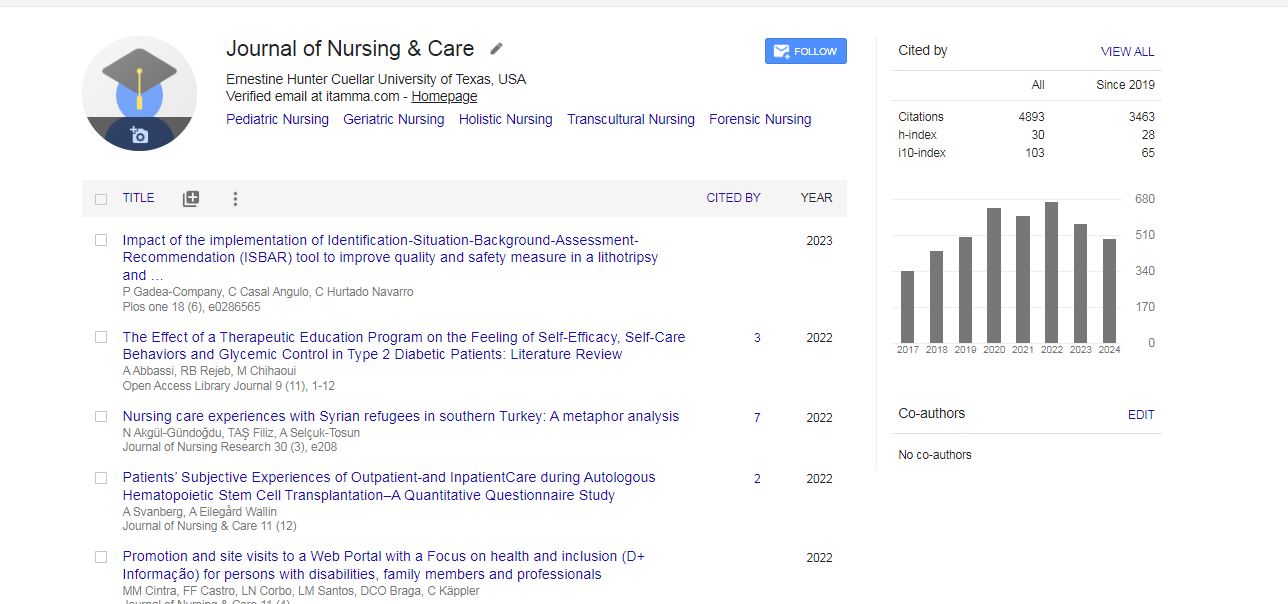
Journal of Nursing & Care received 4230 citations as per Google Scholar report