Opinion - (2025) Volume 9, Issue 6
Received: 03-Dec-2025, Manuscript No. jcre-26-187232;
Editor assigned: 06-Dec-2025, Pre QC No. P-187232;
Reviewed: 20-Dec-2025, QC No. Q-187232;
Revised: 24-Dec-2025, Manuscript No. R-187232;
Published:
31-Dec-2025
, DOI: 10.37421/2795-6172.2025.9.362
Citation: Thompson, Mark. "Hydration Therapy: Optimizing Patient Recovery And Outcomes." J Clin Res 09 (2025):362.
Copyright: © 2025 Thompson M. This is an open-access article distributed under the terms of the Creative Commons Attribution License, which permits unrestricted use, distribution and reproduction in any medium, provided the original author and source are credited.
This article delves into the critical significance of hydration therapy in expediting the recovery of hospitalized patients. It meticulously outlines how timely and precisely administered fluid therapy can effectively avert complications, enhance physiological parameters, and consequently shorten the duration of hospital stays. The research strongly indicates that individualized hydration protocols, which take into account patient-specific factors, demonstrate superior efficacy compared to generalized treatment approaches. The impact of intravenous fluid therapy on clinical outcomes in hospitalized patients has been systematically reviewed and meta-analyzed, underscoring its crucial role [1].
Furthermore, the intricate relationship between hydration status and the recovery trajectory of critically ill patients is thoroughly examined. This perspective emphasizes the delicate equilibrium essential in fluid management, highlighting the detrimental effects of both dehydration and fluid overload on the recovery process. The study consequently points to the paramount importance of continuous monitoring of hydration markers in this vulnerable patient group [2].
In the specific context of post-operative care, this paper elucidates how effective hydration therapy significantly contributes to pain management, promotes robust wound healing, and ultimately supports overall functional recovery. It posits that insufficient fluid intake can lead to prolonged recovery periods and elevate the risk of post-operative complications. Consequently, the authors strongly advocate for the implementation of standardized, evidence-based hydration protocols within surgical settings [3].
Additionally, this research investigates the profound impact of hydration status on the immune system's response during periods of hospitalization. It proposes that adequate hydration is vital for optimal immune cell function, thereby bolstering the body's ability to combat infections and accelerating the overall recovery process. The study also stresses the necessity of closely monitoring and correcting any electrolyte imbalances that may accompany fluid administration [4].
A clinical trial meticulously assesses the effectiveness of various hydration strategies in patients diagnosed with acute kidney injury (AKI). The findings reveal that a meticulously managed fluid regimen, specifically tailored to the patient's renal function, can play a pivotal role in preventing further kidney damage and facilitating recovery. This research underscores the indispensable need for vigilant fluid management, especially for patient populations with compromised organ systems [5].
Moreover, this review highlights a significant connection between dehydration and the incidence of delirium among elderly hospitalized patients. It proposes that optimizing hydration levels can serve as both a preventative and therapeutic intervention for delirium, thereby enhancing recovery outcomes and reducing the burden on hospital resources. The authors champion the adoption of proactive hydration protocols in geriatric care settings [6].
This study specifically addresses patients experiencing gastrointestinal disorders, emphasizing the vital role of fluid and electrolyte balance in their recovery. It provides evidence that tailored hydration therapy can effectively alleviate symptoms, prevent dehydration-related complications, and expedite the restoration of normal gastrointestinal function. This underlines the importance of precise fluid management in managing these conditions [7].
The efficacy of different types of intravenous fluids on patient recovery patterns is critically evaluated. The findings suggest that beyond merely providing volume, the specific composition of intravenous fluids can significantly influence acid-base balance, oxygen delivery to tissues, and ultimately, patient outcomes and the speed of recovery. This necessitates careful consideration of fluid choice [8].
This research thoroughly examines the critical role of hydration in both the prevention and management of sepsis-related organ dysfunction. It strongly emphasizes that maintaining adequate fluid balance is absolutely essential for achieving hemodynamic stability, ensuring optimal organ perfusion, and ultimately improving the survival and recovery rates of patients battling sepsis [9].
Finally, this article addresses the inherent challenges and outlines best practices for delivering hydration therapy to patients presenting with complex comorbidities. It underscores the necessity of multidisciplinary collaboration and the utilization of advanced monitoring techniques to guarantee safe and effective fluid management, which is crucial for optimizing recovery outcomes in these intricate clinical scenarios [10].
The significance of hydration therapy in accelerating the recovery of hospitalized patients is a central theme. The article explains how proper fluid administration can prevent complications, improve physiological markers, and shorten hospital stays. It emphasizes that personalized hydration plans are more effective than generic ones. This systematic review and meta-analysis highlights the impact of intravenous fluid therapy on clinical outcomes [1].
The relationship between hydration status and recovery in critically ill patients is also explored. This section stresses the fine balance required in fluid management, warning against both dehydration and fluid overload, as both can hinder recovery. The importance of continuous monitoring of hydration markers is underlined in this prospective cohort study [2].
For post-operative patients, the paper details how effective hydration therapy aids in pain management, wound healing, and overall functional recovery. It suggests that insufficient fluid intake can prolong recovery and increase complication risks, advocating for standardized hydration protocols in surgical care. This perspective comes from a study on optimizing postoperative recovery [3].
The impact of hydration on the immune system's response during hospitalization is another key area. It's suggested that proper hydration supports immune cell function, helping combat infections and promoting recovery. The study also highlights the need to monitor and correct electrolyte imbalances alongside fluid administration. This pilot study focuses on hydration status and immune function [4].
A clinical trial evaluates hydration strategies in patients with acute kidney injury (AKI). It found that a carefully managed fluid regimen, tailored to renal function, can prevent further kidney damage and promote recovery. The study emphasizes vigilance in fluid management for vulnerable patient groups. This research pertains to fluid management strategies in AKI [5].
This review connects dehydration with delirium in elderly hospitalized patients. It proposes that optimizing hydration can prevent and manage delirium, improving recovery and resource utilization. Proactive hydration protocols in geriatric care are advocated. This review discusses the role of hydration in delirium in older adults [6].
Patients with gastrointestinal disorders are the focus of another study, highlighting the importance of fluid and electrolyte balance for their recovery. Tailored hydration therapy is shown to alleviate symptoms, prevent dehydration-related issues, and speed up the return to normal gastrointestinal function. This is a clinical perspective on fluid and electrolyte management in GI disorders [7].
The efficacy of different intravenous fluid types on patient recovery is analyzed. The research indicates that the composition of IV fluids, not just volume, can affect acid-base balance, oxygen delivery, and recovery speed. This comparative analysis looks at intravenous fluid choices and their impact [8].
The role of hydration in preventing and managing sepsis-related organ dysfunction is examined. Maintaining adequate fluid balance is critical for hemodynamic stability, organ perfusion, and improving survival and recovery rates in septic patients. This article covers fluid resuscitation in sepsis [9].
Finally, challenges and best practices for hydration therapy in patients with complex comorbidities are explored. The need for multidisciplinary collaboration and advanced monitoring for safe and effective fluid management is stressed, crucial for optimizing recovery in these cases. This clinical review addresses navigating fluid management in patients with multiple comorbidities [10].
Hydration therapy plays a critical role in patient recovery across various clinical settings, including general hospitalization, critical care, and post-operative recovery. Proper fluid management is essential for preventing complications, supporting immune function, and improving physiological parameters. Tailored and individualized hydration protocols are consistently shown to be more effective than generalized approaches. Maintaining fluid balance is particularly crucial for vulnerable populations, such as those with acute kidney injury, elderly patients prone to delirium, and individuals with gastrointestinal disorders or sepsis. The composition of intravenous fluids also impacts recovery trajectories, and managing fluid in patients with complex comorbidities requires careful, multidisciplinary approaches. Continuous monitoring of hydration status is vital for optimizing patient outcomes and expediting recovery.
None
None
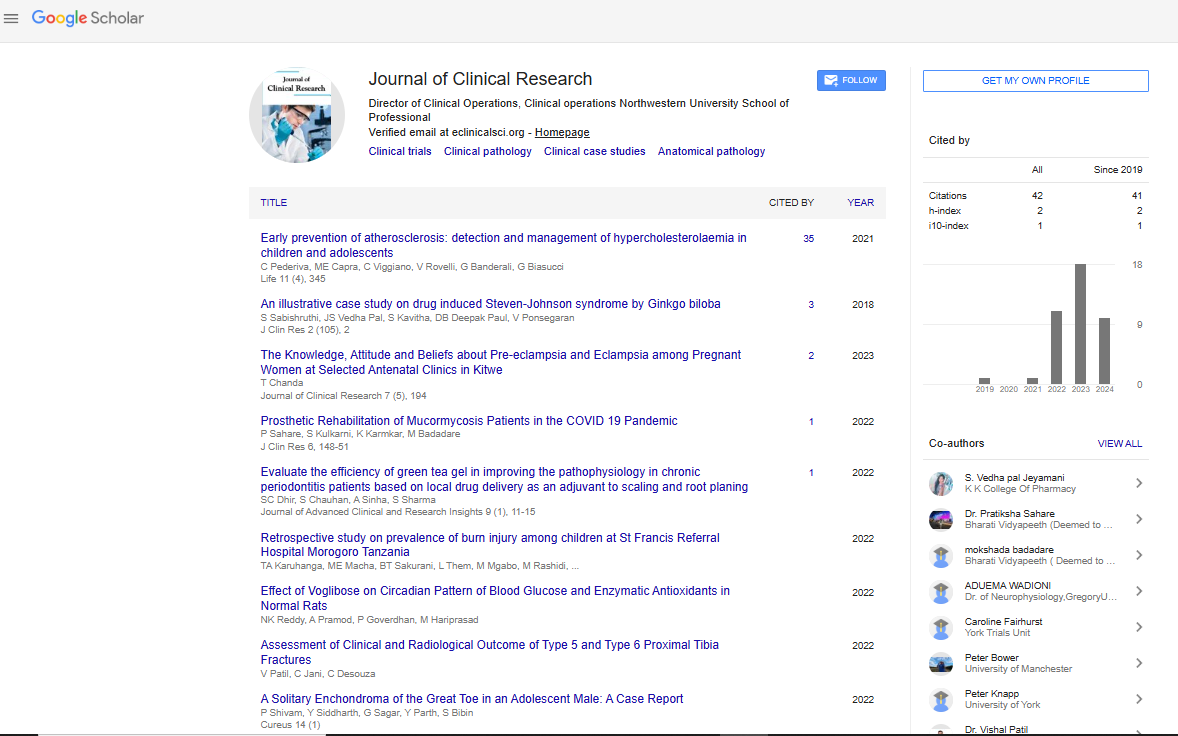
Journal of Clinical Research received 11 citations as per Google Scholar report