Brief Report - (2025) Volume 13, Issue 5
Received: 01-Oct-2025, Manuscript No. jaat-26-183177;
Editor assigned: 03-Oct-2025, Pre QC No. P-183177;
Reviewed: 17-Oct-2025, QC No. Q-183177;
Revised: 22-Oct-2025, Manuscript No. R-183177;
Published:
29-Oct-2025
, DOI: 10.37421/2329-6542.2025.13.374
Citation: Al‑Masri, Laila. ”HPC: Unlocking Cosmic Mysteries
With Big Data.” J Astrophys Aerospace Technol 13 (2025):374.
Copyright: © 2025 Al‑Masri L. This is an open-access article distributed under the terms of the Creative Commons Attribution License, which permits unrestricted use, distribution and reproduction in any medium, provided the original author and source are credited.
High-performance computing (HPC) has become an indispensable tool for modern astrophysical research, enabling the analysis of the massive datasets generated by contemporary sky surveys and complex cosmological simulations. These analyses encompass demanding computational tasks, including N-body simulations, spectral analysis, image processing, and the training of machine learning models, all of which benefit significantly from the parallel processing power, extensive memory, and high-speed storage and interconnects that HPC provides [1].
The application of HPC is therefore crucial for astronomers to extract meaningful scientific insights and drive discoveries in pivotal areas such as galaxy formation, the distribution of dark matter, and the study of exoplanets. This study specifically explores the acceleration of complex astrophysical calculations, particularly gravitational lensing simulations, through the strategic integration of Graphics Processing Units (GPUs) within HPC environments. By re-architecting traditional CPU-bound algorithms for parallel execution on GPUs, researchers have achieved substantial speedups, which are vital for efficiently processing the vast amounts of observational data from upcoming astronomical surveys and enabling more timely scientific discovery [2].
The enhancement offered by GPUs is critical for the future of astronomical data analysis. Furthermore, the advent of exascale computing presents both significant challenges and remarkable opportunities for astrophysical data analysis. The increased computational power offered by exascale systems is essential for conducting more detailed and realistic cosmological simulations, which are fundamental to understanding phenomena like large-scale structure formation and the evolution of galaxies. The authors of this work discuss the necessary software and algorithmic adaptations required to effectively leverage these advanced computational architectures [3].
Machine learning algorithms, empowered by HPC resources, are increasingly applied to the automated classification of astronomical objects. The sheer volume of data from surveys such as the Sloan Digital Sky Survey and the Vera C. Rubin Observatory necessitates efficient methodologies for object identification and characterization. HPC facilitates the training of sophisticated deep learning models on these extensive datasets, leading to faster and more accurate classification of galaxies, quasars, and other celestial bodies [4].
The challenges of managing and processing petabyte-scale astrophysical datasets are substantial. HPC infrastructure, including distributed file systems and high-bandwidth networks, plays a critical role in handling the data throughput from modern telescopes. Techniques for efficient data reduction, calibration, and storage are discussed, highlighting the indispensable role of HPC in rendering these massive datasets scientifically accessible and usable [5].
Research investigating the performance optimization of N-body simulations for dark matter distribution studies on HPC clusters focuses on algorithmic improvements. These include adaptive mesh refinement and parallelization strategies designed to efficiently simulate the gravitational interactions of billions of particles. The capacity to execute these simulations at unprecedented scales with HPC is paramount for constraining dark matter properties and advancing our understanding of cosmic structure formation [6].
The integration of cloud computing resources with traditional HPC paradigms is being explored for astrophysical data analysis. Cloud platforms offer scalable and flexible computational power, particularly beneficial for intermittent or bursty workloads common in astronomical research. Hybrid approaches, combining on-premises HPC with cloud services, are emerging as effective strategies for managing diverse analysis needs and large datasets [7].
Spectral analysis of astrophysical objects, particularly the examination of large spectral datasets from surveys, presents significant computational demands. HPC is essential for executing computationally intensive tasks such as cross-correlation, feature extraction, and model fitting across millions of spectra. The insights derived from such analyses are critical for comprehending stellar populations, chemical evolution, and the fundamental properties of galaxies [8].
The development and application of parallel algorithms for image processing in astronomical surveys are significantly enhanced by HPC systems. These systems are employed to manage the massive volume of image data, facilitating tasks like source detection, aperture photometry, and image stacking. These processes are fundamental for generating scientifically valuable catalogs and for studying faint or extended astronomical objects [9].
Finally, the simulation of planetary system formation and evolution, including the detailed modeling of protoplanetary disks and planet-disk interactions, presents considerable computational challenges. HPC resources are indispensable for the complex, long-timescale simulations required to thoroughly understand planet formation processes. This research underscores the critical need for efficient numerical methods and scalable parallel implementations to address these demanding computational problems [10].
High-performance computing (HPC) is fundamental to the analysis of the vast datasets produced by modern astrophysical observations and simulations. Tasks such as N-body simulations, spectral analysis, image processing, and machine learning model training, which are core to astronomical research, demand the parallel processing power, large memory capacities, and high-speed storage and interconnects that HPC systems offer. Consequently, HPC is essential for astronomers to derive meaningful scientific insights and make discoveries in fields like galaxy formation and exoplanet studies [1].
Significant advancements in accelerating complex astrophysical calculations, such as gravitational lensing simulations, are being realized through the strategic deployment of GPUs within HPC environments. By re-engineering conventional CPU-bound algorithms for parallel execution on GPUs, researchers are achieving substantial performance gains, crucial for processing the immense volumes of data from upcoming astronomical surveys and enabling more efficient scientific discovery [2].
The evolving landscape of exascale computing presents both challenges and opportunities for astrophysical data analysis. The heightened computational capabilities of exascale systems are vital for executing more sophisticated and realistic cosmological simulations necessary for understanding phenomena like large-scale structure formation and galactic evolution. This paper examines the software and algorithmic adaptations required to effectively utilize these advanced computational architectures [3].
Automated classification of astronomical objects is increasingly reliant on machine learning algorithms powered by HPC resources. The sheer magnitude of data from astronomical surveys necessitates efficient methods for object identification and characterization. HPC enables the training of advanced deep learning models, leading to improved speed and accuracy in classifying various celestial bodies [4].
The management and processing of petabyte-scale astrophysical datasets pose considerable technical hurdles. HPC infrastructure, encompassing distributed file systems and high-bandwidth networks, is indispensable for handling the data flow from modern telescopes. This work details techniques for efficient data reduction, calibration, and storage, emphasizing HPC's critical role in making large datasets scientifically accessible [5].
Optimization of N-body simulations for dark matter studies on HPC clusters involves algorithmic enhancements such as adaptive mesh refinement and parallelization strategies. These improvements are designed to efficiently simulate the gravitational interactions of billions of particles, with HPC enabling simulations at unprecedented scales to constrain dark matter properties and advance the understanding of cosmic structure formation [6].
The integration of cloud computing with traditional HPC for astrophysical data analysis is being actively explored. Cloud platforms provide scalable and flexible computational resources, particularly valuable for intermittent computational demands. Hybrid approaches that combine on-premises HPC with cloud services are emerging as effective solutions for managing diverse analytical requirements and large datasets [7].
Spectral analysis of astrophysical objects, especially the examination of extensive spectral datasets, requires significant computational resources. HPC is essential for performing intensive tasks like cross-correlation, feature extraction, and model fitting across millions of spectra, providing critical insights into stellar populations, chemical evolution, and galactic properties [8].
The development and application of parallel algorithms for astronomical image processing are significantly facilitated by HPC systems. These systems are used to process vast amounts of image data for tasks such as source detection, aperture photometry, and image stacking, which are fundamental for catalog creation and the study of faint astronomical objects [9].
Simulating the formation and evolution of planetary systems, including detailed modeling of protoplanetary disks, presents complex computational challenges. HPC resources are critical for the long-timescale simulations required to understand planet formation processes, highlighting the need for efficient numerical methods and scalable parallel implementations [10].
High-performance computing (HPC) is essential for analyzing massive astronomical datasets, enabling complex tasks like simulations, spectral analysis, image processing, and machine learning. GPUs are being integrated into HPC to accelerate calculations, while exascale computing promises even greater capabilities for cosmological simulations. Machine learning, powered by HPC, automates object classification. Managing petabyte-scale data relies on HPC infrastructure for efficient processing and storage. N-body simulations for dark matter studies are optimized on HPC clusters, and hybrid HPC-cloud approaches offer flexible resources. Spectral analysis and image processing in astronomy also heavily depend on HPC for intensive computations. Finally, HPC is crucial for simulating planetary system formation and evolution, requiring efficient numerical methods.
None
None
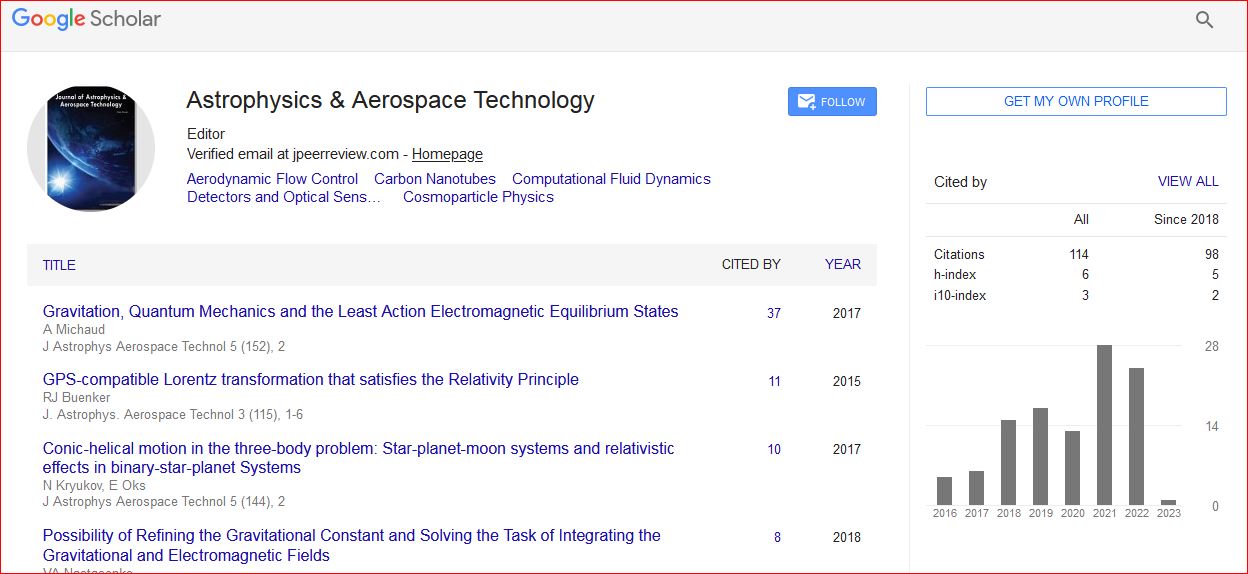
Astrophysics & Aerospace Technology received 114 citations as per Google Scholar report