Brief Report - (2025) Volume 14, Issue 6
Received: 01-Dec-2025, Manuscript No. jnc-25-178140;
Editor assigned: 03-Dec-2025, Pre QC No. P-178140;
Reviewed: 17-Dec-2025, QC No. Q-178140;
Revised: 22-Dec-2025, Manuscript No. R5-178140;
Published:
29-Dec-2025
, DOI: DOI: 10.37421/2167-1168.2025.14.736
Citation: Cole, Daniel. ”Holistic Nursing for Chronic Disease Management.” J Nurs Care 14 (2025):736.
Copyright: © 2025 Cole D. This is an open-access article distributed under the terms of the Creative Commons Attribution License, which permits unrestricted use, distribution and reproduction in any medium, provided the original author and source are credited.
Effective nursing management of chronic diseases hinges upon a multifaceted and holistic strategy that permeates various dimensions of patient care. This approach is fundamentally anchored in empowering patients with comprehensive knowledge and essential skills, thereby enabling their active and informed participation in their own healthcare journey. The ultimate aim is to proactively prevent the onset or exacerbation of complications and to significantly enhance the overall quality of life for individuals living with long-term health conditions. In the specific context of long-term care settings, the nursing focus must be meticulously directed towards preserving and promoting functional independence among residents. Simultaneously, there is an imperative to uphold and foster an environment that respects and nurtures their inherent dignity. This necessitates the delivery of care that is not only compassionate but also deeply personalized, centering on the unique needs and preferences of each individual. The evolving landscape of healthcare delivery is increasingly shaped by technological advancements, particularly in the realm of telehealth and remote monitoring systems. The integration of these innovative tools is fundamentally transforming how chronic diseases are managed, offering new avenues for patient engagement and continuous care. The specialized knowledge and skills required for gerontological nursing are paramount when addressing the complex health needs of older adults within long-term care environments. This specialized expertise is crucial for navigating the challenges inherent in aging populations with multiple chronic conditions. A cornerstone of successful chronic disease management is robust and effective patient education. Nurses are tasked with the critical responsibility of imparting information that patients can readily comprehend and apply to their daily lives, thereby fostering adherence to treatment plans. To ensure the delivery of comprehensive and high-quality patient care, interprofessional collaboration stands out as an indispensable element. Nurses, as integral members of the multidisciplinary healthcare team, work synergistically with other professionals to achieve optimal patient outcomes. Beyond the physiological aspects of chronic illness, psychosocial factors play a profoundly significant role in influencing the trajectory of disease management and patient well-being. Acknowledging and addressing these emotional and social dimensions is as crucial as managing physical symptoms. Navigating the often-turbulent transitions of care for individuals with chronic diseases presents a critical juncture where the expertise of nursing intervention can be instrumental in averting adverse events. Smooth transitions are vital for maintaining continuity of care. Within long-term care facilities, nurses are consistently at the forefront of managing a diverse array of complex health needs presented by an aging demographic. Their role extends beyond basic care to include the promotion of healthy aging and specialized interventions. Finally, the role of advocacy is an intrinsic and fundamental aspect of nursing practice, particularly for patients navigating the complexities of chronic diseases and requiring long-term care. Nurses serve as the voice for their patients, ensuring their rights are upheld.
The intricate process of managing chronic diseases within nursing practice demands a holistic framework, integrating patient education, self-management support, interprofessional teamwork, and careful consideration of psychosocial elements. This comprehensive approach empowers patients with the knowledge and skills necessary for active involvement in their care, aiming to prevent complications and enhance their overall quality of life. In long-term care facilities, the nursing mandate shifts towards maintaining functional independence and preserving the dignity of residents. This involves providing care that is not only compassionate but also deeply attuned to the individual needs and preferences of each person. The incorporation of modern technologies, such as telehealth and remote patient monitoring, is revolutionizing the field of chronic disease management. Nurses are pivotal in leveraging these tools to foster greater patient engagement and facilitate proactive identification of health issues. Specialized nursing knowledge is indispensable when addressing the unique challenges associated with aging and chronic conditions in long-term care settings. This includes adeptly managing polypharmacy, preventing falls, recognizing and treating delirium, and providing sensitive end-of-life care. Patient education is universally recognized as a fundamental pillar in the effective management of chronic diseases. Nurses are instrumental in employing clear communication strategies to ensure patients fully grasp their conditions, treatment regimens, and the importance of consistent adherence. Interprofessional collaboration is paramount for optimizing the comprehensive management of chronic diseases. Nurses function as vital conduits within the healthcare team, liaising with physicians, pharmacists, dietitians, and therapists to ensure a coordinated and holistic approach to patient care. Psychosocial factors, including but not limited to depression, anxiety, and social isolation, exert a considerable influence on the management of chronic diseases. Nurses must be proficient in assessing and addressing these critical issues, offering emotional support and facilitating access to necessary resources. The transition of care for patients with chronic conditions, particularly as they move from hospital settings to home or long-term care facilities, represents a high-risk period where skilled nursing intervention can significantly mitigate adverse outcomes. Effective discharge planning is key. Nurses operating within long-term care environments are at the vanguard of managing the multifaceted health requirements of an aging population. Their responsibilities encompass promoting healthy aging and providing specialized care for prevalent chronic conditions. Advocacy emerges as a core nursing responsibility within the broader context of chronic disease management and long-term care. Nurses champion the rights and advocate for the needs of their patients, ensuring equitable access to care and respect for their autonomy.
Effective chronic disease management requires a holistic nursing approach, emphasizing patient education, self-management support, interprofessional collaboration, and psychosocial care. In long-term settings, nurses focus on functional independence, dignity, and person-centered care. Technology like telehealth is transforming care delivery, demanding new digital skills from nurses. Gerontological nursing expertise is crucial for managing complex needs in older adults, including polypharmacy and fall prevention. Patient education empowers individuals to understand their conditions and adhere to treatment. Interprofessional teamwork ensures coordinated care, while addressing psychosocial factors like depression and anxiety improves well-being. Smooth transitions of care are vital to prevent adverse events. Nurses advocate for patient rights and needs within healthcare systems. Symptom management is key to improving comfort and quality of life. Ethical considerations and patient autonomy are paramount in long-term care.
None
None
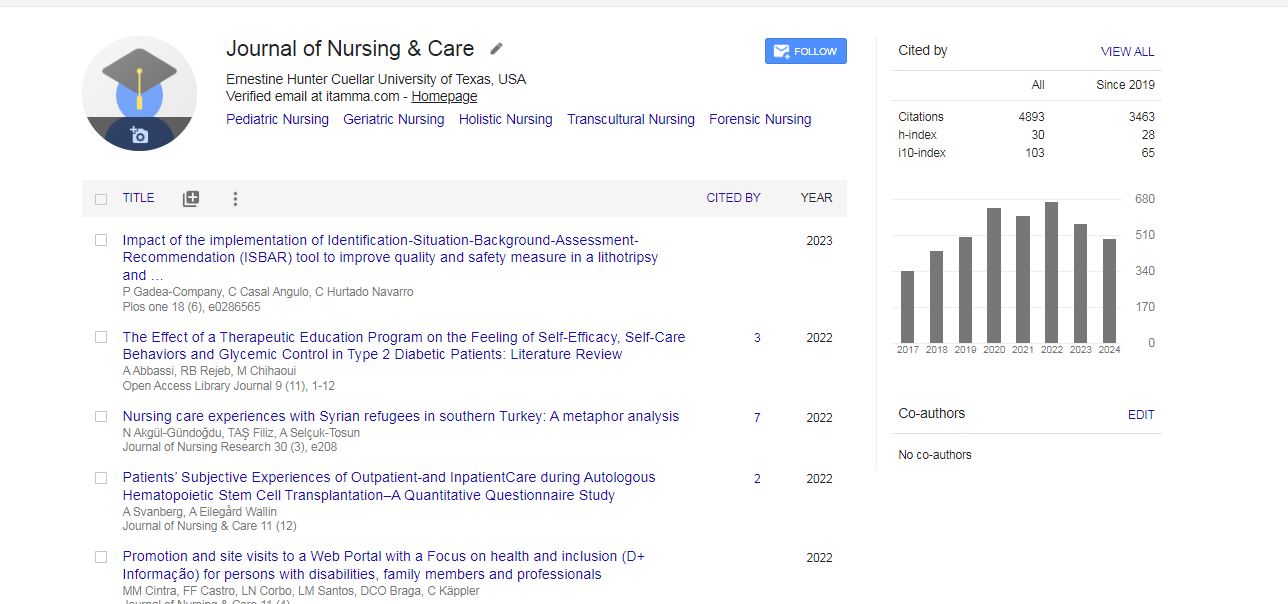
Journal of Nursing & Care received 4230 citations as per Google Scholar report