Opinion - (2025) Volume 14, Issue 6
Received: 01-Dec-2025, Manuscript No. jnc-25-178142;
Editor assigned: 03-Dec-2025, Pre QC No. P-178142;
Reviewed: 17-Dec-2025, QC No. Q-178142;
Revised: 22-Dec-2025, Manuscript No. R-178142;
Published:
29-Dec-2025
, DOI: DOI: 10.37421/2167-1168.2025.14.738
Citation: Lee, Hannah. ”Holistic Nursing: Compassionate Pain Management Strategies.” J Nurs Care 14 (2025):738.
Copyright: © 2025 Lee H. This is an open-access article distributed under the terms of the Creative Commons Attribution License, which permits unrestricted use, distribution and reproduction in any medium, provided the original author and source are credited.
Effective pain assessment and management in nursing care are foundational to patient well-being and recovery. A holistic approach is paramount, integrating patient self-report, observational methods, and physiological indicators to gain a comprehensive understanding of the pain experience. Nurses are central to this process, tasked with identifying diverse pain types, recognizing their profound impact on individuals, and devising individualized management strategies. This necessitates the skillful use of validated pain scales and keen observation for non-verbal cues, especially in non-communicative patients, all while fostering collaboration within the interdisciplinary team to optimize pain relief and enhance the quality of life. [1] Understanding the pervasive influence of chronic pain on an individual's daily functioning and mental health is a critical responsibility for nurses. Beyond merely addressing the physical manifestations of pain, it is essential to recognize and actively manage the associated psychological distress, such as anxiety and depression, which often accompany persistent pain conditions. Nurses are empowered to equip patients with effective self-management techniques and serve as unwavering advocates for comprehensive care plans that acknowledge and address the multifaceted nature of chronic pain, ensuring a more holistic approach to healing and well-being. [2] The significance of non-pharmacological interventions in the realm of pain management is gaining increasing recognition and acceptance within the healthcare community. Nurses hold a pivotal role in the implementation and patient education surrounding these diverse strategies, which encompass a range of modalities including physical therapy, cognitive-behavioral therapy, mindfulness practices, and various complementary therapies. The judicious integration of these non-pharmacological approaches alongside conventional pharmacological treatments holds the potential to significantly improve pain control and, importantly, reduce the reliance on opioid medications, thereby mitigating associated risks. [3] Pain assessment in pediatric populations presents a unique set of challenges that demand specialized tools and tailored approaches from healthcare professionals. Nurses must adeptly adapt their communication strategies and employ age-appropriate pain scales to accurately gauge pain levels in children, ensuring their comfort and effective treatment. Furthermore, the active involvement of the child's family is absolutely crucial in supporting the child's overall pain experience and ensuring consistent adherence to prescribed treatment plans, fostering a collaborative environment for healing. [4] The systematic development and diligent implementation of evidence-based pain management protocols are indispensable for ensuring consistent, high-quality nursing care across various healthcare settings. Nurses actively contribute to this vital process by diligently staying abreast of the latest research findings, actively participating in the development and refinement of clinical guidelines, and ensuring that the care provided to patients meticulously aligns with current best practices. Continuous evaluation of the effectiveness of these established protocols is an essential element for driving ongoing improvement and maintaining the highest standards of care. [5] Pain experienced in the perioperative setting necessitates vigilant and proactive assessment and management by nurses throughout the entire patient journey. This comprehensive approach includes providing thorough pre-operative pain education, ensuring meticulous intra-operative monitoring, and implementing effective post-operative pain control strategies utilizing a multimodal regimen. Nurses are critically important in the prevention and adept management of acute post-operative pain, ultimately contributing to enhanced patient recovery, reduced complications, and improved overall satisfaction with the surgical experience. [6] The rapid advent and integration of technology are opening up new and innovative avenues for both the assessment and management of pain. Telehealth platforms and advanced wearable devices are proving to be invaluable tools in facilitating remote pain monitoring and fostering increased patient engagement, thereby extending the reach and accessibility of essential nursing care. Nurses must cultivate proficiency in utilizing these evolving technological tools to deliver continuous, personalized, and highly effective pain support to a wider range of patients. [7] Effective communication stands as a fundamental cornerstone of successful pain management strategies in nursing practice. Nurses must continuously strive to develop and refine strong communication skills to accurately elicit pain reports from patients, clearly articulate complex treatment options, and serve as effective advocates for their patients' unique needs and preferences. The cultivation of trust and rapport between the nurse and patient is an indispensable element that underpins the entire process of achieving successful and sustainable pain relief. [8] Pain management within the specialized context of palliative care is primarily focused on significantly improving the quality of life for individuals living with life-limiting illnesses. Nurses play an instrumental role in the accurate assessment and skillful management of complex pain syndromes, often requiring a sophisticated combination of both pharmacological and non-pharmacological therapeutic strategies. Their crucial role extends beyond clinical interventions to encompass the provision of essential emotional and psychological support to both patients and their families during challenging times. [9] An understanding of the diverse cultural factors that profoundly influence an individual's pain perception and expression is absolutely vital for delivering equitable and sensitive nursing care. Nurses must actively cultivate cultural competence to ensure they can provide individualized pain assessments and develop management plans that genuinely respect and incorporate the diverse beliefs, values, and practices of all patients. This culturally sensitive approach is essential to guarantee that every patient receives appropriate, effective, and respectful pain relief tailored to their unique background. [10]
Effective pain assessment in nursing care demands a comprehensive and holistic strategy, intricately weaving together patient self-reports, direct observational methods, and relevant physiological indicators. Nurses are entrusted with the critical responsibility of identifying the varied types of pain experienced by patients, understanding the multifaceted impact these have on their overall well-being, and subsequently implementing meticulously individualized management strategies. This encompasses the proficient utilization of validated pain assessment scales, the adept recognition of subtle non-verbal cues in patients unable to communicate verbally, and robust collaboration with the broader interdisciplinary team to ensure optimal pain relief and a subsequent enhancement in the patient's quality of life. [1] A thorough comprehension of the profound impact that chronic pain exerts on an individual's daily functioning and their mental health is of paramount importance for nurses engaged in patient care. This understanding extends beyond the mere physical symptoms of pain to include the recognition and management of associated psychological distress, such as prevalent conditions like anxiety and depression, which frequently accompany chronic pain. Nurses are empowered to actively engage patients by providing them with effective self-management techniques and advocating passionately for the development and implementation of comprehensive care plans that address the inherently multifaceted nature of chronic pain. [2] The significant role and effectiveness of non-pharmacological interventions in the comprehensive management of pain are increasingly acknowledged and integrated into standard practice. Nurses are central figures in the practical implementation of these diverse strategies and play a key role in educating patients about their utility, which includes modalities such as physical therapy, cognitive-behavioral therapy, mindfulness-based practices, and various complementary therapies. The strategic integration of these complementary approaches alongside traditional pharmacological treatments offers a promising pathway towards achieving improved pain control and concurrently reducing the dependence on opioid analgesics. [3] Accurate pain assessment within pediatric populations presents distinct and unique challenges, necessitating the application of specialized tools and carefully adapted approaches by healthcare providers. Nurses must be adept at modifying their communication strategies and employing age-appropriate pain scales to effectively gauge the level of pain experienced by children, ensuring their comfort and facilitating appropriate treatment. Moreover, the active and supportive involvement of the child's family is absolutely crucial in mitigating the child's pain experience and ensuring consistent adherence to the established treatment plans, fostering a collaborative healing environment. [4] The systematic development and diligent implementation of evidence-based pain management protocols are essential prerequisites for delivering consistent and high-quality nursing care across diverse healthcare settings. Nurses contribute significantly to this crucial endeavor by continuously staying informed about the latest research advancements, actively participating in the creation and revision of clinical guidelines, and ensuring that patient care practices rigorously align with current, evidence-supported best practices. Ongoing and rigorous evaluation of the effectiveness of these established protocols is a critical component for driving continuous quality improvement in pain management. [5] Pain management in the perioperative setting demands vigilant and proactive assessment and management by nursing professionals throughout the entire perioperative continuum. This comprehensive approach includes providing essential pre-operative pain education, conducting thorough intra-operative monitoring for signs of pain, and implementing effective post-operative pain control measures utilizing a well-coordinated multimodal strategy. Nurses are indispensable in the critical tasks of preventing and skillfully managing acute post-operative pain, thereby significantly enhancing the patient's recovery trajectory and overall satisfaction with their care experience. [6] The progressive advent and integration of technological advancements are actively creating novel avenues and opportunities for the assessment and management of pain. Emerging telehealth platforms and sophisticated wearable devices are proving to be invaluable in facilitating remote pain monitoring and actively engaging patients, thereby significantly expanding the reach and accessibility of essential nursing care services. It is imperative that nurses develop and maintain proficiency in utilizing these evolving technological tools to provide continuous, personalized, and highly effective pain support to a broader patient population. [7] Effective communication is unequivocally recognized as a fundamental cornerstone of successful and patient-centered pain management within the nursing profession. Nurses must diligently cultivate and continually refine strong interpersonal and communication skills to accurately elicit pain reports from patients, clearly explain complex treatment options and rationale, and serve as assertive advocates for their patients' unique needs and preferences. The establishment and nurturing of trust and rapport between the nurse and the patient are indispensable elements that form the bedrock of achieving successful and sustainable pain relief outcomes. [8] Pain management strategies specifically tailored for palliative care settings are fundamentally centered on the overarching goal of improving the quality of life for patients living with life-limiting illnesses. Nurses play an instrumental role in the intricate assessment and skillful management of complex pain syndromes, often requiring the thoughtful application of a combination of both pharmacological and non-pharmacological therapeutic interventions. Their critical responsibilities extend beyond the direct clinical management of pain to encompass the vital provision of emotional support and compassionate care to both the patients and their families during profoundly challenging times. [9] An in-depth understanding of the diverse cultural factors that significantly influence an individual's perception and expression of pain is absolutely essential for the provision of equitable and culturally sensitive nursing care. Nurses must actively develop and maintain cultural competence to ensure they can conduct individualized pain assessments and formulate management plans that respectfully incorporate and acknowledge the diverse beliefs, values, and practices inherent in different cultural backgrounds. This culturally informed approach is paramount to ensuring that all patients receive appropriate, effective, and respectful pain relief tailored to their unique needs and experiences. [10]
Effective pain management in nursing requires a holistic approach, integrating patient self-report, observation, and physiological indicators. Nurses play a crucial role in assessing different pain types, understanding their impact, and implementing individualized strategies using validated scales and non-verbal cue recognition. Addressing chronic pain involves managing physical discomfort alongside psychological distress like anxiety and depression, empowering patients with self-management techniques. Non-pharmacological interventions, including physical therapy and mindfulness, are increasingly important alongside pharmacological treatments. Specialized approaches are needed for pediatric pain assessment, emphasizing age-appropriate tools and family involvement. Evidence-based protocols and continuous evaluation are key to high-quality nursing care. Perioperative pain management necessitates vigilant assessment and multimodal strategies. Technology, such as telehealth and wearable devices, enhances remote monitoring and patient engagement. Strong nurse-patient communication, built on trust, is fundamental for accurate assessment and effective advocacy. Palliative care pain management focuses on quality of life, requiring a combination of interventions and emotional support. Cultural competence is vital for equitable pain assessment and management, respecting diverse beliefs and practices.
None
None
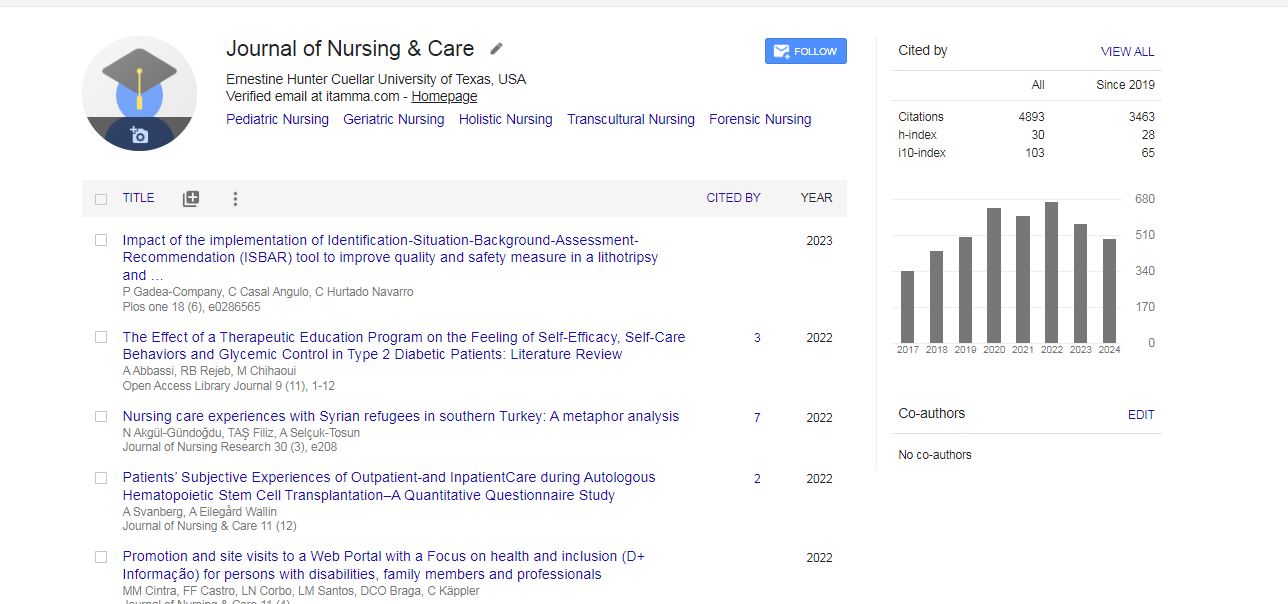
Journal of Nursing & Care received 4230 citations as per Google Scholar report