Commentary - (2025) Volume 11, Issue 2
Received: 01-Apr-2025, Manuscript No. elj-25-172490;
Editor assigned: 03-Apr-2025, Pre QC No. P-172490;
Reviewed: 17-Apr-2025, QC No. Q-172490;
Revised: 22-Apr-2025, Manuscript No. R-172490;
Published:
29-Apr-2025
, DOI: 10.37421/2472-0895.2025.11.306
Citation: Sakamoto, Hiroto. ”Holistic Epilepsy Management: Innovations and Support.” Epilepsy J 11 (2025):306.
Copyright: © 2025 Sakamoto H. This is an open-access article distributed under the terms of the Creative Commons Attribution License, which permits unrestricted use, distribution and reproduction in any medium, provided the original author and source are credited.
Acute seizures and status epilepticus demand prompt and effective pharmacological intervention to prevent further neurological damage. This review outlines current best practices for managing these critical conditions in adults, focusing on the selection and administration of antiepileptic drugs, including benzodiazepines as first-line agents, followed by various second-line options, to ensure rapid seizure control and mitigate complications [1].
Identifying reliable biomarkers for epilepsy is crucial for early diagnosis, prognosis, and treatment monitoring. This review explores recent advancements in biomarker research, including genetic, proteomic, metabolomic, and neuroimaging markers, highlighting their potential to revolutionize how we understand and manage seizure disorders. The focus is on translating these discoveries into clinical practice, ultimately improving patient outcomes [2].
Neuroinflammation is increasingly recognized as a key player in the development and progression of epilepsy, directly contributing to seizure generation and chronic epileptogenesis. This article delves into the intricate mechanisms by which inflammatory processes affect neuronal excitability, compromise the blood-brain barrier, and alter brain circuits, offering new therapeutic targets for managing refractory seizures [3].
Managing status epilepticus in children presents unique challenges due to differences in pathophysiology and drug metabolism compared to adults. This comprehensive review summarizes the most up-to-date treatment guidelines, explores emerging therapies, and highlights critical areas for future research aimed at improving outcomes and reducing morbidity in pediatric patients experiencing prolonged seizures [4].
The ketogenic diet has long been recognized as an effective non-pharmacological treatment for refractory epilepsy, particularly in children. This updated review synthesizes the latest evidence on its mechanisms of action, clinical efficacy across various epilepsy syndromes, practical implementation challenges, and potential side effects, reaffirming its role as a valuable therapeutic option [5].
The era of precision medicine is transforming epilepsy treatment, especially for genetic forms. This article highlights how advancements in genomic sequencing and functional studies are enabling personalized therapeutic strategies, moving beyond symptomatic control to target underlying molecular pathways, offering hope for improved seizure control and reduced side effects in specific patient populations [6].
Epilepsy is more than just seizures; it often co-occurs with significant psychiatric and neurological comorbidities that profoundly impact quality of life. This review explores the prevalence, shared pathophysiological mechanisms, and management strategies for common comorbidities like depression, anxiety, cognitive dysfunction, and sleep disorders, advocating for holistic patient care [7].
Advances in wearable and implantable technologies are revolutionizing seizure management by offering discrete and continuous monitoring for detection and even prediction. This article assesses the current state of these devices, their accuracy, clinical utility, and the challenges in integrating them into routine care, promising greater autonomy and safety for individuals living with epilepsy [8].
For patients with drug-resistant epilepsy, surgical intervention offers a potential path to seizure freedom or significant reduction. This review highlights evolving surgical techniques, including resective surgery, laser interstitial thermal therapy, and neuromodulation, emphasizing patient selection criteria and the multidisciplinary approach required to maximize therapeutic benefits and minimize risks [9].
Effective first aid during a seizure can significantly impact outcomes, especially in community settings where medical professionals may not be immediately available. This article provides clear, actionable guidance on how bystanders and caregivers can safely manage a seizure, recognize when emergency services are needed, and prevent injury, fostering a supportive environment for individuals with epilepsy [10].
Acute seizures and status epilepticus demand prompt, effective pharmacological intervention to prevent neurological damage in adults, outlining best practices for antiepileptic drug selection and administration, including first-line benzodiazepines and various second-line options, to achieve rapid seizure control and mitigate complications [1]. However, managing status epilepticus in children presents unique challenges due to differences in pathophysiology and drug metabolism. Current treatment guidelines, emerging therapies, and critical research areas aim to improve outcomes and reduce morbidity in pediatric patients experiencing prolonged seizures [4]. Recognizing the importance of immediate response in various settings, effective first aid during a seizure can significantly impact outcomes, especially when medical professionals aren't immediately available. This includes clear, actionable guidance for bystanders and caregivers on safely managing a seizure, knowing when emergency services are necessary, and preventing injury, fostering a supportive environment for individuals with epilepsy [10].
Identifying reliable biomarkers for epilepsy is crucial for early diagnosis, prognosis, and treatment monitoring. Recent advancements in biomarker research encompass genetic, proteomic, metabolomic, and neuroimaging markers, demonstrating their potential to revolutionize our understanding and management of seizure disorders. The focus here is on translating these discoveries into clinical practice, ultimately improving patient outcomes [2]. Furthermore, neuroinflammation is increasingly recognized as a key player in the development and progression of epilepsy. It directly contributes to seizure generation and chronic epileptogenesis. This involves understanding the intricate mechanisms by which inflammatory processes affect neuronal excitability, compromise the blood-brain barrier, and alter brain circuits, offering new therapeutic targets for managing refractory seizures [3].
Beyond conventional pharmacology, the ketogenic diet has long been recognized as an effective non-pharmacological treatment for refractory epilepsy, particularly in children. This updated review synthesizes the latest evidence on its mechanisms of action, clinical efficacy across various epilepsy syndromes, practical implementation challenges, and potential side effects, reaffirming its role as a valuable therapeutic option [5].
Simultaneously, the era of precision medicine is transforming epilepsy treatment, especially for genetic forms. Advances in genomic sequencing and functional studies enable personalized therapeutic strategies, moving beyond mere symptomatic control to target underlying molecular pathways. This offers hope for improved seizure control and reduced side effects in specific patient populations [6]. For patients with drug-resistant epilepsy, surgical intervention provides a potential path to seizure freedom or significant reduction. This highlights evolving surgical techniques, including resective surgery, laser interstitial thermal therapy, and neuromodulation, emphasizing critical patient selection criteria and the multidisciplinary approach required to maximize therapeutic benefits and minimize risks [9].
Epilepsy often co-occurs with significant psychiatric and neurological comorbidities that profoundly impact quality of life, extending beyond the seizures themselves. Common comorbidities include depression, anxiety, cognitive dysfunction, and sleep disorders. This review explores their prevalence, shared pathophysiological mechanisms, and effective management strategies, advocating for a holistic approach to patient care [7]. In a related vein, technological advances are revolutionizing seizure management. Wearable and implantable devices offer discrete and continuous monitoring for detection and even prediction. This involves assessing the current state of these devices, their accuracy, clinical utility, and the challenges involved in integrating them into routine care, promising greater autonomy and safety for individuals living with epilepsy [8].
Effective management of epilepsy and related seizure disorders encompasses a broad spectrum of interventions, from acute pharmacological strategies for status epilepticus in both adults and children to long-term non-pharmacological treatments like the ketogenic diet [1, 4, 5]. Advancements in identifying reliable biomarkers, including genetic, proteomic, metabolomic, and neuroimaging markers, are crucial for early diagnosis, prognosis, and personalized treatment approaches [2, 6]. Understanding the role of neuroinflammation in seizure generation also opens new therapeutic targets for refractory cases [3]. Beyond seizure control, a holistic approach to epilepsy care addresses significant psychiatric and neurological comorbidities such as depression, anxiety, cognitive dysfunction, and sleep disorders, which profoundly affect quality of life [7]. Technological innovations, particularly wearable and implantable devices, are transforming seizure management through continuous detection and prediction, offering greater autonomy and safety for patients [8]. For drug-resistant epilepsy, surgical interventions, including resective surgery and neuromodulation, provide viable paths to seizure freedom, emphasizing the importance of multidisciplinary patient selection [9]. Crucially, basic first aid education empowers bystanders and caregivers to safely manage seizures in community settings, preventing injury and ensuring timely emergency care when needed [10]. Overall, current research emphasizes a multi-faceted approach to epilepsy, combining precise interventions with comprehensive patient support and technological integration.
None
None
Indexed at, Google Scholar, Crossref
Indexed at, Google Scholar, Crossref
Indexed at, Google Scholar, Crossref
Indexed at, Google Scholar, Crossref
Indexed at, Google Scholar, Crossref
Indexed at, Google Scholar, Crossref
Indexed at, Google Scholar, Crossref
Indexed at, Google Scholar, Crossref
Indexed at, Google Scholar, Crossref
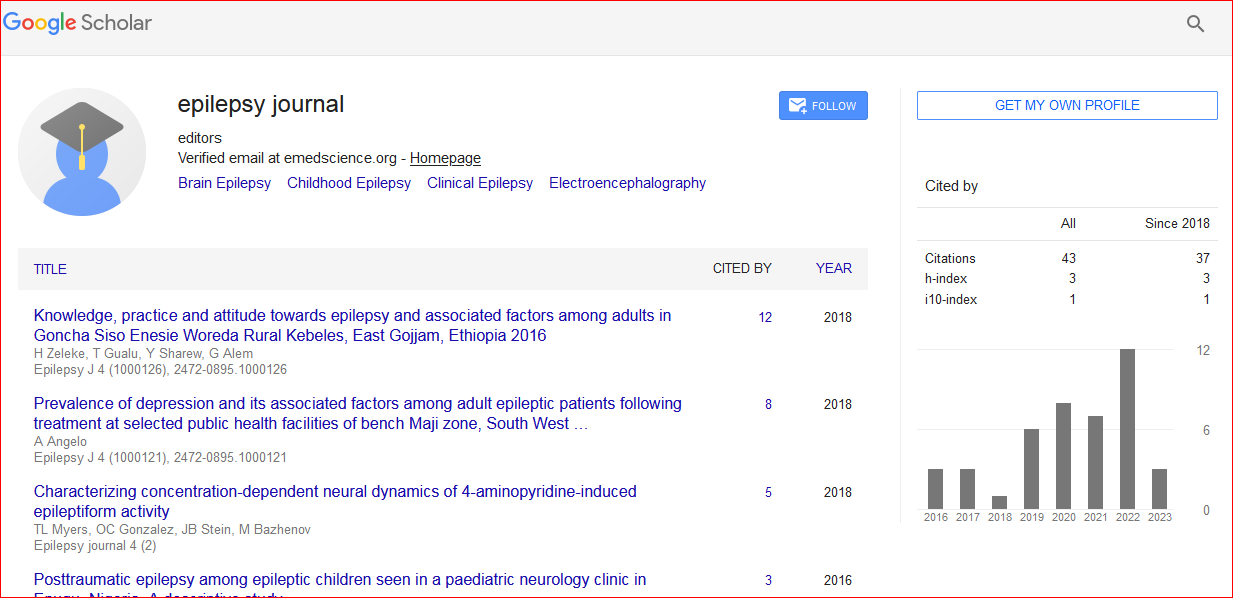
Epilepsy Journal received 41 citations as per Google Scholar report