Commentary - (2025) Volume 14, Issue 5
Received: 01-Sep-2025, Manuscript No. aim-25-177769;
Editor assigned: 03-Sep-2025, Pre QC No. P-177769;
Reviewed: 17-Sep-2025, QC No. Q-177769;
Revised: 22-Sep-2025, Manuscript No. R-177769;
Published:
29-Sep-2025
, DOI: 10.37421/2427-5162.2025.14.587
Citation: Sharma, Kavita. ”Holistic and Integrative Therapies for Autoimmune Care.” Alt Integr Med 14 (2025):587.
Copyright: © 2025 Sharma K. This is an open-access article distributed under the terms of the Creative Commons Attribution License, which permits unrestricted use, distribution and reproduction in any medium, provided the original author and source are credited.
Integrative medicine offers a holistic approach to autoimmune diseases, blending conventional and complementary therapies. This strategy incorporates non-pharmacological interventions like diet, mindbody practices, and nutritional supplements. Such methods aim to modulate immune responses, reduce inflammation, and enhance patient quality of life by addressing underlying disease mechanisms beyond standard treatments. A personalized, comprehensive approach is suggested to significantly benefit patients [1].
The management of autoimmune diseases increasingly considers various dietary interventions. This includes examining the impact of specific diets such as glutenfree, ketogenic, or Mediterranean approaches on disease activity, gut microbiota, and inflammatory processes. While dietary changes show considerable promise, further highquality research is essential to establish definitive recommendations and fully elucidate their underlying biological mechanisms [2].
Mindbody therapies have demonstrated efficacy in managing autoimmune diseases, according to a systematic review and metaanalysis. Practices like meditation, yoga, and mindfulness are shown to positively influence psychological wellbeing, mitigate stress levels, and potentially modulate inflammatory markers in affected individuals. These therapies hold significant potential as adjunctive treatments to improve overall patient outcomes [3].
Yoga specifically has been investigated for its impact on inflammatory markers, autoimmunity, and stress in autoimmune disorders. Evidence indicates that consistent yoga practice can reduce proinflammatory cytokines, decrease autoantibody levels, and lower perceived stress. This suggests yoga serves as a valuable complementary therapy, improving both immune regulation and psychological health for patients [4].
Emerging therapeutic strategies for autoimmune diseases are increasingly focusing on targeting the gut microbiome. The intricate relationship between gut dysbiosis, immune regulation, and autoimmune pathogenesis is a critical area of study. Interventions such as probiotics, prebiotics, fecal microbiota transplantation, and specific dietary modifications are explored for their potential to restore gut health and alleviate autoimmune symptoms [5].
Nutraceuticals are being explored for their role in autoimmune diseases, with current clinical trials and future prospects showing promise. This involves evaluating natural compounds, vitamins, and minerals like vitamin D, omega3 fatty acids, and curcumin for their immunomodulatory and antiinflammatory properties. These compounds could effectively complement conventional therapies, providing new insights into their mechanisms of action [6].
Acupuncture has been systematically reviewed for its effectiveness in managing autoimmune diseases. Clinical studies suggest that acupuncture can help alleviate symptoms, reduce inflammation, and modulate immune responses across various autoimmune conditions. These findings position acupuncture as a viable adjunctive therapy, though additional rigorous research is encouraged to solidify its evidence base [7].
Traditional herbal medicine offers a rich source of remedies with potential in autoimmune disease management. Various herbal compounds exhibit immunomodulatory, antiinflammatory, and antioxidant properties that could restore immune balance and reduce disease activity. The scientific validation of these traditional practices is crucial for their integration into modern autoimmune care paradigms [8].
Psychological stress is a significant factor in autoimmune disorders, with a systematic review highlighting its association with disease activity. Stress can act as a trigger or exacerbating factor, influencing immune function and inflammatory pathways. Consequently, effective stress management techniques are emphasized as an integral component of an integrative approach to autoimmune disease care [9].
Integrative nutrition plays a vital role in managing autoimmune diseases, as evidenced by a recent systematic review. This field synthesizes how dietary patterns, specific nutrients, and various food components can profoundly influence immune system regulation, gut health, and inflammatory processes. Personalized nutritional strategies hold significant potential to complement conventional treatments and enhance clinical outcomes for autoimmune patients [10].
This narrative review comprehensively examines the application of integrative medicine in autoimmune diseases. It highlights the synergistic use of conventional and complementary therapies, encompassing dietary adjustments, mindbody practices, and nutritional supplements. These strategies are posited to modulate immune responses, alleviate inflammation, and enhance patient wellbeing by addressing root causes beyond typical medical interventions. The review advocates for a personalized, holistic therapeutic framework [1]. The role of various dietary interventions in managing autoimmune diseases is thoroughly explored in this narrative review. It investigates how specific dietary regimens, such as glutenfree, ketogenic, or Mediterranean diets, influence disease activity, gut microbiota composition, and inflammatory markers. The review concludes by emphasizing the necessity for further highquality research to establish robust dietary recommendations and fully understand their mechanistic underpinnings [2]. A systematic review and metaanalysis evaluated the effectiveness of mindbody therapies for autoimmune conditions. Findings reveal that practices like meditation, yoga, and mindfulness positively impact psychological health, reduce stress, and potentially influence inflammatory biomarkers. These therapies are presented as valuable adjunctive treatments capable of improving patient outcomes and overall quality of life [3]. Specifically, the practice of yoga has been shown to exert positive effects on key markers associated with autoimmune disorders. A systematic review revealed that consistent engagement in yoga can lead to significant reductions in proinflammatory cytokines, autoantibody levels, and perceived stress. This highlights yogas considerable potential as a complementary therapy to enhance immune regulation and promote psychological wellbeing [4]. Emerging therapeutic strategies for autoimmune diseases include targeting the gut microbiome, as discussed in this article. It details the complex interplay between gut dysbiosis, immune system regulation, and the development of autoimmune pathogenesis. Interventions such as probiotics, prebiotics, fecal microbiota transplantation, and dietary modifications are explored for their capacity to restore gut health and ameliorate autoimmune symptoms [5]. This review summarizes the current landscape of clinical trials and future prospects for nutraceutical use in autoimmune diseases. It assesses various natural compounds, vitamins, and minerals, including vitamin D, omega3 fatty acids, and curcumin, for their immunomodulatory and antiinflammatory properties. The article emphasizes nutraceuticals potential to complement conventional therapies and elucidates their mechanisms of action [6]. The efficacy of acupuncture in managing autoimmune diseases was investigated through a systematic review and metaanalysis. Clinical studies presented evidence that acupuncture can alleviate symptoms, reduce inflammation, and modulate immune responses across various autoimmune conditions. The findings position acupuncture as a promising adjunctive therapy, with a call for more rigorous research to strengthen its evidence base [7]. This review explores the efficacy and underlying mechanisms of traditional herbal medicine in autoimmune diseases. It discusses numerous herbal remedies exhibiting immunomodulatory, antiinflammatory, and antioxidant characteristics, which could potentially restore immune balance and diminish disease activity. The article underscores the critical need for scientific validation of these traditional practices to integrate them into contemporary autoimmune care [8]. The systematic review examined the significant association between psychological stress and disease activity in various autoimmune disorders. It provided robust evidence that stress can act as a trigger or exacerbate autoimmune conditions by adversely influencing immune function and inflammatory pathways. The article therefore stresses the importance of integrating effective stress management techniques within a holistic approach to autoimmune disease care [9]. Integrative nutritions role in managing autoimmune diseases is comprehensively explored in this systematic review. It synthesizes research on how dietary patterns, specific nutrients, and food components can influence immune system regulation, gut health, and inflammatory processes. The review highlights the significant potential of personalized nutritional strategies to complement standard medical treatments and improve clinical outcomes for autoimmune patients [10].
This body of literature explores diverse nonpharmacological and complementary approaches to managing autoimmune diseases. Key strategies include integrative medicine, combining conventional and alternative therapies, and specific dietary interventions that influence gut microbiota and inflammation. Mindbody practices like meditation and yoga improve psychological wellbeing, reduce stress, and modulate inflammatory markers. Research highlights the critical role of the gut microbiome, with interventions such as probiotics and fecal microbiota transplantation showing promise in restoring gut health. Furthermore, nutraceuticals, traditional herbal medicine, and acupuncture are evaluated for their immunomodulatory and antiinflammatory properties. Psychological stress is identified as a significant exacerbating factor, emphasizing stress management. Collectively, these studies advocate for personalized, holistic, and integrative approaches to complement standard treatments, aiming to improve immune regulation, reduce disease activity, and enhance overall quality of life. While many interventions show potential, a consistent theme is the need for more highquality research for definitive recommendations and to elucidate underlying mechanisms.
None
None
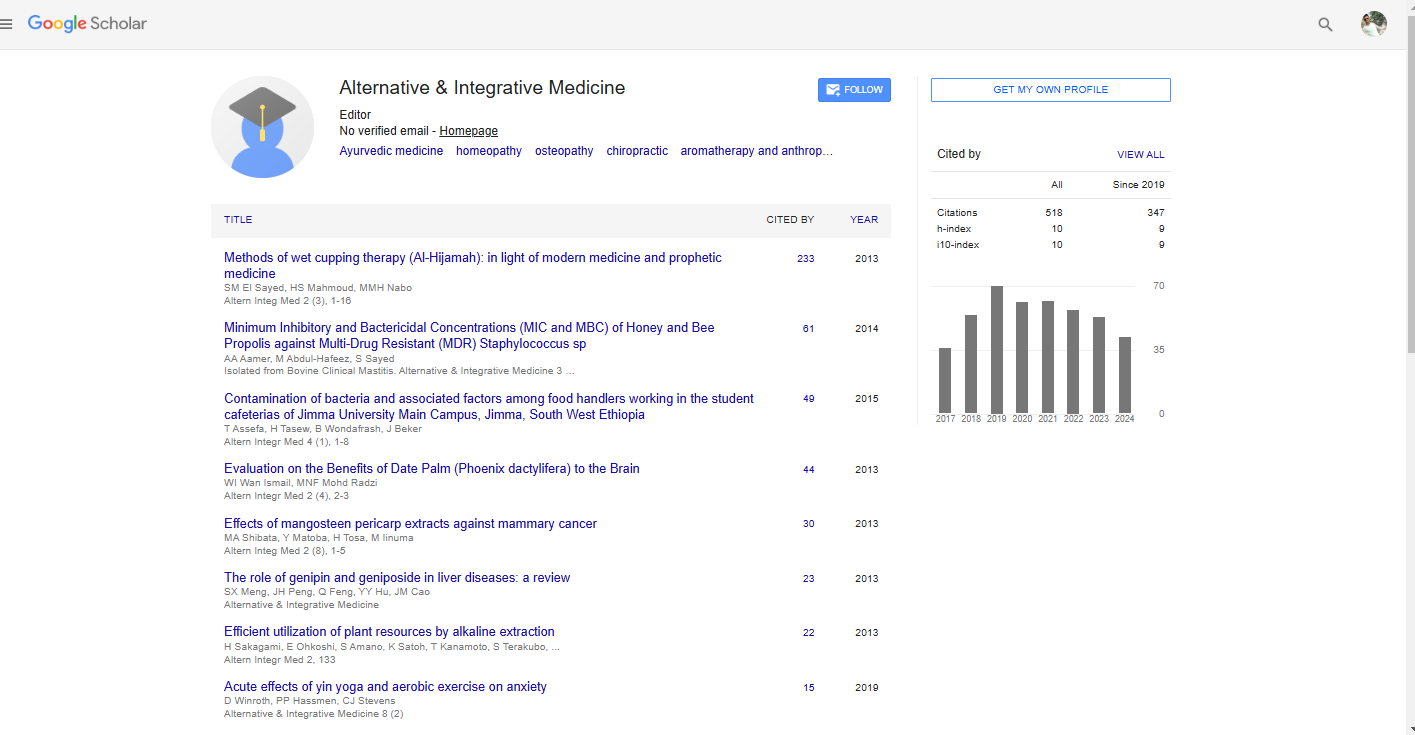
Alternative & Integrative Medicine received 476 citations as per Google Scholar report