Brief Report - (2025) Volume 14, Issue 4
Received: 01-Jul-2025, Manuscript No. mcce-26-190186;
Editor assigned: 03-Jul-2025, Pre QC No. P-190186;
Reviewed: 17-Jul-2025, QC No. Q-190186;
Revised: 22-Jul-2025, Manuscript No. R-190186;
Published:
29-Jul-2025
, DOI: 10.37421/2470-6965.2025.14.420
Citation: Kimani, David. ”Bridging Malaria’s Funding Gap: Innovative Solutions Needed.” Malar Contr Elimination 14 (2025):420.
Copyright: © 2025 Kimani D. This is an open-access article distributed under the terms of the Creative Commons Attribution License, which permits unrestricted use, distribution and reproduction in any medium, provided the original author and source are credited.
Global efforts to combat malaria are currently hampered by a significant and persistent funding gap, which impedes progress towards its eventual elimination. This shortfall arises from a complex interplay of factors, including the pressing demands of competing health priorities, the challenges associated with mobilizing sufficient domestic financial resources, and the inherent volatility and unpredictability often associated with international aid. To effectively bridge this financial deficit and establish sustainable malaria control programs, the implementation of innovative financing mechanisms is absolutely crucial. These mechanisms encompass a range of approaches, such as the establishment of dedicated taxes, active engagement with the private sector, and the utilization of blended finance models. Furthermore, enhancing the efficiency of program implementation and ensuring cost-effectiveness are equally vital strategies to maximize the impact of the financial resources that are available for malaria control [1].
Domestic financing is recognized as a fundamental pillar for achieving sustainable malaria control initiatives. Nations must prioritize the strengthening of their national health systems and concurrently increase the budgetary allocations specifically designated for malaria programs. This necessitates a concerted effort to advocate for increased political will at the highest levels of government, implement measures to improve the efficiency of tax collection processes, and actively explore novel domestic revenue streams that can be exclusively earmarked for health, with a particular focus on malaria interventions. Equally paramount is the imperative to bolster the capacity of national institutions responsible for the effective management and disbursement of these crucial funds [2].
The private sector possesses a considerable potential to contribute to the funding of malaria control efforts through various avenues. These include the implementation of corporate social responsibility initiatives, the channeling of impact investing towards health programs, and the formation of robust public-private partnerships. For such collaborations to be successful, it is essential to establish clear frameworks, provide appropriate incentives, and demonstrate tangible, measurable impact that aligns private sector interests with overarching public health objectives. Industries that directly or indirectly benefit from a healthy and productive workforce, such as those in the mining and agricultural sectors, represent significant opportunities to unlock substantial financial resources for critical malaria interventions [3].
Blended finance models, which artfully combine concessional and commercial forms of finance, represent a particularly promising pathway for attracting private capital into the realm of malaria control. These sophisticated approaches are designed to mitigate investment risks, thereby making such ventures considerably more attractive to a wider range of institutional investors. The development and deployment of innovative financial instruments, including social impact bonds or development impact bonds, have the potential to effectively leverage substantial private funds towards achieving specific, well-defined malaria control outcomes. This ensures a high degree of accountability and guarantees the delivery of measurable and impactful results [4].
Improving the overall efficiency and cost-effectiveness of malaria control programs is an indispensable strategy for extending the reach and maximizing the impact of limited financial resources. This involves a multifaceted approach that includes the optimization of procurement processes to ensure value for money, the strengthening of supply chains for essential diagnostics and life-saving treatments to prevent stockouts and ensure availability, and the rigorous adoption of evidence-based intervention strategies that have demonstrated proven effectiveness. Furthermore, strategic investments in robust monitoring and evaluation systems are critical for identifying operational inefficiencies and pinpointing areas where improvements can be made, thereby ensuring that funds are utilized in the most optimal manner possible to achieve the greatest reduction in the malaria burden [5].
The Global Fund to Fight AIDS, Tuberculosis and Malaria continues to be an indispensable and critical source of funding for a vast array of malaria control initiatives worldwide. However, the long-term sustainability of the Global Fundâ??s vital contributions is intrinsically linked to the consistent and predictable replenishment of its resources by donor countries. Consequently, sustained advocacy efforts aimed at securing increased and reliable donor commitments are absolutely essential for the continued success of global malaria control. Moreover, the exploration and implementation of novel funding modalities within the structure of the Global Fund itself, such as the adoption of performance-based funding mechanisms, could serve as a powerful incentive to drive greater impact and enhance overall program efficiency [6].
Innovative financing mechanisms, which can generate dedicated and predictable revenue streams specifically for malaria control, are gaining increasing attention. One prominent example involves the implementation of targeted taxes on specific products or services that have a public health impact or where revenue generation is feasible. Such taxes could include levies on tobacco products or a portion of revenue from international air travel. However, the successful implementation of these tax-based approaches requires careful consideration of their political feasibility, potential equity implications, and the establishment of transparent and robust mechanisms for fund allocation and oversight. These elements are crucial to ensure that the generated revenues effectively contribute to achieving malaria elimination goals [7].
Philanthropic foundations, notably organizations like the Bill & Melinda Gates Foundation, have played an instrumental role in supporting critical malaria research and advancing control efforts globally. The sustained and continued engagement of these influential philanthropic entities is of paramount importance for the ongoing fight against malaria. Encouraging enhanced coordination and collaboration among diverse philanthropic actors, and ensuring that their funding strategies are closely aligned with national health priorities and overarching global strategies, can significantly amplify their collective impact and contribute substantially to closing the persistent funding gap [8].
Debt-for-health swaps represent an unconventional yet potentially significant funding mechanism that holds considerable promise for bolstering malaria control programs, particularly in low-income countries grappling with substantial sovereign debt. These innovative financial arrangements facilitate the conversion of national debt obligations into direct investments dedicated to health programs. By effectively freeing up fiscal space that would otherwise be allocated to debt servicing, these swaps can provide crucial resources for malaria interventions. However, the success of such swaps hinges on careful negotiation processes and the establishment of transparent governance structures to ensure that the resultant financial benefits are effectively and equitably channeled towards prioritized malaria control objectives [9].
Strengthening national health information systems and consistently improving the quality of health data are fundamental prerequisites for enabling evidence-based resource allocation and for accurately demonstrating the tangible impact of implemented malaria control interventions. The availability of robust and reliable data is essential for ensuring that resources are precisely targeted to areas of greatest need, for effectively identifying regions with the highest malaria burden, and for facilitating efficient and effective program management. Strategic investments in the development and adoption of digital health solutions, coupled with enhanced capacity building for data analysis at the national level, can significantly amplify the overall effectiveness and efficiency of malaria funding [10].
The persistent funding gap in global malaria control represents a significant impediment to achieving elimination goals, stemming from competing health priorities, challenges in domestic resource mobilization, and fluctuating international aid [1].
Innovative financing mechanisms, including dedicated taxes, private sector engagement, and blended finance, are vital for closing this shortfall and ensuring sustainable programs, alongside increased program efficiency and cost-effectiveness [1].
Domestic financing is a cornerstone of sustainability, requiring countries to strengthen health systems and increase budget allocations for malaria programs by advocating for political will, improving tax collection, and exploring innovative revenue streams earmarked for health [2].
The private sector can contribute significantly through corporate social responsibility, impact investing, and public-private partnerships, especially by engaging industries benefiting from a healthy workforce [3].
Blended finance models, combining concessional and commercial finance, are promising for attracting private capital by de-risking investments and developing instruments like social impact bonds [4].
Improving program efficiency and cost-effectiveness is crucial for maximizing the impact of limited resources, involving optimized procurement, strengthened supply chains, and evidence-based strategies, supported by robust monitoring and evaluation [5].
The Global Fund remains a critical funding source, but its sustainability relies on consistent donor replenishment and exploring new modalities like performance-based funding to incentivize impact and efficiency [6].
Innovative mechanisms such as taxes on tobacco or air travel can generate dedicated revenue, but their political feasibility and equity require careful consideration, alongside strong oversight for effective fund allocation [7].
Philanthropic foundations have been instrumental, and their sustained engagement, along with better coordination and alignment with national priorities, can amplify their impact in closing the funding gap [8].
Debt-for-health swaps offer an unconventional but potentially significant funding avenue by converting sovereign debt into health investments, but require careful negotiation and transparent governance [9].
Strengthening health information systems and data quality are fundamental for evidence-based resource allocation and demonstrating intervention impact, necessitating investment in digital health and data analysis capacity building [10].
Global malaria control faces a substantial funding gap hindering elimination efforts, driven by competing health priorities, insufficient domestic resources, and unstable international aid. Innovative financing mechanisms like dedicated taxes, private sector engagement, and blended finance are crucial. Domestic funding requires strengthened health systems and increased budget allocations. The private sector can contribute through corporate social responsibility and partnerships. Blended finance attracts private capital by de-risking investments. Improving program efficiency and cost-effectiveness is key to maximizing resource impact. The Global Fund is vital but needs consistent donor support. Innovative tax-based mechanisms can generate revenue but need careful consideration of feasibility and equity. Philanthropic foundations play a significant role and require coordination. Debt-for-health swaps offer potential for low-income countries. Robust health information systems and data quality are essential for effective resource allocation and demonstrating impact.
None
None
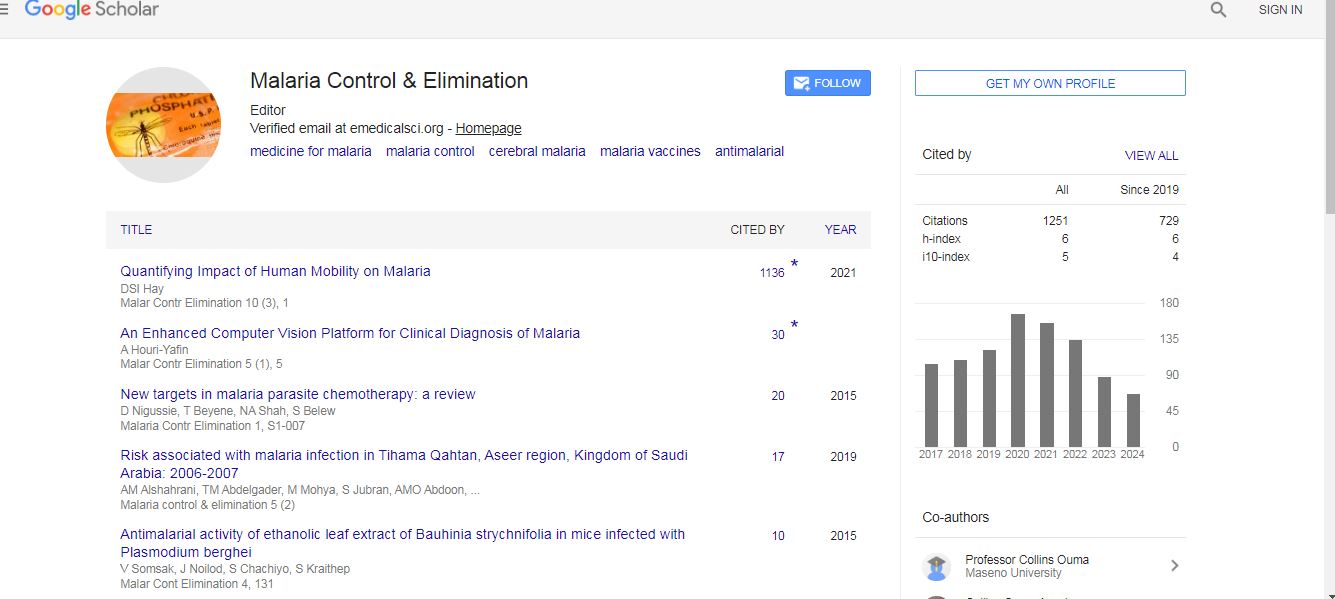
Malaria Control & Elimination received 1187 citations as per Google Scholar report