Brief Report - (2025) Volume 9, Issue 5
Received: 01-Sep-2025, Manuscript No. jchd-26-185704;
Editor assigned: 03-Sep-2025, Pre QC No. P-185704;
Reviewed: 17-Sep-2025, QC No. Q-185704;
Revised: 22-Sep-2025, Manuscript No. R-185704;
Published:
29-Sep-2025
, DOI: 10.37421/2684-6020.2024.9.260
Citation: Ali, Khaled. ”Heart-Healthy Lifestyle: Key to Coronary
Disease Prevention.” J Coron Heart Dis 09 (2025):260.
Copyright: © 2025 Ali K. This is an open-access article distributed under the terms of the Creative Commons Attribution License, which permits unrestricted use, distribution
and reproduction in any medium, provided the original author and source are credited.
Coronary heart disease (CHD) is a complex condition significantly influenced by an individual's lifestyle choices. Modifiable risk factors, including dietary habits, physical activity levels, smoking, and alcohol consumption, play a pivotal role in the onset and advancement of this disease. Adopting a heart-healthy lifestyle, which encompasses a balanced diet low in saturated fats and cholesterol, regular engagement in physical exercise, cessation of smoking, and maintaining moderate alcohol intake, can substantially decrease the risk of developing CHD and enhance overall cardiovascular health outcomes [1].
The connection between dietary patterns and the risk of CHD is well-documented and extensively studied. Diets that are abundant in fruits, vegetables, whole grains, and lean protein sources, while simultaneously limiting the intake of processed foods, red meat, and added sugars, have been consistently associated with a lower incidence of CHD. Specific dietary regimens, such as the Mediterranean diet, have repeatedly demonstrated cardioprotective benefits by favorably impacting lipid profiles, blood pressure regulation, and inflammatory processes within the body [2].
Physical inactivity stands out as a significant and independent risk factor for the development of CHD. Engaging in regular aerobic and resistance exercise routines is crucial for improving cardiovascular fitness, lowering blood pressure, optimizing lipid profiles, and effectively managing body weight. All these factors collectively contribute to a notable reduction in the overall risk of CHD. Current recommendations generally advise a minimum of 150 minutes of moderate-intensity or 75 minutes of vigorous-intensity aerobic activity per week, complemented by muscle-strengthening exercises [3].
Smoking represents a potent and detrimental risk factor for CHD. The act of smoking inflicts damage upon blood vessels, actively promotes the development of atherosclerosis, and significantly elevates the likelihood of forming blood clots. Fortunately, the cessation of smoking leads to prompt and considerable reductions in CHD risk, with the beneficial effects continuing to accumulate over time. Consequently, public health initiatives and clinical interventions specifically designed to support smoking cessation are indispensable for effective CHD prevention strategies [4].
Excessive consumption of alcohol can elevate the risk of CHD through a variety of physiological mechanisms. These include contributing to the development of hypertension, inducing cardiac arrhythmias, and causing cardiomyopathy. While some studies suggest potential cardioprotective effects from moderate alcohol intake, these benefits are often overshadowed by other health risks, and medical guidelines do not typically endorse initiating alcohol consumption for cardiovascular health. A nuanced understanding of the dose-response relationship between alcohol and cardiovascular health is therefore essential [5].
Obesity is recognized as a major risk factor for CHD, and it frequently coexists with other detrimental metabolic abnormalities such as dyslipidemia, hypertension, and insulin resistance. Undertaking weight loss through a combination of dietary adjustments and regular exercise can lead to substantial improvements in these associated risk factors, thereby reducing the overall burden of CHD in affected individuals. This underscores the importance of weight management in cardiovascular health [6].
The role of psychological stress in the development of CHD, though often overlooked, is significant. Chronic stress can foster the adoption of unhealthy lifestyle behaviors, such as poor dietary choices and smoking, and can also directly impact cardiovascular physiology by increasing blood pressure and heart rate. Interventions based on mindfulness and other stress-reduction techniques have shown considerable promise in mitigating these adverse cardiovascular effects [7].
Both the duration and the quality of sleep are increasingly acknowledged as critical determinants of cardiovascular health. Experiencing either persistently short or excessively long sleep durations, in addition to suffering from poor sleep quality, such as in the case of sleep apnea, has been linked to an increased risk of CHD. Therefore, optimizing sleep hygiene practices is an essential component of a comprehensive heart-healthy lifestyle [8].
Achieving and maintaining adherence to lifestyle modifications presents a significant challenge, yet it remains critically important for the long-term prevention of CHD. Emerging strategies such as motivational interviewing, behavioral counseling, and the utilization of digital health interventions are proving effective in enhancing patient engagement and improving adherence to recommended lifestyle changes. These approaches ultimately contribute to better cardiovascular outcomes [9].
The intricate interplay between an individual's genetic makeup and their lifestyle choices in the context of CHD is a complex area of study. While a genetic predisposition can undoubtedly heighten the risk of developing CHD, the adoption and maintenance of a healthy lifestyle can significantly counteract these genetic influences. Therefore, understanding an individual's genetic risk profile in conjunction with personalized lifestyle interventions holds considerable promise for developing more effective and targeted CHD prevention strategies [10].
Coronary heart disease (CHD) is profoundly affected by lifestyle choices, with modifiable risk factors such as diet, physical activity, smoking, and alcohol consumption playing a critical role in its development and progression. Embracing a heart-healthy lifestyle, characterized by a balanced diet low in saturated fats and cholesterol, regular physical activity, smoking cessation, and moderate alcohol intake, can substantially reduce the risk of CHD and improve cardiovascular health outcomes [1].
The relationship between dietary patterns and CHD risk is firmly established. Diets rich in fruits, vegetables, whole grains, and lean proteins, while limiting processed foods, red meat, and added sugars, are associated with lower CHD incidence. Specific dietary approaches, like the Mediterranean diet, have consistently shown cardioprotective effects by positively influencing lipid profiles, blood pressure, and inflammation [2].
Physical inactivity is a significant, independent risk factor for CHD. Regular engagement in aerobic and resistance exercise enhances cardiovascular fitness, lowers blood pressure, improves lipid profiles, and aids in weight management, all of which contribute to reducing CHD risk. Current guidelines recommend at least 150 minutes of moderate-intensity or 75 minutes of vigorous-intensity aerobic activity per week, along with muscle-strengthening activities [3].
Smoking stands as a potent risk factor for CHD, causing damage to blood vessels, promoting atherosclerosis, and increasing the risk of blood clots. Smoking cessation leads to rapid and substantial reductions in CHD risk, with benefits that continue to accrue over time. Therefore, public health initiatives and clinical interventions focused on smoking cessation are crucial for CHD prevention [4].
Excessive alcohol consumption contributes to CHD risk through various pathways, including hypertension, arrhythmias, and cardiomyopathy. While moderate alcohol intake might offer some cardioprotective effects, these benefits are often outweighed by other health risks, and it is generally not recommended to start drinking for cardiovascular benefits. Understanding the dose-response relationship is key to managing alcohol's impact on cardiovascular health [5].
Obesity is a significant risk factor for CHD and often coexists with other metabolic abnormalities like dyslipidemia, hypertension, and insulin resistance. Weight loss achieved through dietary changes and exercise can lead to substantial improvements in these risk factors and reduce the overall burden of CHD, highlighting the importance of weight management in cardiovascular disease prevention [6].
Psychological stress plays an often-underestimated role in CHD prevention. Chronic stress can lead to unhealthy lifestyle behaviors, such as poor eating habits and smoking, and can directly affect cardiovascular physiology by increasing blood pressure and heart rate. Stress-reduction techniques, including mindfulness-based interventions, show promise in mitigating these cardiovascular risks [7].
Sleep duration and quality are increasingly recognized as vital for cardiovascular health. Both short and long sleep durations, as well as poor sleep quality (e.g., sleep apnea), are linked to an elevated risk of CHD. Therefore, optimizing sleep hygiene is a critical component of a heart-healthy lifestyle, contributing to overall cardiovascular well-being [8].
Adherence to lifestyle modifications, while challenging, is paramount for the long-term prevention of CHD. Strategies like motivational interviewing, behavioral counseling, and digital health interventions are emerging as effective methods to enhance patient engagement and adherence to recommended lifestyle changes, ultimately leading to improved cardiovascular outcomes [9].
The complex interplay between genetics and lifestyle in the context of CHD is notable. Although genetic predisposition can increase risk, adopting a healthy lifestyle can significantly mitigate these genetic influences. Personalized lifestyle interventions guided by an understanding of an individual's genetic risk profile offer promising avenues for more effective CHD prevention strategies [10].
Coronary heart disease (CHD) is heavily influenced by lifestyle factors. Modifiable risks like diet, physical activity, smoking, and alcohol intake are crucial. A heart-healthy lifestyle involving a balanced diet, regular exercise, smoking cessation, and moderate alcohol consumption can significantly reduce CHD risk. Dietary patterns rich in fruits, vegetables, and whole grains, while limiting processed foods, are linked to lower incidence. Physical inactivity is a major risk, while regular exercise improves cardiovascular health. Smoking is a potent risk factor, and quitting yields substantial benefits. Excessive alcohol increases risk, though moderate intake's benefits are debated. Obesity and chronic stress contribute significantly to CHD, and weight loss and stress management are beneficial. Sleep quality and duration are also critical determinants of cardiovascular health. Adherence to lifestyle changes is challenging but vital, and behavioral interventions can improve outcomes. The interaction between genetics and lifestyle is complex, with healthy habits capable of mitigating genetic predispositions. Overall, proactive lifestyle management is key to preventing and managing CHD.
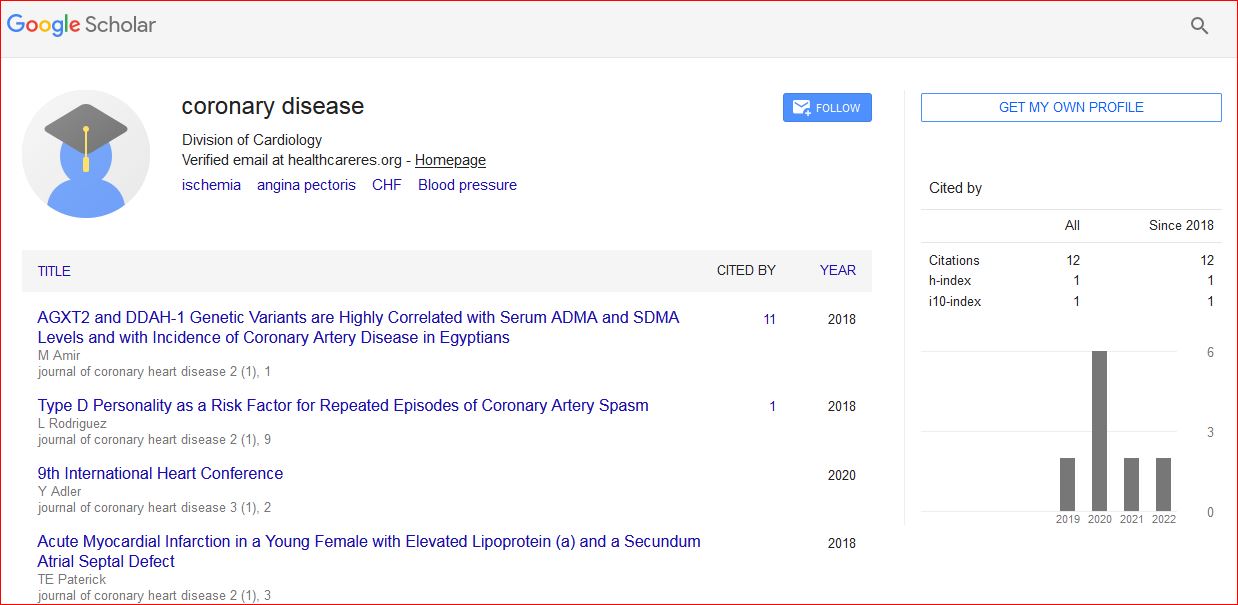
Journal of Coronary Heart Diseases received 15 citations as per Google Scholar report