Perspective - (2025) Volume 14, Issue 4
Received: 03-Aug-2025, Manuscript No. jnc-25-173964;
Editor assigned: 05-Aug-2025, Pre QC No. P-173964;
Reviewed: 19-Aug-2025, QC No. Q-173964;
Revised: 25-Aug-2025, Manuscript No. R-173964;
Published:
30-Aug-2025
, DOI: 10.37421/2167-1168.2025.14.722
Citation: Lindgren, Sofia. ”Healthcare Workforce: Challenges, Solutions, Future.” J Nurs Care 14 (2025):722.
Copyright: © 2025 Lindgren S. This is an open-access article distributed under the terms of the Creative Commons Attribution License, which permits unrestricted use, distribution and reproduction in any medium, provided the original author and source are credited.
The profound impact of the COVID-19 pandemic on the mental health of healthcare workers has become a significant area of research. Extensive findings reveal high prevalence rates of anxiety, depression, insomnia, and pervasive burnout among this frontline group. Recognizing and addressing these psychological tolls is crucial, underscoring the urgent demand for comprehensive psychological support interventions to safeguard the well-being of healthcare professionals during ongoing and future public health crises[1].
A pressing global crisis is the widespread shortage of healthcare personnel, affecting health systems worldwide. This complex issue stems from a multitude of factors, including systemic inadequacies in education and training programs, consistently poor working conditions, and an uneven geographical distribution of available talent. The severe consequences of these shortages are felt across patient care and overall public health, necessitating the development and implementation of robust policy solutions aimed at fostering sustainable workforce planning for the long term[2].
Digital advancements, such as the rapid integration of Artificial Intelligence (AI) and the expansion of telemedicine, are fundamentally transforming the healthcare landscape. These technological shifts are not merely operational changes; they are significantly reshaping the roles and demands placed upon the healthcare workforce. To effectively harness the benefits of these innovations while preserving human-centric care, there is an imperative for continuous skill development and adaptive training initiatives for all healthcare providers[3].
Efforts to enhance racial and ethnic diversity within the healthcare workforce have been the subject of rigorous systematic examination. Studies consistently demonstrate that increased diversity yields tangible positive impacts on patient outcomes, fosters greater health equity, and improves cultural competence within care delivery. This evidence strongly supports the advocacy for well-structured and impactful policy interventions designed to address and rectify existing underrepresentation within the healthcare professions[4].
The COVID-19 pandemic profoundly impacted the nursing profession, leading to a substantial increase in nurse turnover and presenting significant challenges for retention. A systematic review and meta-analysis quantified these alarming trends, pinpointing key contributing factors such as heightened burnout, deteriorating working conditions, and insufficient organizational support. Effective strategies are urgently needed to stabilize the nursing workforce, ensuring adequate staffing and support for this essential group of healthcare providers[5].
Evaluating interventions aimed at bolstering the mental health and overall well-being of healthcare workers is vital for a resilient health system. Research indicates that promising approaches include mindfulness-based stress reduction techniques and cognitive behavioral therapy. The efficacy of these interventions is often amplified by strong organizational support, emphasizing that systemic factors play a significant role alongside individual coping strategies in promoting enduring mental health[6].
Physician well-being is a complex issue requiring targeted interventions. A comprehensive systematic review explored a wide array of strategies, encompassing both individual-focused resilience training and broader organizational changes designed to alleviate workplace stressors. This research highlights the multifactorial nature of physician burnout, asserting that effective solutions must be comprehensive and tailored to address the diverse contributing factors within the medical profession[7].
The role of Artificial Intelligence (AI) in healthcare is rapidly evolving, presenting both formidable challenges and substantial opportunities for the medical workforce. This technological shift mandates that healthcare professionals receive specialized training to effectively collaborate with AI systems, adapt to redefined professional roles, and navigate the complex ethical considerations that arise from AI integration. Preparing the workforce for this future is paramount for leveraging AI's full potential[8].
During the intense pressures of the COVID-19 pandemic, understanding the resilience factors and coping mechanisms of healthcare workers became critical. A systematic review revealed that both individual psychological resources, such as personal coping strategies, and robust organizational support systems were instrumental in fostering resilience. These combined elements were essential in mitigating adverse mental health outcomes among those on the front lines, reinforcing the need for integrated support[9].
Workplace violence against healthcare professionals represents a pervasive and serious global issue. A systematic review and meta-analysis quantified its prevalence and identified associated factors, demonstrating the significant physical and psychological harm inflicted upon healthcare providers. The findings underscore an urgent and undeniable need for the implementation of comprehensive preventive measures and supportive institutional policies to protect healthcare workers from such pervasive threats[10].
The profound impact of global health crises, such as the COVID-19 pandemic, on the mental health and overall well-being of healthcare workers has become an area of critical concern. Studies consistently highlight a significant toll, with these frontline professionals experiencing alarming rates of anxiety, depression, insomnia, and pervasive burnout [1]. This acute stress environment prompted deeper investigation into resilience factors and effective coping mechanisms, revealing that both individual psychological resources and robust organizational support systems are instrumental in mitigating adverse mental health outcomes [9]. Furthermore, interventions designed to bolster mental health, including mindfulness-based stress reduction and cognitive behavioral therapy, have demonstrated promising results, with their effectiveness often enhanced by strong organizational backing [6]. For physicians, addressing burnout requires a comprehensive approach, recognizing its multifactorial nature and necessitating tailored interventions that encompass both individual-focused strategies and broader organizational changes [7].
Beyond mental health, the global healthcare sector continues to grapple with persistent and systemic workforce shortages. These critical shortages stem from a complex interplay of factors, including inadequate education, poor working conditions, and maldistribution of skilled professionals. Such deficiencies create severe consequences for health systems worldwide [2]. A particularly acute challenge lies within the nursing profession, where systematic reviews quantified a significant increase in nurse turnover and formidable retention issues, especially during and after the COVID-19 pandemic. Burnout, unfavorable working environments, and insufficient organizational support are consistently identified as primary drivers behind nurses leaving their vital roles. Consequently, there is an urgent need for strategic interventions aimed at stabilizing and sustaining the nursing workforce [5].
The healthcare landscape is undergoing a profound digital transformation, characterized by the increasing integration of technologies like Artificial Intelligence (AI) and the expansion of telemedicine. This evolution is fundamentally reshaping how healthcare services are delivered and impacting the workforce [3]. The evolving role of AI presents both considerable challenges and unique opportunities for medical professionals. It mandates that healthcare systems prioritize comprehensive training for their staff to effectively collaborate with AI systems, adapt proactively to new professional roles, and carefully navigate complex ethical considerations [8]. Continuous skill development and adaptive training initiatives are paramount to ensure human-centric care remains central amidst these rapid technological advancements.
Efforts to enhance racial and ethnic diversity within the healthcare workforce represent another vital dimension of improving healthcare delivery. Rigorous systematic reviews demonstrate that a more diverse workforce yields tangible positive impacts on patient outcomes and actively advances health equity. Moreover, increased diversity contributes to a richer understanding of diverse patient populations and improves cultural competence within care provision. This compelling evidence strongly supports the advocacy for well-structured policy interventions designed to address and rectify existing underrepresentation within the healthcare professions, fostering a more inclusive and effective healthcare environment [4].
A significant and alarming concern for healthcare professionals globally is the pervasive issue of workplace violence. Systematic reviews and meta-analyses have meticulously assessed the global prevalence of such violence and rigorously identified its associated factors. The data unequivocally demonstrates that violence against healthcare workers leads to substantial physical and profound psychological harm, impacting not only individual well-being but also contributing to workforce attrition. This stark reality underscores an urgent and undeniable requirement for the implementation of comprehensive preventive measures, robust security protocols, and strong supportive organizational policies to effectively protect those who provide essential care from these persistent threats [10].
What this really means is that a holistic and integrated approach is essential to address the intertwined, complex challenges facing the modern healthcare workforce. From mitigating the severe mental health toll to addressing systemic global shortages, embracing technological shifts responsibly, fostering genuine diversity, and crucially ensuring workplace safetyâ??each aspect demands dedicated, coordinated attention. Preparing the healthcare workforce for future demands involves not just skill acquisition but also a deep commitment to creating supportive, equitable, and inherently safe environments where professionals can thrive and deliver optimal patient care. This comprehensive understanding and proactive strategy are key to building a resilient, effective, and sustainable global health system.
The healthcare sector faces a range of significant challenges impacting its workforce, as highlighted across several recent reviews. Mental health among healthcare workers has been a critical concern, particularly exacerbated by the COVID-19 pandemic, leading to high rates of anxiety, depression, insomnia, and burnout. The need for robust psychological support and resilience-building strategies has become evident, with studies exploring effective interventions like mindfulness and cognitive behavioral therapy. Beyond the pandemic's immediate toll, global health workforce shortages persist, driven by issues such as inadequate training, poor working conditions, and maldistribution. The evolving landscape of healthcare also sees digital advancements, including Artificial Intelligence (AI) and telemedicine, reshaping roles and requiring continuous skill development. This transformation presents both opportunities and challenges, necessitating training for professionals to effectively collaborate with AI systems and manage ethical considerations. Diversity within the healthcare workforce is another vital area, with interventions aimed at increasing racial and ethnic representation showing positive impacts on patient outcomes and health equity. Specific workforce segments, like nursing, experience high turnover rates, especially amplified during the pandemic, underscoring the need for improved retention strategies that address burnout and working conditions. Furthermore, healthcare professionals frequently encounter workplace violence, a pervasive issue that causes significant physical and psychological harm, calling for urgent preventive measures. Overall, the literature emphasizes a multifaceted approach to support and sustain the healthcare workforce, addressing mental well-being, structural shortages, technological shifts, diversity, and safety concerns.
None
None
1. Sofia P, Vasiliki N, Theodoros G. "The Impact of COVID-19 on Mental Health and Burnout Among Healthcare Workers: A Systematic Review".J Clin Med 9 (2020):1621.
Indexed at, Google Scholar, Crossref
2. Richard MS, Jun XL, Yemane K. "Global health workforce shortages: a scoping review of causes, consequences, and solutions".Hum Resour Health 18 (2020):52.
Indexed at, Google Scholar, Crossref
3. Bertalan M, Zsanett D, Miklos B. "The digital transformation of healthcare: implications for the workforce".NPJ Digit Med 5 (2022):155.
Indexed at, Google Scholar, Crossref
4. Ahmed G, Riad S, Young JL. "Racial and ethnic diversity in the healthcare workforce: a systematic review of the evidence for policy interventions".J Health Care Poor Underserved 34 (2023):122-140.
Indexed at, Google Scholar, Crossref
5. Jinsuk H, Jinah K, Eunjeong K. "Nurse turnover and retention during the COVID-19 pandemic: A systematic review and meta-analysis".J Adv Nurs 79 (2023):162-178.
Indexed at, Google Scholar, Crossref
6. Stephen K, Alana SW, Darryl S. "Effectiveness of interventions to improve mental health and wellbeing of healthcare workers: A systematic review and meta-analysis".J Affect Disord 273 (2020):290-302.
Indexed at, Google Scholar, Crossref
7. Julian Z, Jonathan E, Jennifer G. "Systematic review of interventions to improve physician well-being".Front Psychol 12 (2021):697207.
Indexed at, Google Scholar, Crossref
8. Christian B, Jagannath K, Avirup K. "Artificial intelligence in healthcare: Challenges and opportunities for the medical workforce".JMIR Med Inform 10 (2022):e35582.
Indexed at, Google Scholar, Crossref
9. Yu L, Jing H, Yixiao S. "Resilience and coping strategies among healthcare workers during the COVID-19 pandemic: A systematic review".J Affect Disord 299 (2022):348-361.
Indexed at, Google Scholar, Crossref
10. Min L, Xiuling C, Kaiyan C. "Workplace violence against healthcare professionals: a systematic review and meta-analysis".Saf Health Work 12 (2021):15-22.
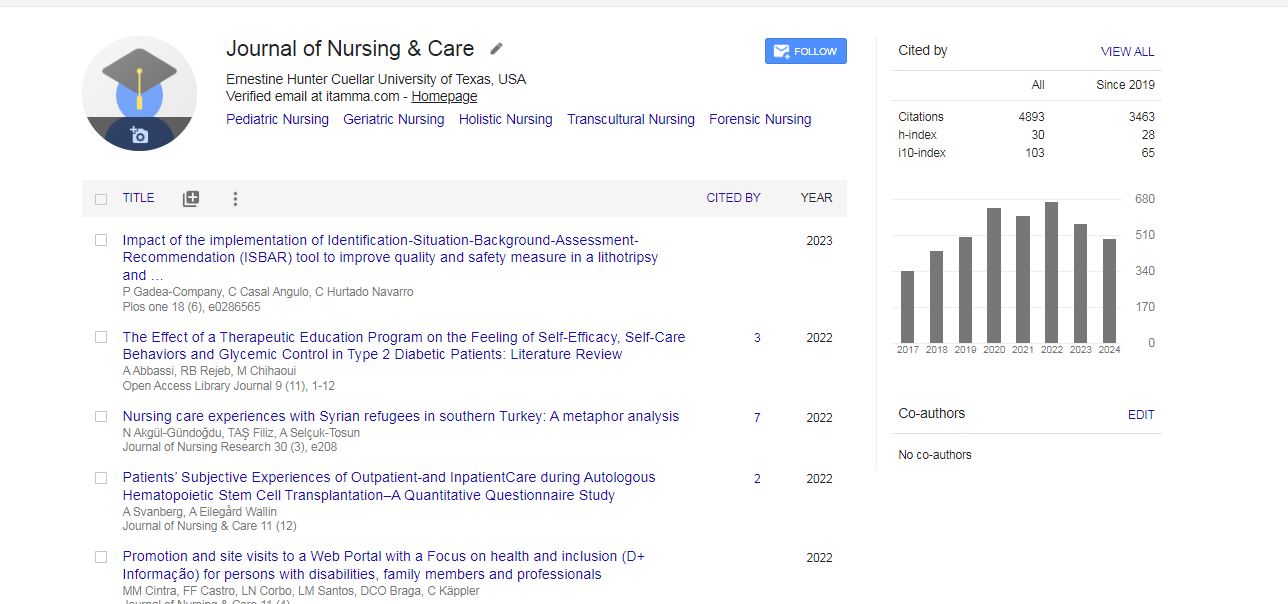
Journal of Nursing & Care received 4230 citations as per Google Scholar report