Perspective - (2025) Volume 15, Issue 3
Received: 30-May-2025, Manuscript No. jmcj-25-176490;
Editor assigned: 02-Jun-2025, Pre QC No. P-176490;
Reviewed: 13-Jun-2025, QC No. Q-176490;
Revised: 20-Jun-2025, Manuscript No. R-176490;
Published:
27-Apr-2025
, DOI: 10.37421/2165-7912.2025.15.618
Citation: Hale, Marcus J. "Global Platforms: Reshaping Media, Power, Geopolitics." J Mass Communicat Journalism 15(2025):618.
Copyright: © 2025 Hale J. Marcus This is an open-access article distributed under the terms of the Creative Commons Attribution License, which permits unrestricted use,
distribution and reproduction in any medium, provided the original author and source are credited.
The advent of global digital platforms, epitomized by tech giants like Google, Facebook, and Apple, has irrevocably transformed the landscape of traditional media globalization, establishing these entities as formidable gatekeepers. These platforms exert profound control over content distribution, meticulously gather and utilize audience data, and command significant advertising revenue. This concentrated power has led to the emergence of novel forms of media authority, which frequently challenge established notions of national media sovereignty and consequently introduce a myriad of complex ethical and regulatory dilemmas that warrant immediate global attention [1].
Furthermore, the pervasive phenomenon of datafication, coupled with the rapid ascent of these global digital platforms, is fundamentally reconfiguring the intricate flows of media across international borders. This reorientation is primarily driven by algorithmic curation, aggressive data extraction strategies, and the undeniable dominance these platforms hold. These elements collectively introduce entirely new power dynamics, effectively shifting traditional gatekeeping roles and exerting a considerable impact on content diversity, universal accessibility, and the broader economic landscape of media industries throughout the world [2].
Concurrently, the global expansion of Chinese media presents a unique case study, particularly in its implications for African nations. Beijing's strategic 'going out' approach is driven by specific motivations, yet it encounters substantial challenges in successfully adapting to the diverse and often localized media environments found across Africa. This expansion frequently results in contradictory outcomes, fueling ongoing debates surrounding media influence, the subtle exercise of soft power, and the adherence to critical journalistic ethics within an increasingly intricate globalized context [3].
The transformative influence of Artificial Intelligence (AI) on global journalism is another critical dimension of contemporary media. Its impact is evident in the evolution of journalistic practices, the emergence of novel ethical considerations, and the constant reshaping of power dynamics within the news industry itself. AI streamlines tasks, profoundly influences content distribution channels, and raises serious questions about inherent algorithmic bias, the preservation of journalistic autonomy, and the very future of information dissemination in our globally interconnected society [4].
The tension between the worldwide operations of streaming platforms and individual national cultural policies is particularly pronounced in regions such as Europe. These powerful platforms inherently challenge long-standing traditional regulatory frameworks that were originally conceived for national media ecosystems. This conflict instigates widespread debates concerning content quotas, mandates for local production, and the imperative to preserve cultural diversity in an ever-expanding, globalized digital media market [5].
Beyond cultural policies, the geopolitical competition between major global players like China and the United States is actively shaping the future of the global digital order. This rivalry unfolds through their distinct digital platforms and underlying technological infrastructures. The consequence is the formation of divergent technological ecosystems, varying data governance models, and competing spheres of digital influence. These developments critically impact fundamental aspects such as free speech, data privacy, and the overall trajectory of global information flows [6].
Digital media platforms also play an instrumental role in empowering diasporic communities, enabling them to foster and maintain vital transnational connections, construct fluid hybrid identities, and actively participate in cross-border public spheres. Online media significantly facilitates communication, supports robust cultural production, and aids political mobilization among migrant populations. However, this digital landscape also surfaces challenges related to persistent digital divides, questions of equitable representation, and the inherent complexities of belonging in our intricately globalized world [7].
A critical examination of the political economy of global digital media reveals pressing concerns, including the rise of new monopolies, the pervasive practice of data extraction, and the significant shifts in labor conditions within the burgeoning platform economy. This form of media globalization, largely propelled by dominant tech corporations, regrettably exacerbates existing economic inequalities, systematically commodifies user data, and fundamentally reshapes the tenets of global capitalism itself. Such developments raise urgent and profound questions concerning power distribution, ownership models, and the vital need for democratic control over increasingly crucial digital resources [8].
The vibrant dynamics of global popular culture in the digital age are clearly exemplified through the phenomena of transnational fandom and evolving media consumption patterns, notably visible in the global appeal of East Asian cultural exports like K-pop. Digital platforms are undeniably pivotal in catalyzing the worldwide dissemination of popular culture, leading to the creation of innovative hybrid cultural forms, facilitating profound active fan engagement across borders, and offering fresh frameworks for understanding cultural influence that move beyond traditional Western-centric models of media globalization [9].
Finally, global media, with digital platforms at its core, holds immense power in framing international conflicts and crises. This framing directly impacts public perception and carries the critical potential to either escalate or de-escalate global tensions. Both traditional news organizations and pervasive social media play a crucial role in constructing narratives, mobilizing diverse public opinions, and ultimately influencing significant geopolitical outcomes. This highlights the profound and intricate complexities of media influence within our highly interconnected and often polarized global environment [10].
At the heart of contemporary media globalization lies the undeniable power of global digital platforms. These entities, functioning as new gatekeepers, have fundamentally reshaped how content is distributed and consumed. They exert significant control over audience data and advertising revenue, thereby introducing novel forms of media authority that frequently challenge national media sovereignty and generate complex ethical and regulatory questions [1]. This rearticulation of power is heavily influenced by datafication, where algorithmic curation and extensive data extraction by dominant platforms shift traditional roles. These shifts directly affect content diversity, accessibility, and the economic frameworks of global media industries [2]. The political economy underscores this further, identifying new monopolies, pervasive data extraction, and altered labor conditions within the platform economy, all exacerbating economic inequalities and commodifying user data, thereby reshaping global capitalism [8].
Beyond commercial dominance, media globalization is deeply intertwined with geopolitical realities. The global expansion of Chinese media, particularly its impact on African nations, highlights the complexities of a 'going out' strategy. This initiative faces challenges in local adaptation and sparks debates around media influence, soft power, and journalistic ethics [3]. Similarly, the global operations of streaming platforms often clash with national cultural policies, particularly in Europe. These platforms challenge traditional regulatory frameworks, leading to crucial discussions about content quotas, local production, and the preservation of cultural diversity [5]. This interplay is further complicated by the geopolitical competition between China and the United States, which shapes the global digital order through divergent technological ecosystems, data governance models, and digital influence spheres, impacting free speech and data privacy [6]. Moreover, how global media, especially digital platforms, frame international conflicts significantly influences public perception and geopolitical outcomes, underscoring their power in shaping narratives and mobilizing opinions [10].
The transformative influence of Artificial Intelligence (AI) on global journalism marks another significant shift. AI affects journalistic practices, introduces new ethical considerations, and reconfigures power dynamics within the news industry. It automates tasks, influences content distribution, and raises critical questions about algorithmic bias, journalistic autonomy, and the future of information dissemination in an interconnected world [4].
Digital media platforms also foster significant social and cultural transformations. They empower diasporic communities to maintain vital transnational connections, construct fluid hybrid identities, and engage in cross-border public spheres. Online media facilitates communication, cultural production, and political mobilization among migrants, though challenges like digital divides and representation persist [7]. Additionally, the digital age has revolutionized global popular culture. This is evident in transnational fandom and media consumption patterns, notably around East Asian cultural phenomena like K-pop. Digital platforms accelerate the global spread of popular culture, fostering hybrid cultural forms and active fan engagement across borders, offering new models for understanding cultural influence beyond Western-centric views [9].
Global digital platforms fundamentally reshape media globalization, acting as powerful gatekeepers that control content, data, and revenue. This dominance challenges national sovereignty and introduces significant ethical and regulatory questions. The pervasive datafication and algorithmic curation on these platforms are reconfiguring global media flows, with direct impacts on content diversity, accessibility, and the economic landscape of media industries worldwide. Beyond this, the geopolitical dimensions of media globalization are evident in China's media expansion into Africa, which raises complex issues of influence, soft power, and journalistic ethics. Similarly, the operations of global streaming platforms frequently clash with national cultural policies, especially in Europe, sparking debates over content quotas, local production, and the preservation of cultural diversity. The broader geopolitical competition between major global powers like China and the United States further shapes the digital order through distinct technological ecosystems and data governance models, directly influencing aspects like free speech and data privacy. Technological advancements, particularly Artificial Intelligence (AI), are transforming global journalism, affecting practices, ethics, and power dynamics while raising concerns about algorithmic bias and journalistic autonomy. Socially and culturally, digital media empowers diasporic communities to forge transnational connections and hybrid identities, fostering cross-border public spheres despite persistent digital divides. Moreover, the digital age accelerates global popular culture phenomena, such as K-pop, facilitating transnational fandom and new cultural influences that move beyond traditional Western-centric models. Underlying these developments, the political economy of global digital media points to the rise of new monopolies, pervasive data extraction, and altered labor conditions, which collectively exacerbate economic inequalities and commodify user data, reshaping global capitalism. Ultimately, global media plays a critical role in framing international conflicts and crises, influencing public perception and geopolitical outcomes in an increasingly interconnected and often polarized global environment.
None
None
Indexed at, Google Scholar, Crossref
Indexed at, Google Scholar, Crossref
Indexed at, Google Scholar, Crossref
Indexed at, Google Scholar, Crossref
Indexed at, Google Scholar, Crossref
Indexed at, Google Scholar, Crossref
Indexed at, Google Scholar, Crossref
Indexed at, Google Scholar, Crossref
Indexed at, Google Scholar, Crossref
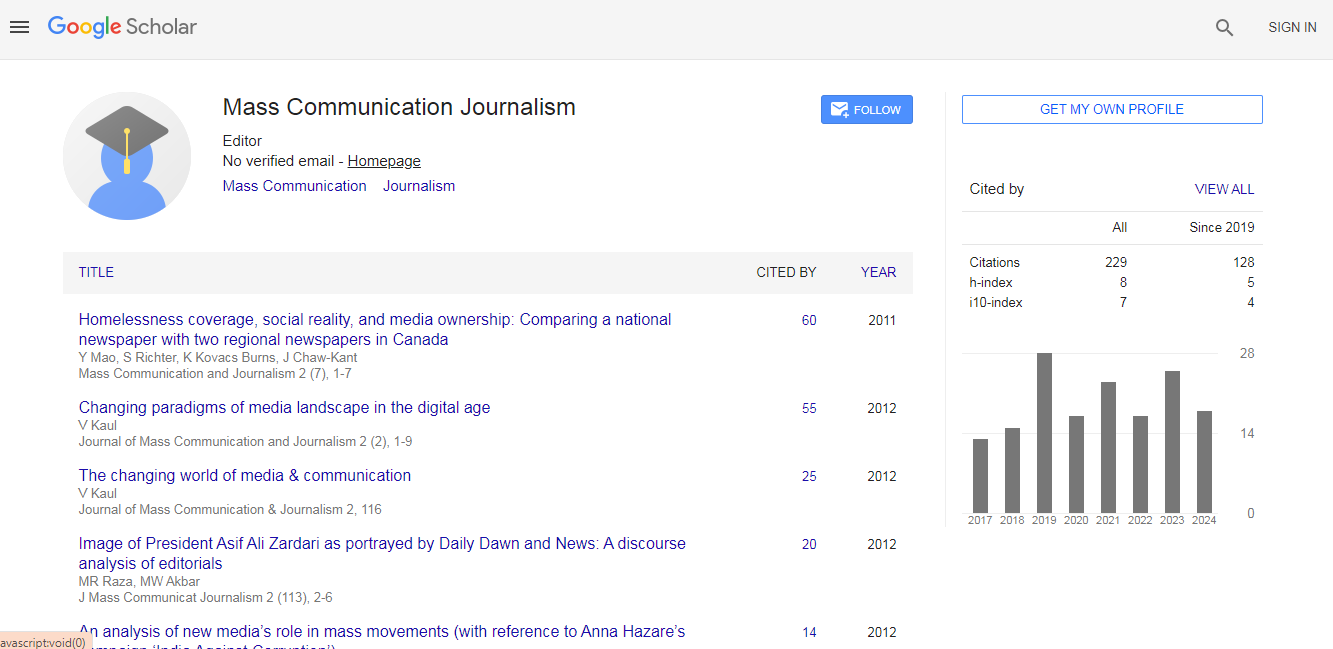
Journal of Mass Communication & Journalism received 205 citations as per Google Scholar report