Short Communication - (2025) Volume 17, Issue 5
Received: 01-Sep-2025, Manuscript No. jcst-25-176304;
Editor assigned: 03-Sep-2025, Pre QC No. P-176304;
Reviewed: 17-Sep-2025, QC No. Q-176304;
Revised: 22-Sep-2025, Manuscript No. R-176304;
Published:
29-Sep-2025
, DOI: 10.37421/1948-5956.2025.17.729
Citation: Carter, Natalie. ”Global Cancer Burden: Rising Incidence,
Persistent Disparities.” J Cancer Sci Ther 17 (2025):729.
Copyright: © 2025 Carter N. This is an open-access article distributed under the terms of the Creative Commons Attribution License, which permits unrestricted use, distribution
and reproduction in any medium, provided the original author and source are credited.
A comprehensive overview of the global cancer burden in 2020 estimated 19.3 million new cancer cases and nearly 10.0 million deaths, identifying breast cancer as the most commonly diagnosed cancer globally, surpassing lung cancer. This data also revealed significant geographical and sex disparities in cancer incidence and mortality, underscoring the necessity for tailored cancer control strategies worldwide [1].
Focusing on Europe, an analysis detailed cancer incidence and mortality for 40 countries in 2020, estimating 2.7 million new cases and 1.3 million deaths. It highlighted breast cancer as most common among women and prostate cancer among men, with varying patterns across European regions influenced by differences in risk factors and healthcare access, demanding targeted prevention and early detection programs [2].
A systematic analysis for the Global Burden of Disease Study 2019 evaluated the global burden of colorectal cancer (CRC) in 2019, showing significant increases in incidence and mortality, particularly in younger age groups and low- and middle-income countries. This study emphasized the critical role of modifiable risk factors like diet, obesity, and physical inactivity in driving these trends, highlighting the need for global public health interventions [3].
Another systematic analysis uncovered a significant global rise in early-onset cancer incidence between 2000 and 2019, with particularly sharp increases in female breast, nasopharynx, and prostate cancers. Environmental and lifestyle changes, such as Westernized diets, obesity, and alcohol consumption, are pointed to as potential factors fueling these trends, underscoring the necessity for focused research and preventive strategies aimed at younger populations [4].
A population-based study examined cervical cancer incidence trends across 30 countries from 2003 to 2017, observing significant decreases in high-income countries due to effective screening and Human Papillomavirus (HPV) vaccination programs. Many low- and middle-income countries, however, continue to face rising or stable incidence rates, highlighting the profound impact of organized screening and vaccination on disease burden and calling for broader global implementation of these interventions [5].
Cancer incidence and mortality trends in the United States from 1999 to 2018 revealed overall declines in both, primarily driven by decreases in lung, prostate, and colorectal cancers. This report also brought attention to persistent and emerging racial, ethnic, and socioeconomic disparities, with certain cancers like liver and pancreatic continuing to rise, indicating the need for targeted interventions to address these inequalities [6].
A systematic analysis in 2020 presented a global picture of cancer burden in adolescents and young adults (AYA, 15-39 years), estimating 1.3 million new cases. It identified significant increases in incidence for certain cancers, such as breast and thyroid, within this age group. The findings call for increased attention to AYA-specific cancer prevention, early detection, and survivorship programs, which are often overlooked in general cancer control strategies [7].
In China, cancer incidence and mortality data for 2016 highlighted an increasing burden with approximately 4.06 million new cancer cases. The data noted a higher incidence in males than females and in urban areas compared to rural, with lung, stomach, and colorectal cancers being the most common. This study underscored the urgent need for comprehensive cancer control strategies tailored to China's unique demographic and risk factor profile [8].
The most current U.S. cancer statistics for 2023 anticipate 1.95 million new cancer cases and 609,820 deaths. While ongoing declines in overall cancer mortality are largely attributed to reductions in lung, colorectal, breast, and prostate cancer deaths, the report also highlights rising incidence for several cancers, including advanced-stage prostate cancer and young-onset colorectal cancer, underscoring the dynamic nature of cancer trends [9].
Lastly, a study examining cancer incidence trends among U.S. adults aged 65 and older from 2000 to 2015 found an overall stable or slightly decreasing trend for all cancers combined in this age group, with significant declines in lung and prostate cancers. Nevertheless, incidence increased for several other cancers, including liver, kidney, and melanoma, suggesting a shifting landscape of cancer burden in the elderly population that warrants continued surveillance and targeted prevention [10].
Recent global statistics from 2020 reveal an estimated 19.3 million new cancer cases and nearly 10.0 million deaths, with breast cancer identified as the most commonly diagnosed cancer globally, surpassing lung cancer. These findings also underscore significant geographical and sex disparities in cancer incidence and mortality, emphasizing the critical need for tailored cancer control strategies worldwide [1].
In a regional context, a detailed analysis of 40 European countries in 2020 reported approximately 2.7 million new cancer cases and 1.3 million deaths. Breast cancer was the most prevalent among women, while prostate cancer was most common among men. This study highlighted varying patterns across European regions, influenced by differences in risk factors and healthcare access, thereby necessitating targeted prevention and early detection programs [2].
The global burden of colorectal cancer (CRC) in 2019 demonstrated substantial increases in both incidence and mortality, particularly concerning younger age groups and in low- and middle-income countries. This trend points to the crucial role of modifiable risk factors such as diet, obesity, and physical inactivity in driving these increases, stressing the importance of global public health interventions aimed at these factors [3].
Concurrently, a significant global rise in early-onset cancer incidence was observed between 2000 and 2019, showing particularly sharp increases in female breast, nasopharynx, and prostate cancers. This increase is potentially linked to environmental and lifestyle changes, including Westernized diets, obesity, and alcohol consumption, reinforcing the call for focused research and preventive strategies specifically targeting younger populations [4].
Regarding cervical cancer, incidence trends across 30 countries from 2003 to 2017 showed significant declines in high-income nations, a success largely attributed to effective screening and Human Papillomavirus (HPV) vaccination programs. In stark contrast, many low- and middle-income countries continue to experience rising or stable incidence rates, illustrating the profound impact of organized screening and vaccination on disease burden and advocating for broader global implementation of these vital interventions [5].
Furthermore, a global assessment of the cancer burden in adolescents and young adults (AYA, 15-39 years) in 2020 estimated 1.3 million new cases. This analysis identified significant increases in incidence for specific cancers, such as breast and thyroid, within this demographic. The findings emphasize the need for increased attention to AYA-specific cancer prevention, early detection, and survivorship programs, which are often marginalized within general cancer control strategies [7].
In the United States, cancer incidence and mortality trends from 1999 to 2018 indicated overall declines, predominantly driven by reductions in lung, prostate, and colorectal cancers. Despite these overall improvements, the report highlighted persistent and emerging racial, ethnic, and socioeconomic disparities. Certain cancers, including liver and pancreatic, continue to show rising trends, signifying the ongoing need for targeted interventions to effectively address these inequalities [6].
The most recent U.S. cancer statistics for 2023 forecast 1.95 million new cancer cases and 609,820 deaths. While overall cancer mortality continues to decline, largely due to reductions in lung, colorectal, breast, and prostate cancer deaths, there is also a notable rise in the incidence of several cancers, including advanced-stage prostate cancer and young-onset colorectal cancer, underscoring the complex and dynamic nature of contemporary cancer trends [9].
An examination of cancer incidence trends among U.S. adults aged 65 and older from 2000 to 2015 revealed an overall stable or slightly decreasing trend for all cancers combined in this demographic, with significant declines observed in lung and prostate cancers. Nevertheless, incidence increased for several other cancers, including liver, kidney, and melanoma, suggesting a shifting landscape of cancer burden in the elderly population that warrants continued surveillance and targeted prevention [10].
Finally, in China, the 2016 cancer incidence and mortality data presented an increasing burden, with approximately 4.06 million new cancer cases. The study noted a higher incidence in males than females and in urban areas compared to rural regions, with lung, stomach, and colorectal cancers identified as the most common. This highlights the urgent need for comprehensive cancer control strategies specifically tailored to China's unique demographic and risk factor profile [8].
The global cancer burden remains substantial, with 19.3 million new cases and 10.0 million deaths estimated in 2020. Breast cancer is now the most commonly diagnosed worldwide, and significant geographical and sex disparities persist. European data mirrors some global trends, with breast and prostate cancers being prominent. There's a notable global increase in colorectal cancer, especially in younger populations and low-to-middle income countries, linked to lifestyle factors like diet and obesity. Similarly, early-onset cancers, including breast, nasopharynx, and prostate, are rising globally, potentially driven by environmental and lifestyle changes. Effective screening and HPV vaccination have significantly reduced cervical cancer incidence in high-income countries, but rates remain stable or rising elsewhere, calling for broader implementation. Cancer in adolescents and young adults (AYA) also shows increasing incidence for specific types like breast and thyroid, requiring dedicated prevention programs. In the U.S., overall cancer mortality is declining, largely due to reductions in lung, prostate, and colorectal cancers, yet disparities persist and some cancers, like liver and advanced-stage prostate, are increasing. This dynamic is also seen in the elderly U.S. population, with declines in some cancers but increases in others like liver and kidney. China faces a growing cancer burden, with 4.06 million new cases in 2016, and specific challenges related to gender, urban-rural divides, and common cancers like lung, stomach, and colorectal, highlighting the need for tailored national strategies.
Indexed at, Google Scholar, Crossref
Indexed at, Google Scholar, Crossref
Indexed at, Google Scholar, Crossref
Indexed at, Google Scholar, Crossref
Indexed at, Google Scholar, Crossref
Indexed at, Google Scholar, Crossref
Indexed at, Google Scholar, Crossref
Indexed at, Google Scholar, Crossref
Indexed at, Google Scholar, Crossref
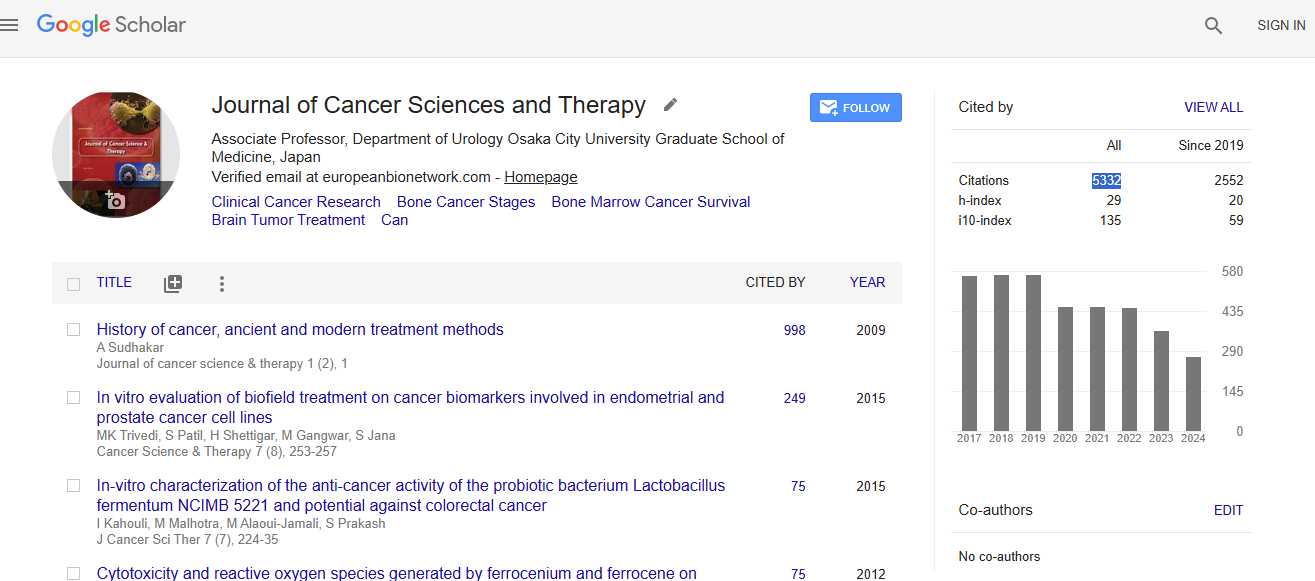
Cancer Science & Therapy received 5332 citations as per Google Scholar report