Brief Report - (2025) Volume 9, Issue 5
Received: 01-Oct-2025, Manuscript No. cmcr-25-178077;
Editor assigned: 03-Oct-2025, Pre QC No. P-178077;
Reviewed: 17-Oct-2025, QC No. Q-178077;
Revised: 22-Oct-2025, Manuscript No. R-178077;
Published:
29-Oct-2025
, DOI: 10.37421/2684-4915.2025.9.393
Citation: Delgado, Ana. ”Global ADR Burden: Management, Safety, Innovation.” Clin Med Case Rep 09 (2025):393.
Copyright: © 2025 Delgado A. This is an open-access article distributed under the terms of the Creative Commons Attribution License, which permits unrestricted use, distribution and reproduction in any medium, provided the original author and source are credited.
This systematic review and meta-analysis investigated the prevalence, characteristics, and outcomes of adverse drug reactions (ADRs) in hospitalized children. It highlighted that ADRs are a significant burden in pediatric inpatient settings, often leading to increased hospital stays and morbidity. The study identified common drug classes implicated and suggested that proactive pharmacovigilance and careful medication management are crucial for patient safety in this vulnerable population[1].
This systematic review and meta-analysis focused on the prevalence and characteristics of adverse drug reactions (ADRs) in geriatric patients, a population highly susceptible due to polypharmacy and age-related physiological changes. The findings underscored a high incidence of ADRs in older adults, emphasizing the need for enhanced pharmacovigilance, medication review, and personalized therapeutic approaches to minimize drug-related harm and improve patient safety in this demographic[2].
This article addresses the significant challenges and opportunities within pharmacovigilance systems in low- and middle-income countries (LMICs). It highlights issues such as under-reporting of adverse drug reactions (ADRs), limited resources, and inadequate regulatory frameworks. The authors emphasize the critical need for robust pharmacovigilance to ensure drug safety in these regions and propose strategies, including capacity building and international collaboration, to strengthen ADR monitoring and reporting[3].
This systematic review explores the application of machine learning (ML) techniques for predicting adverse drug reactions (ADRs). The article discusses various ML models and data sources used to identify potential ADRs, highlighting the promising role of Artificial Intelligence in improving drug safety. It also points out the current limitations and challenges, such as data quality and interpretability, suggesting future directions for developing more accurate and reliable predictive tools in pharmacovigilance[4].
This global pharmacovigilance data analysis examines the adverse drug reactions (ADRs) associated with COVID-19 vaccines. The study characterized the safety profiles of different vaccine types by analyzing large-scale reporting databases. It provided crucial insights into common and serious ADRs, reaffirming the overall safety of these vaccines while emphasizing the importance of continuous monitoring to detect rare or delayed adverse events and inform public health strategies[5].
This systematic review and meta-analysis focused on adverse drug events (ADEs) stemming from medication errors in the pediatric population. The study revealed that medication errors significantly contribute to ADEs in children, leading to preventable harm. It highlighted common types of errors and drug classes involved, underscoring the critical need for improved medication safety practices, error prevention strategies, and enhanced surveillance in pediatric care settings to protect this vulnerable patient group[6].
This systematic review provides a comprehensive overview of various methods used for causality assessment of adverse drug reactions (ADRs). It critically evaluates different algorithms and approaches, such as the Naranjo algorithm and WHO-UMC causality assessment, discussing their strengths and limitations. The article emphasizes the importance of accurate causality assessment in pharmacovigilance for robust decision-making regarding drug safety signals and regulatory actions[7].
This systematic review and meta-analysis explores the role of pharmacogenomic testing in preventing adverse drug reactions (ADRs). The study evaluates the effectiveness of using genetic information to guide drug therapy, demonstrating that tailored prescribing based on an individual's genetic profile can significantly reduce the incidence of certain ADRs. It highlights the potential of pharmacogenomics to personalize medicine and improve patient safety, while also addressing implementation challenges[8].
This systematic review investigates adverse drug reactions (ADRs) associated with herbal medicines, often perceived as safe. The study highlights that despite their natural origin, herbal products can cause significant ADRs, including drug-herb interactions and direct toxic effects. It underscores the importance of robust pharmacovigilance for herbal remedies and calls for greater awareness among healthcare professionals and the public regarding the potential risks and the need for comprehensive product labeling[9].
This systematic review and meta-analysis quantifies the substantial economic burden of adverse drug reactions (ADRs) on healthcare systems globally. The study demonstrates that ADRs lead to increased hospitalization, prolonged hospital stays, additional medical interventions, and significant direct and indirect costs. It emphasizes that investing in pharmacovigilance and strategies to prevent ADRs can yield substantial economic benefits and improve overall healthcare efficiency and patient outcomes[10].
Adverse drug reactions (ADRs) represent a pervasive and significant concern within global healthcare, profoundly impacting patient safety and imposing substantial economic burdens worldwide. Systematic reviews consistently highlight the critical influence of ADRs across diverse demographics. For instance, studies demonstrate that ADRs constitute a major burden in pediatric inpatient environments, frequently leading to extended hospital stays, increased morbidity, and considerable healthcare resource utilization. Proactive pharmacovigilance and meticulous medication management are paramount for safeguarding this vulnerable patient population[1]. Similarly, older adults, often managing polypharmacy and experiencing age-related physiological changes, exhibit a high susceptibility to ADRs. This necessitates enhanced pharmacovigilance, thorough medication reviews, and personalized therapeutic approaches to minimize drug-related harm and improve patient safety within this demographic[2].
The profound economic implications of ADRs are also a major concern, as these reactions translate into increased hospitalization rates, prolonged hospital durations, and additional medical interventions, incurring substantial direct and indirect costs for healthcare systems globally. This evidence strongly suggests that strategic investment in comprehensive pharmacovigilance programs and robust ADR prevention strategies can yield significant economic benefits, while simultaneously enhancing overall healthcare efficiency and improving patient outcomes[10]. However, the effectiveness of pharmacovigilance systems varies significantly. In low- and middle-income countries (LMICs), for example, significant operational and systemic challenges persist, including widespread under-reporting of ADRs, severe limitations in resources, and often inadequate regulatory frameworks. Addressing these deficiencies requires concerted efforts to build capacity and foster international collaboration to strengthen ADR monitoring and reporting mechanisms[3].
Beyond spontaneous adverse reactions, medication errors pose another critical threat, particularly within the pediatric population, where they represent a significant contributor to adverse drug events (ADEs). These errors are largely preventable and lead to avoidable harm in children, emphasizing the urgent need for comprehensive improvements in medication safety practices, the implementation of effective error prevention strategies, and enhanced surveillance systems specifically tailored for pediatric care settings[6].
The landscape of drug safety is continually evolving with the integration of advanced methodologies aimed at predicting and preventing ADRs. Machine Learning (ML) techniques are increasingly being explored for their potential in identifying and predicting adverse drug reactions. Various ML models, coupled with diverse data sources, offer promising avenues for improving drug safety by pinpointing potential ADRs early. Challenges related to data quality and model interpretability remain, directing future research towards more accurate predictive tools in pharmacovigilance[4]. Concurrently, pharmacogenomics is revolutionizing personalized medicine by utilizing an individualâ??s genetic information to guide drug therapy. Studies demonstrate that tailored prescribing based on a patient's genetic profile can significantly reduce the incidence of certain ADRs, highlighting the immense potential of pharmacogenomics to enhance patient safety, even as practical implementation challenges are addressed[8]. Central to all pharmacovigilance efforts is the accurate causality assessment of ADRs. A systematic review provides a critical overview of various methods, such as the Naranjo algorithm and WHO-UMC causality assessment, discussing their strengths and limitations. This thorough evaluation underscores the importance of robust causality assessment for informed decision-making regarding drug safety signals and subsequent regulatory actions[7].
Pharmacovigilance also extends its reach to specific and often unique drug safety contexts. The global analysis of pharmacovigilance data concerning COVID-19 vaccines, for instance, has been instrumental in characterizing their safety profiles. This research provided crucial insights into both common and serious ADRs, reaffirming the overall safety of these vaccines while simultaneously emphasizing the ongoing need for continuous monitoring to detect rare or delayed adverse events and effectively inform public health strategies[5]. Moreover, even substances widely perceived as safe, such as herbal medicines, have been identified as sources of significant ADRs. Despite their natural origin, herbal products can lead to notable adverse effects, including clinically relevant drug-herb interactions and direct toxicities. This underscores the critical importance of robust pharmacovigilance specifically for herbal remedies and advocates for heightened awareness among healthcare professionals and the public regarding their potential risks, alongside the necessity for comprehensive product labeling[9].
Adverse drug reactions (ADRs) present a substantial global health burden, impacting various patient populations and healthcare systems. Studies highlight a high incidence of ADRs in hospitalized children, leading to increased hospital stays and morbidity, and a similar susceptibility in geriatric patients due to polypharmacy and physiological changes. These findings underscore the critical need for robust pharmacovigilance and careful medication management to enhance patient safety across all age groups. Pharmacovigilance systems, particularly in low- and middle-income countries, face significant challenges such as under-reporting and limited resources, necessitating capacity building and international collaboration to strengthen monitoring efforts. The economic impact of ADRs is considerable, incurring substantial costs through prolonged hospitalizations and additional medical interventions, making investment in prevention economically beneficial. Advanced methods are emerging to improve drug safety, including the application of Machine Learning for predicting ADRs and pharmacogenomic testing to personalize medicine and reduce adverse events based on genetic profiles. Causality assessment methods are crucial for reliable decision-making in pharmacovigilance. Furthermore, specific drug safety concerns extend to COVID-19 vaccines, where global data analysis reaffirms overall safety while emphasizing continuous monitoring, and even to herbal medicines, which despite their natural origin, can cause significant ADRs and drug-herb interactions. Medication errors also contribute significantly to adverse drug events, particularly in pediatric populations, stressing the importance of error prevention strategies. This body of research collectively emphasizes proactive strategies, technological advancements, and comprehensive monitoring to mitigate drug-related harm and improve patient outcomes.
None
None
Indexed at, Google Scholar, Crossref
Indexed at, Google Scholar, Crossref
Indexed at, Google Scholar, Crossref
Indexed at, Google Scholar, Crossref
Indexed at, Google Scholar, Crossref
Indexed at, Google Scholar, Crossref
Indexed at, Google Scholar, Crossref
Indexed at, Google Scholar, Crossref
Indexed at, Google Scholar, Crossref
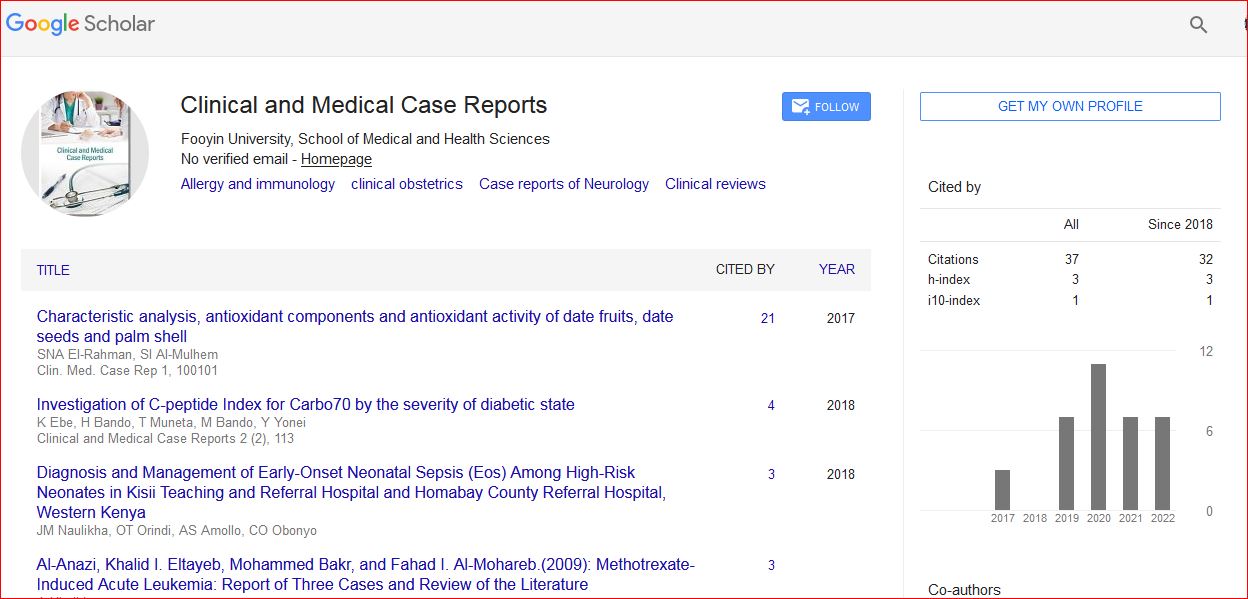
Clinical and Medical Case Reports received 53 citations as per Google Scholar report