Brief Report - (2025) Volume 9, Issue 4
Received: 01-Jul-2025, Manuscript No. jgdr-26-179178;
Editor assigned: 03-Jul-2025, Pre QC No. P-179178;
Reviewed: 17-Jul-2025, QC No. Q-179178;
Revised: 22-Jul-2025, Manuscript No. R-179178;
Published:
29-Jul-2025
, DOI: 10.37421/2684-6039.2025.09.272
Citation: Novak, Tomas. ”Genetics and Epigenetics: The Drivers of Aging.” J Genet DNA Res 09 (2025):272.
Copyright: © 2025 Novak T. This is an open-access article distributed under the terms of the Creative Commons Attribution License, which permits unrestricted use, distributionand reproduction in any
medium, provided the original author and source are credited.
Aging is a multifaceted biological process intricately shaped by an interplay of genetic inheritance and dynamic epigenetic modifications. Inherited genetic variations play a significant role in predisposing individuals to accelerated aging phenotypes, impacting the fundamental cellular and molecular mechanisms that govern lifespan and healthspan. These genetic predispositions can influence a wide array of biological processes, from cellular repair to metabolic efficiency, ultimately affecting the rate at which an individual ages [1].
The telomere, a protective cap at the ends of chromosomes, serves as a critical indicator of cellular aging. Telomere attrition, a hallmark of aging, is influenced by both genetic factors and epigenetic regulation. Cellular stress and lifestyle choices can accelerate telomere shortening, a process that epigenetic mechanisms like DNA methylation of telomeric genes actively modulate, thereby influencing cellular senescence and organismal aging [2].
Epigenetic modifications, including DNA methylation, are crucial regulators of gene expression that respond to environmental cues and lifestyle choices. These dynamic alterations can influence the aging trajectory by modifying how genetic information is accessed and utilized, leading to changes in cellular function and increasing susceptibility to age-related diseases. Understanding these epigenetic regulators is key to developing targeted interventions [1].
Specific DNA methylation patterns have been identified as potential epigenetic signatures of cognitive aging. Studies have pinpointed CpG sites whose methylation status changes with age, correlating with impaired memory function. This suggests that epigenetic drift significantly contributes to neurodegeneration and highlights the potential for epigenetic biomarkers in assessing cognitive decline [3].
Genetic variations in DNA repair pathways are strongly linked to accelerated aging. Mutations in genes responsible for repairing DNA damage can result in genomic instability, a primary driver of cellular senescence and the development of age-related pathologies. Robust DNA repair mechanisms are therefore essential for maintaining healthy longevity [4].
Histone modifications, particularly those involved in maintaining heterochromatin, play a vital role in the aging process. Age-related epigenetic drift can lead to the loss of heterochromatin structure and aberrant gene expression, contributing to cellular dysfunction and increased vulnerability to disease. Preserving epigenetic integrity is crucial for combating aging [5].
Environmental factors, such as diet and exposure to toxins, significantly influence the epigenome and, consequently, aging. Epigenetic plasticity allows external stimuli to modulate the aging process, leading to variations in lifespan and healthspan. Lifestyle interventions hold promise for modifying epigenetic marks and promoting healthy aging [6].
The concept of the 'epigenetic clock' has emerged as a powerful biomarker of biological age. DNA methylation patterns can accurately reflect chronological age and predict health outcomes, offering a valuable tool for studying aging and developing anti-aging strategies. These clocks can identify individuals at higher risk for age-related diseases [7].
Genetic determinants of longevity are being actively investigated, focusing on common and rare variants associated with exceptional lifespan. Specific genetic profiles can confer resilience to age-related diseases, underscoring the complex interplay between genetic inheritance and the aging trajectory, and contributing to our understanding of healthy aging [8].
Epigenetic dysregulation, particularly within metabolic pathways, contributes significantly to aging and associated diseases. Alterations in DNA methylation and histone acetylation can impact gene expression related to metabolism, leading to metabolic dysfunction and impaired cellular homeostasis, which are characteristic hallmarks of aging [9].
Aging is a complex biological process influenced by both inherited genetic factors and dynamic epigenetic modifications. Genetic variations can predispose individuals to accelerated aging phenotypes, while epigenetic alterations, such as DNA methylation and histone modifications, act as crucial regulators, responding to environmental cues and lifestyle choices. Understanding these intertwined mechanisms is key to developing targeted interventions for age-related diseases [1].
The role of telomere attrition as a hallmark of aging is critically examined, linking it to both genetic predisposition and epigenetic regulation. This research highlights how telomere length can be influenced by cellular stress and lifestyle, with epigenetic mechanisms like DNA methylation of telomeric genes playing a significant role in modulating telomere maintenance and, consequently, cellular senescence [2].
This study investigates the impact of DNA methylation patterns on age-related cognitive decline. It identifies specific CpG sites whose methylation status changes with age and correlates with impaired memory function, suggesting that epigenetic drift contributes to neurodegeneration and underscores the potential for epigenetic biomarkers in assessing cognitive aging [3].
The research explores the link between genetic variations in DNA repair pathways and accelerated aging. It highlights how mutations in genes responsible for repairing DNA damage can lead to genomic instability, a key driver of cellular senescence and age-related pathologies, emphasizing the importance of robust DNA repair for healthy longevity [4].
This paper examines the role of histone modifications, particularly those associated with heterochromatin, in aging. It details how age-related epigenetic drift can lead to the loss of heterochromatin and aberrant gene expression, contributing to cellular dysfunction and increased susceptibility to disease. The findings suggest that maintaining epigenetic integrity is vital for combating aging [5].
The influence of environmental factors, such as diet and toxin exposure, on the epigenome and aging is explored. This article highlights how epigenetic plasticity allows the aging process to be modulated by external stimuli, leading to variations in lifespan and healthspan. It underscores the potential for lifestyle interventions to modify epigenetic marks and promote healthy aging [6].
This work reviews the concept of the 'epigenetic clock' as a measure of biological age. It discusses how DNA methylation patterns can accurately reflect chronological age and predict health outcomes, providing a powerful tool for studying aging and developing anti-aging strategies. The article emphasizes the potential of these clocks to identify individuals at higher risk for age-related diseases [7].
The investigation focuses on the genetic underpinnings of longevity, examining common and rare variants associated with exceptional lifespan. It explores how specific genetic profiles can confer resilience to age-related diseases, highlighting the interplay between genetic inheritance and the aging trajectory. This research contributes to understanding the biological basis of healthy aging [8].
This article discusses how epigenetic dysregulation, particularly in the context of metabolic pathways, contributes to aging and age-related diseases. It examines how changes in DNA methylation and histone acetylation can affect gene expression involved in metabolism, leading to metabolic dysfunction and impaired cellular homeostasis, which are hallmarks of aging [9].
The impact of mitochondrial DNA (mtDNA) mutations and their epigenetic regulation on cellular aging is explored. This paper highlights how accumulating mtDNA damage, driven by both genetic factors and oxidative stress, contributes to mitochondrial dysfunction and senescence, linking mitochondrial health to organismal aging and longevity [10].
Aging is a complex process driven by genetic and epigenetic factors. Genetic variations can predispose individuals to faster aging, while epigenetic modifications like DNA methylation and histone alterations regulate gene expression in response to environmental influences. Key aspects of aging explored include telomere attrition, DNA repair deficiencies, and epigenetic signatures of cognitive decline. The epigenetic clock serves as a biomarker for biological age, and environmental factors significantly impact the epigenome. Genetic determinants of longevity are also being studied. Epigenetic dysregulation in metabolic pathways and mitochondrial DNA mutations further contribute to cellular aging and age-related diseases, underscoring the importance of maintaining epigenetic integrity and healthy lifestyle choices for promoting longevity and healthspan.
None
None
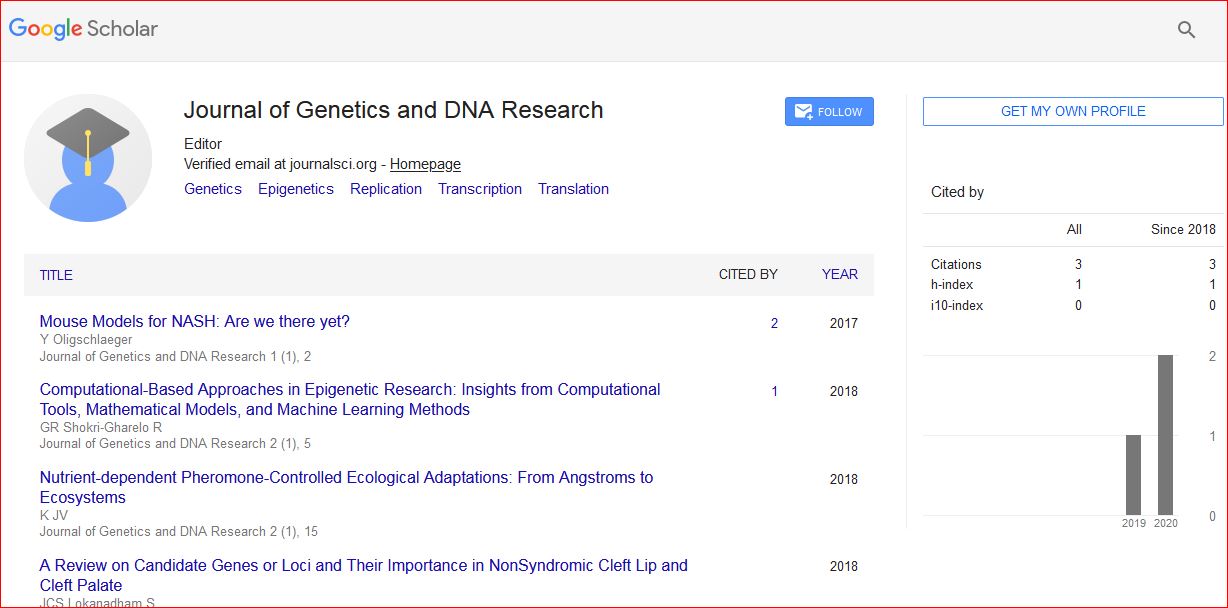
Journal of Genetics and DNA Research received 3 citations as per Google Scholar report