Brief Report - (2025) Volume 9, Issue 6
Received: 01-Dec-2025, Manuscript No. ahbs-26-182568;
Editor assigned: 03-Dec-2025, Pre QC No. P-182568;
Reviewed: 17-Dec-2025, QC No. Q-182568;
Revised: 22-Dec-2025, Manuscript No. R-182568;
Published:
29-Dec-2025
, DOI: 10.37421/2952-8097.2025.9.346
Citation: Ricci, Marco. ”Genetic Selection’s Behavioral Impact:
A Welfare Concern.” J Anim Health Behav Sci 09 (2025):346.
Copyright: © 2025 Ricci M. This is an open-access article distributed under the terms of the Creative Commons Attribution License, which permits unrestricted use, distribution
and reproduction in any medium, provided the original author and source are credited.
Genetic selection has profoundly influenced the behavioral characteristics of domestic animals, impacting critical traits such as docility, stress responsiveness, and social interactions. While economic advantages often drive these breeding programs, a thorough understanding of the resulting behavioral shifts is paramount for ensuring animal welfare and optimizing farm management practices. This research systematically explores how targeted breeding strategies, implemented to enhance production traits, can inadvertently lead to alterations in behavioral phenotypes. Such changes may manifest as difficulties in animal handling or an increased susceptibility to stress-related disorders, underscoring the significant implications for animal health and the nuanced human-animal bond, which necessitate continued in-depth investigation. [1]
Examining the intricate genetic architecture underpinning fear and anxiety in pigs reveals a discernible association between selection for production-oriented traits, such as accelerated growth rates, and an increased propensity for fearfulness. This study undertakes a detailed exploration of specific genes and their direct correlations with an animal's behavioral responses when confronted with novelty and potentially threatening stimuli. The findings strongly suggest that the pursuit of rapid growth may be accompanied by a trade-off involving heightened stress reactivity, a critical consideration that demands careful deliberation within the context of ongoing breeding program development. [2] The intensive selection for elevated milk production in dairy cows has been demonstrably linked to significant alterations in their maternal behavior. This particular research endeavors to meticulously investigate how sustained genetic improvements aimed at increasing yield have exerted an influence on the willingness of cows to engage with their calves, encompassing crucial aspects like suckling behavior and maternal defense mechanisms. The study's indications point towards a potential disruption in the natural maternal bond, a development that carries considerable implications for calf welfare and the crucial development of resilience to early-life stressors. [3] Aggression in chickens, with a particular focus on the problematic behavior of feather pecking, stands as a significant animal welfare concern. This issue is often compounded by the demands of intensive farming systems and the genetic selection for traits like rapid growth and high egg production. This article critically examines the underlying genetic basis of aggression and its complex relationship with various production traits. It highlights how, while selection has successfully enhanced productivity, it has, in certain instances, intensified undesirable social behaviors, prompting a discussion on strategies to mitigate these effects through both breeding and refined management practices. [4] The behavioral repertoire observed in sheep has been significantly shaped over millennia by the processes of domestication and subsequent selective breeding, often prioritizing traits such as wool quality and overall growth. This current study undertakes an investigation into how modern breeding objectives, primarily focused on meat production, may be influencing sheep temperament and their responses to routine handling procedures. The resultant findings strongly suggest a critical need to integrate comprehensive behavioral assessments directly into the framework of breeding programs to ensure that the animals continue to exhibit manageable temperaments and desirable behavioral characteristics. [5] This paper meticulously examines the fundamental genetic underpinnings that govern stress resilience within beef cattle populations. It postulates that the persistent selection for traits like rapid growth and a lean carcass composition may inadvertently exert an influence on the hypothalamic-pituitary-adrenal (HPA) axis, thereby affecting an animal's inherent capacity to effectively cope with various stressors. The research unequivocally highlights the potential for antagonistic pleiotropy, a phenomenon where genes conferring advantages for production may simultaneously carry detrimental effects on stress response mechanisms, underscoring the imperative of considering physiological and behavioral indicators alongside traditional production metrics. [6] The intricate process of domestication in dogs has undeniably resulted in a remarkable spectrum of behavioral diversity, largely driven by intensive artificial selection aimed at fulfilling various functional roles. This comprehensive review centers its attention on elucidating how the selective breeding for specific traits, such as trainability, sociability, and particular working abilities, has fundamentally shaped canine behavior. It further delves into the underlying genetic mechanisms that facilitate these behavioral transformations and addresses the ongoing challenges inherent in balancing the selection for desired traits with the crucial imperative of maintaining overall canine well-being and adaptive capacity. [7] Understanding the multifaceted behavioral consequences that arise from the selection for enhanced disease resistance in livestock represents a burgeoning and critical area of scientific inquiry. This particular study aims to investigate the potential impact that breeding for improved immunity might have on an animal's intrinsic motivation to seek out the company of conspecifics or to actively engage in social activities. The authors put forth a compelling hypothesis that while advancements in disease resistance are undoubtedly beneficial, they could potentially lead to significant alterations in social dynamics or a reduction in exploratory behavior, thereby necessitating the adoption of a more holistic and integrated approach to defining breeding goals. [8] This research meticulously explores the intricate relationship that exists between the selection process focused on feed efficiency and the subsequent manifestation of behavioral traits in broiler chickens. It undertakes a thorough examination to determine whether improvements achieved in nutrient utilization might be occurring at the expense of critical behavioral indicators such as activity levels, exploratory tendencies, or essential social interactions. The study successfully identifies specific genetic correlations that strongly suggest that while feed conversion ratios have demonstrably improved, certain broiler lines may indeed exhibit a notable reduction in locomotive activity, consequently impacting their capacity to express natural, innate behaviors. [9] The selective breeding of cattle specifically for enhanced muscle development and a simultaneous reduction in fat deposition carries substantial implications for their behavioral patterns, particularly concerning aspects of docility and their general response to stress. This particular study is dedicated to investigating the underlying genetic basis of temperament within beef cattle populations and its potential interconnectedness with the biological pathways governing muscle growth. The findings strongly suggest that while the selection process for lean meat yield proves to be highly effective from a production standpoint, it may inadvertently result in animals that exhibit a greater propensity for excitability or are less amenable to routine handling, thereby introducing significant challenges for effective farm management and the overarching goal of ensuring animal welfare. [10]The profound impacts of genetic selection on livestock behavior are well-documented, influencing critical traits such as docility, stress response, and social interactions. While economic gains are frequently the primary driver behind such selection, a comprehensive understanding of these behavioral shifts is indispensable for maintaining high standards of animal welfare and implementing effective farm management strategies. This research delves into how targeted breeding for enhanced production traits can unintentionally alter behavioral phenotypes, sometimes leading to practical challenges in handling or an increased susceptibility to stress-related disorders. The broader implications for animal health and the vital human-animal bond are significant and warrant further dedicated investigation. [1]
An examination of the genetic architecture underlying fear and anxiety in pigs reveals a notable association between selection for production traits, like accelerated growth rate, and an increased propensity for fearfulness. This specific study meticulously investigates particular genes and their correlations with behavioral responses to novel stimuli and threatening situations. The findings suggest that while rapid growth may be achieved, it could come at the cost of heightened stress reactivity, highlighting a potential trade-off that necessitates careful consideration within breeding programs. [2] The selection for high milk production in dairy cows has been consistently linked to alterations in their maternal behavior. This particular research focuses on how intensive genetic improvement for yield has affected the willingness of cows to interact with their calves, including crucial aspects such as suckling behavior and maternal defense. The study's indications point towards a potential disruption in the natural maternal bond, which can have significant implications for calf welfare and the development of resilience to early-life stress. [3] Aggression in chickens, particularly the behavior of feather pecking, represents a major welfare concern that is often exacerbated by intensive farming systems and the genetic selection for rapid growth and high egg production. This article critically explores the genetic underpinnings of aggression and its complex relationship with production traits. It emphasizes that while selection has successfully improved productivity, it has also, in some cases, intensified problematic social behaviors, leading to a discussion of strategies to mitigate these effects through breeding or management interventions. [4] The behavioral patterns of sheep have been significantly shaped by millennia of domestication and subsequent selective breeding for traits like wool quality and growth. This study investigates how contemporary breeding objectives, primarily focused on meat production, may influence sheep temperament and their responses to handling. The findings strongly suggest a need to integrate detailed behavioral assessments into breeding programs to ensure that animals maintain manageable temperaments and exhibit desirable behavioral characteristics. [5] This paper delves into the genetic basis of stress resilience in beef cattle. It proposes that selection for rapid growth and carcass leanness might inadvertently impact the hypothalamic-pituitary-adrenal (HPA) axis, consequently affecting an animal's ability to cope with stressors. The research highlights the potential for antagonistic pleiotropy, where genes beneficial for production could be detrimental to stress response, thus emphasizing the importance of considering physiological and behavioral indicators alongside traditional production metrics. [6] The domestication of dogs has resulted in a remarkable diversity of behavior, largely driven by intense artificial selection for various roles. This review specifically focuses on how selection for traits such as trainability, sociability, and specific working abilities has shaped canine behavior. It discusses the genetic mechanisms responsible for these behavioral changes and the ongoing challenges in balancing the selection for desired traits with the maintenance of overall canine well-being and adaptability. [7] Understanding the behavioral consequences of selecting livestock for enhanced disease resistance is an emerging and crucial area of research. This study investigates how breeding for improved immunity might affect an animal's motivation to seek out conspecifics or engage in social activities. The authors hypothesize that while disease resistance is beneficial, it could lead to altered social dynamics or reduced exploratory behavior, necessitating a holistic approach to breeding goals. [8] This research explores the intricate relationship between selection for feed efficiency and behavioral traits in broilers. It examines whether improvements in nutrient utilization are achieved at the expense of activity levels, exploration, or social interactions. The study identifies specific genetic correlations, suggesting that while feed conversion ratios have improved, certain broiler lines may exhibit reduced locomotive activity, impacting their ability to express natural behaviors. [9] The selection of cattle for enhanced muscle development and reduced fat deposition has significant implications for their behavior, particularly concerning docility and stress response. This study investigates the genetic basis of temperament in beef cattle and its potential links to muscle growth pathways. The findings suggest that while selection for lean meat yield is effective, it may inadvertently lead to animals that are more prone to excitability or less amenable to handling, posing challenges for farm management and animal welfare. [10]Genetic selection in livestock, while driven by economic gains, significantly impacts animal behavior, influencing docility, stress response, and social interactions. This can lead to unintended consequences such as increased fearfulness in pigs selected for growth [2], altered maternal behavior in dairy cows bred for high milk yield [3], and heightened aggression in chickens due to selection for rapid growth and egg production [4].
Similarly, sheep selected for meat production may exhibit temperament changes [5], while beef cattle bred for leanness might have impaired stress resilience [6].
Even in dogs, selection for specific roles has shaped behavior [7].
Emerging research suggests breeding for disease resistance could alter social dynamics [8], and improvements in feed efficiency in broilers may reduce activity [9].
Selection for muscle development in cattle also affects temperament [10].
Overall, there is a need to integrate behavioral assessments into breeding programs to balance productivity with animal welfare. The human-animal bond is also a significant consideration in these selective processes [1].
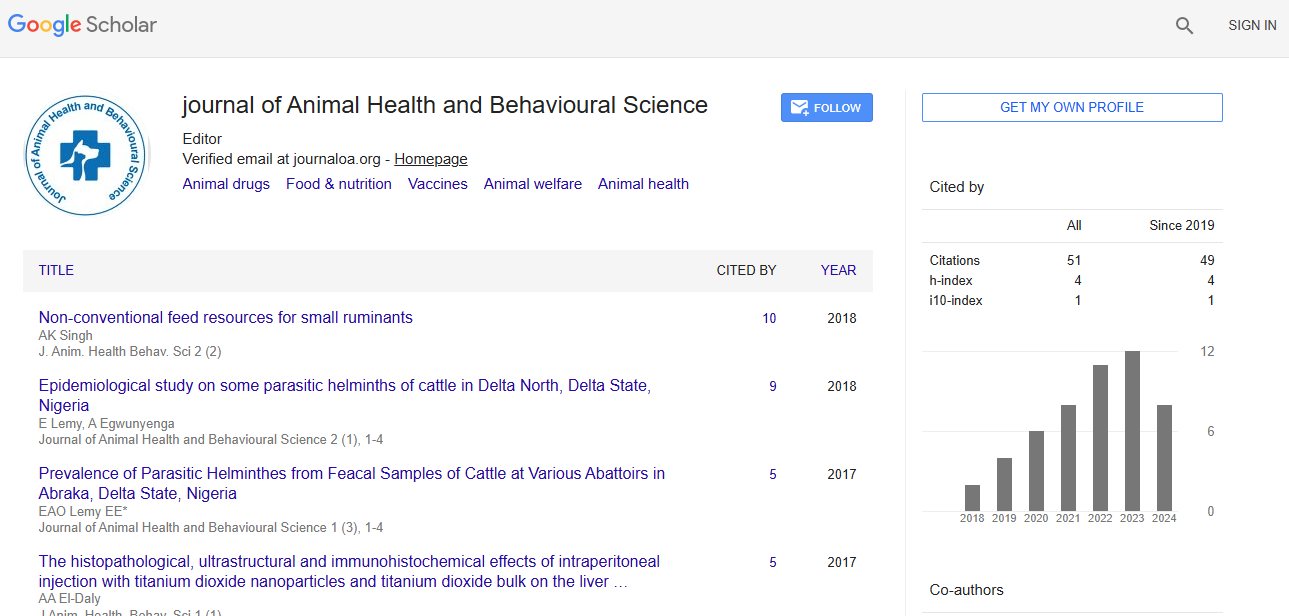
Journal of Animal Health and Behavioural Science received 38 citations as per Google Scholar report