Perspective - (2025) Volume 19, Issue 6
Received: 01-Dec-2025, Manuscript No. jmgm-26-188394;
Editor assigned: 03-Dec-2025, Pre QC No. P-188394;
Reviewed: 17-Dec-2025, QC No. Q-188394;
Revised: 22-Dec-2025, Manuscript No. R-188394;
Published:
19-Dec-2025
, DOI: 10.37421/1747-0862.2025.19.757
Citation: Ruiz, Alejandro. ”Genetic Counseling’s Evolution: Empowering Informed Decisions.” J Mol Genet Med 19 (2025):757.
Copyright: © 2025 Ruiz A. This is an open-access article distributed under the terms of the Creative Commons Attribution License, which permits unrestricted use, distribution and reproduction in any medium, provided the original author and source are credited.
The landscape of genetic counseling is undergoing a profound transformation, driven by the rapid advancements in genomic technologies and their increasing integration into clinical practice. Genetic counselors are at the forefront of this evolution, adapting their expertise to interpret complex genomic data beyond single-gene disorders. This shift necessitates a deeper understanding of multi-gene panels, whole exome, and whole genome sequencing, as well as the nuances of variant interpretation and associated risks, empowering patients with actionable insights for informed decision-making regarding genetic testing and risk assessment [1].
The integration of direct-to-consumer (DTC) genetic testing into routine healthcare presents both opportunities and challenges. While DTC results can spur patient interest in genetic health, they often require careful interpretation by qualified professionals to address limitations, potential incidental findings, and their clinical significance. Genetic counselors are instrumental in bridging the gap between consumer-generated genetic information and evidence-based medical guidance, ensuring clarity and appropriate action [2].
As genomic medicine expands, the ethical, legal, and social implications (ELSI) become increasingly critical. Issues surrounding genetic information, including privacy, consent, equity, and responsible use, are at the forefront of these discussions. Genetic counselors play a vital role in helping patients comprehend the multifaceted implications of genomic testing for themselves and their families, advocating for ethical best practices in both research and clinical settings [3].
In the realm of oncology, precision medicine, heavily influenced by genomic insights, is revolutionizing cancer care. Genetic counselors are indispensable in guiding patients through germline and somatic genetic testing, interpreting results to inform personalized treatment strategies, assess hereditary cancer risks, and facilitate family cascade testing, ultimately aiming to enhance outcomes and minimize treatment toxicity [4].
The emerging application of polygenic risk scores (PRS) in clinical settings represents another area where genetic counselors are crucial. Their expertise is vital in interpreting and communicating the probabilistic nature of PRS, their inherent limitations, and their potential influence on health decisions, thereby enabling individuals to make informed choices about preventative strategies [5].
Navigating incidental findings, which are unexpected genetic results from genomic sequencing, poses a significant challenge that genetic counselors adeptly manage. They assist patients in understanding the implications of such findings, which may have clinical relevance, empowering them to make informed decisions about further medical management and familial communication [6].
The growing accessibility of genomic information underscores the imperative for enhanced genetic literacy among healthcare providers and the general public. Genetic counselors are central to developing educational resources and strategies that improve comprehension of genetic concepts, testing modalities, and their implications, fostering greater patient engagement and shared decision-making processes [7].
Genetic counseling for rare diseases is being profoundly reshaped by advancements in genomic technologies, leading to faster and more accurate diagnoses. Counselors are essential in supporting families by helping them understand complex genetic findings, addressing the psychosocial impact of rare conditions, and connecting them with relevant resources and support networks [8].
The expanding utilization of pharmacogenomics introduces a new frontier where genetic counselors are increasingly important. They work with patients and physicians to elucidate how an individual's genetic makeup influences drug response and metabolism, thereby optimizing medication selection and dosage for improved efficacy and reduced adverse effects [9].
Telehealth has significantly broadened the reach of genetic counseling services, particularly for individuals in remote areas or those facing mobility challenges. Genetic counselors are actively adapting their communication and counseling techniques to deliver high-quality care effectively in a virtual setting, addressing the unique considerations of remote patient interactions and ensuring accessibility [10].
Genetic counseling is rapidly evolving to meet the demands of the genomic era, moving beyond the interpretation of single-gene disorders to encompass the complexity of genomic data for a wide array of conditions. This necessitates advanced expertise in interpreting multi-gene panels, whole exome, and whole genome sequencing, alongside a thorough understanding of variant interpretation and associated risks. The ultimate goal is to empower patients with clear, actionable information to make informed decisions about genetic testing, risk assessment, and potential interventions, thereby integrating genomic insights into personalized healthcare strategies [1].
Integrating direct-to-consumer (DTC) genetic testing into clinical practice presents a dual landscape of opportunities and challenges for genetic counselors. While DTC results can serve as a catalyst for patient engagement with healthcare professionals, they frequently necessitate careful interpretation by qualified experts to delineate their limitations, identify potential incidental findings, and assess their clinical significance. Genetic counselors play a pivotal role in bridging the disconnect between information derived from DTC testing and evidence-based medical advice [2].
The ethical dimensions of genomic medicine are inherently complex, spanning concerns related to privacy, informed consent, health equity, and the judicious application of genetic information. Genetic counselors are at the vanguard of these crucial discussions, assisting patients in fully grasping the implications of genomic testing for themselves and their family members, and championing the adoption of ethical best practices in both research endeavors and clinical care [3].
In the context of cancer care, precision medicine, propelled by genomic discoveries, is fundamentally altering therapeutic approaches. Genetic counselors are vital for guiding patients through germline and somatic genetic testing, interpreting the resulting data to inform treatment selection, evaluate hereditary cancer risk, and facilitate cascade testing within families. This personalized medical model aims to enhance patient outcomes and mitigate treatment-related toxicities [4].
The clinical application of polygenic risk scores (PRS) represents a nascent yet significant area where the skills of genetic counselors are indispensable. Proficiency in interpreting and communicating the probabilistic nature of PRS, acknowledging their limitations, and understanding their potential impact on health-related decisions requires specialized knowledge, thereby facilitating informed decision-making for individuals concerning preventative health measures [5].
Managing incidental findings derived from genomic sequencing is a critical function within genetic counseling. Counselors guide patients in understanding the implications of unexpected genetic information that may hold clinical importance, enabling them to make well-informed choices regarding subsequent medical management and communication with family members [6].
The increasing availability of genomic information highlights the pressing need for enhanced genetic literacy among both healthcare providers and the broader public. Genetic counselors are instrumental in the development of educational materials and strategies designed to improve comprehension of genetic concepts, testing methodologies, and their implications, ultimately fostering improved patient engagement and the practice of shared decision-making [7].
Genetic counseling for rare diseases is undergoing a significant evolution, facilitated by genomic technologies that enable more rapid and accurate diagnoses. Counselors provide crucial support to families by helping them understand complex genetic findings, navigate the psychosocial challenges associated with rare conditions, and access appropriate resources and support networks [8].
The expanding use of pharmacogenomics introduces a novel domain where genetic counseling is of paramount importance. Counselors assist patients and their physicians in understanding how an individual's genetic profile can influence drug responses and metabolic pathways, thereby enabling the optimization of medication selection and dosage to enhance therapeutic efficacy and minimize adverse reactions [9].
Telehealth has emerged as a transformative modality for genetic counseling, dramatically expanding access to services, particularly for individuals residing in underserved geographical areas or those with physical limitations. Genetic counselors are adeptly refining their communication and counseling techniques to provide high-quality care within a virtual framework, effectively addressing the unique aspects inherent in remote patient interactions [10].
Genetic counseling is undergoing a significant transformation in the genomic era, expanding to interpret complex genomic data and manage diverse conditions. This evolution necessitates enhanced expertise in areas like multi-gene panels and whole genome sequencing. Genetic counselors are crucial in helping patients understand direct-to-consumer testing, navigate ethical considerations of genomic medicine, and personalize cancer care through precision oncology. They also play a vital role in interpreting polygenic risk scores, managing incidental findings, improving genetic literacy, and supporting families with rare diseases. Furthermore, genetic counselors are increasingly involved in pharmacogenomics and delivering services via telehealth to improve accessibility. The core function remains empowering patients with knowledge for informed decision-making in an increasingly complex genetic landscape.
None
None
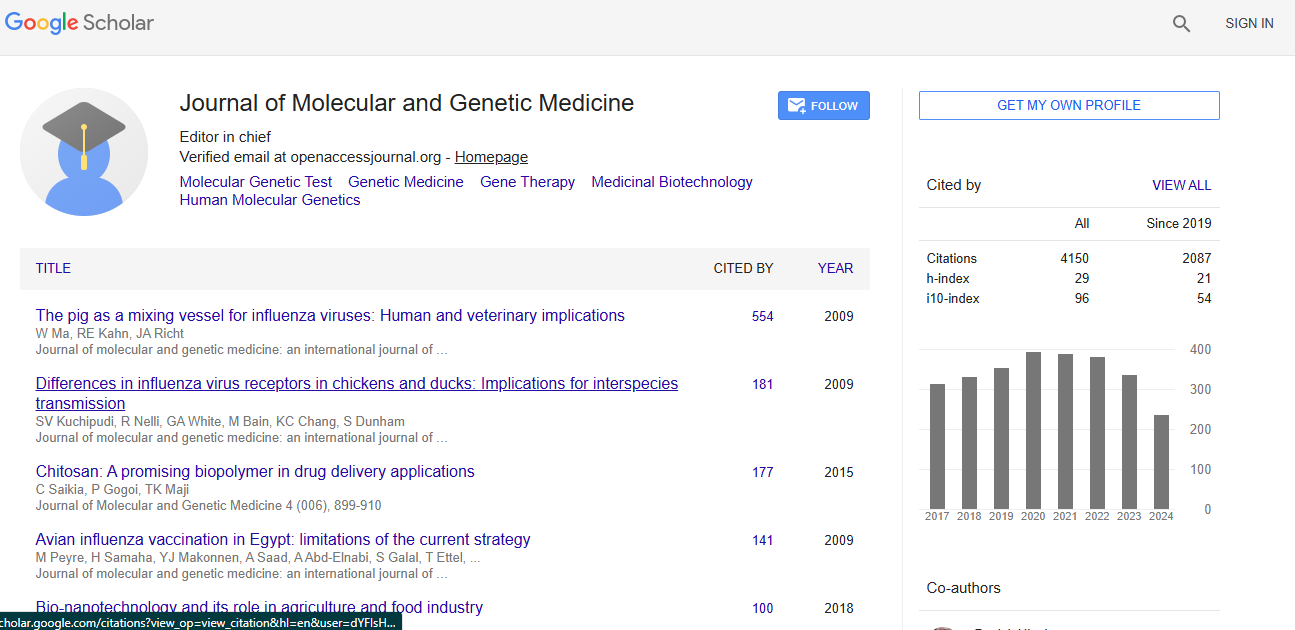
Molecular and Genetic Medicine received 3919 citations as per Google Scholar report