Perspective - (2025) Volume 11, Issue 5
Received: 01-Oct-2025, Manuscript No. cdp-26-185487;
Editor assigned: 03-Oct-2025, Pre QC No. P-185487;
Reviewed: 17-Oct-2025, QC No. Q-185487;
Revised: 22-Oct-2025, Manuscript No. R-185487;
Published:
30-Oct-2025
, DOI: 10.37421/2572-0791.2025.11.197
Citation: Herrera, Camila. ”Genes, Environment, and Depression: A Complex Interplay.” Clin Depress 11 (2025):197.
Copyright: © 2025 Herrera C. This is an open-access article distributed under the terms of the Creative Commons Attribution License, which permits unrestricted use, distribution and reproduction in any medium, provided the original author and source are credited.
The intricate interplay of genetic predispositions and environmental factors significantly shapes an individual's susceptibility to depression. Research points to the heritability of depression, with studies identifying multiple genes, each contributing a small effect, that collectively increase risk. These genes are often involved in neurotransmitter systems, stress response pathways, and neuronal plasticity. Understanding these genetic underpinnings is crucial for developing targeted prevention strategies and more personalized treatment approaches for depression [1].
Investigating the genetic architecture of depression has revealed the complexity of its inheritance. Genome-wide association studies (GWAS) have identified common genetic variants associated with depression, while rare variants are also being explored for their potential impact. Epigenetic modifications, influenced by environmental exposures, further complicate the genetic picture by altering gene expression without changing the underlying DNA sequence. This highlights the dynamic nature of genetic contributions to depression [2].
The role of specific gene families in depression is an active area of research. Genes involved in the serotonin transporter (SLC6A4), brain-derived neurotrophic factor (BDNF), and hypothalamic-pituitary-adrenal (HPA) axis regulation are consistently implicated. Variations in these genes can affect neurotransmitter signaling, synaptic plasticity, and the stress response, all of which are compromised in individuals with depression. Personalized medicine approaches are beginning to consider these genetic profiles for treatment selection [3].
Gene-environment interactions (GxE) are fundamental to understanding depression's development. Stressful life events, particularly during early development, can interact with an individual's genetic vulnerability to precipitate depressive episodes. For example, individuals with a particular variant of the SLC6A4 gene have been shown to be more susceptible to developing depression following childhood adversity. This underscores the need to consider both genetic and environmental histories [4].
Epigenetic mechanisms, such as DNA methylation and histone modification, provide a bridge between genes and environment in the context of depression. These modifications can be influenced by stress, diet, and lifestyle, leading to changes in gene expression relevant to mood regulation. Research is exploring how these epigenetic marks might be reversible, offering potential therapeutic targets for depression treatment [5].
The genetic basis of treatment response in depression is gaining attention. Studies are investigating how genetic variations might predict an individual's likelihood of responding to specific antidepressant medications. Pharmacogenomics aims to tailor drug selection based on a patient's genetic profile, potentially improving efficacy and reducing adverse effects, although widespread clinical implementation is still developing [6].
Polygenic risk scores (PRS) are emerging as valuable tools for quantifying an individual's cumulative genetic predisposition to depression. By aggregating the effects of many common genetic variants, PRS can identify individuals at higher risk, even if no single gene confers a substantial risk on its own. This approach holds promise for early identification and targeted interventions [7].
The study of depression in families and twins has consistently demonstrated a significant heritable component. While twin studies can estimate the proportion of variance in depression attributable to genetic factors (heritability), they don't identify specific genes. However, these foundational studies have paved the way for modern molecular genetic approaches [8].
While genes are important, they are rarely destiny when it comes to depression. The concept of dopamine hypothesis related genes, for example, still needs robust evidence to show direct link to treatment outcome. The environment, including early life experiences, social support, and coping mechanisms, plays a critical role in modulating genetic risk. Effective treatments often involve a combination of psychotherapy and, in some cases, medication, aiming to address both biological and psychosocial factors [9].
The complex genetic architecture of depression means that it's unlikely a single gene will ever be a 'cure.' Instead, future research will focus on identifying pathways and networks of genes involved, and how these interact with environmental stressors. This nuanced understanding is essential for developing truly personalized and effective interventions that address the multifaceted nature of depression [10].
The intricate interplay of genetic predispositions and environmental factors significantly shapes an individual's susceptibility to depression. Research points to the heritability of depression, with studies identifying multiple genes, each contributing a small effect, that collectively increase risk. These genes are often involved in neurotransmitter systems, stress response pathways, and neuronal plasticity. Understanding these genetic underpinnings is crucial for developing targeted prevention strategies and more personalized treatment approaches for depression [1].
Investigating the genetic architecture of depression has revealed the complexity of its inheritance. Genome-wide association studies (GWAS) have identified common genetic variants associated with depression, while rare variants are also being explored for their potential impact. Epigenetic modifications, influenced by environmental exposures, further complicate the genetic picture by altering gene expression without changing the underlying DNA sequence. This highlights the dynamic nature of genetic contributions to depression [2].
The role of specific gene families in depression is an active area of research. Genes involved in the serotonin transporter (SLC6A4), brain-derived neurotrophic factor (BDNF), and hypothalamic-pituitary-adrenal (HPA) axis regulation are consistently implicated. Variations in these genes can affect neurotransmitter signaling, synaptic plasticity, and the stress response, all of which are compromised in individuals with depression. Personalized medicine approaches are beginning to consider these genetic profiles for treatment selection [3].
Gene-environment interactions (GxE) are fundamental to understanding depression's development. Stressful life events, particularly during early development, can interact with an individual's genetic vulnerability to precipitate depressive episodes. For example, individuals with a particular variant of the SLC6A4 gene have been shown to be more susceptible to developing depression following childhood adversity. This underscores the need to consider both genetic and environmental histories [4].
Epigenetic mechanisms, such as DNA methylation and histone modification, provide a bridge between genes and environment in the context of depression. These modifications can be influenced by stress, diet, and lifestyle, leading to changes in gene expression relevant to mood regulation. Research is exploring how these epigenetic marks might be reversible, offering potential therapeutic targets for depression treatment [5].
The genetic basis of treatment response in depression is gaining attention. Studies are investigating how genetic variations might predict an individual's likelihood of responding to specific antidepressant medications. Pharmacogenomics aims to tailor drug selection based on a patient's genetic profile, potentially improving efficacy and reducing adverse effects, although widespread clinical implementation is still developing [6].
Polygenic risk scores (PRS) are emerging as valuable tools for quantifying an individual's cumulative genetic predisposition to depression. By aggregating the effects of many common genetic variants, PRS can identify individuals at higher risk, even if no single gene confers a substantial risk on its own. This approach holds promise for early identification and targeted interventions [7].
The study of depression in families and twins has consistently demonstrated a significant heritable component. While twin studies can estimate the proportion of variance in depression attributable to genetic factors (heritability), they don't identify specific genes. However, these foundational studies have paved the way for modern molecular genetic approaches [8].
While genes are important, they are rarely destiny when it comes to depression. The concept of dopamine hypothesis related genes, for example, still needs robust evidence to show direct link to treatment outcome. The environment, including early life experiences, social support, and coping mechanisms, plays a critical role in modulating genetic risk. Effective treatments often involve a combination of psychotherapy and, in some cases, medication, aiming to address both biological and psychosocial factors [9].
The complex genetic architecture of depression means that it's unlikely a single gene will ever be a 'cure.' Instead, future research will focus on identifying pathways and networks of genes involved, and how these interact with environmental stressors. This nuanced understanding is essential for developing truly personalized and effective interventions that address the multifaceted nature of depression [10].
Depression is influenced by a complex interplay of genetic predispositions and environmental factors, with heritability playing a significant role. Multiple genes contribute to increased risk, often affecting neurotransmitter systems and stress response pathways. Genome-wide association studies (GWAS) and exploration of rare variants are advancing our understanding of genetic architecture, further complicated by epigenetic modifications influenced by environmental exposures. Specific gene families, such as those related to serotonin, BDNF, and the HPA axis, are consistently implicated in depression. Gene-environment interactions (GxE) are critical, with stressful life events interacting with genetic vulnerability. Epigenetic mechanisms like DNA methylation and histone modification bridge genes and environment, offering potential therapeutic targets. The genetic basis of treatment response is a growing area, with pharmacogenomics aiming to personalize medication selection. Polygenic risk scores (PRS) are tools for quantifying cumulative genetic predisposition, aiding in early identification. While family and twin studies established heritability, modern molecular genetics is identifying specific genes and pathways. Ultimately, depression is rarely determined by a single gene, emphasizing the need to consider environmental influences and develop multifaceted interventions.
None
None
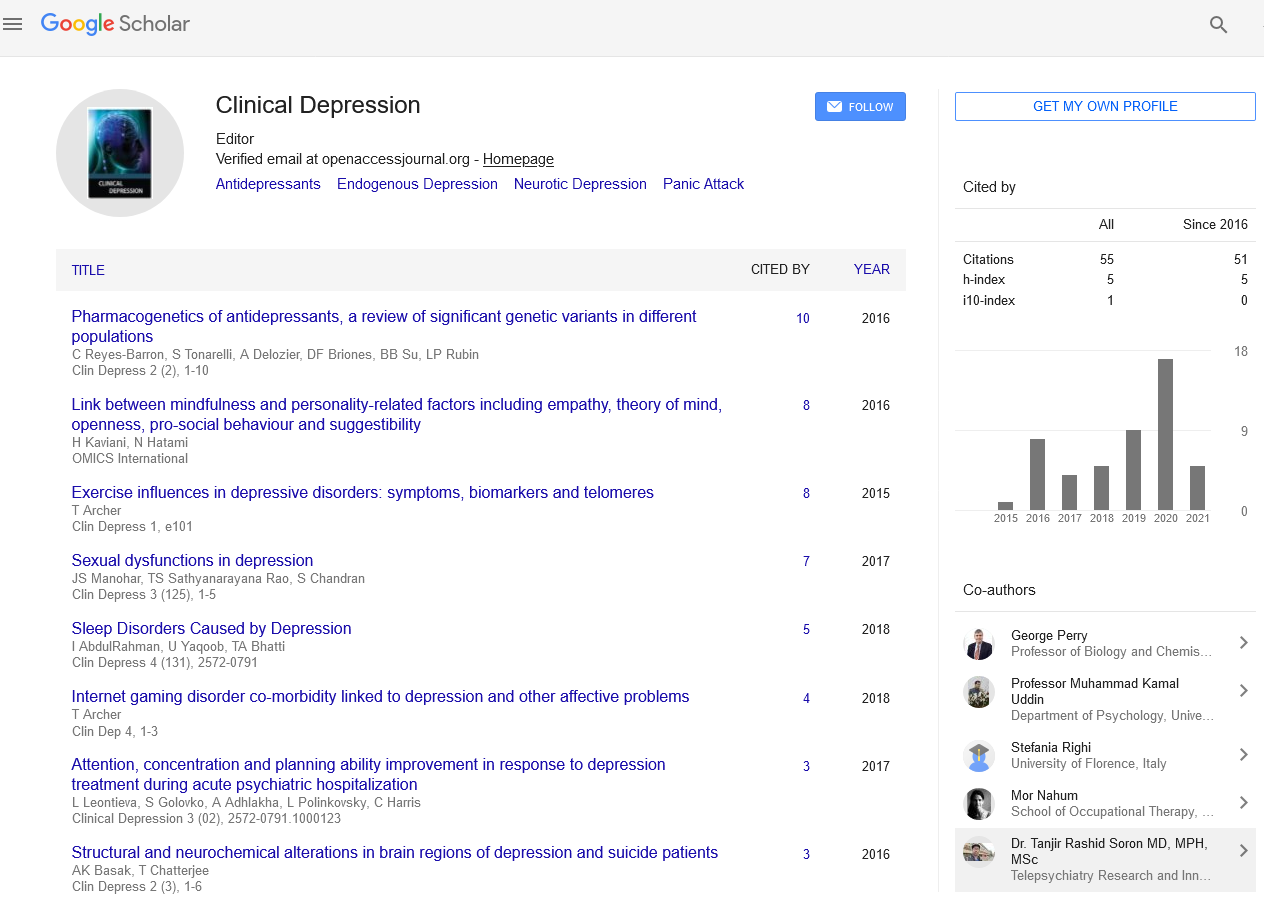
Clinical Depression received 89 citations as per Google Scholar report