Brief Report - (2025) Volume 14, Issue 5
Received: 01-Sep-2025, Manuscript No. mcce-26-190196;
Editor assigned: 03-Sep-2025, Pre QC No. P-190196;
Reviewed: 17-Sep-2025, QC No. Q-190196;
Revised: 22-Sep-2025, Manuscript No. R-190196;
Published:
09-Sep-2025
, DOI: 10.37421/2470-6965.2025.14.430
Citation: Takahashi, Yuki. ”Gene Drive: Promise, Perils, And Path To Malaria Elimination.” Malar Contr Elimination 14 (2025):430.
Copyright: © 2025 Takahashi Y. This is an open-access article distributed under the terms of the Creative Commons Attribution License, which permits unrestricted use, distribution and reproduction in any medium, provided the original author and source are credited.
Genetic control of Anopheles mosquitoes presents a significant opportunity for malaria elimination by targeting vector populations and disrupting disease transmission. Gene drive technologies, particularly those based on CRISPR systems, offer the potential to rapidly disseminate desired genetic modifications, such as infertility or resistance to malaria parasites, throughout wild mosquito populations [1].
However, the deployment of these powerful tools is accompanied by a complex ethical landscape, demanding careful consideration of unintended ecological impacts, ensuring equitable access to the technology, and preventing potential misuse [1].
The practical challenges associated with gene drive implementation are substantial, encompassing the need for robust containment strategies, the management of evolved resistance within mosquito populations, and the critical imperative of engaging local communities in all decision-making processes [1].
A balanced and responsible approach is therefore essential, one that harmonizes scientific advancement with strong ethical frameworks and meaningful community involvement to navigate this new frontier in vector control [1].
The development of gene drive strategies specifically for vector control, with a focus on Anopheles gambiae, faces considerable hurdles concerning both their efficacy and ecological safety. While these strategies demonstrate promise in controlled laboratory settings, their translation to real-world applications necessitates rigorous field testing and a comprehensive understanding of potential off-target effects and fitness costs associated with the genetic modifications [2].
The successful deployment of such technologies hinges on achieving broad societal consensus and establishing robust regulatory oversight to effectively address concerns related to the irreversibility of genetic changes and their potential environmental impact [2].
Community engagement is an absolutely paramount factor for the successful and ethical deployment of genetically modified mosquitoes. The public's perception, their level of understanding regarding the technology, and their specific local needs must be thoroughly integrated into all stages of research and development. Furthermore, addressing community concerns about safety, potential side effects, and the equitable distribution of benefits is absolutely crucial for building trust and securing the social license required for implementation [3].
The ecological implications arising from the release of genetically modified Anopheles mosquitoes warrant extensive and thorough investigation. Understanding the potential impacts on non-target organisms, the intricate structure of food webs, and the functioning of ecosystem services is of critical importance. Therefore, the application of sophisticated modeling techniques and carefully designed contained experimental approaches are essential to accurately assess these potential risks before any consideration of wider environmental release [4].
CRISPR-based gene drive systems are recognized as a potent tool for the rapid propagation of traits, such as malaria parasite refractoriness, through Anopheles populations. Nevertheless, the potential for the development of resistance within the target mosquito population and the inherent difficulty in reversing the introduced genetic drive represent significant challenges that necessitate careful system design and continuous monitoring to manage effectively [5].
The ethical considerations surrounding the release of genetically modified organisms into natural environments are inherently complex. These considerations must encompass the precautionary principle, the fundamental right to a healthy environment, and a thorough assessment of the potential for unforeseen genetic consequences. Consequently, the establishment of a robust governance framework is absolutely essential for fostering responsible innovation within this rapidly evolving field [6].
Ensuring equitable access to the benefits derived from gene drive technologies for malaria control is a critical ethical imperative. Developing countries, which bear a disproportionate burden of malaria, must be afforded a meaningful voice in the decision-making processes and be able to benefit directly from these innovations, rather than being subjected to them without adequate and genuine participation [7].
The development of novel gene drive systems, such as self-limiting gene drives, is crucial for effectively mitigating the inherent risks associated with irreversible genetic modifications. These innovative systems are specifically designed to persist for a predetermined and limited number of generations, thereby allowing for thorough evaluation and the potential for discontinuation should any unforeseen consequences emerge [8].
Assessing the containment and ensuring the biosafety of genetically modified mosquitoes is a fundamental practical necessity. This assessment involves the development of rigorous monitoring strategies to effectively track the spread of modified genes and the establishment of clear protocols for intervention should such measures become necessary. International collaboration and the adoption of standardized guidelines are therefore important for the responsible management of these powerful technologies [9].
The role of public perception and the establishment of trust in the successful adoption of gene drive technologies for vector control cannot be overstated. Transparent communication, comprehensive education initiatives, and genuine engagement with a diverse range of stakeholders are indispensable for building confidence and ensuring that these potent tools are utilized responsibly and ultimately for the betterment of public health [10].
Genetic control of Anopheles mosquitoes represents a promising strategy for malaria elimination by directly impacting vector populations. Gene drive technologies, especially CRISPR-based systems, are capable of rapidly spreading beneficial genetic modifications, such as inducing infertility or conferring malaria resistance, within wild mosquito populations [1].
However, the implementation of these technologies necessitates a thorough examination of ethical concerns, including potential unintended ecological consequences, the need for equitable access, and the possibility of misuse [1].
Practical challenges such as ensuring containment, managing the evolution of resistance, and involving local communities in decision-making are also critical factors that require careful attention [1].
A balanced strategy that integrates scientific progress with robust ethical guidelines and community participation is crucial for the responsible development and deployment of these tools [1].
The advancement of gene drive strategies for controlling disease vectors, particularly Anopheles gambiae, is confronted by significant obstacles related to both efficacy and ecological safety. While laboratory studies have shown promise, real-world deployment demands extensive field testing to understand potential off-target effects and fitness costs. Broad societal consensus and stringent regulatory oversight are essential to address concerns about the irreversibility of genetic modifications and their environmental impact [2].
Effective community engagement is an indispensable component for the successful and ethical implementation of genetically modified mosquitoes. Research and development processes must incorporate public perceptions, understanding of the technology, and the specific needs of local populations. Building trust and obtaining social acceptance require addressing concerns about safety, potential adverse effects, and the fair distribution of benefits [3].
Thorough investigation into the ecological implications of releasing genetically modified Anopheles mosquitoes is imperative. It is critical to comprehend the potential impacts on non-target species, food webs, and essential ecosystem services. Pre-release risk assessment necessitates the use of modeling and contained experimental approaches to evaluate these potential consequences [4].
CRISPR-based gene drive systems offer a powerful method for rapidly disseminating traits like malaria parasite refractoriness within Anopheles populations. However, significant challenges include the potential for resistance evolution in mosquito populations and the difficulty in reversing the drive, which require careful design and ongoing monitoring [5].
The ethical considerations surrounding the release of genetically modified organisms into the wild are intricate. These must include adherence to the precautionary principle, respect for the right to a healthy environment, and assessment of potential unintended genetic consequences. A strong governance framework is vital for responsible innovation in this domain [6].
Ensuring that the benefits of gene drive technologies for malaria control are accessible equitably is a key ethical consideration. Developing nations most affected by malaria should have a voice in decision-making and benefit from these advancements, rather than being passive recipients of the technology [7].
The creation of novel gene drive systems, such as self-limiting gene drives, is vital for reducing the risks associated with irreversible genetic changes. These systems are designed to cease functioning after a limited number of generations, allowing for evaluation and potential discontinuation if unforeseen issues arise [8].
Assessing the containment and biosafety of genetically modified mosquitoes is a practical necessity. This involves developing robust monitoring systems to track gene spread and establishing intervention protocols if needed. International cooperation and standardized guidelines are important for managing these technologies [9].
Public perception and trust are crucial for the acceptance of gene drive technologies in vector control. Transparent communication, education, and meaningful engagement with diverse stakeholders are essential for building confidence and ensuring responsible use for public health benefits [10].
Gene drive technologies, particularly CRISPR-based systems, offer a promising approach for malaria elimination by modifying Anopheles mosquito populations to reduce disease transmission. These technologies can rapidly spread traits like infertility or malaria resistance. However, their deployment faces significant ethical and practical challenges, including potential unintended ecological impacts, equitable access, misuse, containment, resistance evolution, and the need for community engagement. Robust regulatory frameworks, careful design of gene drive systems (e.g., self-limiting drives), and thorough risk assessments are essential. Public trust and transparent communication are paramount for the responsible development and implementation of gene drive solutions to combat malaria.
None
None
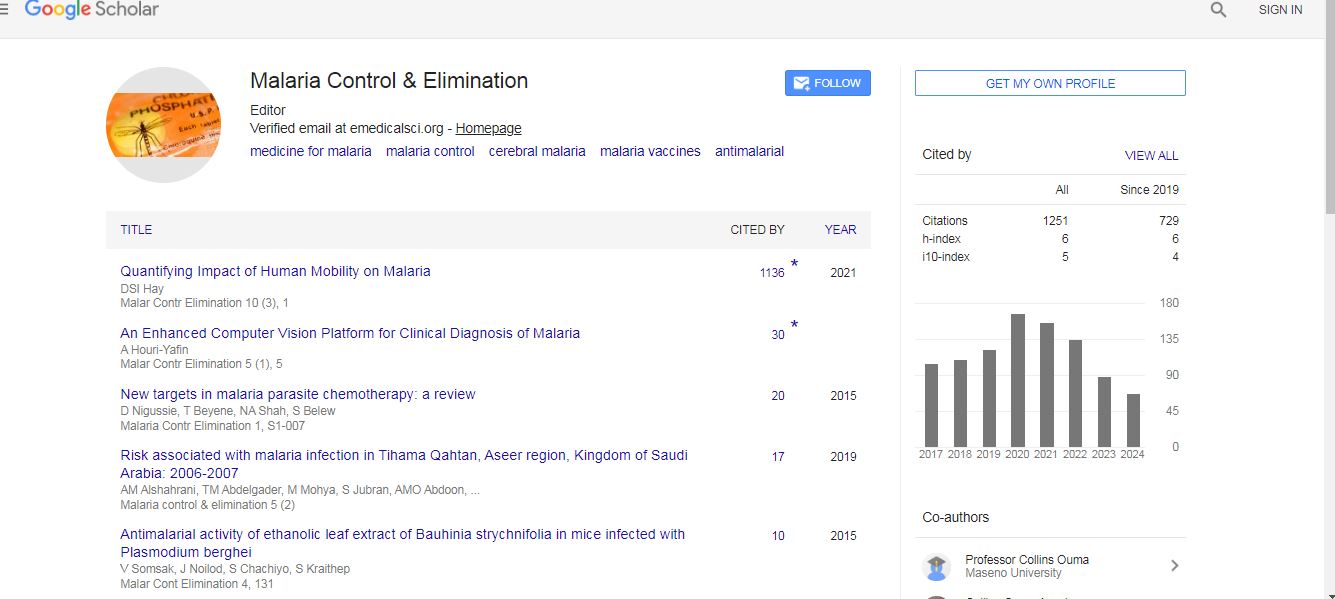
Malaria Control & Elimination received 1187 citations as per Google Scholar report