Short Communication - (2025) Volume 16, Issue 4
Received: 01-Aug-2025, Manuscript No. jfr-26-184117;
Editor assigned: 04-Aug-2025, Pre QC No. P-184117;
Reviewed: 18-Aug-2025, QC No. Q-184117;
Revised: 22-Aug-2025, Manuscript No. R-184117;
Published:
29-Aug-2025
, DOI: 10.37421/2157-7145.2025.16.678
Citation: Brooks, Natalie. ”Forensic Science’s Role in Mass Disaster
Victim Identification.” J Forensic Res 16 (2025):678.
Copyright: © 2025 Brooks N. This is an open-access article distributed under the terms of the Creative Commons Attribution License, which permits unrestricted use,
distribution and reproduction in any medium, provided the original author and source are credited.
Mass disasters and terror attacks present unique and complex challenges for forensic science, particularly in victim identification. This area requires rapid and accurate identification to provide closure for families and aid in ongoing investigations. Forensic DNA analysis, alongside traditional methods like fingerprinting and dental records, plays a pivotal role. However, the scale of events, potential for fragmentation of remains, and environmental degradation pose significant hurdles [1].
The application of advanced DNA profiling techniques, such as short tandem repeat (STR) analysis and next-generation sequencing (NGS), is crucial for efficient identification in mass casualty incidents. Challenges include the need for robust DNA extraction from degraded samples and the management of large-scale reference databases for comparison. International cooperation and standardized protocols are essential for successful outcomes [2].
Human identification in mass fatalities often relies on the comparison of DNA profiles from recovered remains with those from available reference samples (e.g., from relatives). The accuracy and speed of these comparisons are paramount. The development of probabilistic genotyping software has significantly improved the interpretation of complex DNA mixtures, which are common in mass disaster scenarios [3].
Effective management of recovered human remains in mass casualty incidents is a critical logistical challenge. Proper documentation, chain of custody, and ethical considerations are vital. The integration of forensic anthropology and archaeology can assist in the recovery and initial processing of skeletal remains, often found in severe states of degradation [4].
The use of familial DNA searching can be a powerful tool when direct identification is not possible, particularly in cases with limited reference samples. This approach involves searching for close relatives of an unidentified individual within a DNA database. However, its implementation raises privacy concerns and requires strict legal and ethical frameworks [5].
Post-mortem imaging techniques, such as CT and MRI, are increasingly utilized in forensic investigations of mass disasters. These non-invasive methods can aid in identifying subtle injuries, locating foreign objects, and even facilitating the identification of individuals by revealing unique anatomical features, especially when soft tissues are compromised [6].
The management of mass fatality incidents requires a multi-disciplinary approach involving forensic scientists, law enforcement, medical examiners, and disaster response agencies. Effective communication and coordination are paramount to ensure efficient and ethical handling of the deceased and to provide timely information to grieving families [7].
The impact of environmental factors on DNA degradation in mass disaster scenes is a significant concern. Exposure to heat, moisture, and chemicals can severely compromise the quality and quantity of DNA available for analysis. Developing and implementing protocols for rapid recovery and appropriate preservation of biological samples is crucial [8].
Terror attacks, by their nature, often involve fragmented remains and can occur in environments that complicate forensic recovery. The psychological impact on forensic personnel is also a critical consideration, requiring robust support systems and training [9].
The ethical considerations surrounding the collection and use of ante-mortem data in mass disaster identification are complex. Balancing the need for rapid identification with respect for the deceased and the privacy of their families is a constant challenge. Protocols must address consent, data security, and the eventual return of remains [10].
Forensic science faces significant hurdles in victim identification during mass disasters and terror attacks, necessitating rapid and accurate methods to bring closure to families and assist investigations. While DNA analysis is a cornerstone, it must be integrated with traditional techniques, especially considering the scale of incidents, fragmented remains, and environmental degradation [1].
Advanced DNA profiling, including STR analysis and NGS, is essential for efficient identification in mass casualty events. Overcoming challenges such as DNA extraction from degraded samples and managing extensive reference databases requires international cooperation and standardized protocols [2].
Identifying individuals in mass fatalities typically involves comparing DNA profiles from remains with reference samples, often from relatives. Probabilistic genotyping software has greatly enhanced the interpretation of complex DNA mixtures prevalent in mass disaster scenarios, improving accuracy and speed [3].
The logistical aspects of managing recovered human remains in mass casualty incidents are critical. Meticulous documentation, maintaining the chain of custody, and adhering to ethical principles are paramount. Forensic anthropology and archaeology play a vital role in the recovery and initial processing of severely degraded skeletal remains [4].
Familial DNA searching emerges as a powerful tool when direct identification is challenging, particularly with limited reference samples. This method involves searching for relatives in DNA databases but necessitates careful consideration of privacy rights and robust legal and ethical frameworks [5].
Post-mortem imaging, including CT and MRI, offers non-invasive means to support forensic investigations in mass disasters. These techniques can help detect subtle injuries, locate foreign objects, and identify individuals through unique anatomical features, especially when soft tissues are compromised [6].
Effective mass fatality management hinges on a multidisciplinary approach, requiring close collaboration among forensic scientists, law enforcement, medical examiners, and disaster response agencies. Clear communication and coordination are vital for the ethical handling of the deceased and for providing timely updates to affected families [7].
Environmental factors significantly impact DNA degradation at mass disaster sites, with heat, moisture, and chemicals posing threats to sample quality. Therefore, developing and implementing rapid recovery and preservation protocols for biological samples is crucial [8].
Terrorist attacks introduce unique forensic challenges, often involving fragmented remains in complex recovery environments. The psychological toll on forensic personnel is also a critical factor, underscoring the need for comprehensive support and training systems [9].
The ethical dimensions of collecting and utilizing ante-mortem data in mass disaster identification are intricate. Striking a balance between the urgency of identification, respect for the deceased, and family privacy is paramount. Protocols must comprehensively address consent, data security, and the respectful return of remains [10].
Mass disasters and terror attacks pose significant challenges for forensic science, particularly in victim identification. DNA analysis, advanced profiling techniques like STR and NGS, and probabilistic genotyping software are crucial for efficient identification, especially when dealing with degraded samples and complex mixtures. Forensic anthropology and archaeology aid in the recovery and processing of remains, while familial DNA searching offers an alternative when direct identification is difficult, though privacy concerns must be addressed. Post-mortem imaging techniques like CT and MRI assist in identifying subtle injuries and unique anatomical features. Effective management of mass fatalities requires a multidisciplinary, coordinated approach with strict ethical protocols concerning data collection, chain of custody, and family communication. Environmental factors can degrade DNA, necessitating rapid recovery and preservation. Terror attacks present unique recovery and psychological challenges for forensic teams. Ethical considerations regarding ante-mortem data, consent, and privacy are paramount throughout the identification process.
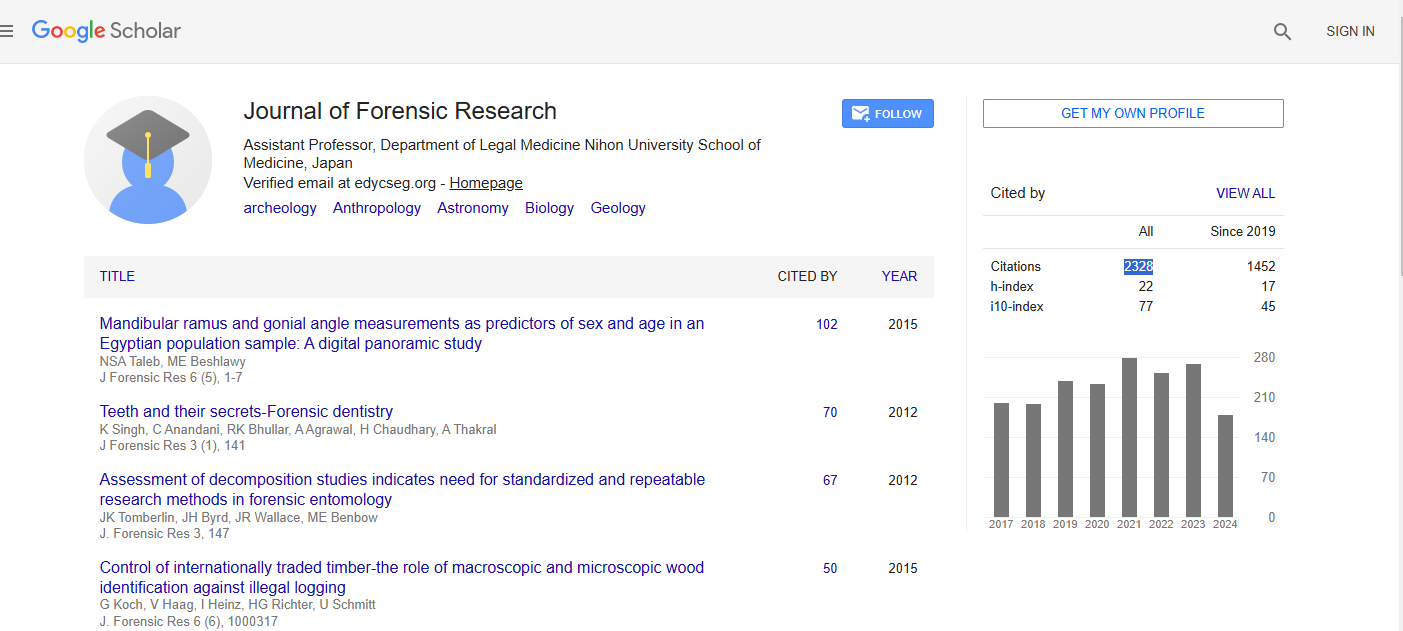
Journal of Forensic Research received 2328 citations as per Google Scholar report