Commentary - (2025) Volume 21, Issue 3
Received: 01-May-2025, Manuscript No. jos-26-185154;
Editor assigned: 05-May-2025, Pre QC No. P-185154;
Reviewed: 19-May-2025, QC No. Q-185154;
Revised: 22-May-2025, Manuscript No. R-185154;
Published:
29-May-2025
, DOI: 10.37421/1584-9341.2024.20.203
Citation: Wei, Chen. ”Fluorescence Imaging Revolutionizes Hepatopancreatobiliary
Surgery.” J Surg 21 (2025):203.
Copyright: © 2025 Wei C. This is an open-access article distributed under the terms of the Creative Commons Attribution License, which permits unrestricted use, distribution
and reproduction in any medium, provided the original author and source are credited.
Real-time fluorescence imaging has emerged as a transformative technology in the realm of surgical interventions, particularly within the complex field of hepatopancreatobiliary (HPB) surgery. This advanced imaging modality offers surgeons an unprecedented ability to visualize physiological processes that were previously difficult or impossible to assess intraoperatively. Its application is increasingly focused on evaluating tissue perfusion, a critical determinant of surgical success and patient recovery. By providing immediate, quantitative data on blood flow dynamics, real-time fluorescence imaging directly informs crucial surgical decisions, ultimately aiming to enhance patient outcomes by identifying and addressing areas of inadequate perfusion. This technique has shown significant promise in improving the safety and efficacy of various HPB procedures, a testament to its growing importance in modern surgical practice [1].
In the specific context of liver transplantation, indocyanine green (ICG) fluorescence imaging has been instrumental in evaluating graft vascular integrity. This method allows for the real-time visualization of blood flow within the transplanted liver, enabling surgeons to swiftly detect early signs of ischemia or congestion. The ability to confirm vascular patency and identify potential perfusion deficits in a timely manner is crucial for ensuring the viability and optimal function of the grafted organ. This intraoperative assessment contributes significantly to reducing the incidence of early graft dysfunction and improving long-term transplant outcomes. The visual feedback provided by ICG fluorescence imaging offers a clear advantage in managing the intricate vascular reconstructions required during liver transplantation [2].
The utility of near-infrared fluorescence imaging, employing ICG, extends to complex pancreatic surgeries, such as pancreaticoduodenectomy. In these procedures, accurate delineation of critical vascular structures and assessment of the pancreatic remnant's viability are paramount. This fluorescence-based technique aids surgeons in precisely identifying these structures and evaluating tissue perfusion, thereby minimizing the risk of complications like pancreatic fistula, a common and serious postoperative concern. The enhanced visualization provided by ICG fluorescence imaging contributes to more informed surgical planning and execution, ultimately leading to improved patient safety and recovery [3].
Beyond qualitative assessments, advanced fluorescence imaging systems are enabling quantitative analysis of liver perfusion. By employing sophisticated three-dimensional imaging techniques, researchers are gaining deeper insights into the intricate dynamics of blood flow within the liver. This quantitative approach allows for more precise measurements of perfusion parameters, offering a more comprehensive understanding of liver function and the impact of various diseases on its vascular network. Such detailed insights are invaluable for both clinical decision-making and advancing our fundamental knowledge of liver physiology and pathology [4].
Fluorescence-guided surgery represents a significant advancement in HPB procedures, and its potential continues to be explored and expanded. This approach encompasses various fluorescent agents and imaging modalities, with a particular emphasis on real-time perfusion assessment. The growing integration of these technologies into surgical workflows promises to enhance surgical precision and patient safety. As the field evolves, fluorescence-guided surgery is poised to become an indispensable tool in the armamentarium of HPB surgeons, offering improved visualization and functional assessment of vital organs and tissues during complex operations [5].
Assessing the perfusion of marginal bile ducts during liver resections is another critical application where ICG fluorescence imaging proves invaluable. Conventional methods may not always reveal compromised areas of the bile duct that are at risk of ischemia. ICG fluorescence imaging offers a superior ability to identify these compromised regions, guiding surgeons on the appropriate extent of resection and reconstruction needed to preserve bile duct function. This precise guidance helps prevent postoperative complications related to bile duct ischemia and failure, thereby improving surgical outcomes in liver resection cases [6].
In the context of oncology, novel fluorescence imaging systems are being developed for real-time monitoring of microvascular perfusion, particularly in pancreatic tumors. The ability to dynamically assess tumor vascularity offers objective insights into the tumor's microenvironment and its response to treatment. This information is crucial for tailoring treatment strategies and evaluating their effectiveness, potentially leading to more personalized and successful oncological interventions. The development of such advanced imaging capabilities signifies a move towards more precise and data-driven cancer care [7].
The accuracy of ICG-based perfusion assessments in hepatectomy specimens is an area of active investigation, with studies aiming to correlate fluorescence imaging findings with established pathological evaluations. By validating the reliability of fluorescence imaging in identifying non-viable liver parenchyma, surgeons can gain greater confidence in using this technique to guide the extent of liver resection. This validation process is essential for the widespread adoption and trust in fluorescence imaging as a standard tool in liver surgery [8].
A systematic review examining the application of fluorescence imaging in assessing biliary tract perfusion during complex HPB surgeries highlights its significant role in preventing complications arising from bile duct ischemia. The review synthesizes existing evidence, underscoring the utility of fluorescence imaging in identifying at-risk areas and guiding surgical decisions to safeguard bile duct integrity. This comprehensive overview confirms the growing importance of fluorescence imaging in managing the complexities of HPB surgeries and improving patient safety [9].
Looking forward, multimodal fluorescence imaging presents an exciting avenue for enhancing the assessment of tissue oxygenation and perfusion in oncological resections. By integrating different wavelengths and contrast agents, this approach can provide a more comprehensive view of tissue health, potentially detecting subtle perfusion abnormalities that might otherwise be missed. This enhanced diagnostic capability promises to improve the precision of oncological surgery and optimize patient management by offering a more complete understanding of the surgical field [10].
Real-time fluorescence imaging represents a significant technological advancement in surgical procedures, particularly within the intricate field of hepatopancreatobiliary (HPB) surgery. Its primary benefit lies in providing immediate, quantitative data regarding tissue perfusion. This capability is crucial for guiding critical surgical decisions, thereby aiming to improve patient outcomes by enabling the identification and management of areas exhibiting inadequate blood flow. The application of this technology in hepatobiliary surgery is a key area of focus, highlighting its potential to revolutionize surgical practice and enhance patient safety [1].
Within the specialized domain of liver transplantation, indocyanine green (ICG) fluorescence imaging has demonstrated substantial value. It plays a vital role in assessing the vascular integrity of the liver graft and detecting early indicators of ischemia or congestion. The real-time visualization afforded by this technique allows surgeons to promptly confirm the patency of blood vessels and identify any perfusion deficits, which is essential for the successful engraftment and function of the transplanted liver. This intraoperative diagnostic capability contributes directly to better graft survival and patient recovery [2].
Near-infrared fluorescence imaging, utilizing ICG, has also proven beneficial in guiding complex pancreatic surgeries, specifically pancreaticoduodenectomy. This technique assists surgeons in clearly delineating critical vascular structures and evaluating the viability of the pancreatic remnant. By offering enhanced visualization of tissue perfusion and vascular supply, it helps reduce the incidence and severity of postoperative complications. The precision offered by ICG fluorescence imaging in these challenging procedures enhances surgical safety and improves the likelihood of a successful recovery [3].
Beyond qualitative visualization, advanced fluorescence imaging systems are increasingly being employed for the quantitative analysis of liver perfusion. These systems are designed to capture and process fluorescence data to provide objective measurements of blood flow dynamics. This quantitative approach offers a deeper and more precise understanding of liver function and the pathological processes affecting it, which can lead to more informed clinical interventions and a better grasp of liver diseases [4].
Fluorescence-guided surgery is a rapidly evolving area with considerable promise for hepato-biliary-pancreatic procedures. The current literature reviews the existing state of this technology and its future potential, discussing various fluorescent agents and imaging modalities. A central theme is the increasing recognition of real-time perfusion assessment as a key component in improving surgical precision and overall patient safety within this surgical specialty. The integration of fluorescence imaging is poised to become a standard of care [5].
In liver resections, particularly when dealing with marginal bile ducts, ICG fluorescence imaging plays a crucial role in assessing perfusion. This technique has the capacity to identify compromised areas of the bile duct that may not be evident through conventional visual inspection. By highlighting these areas, it guides surgeons in determining the appropriate extent of resection and the necessary reconstruction techniques, thereby minimizing the risk of bile duct ischemia and subsequent complications. This targeted approach ensures better preservation of biliary function [6].
A novel fluorescence imaging system has been introduced for the real-time monitoring of microvascular perfusion in pancreatic tumors. This innovative technology aims to provide objective and dynamic assessments of the tumor's vascular network. Such detailed information is critical for effective treatment planning and ongoing evaluation of therapeutic response, contributing to more personalized and potentially more successful oncological management strategies for pancreatic cancer [7].
The correlation between perfusion assessments derived from ICG fluorescence imaging and established pathological findings in hepatectomy specimens is a subject of ongoing research. The objective is to validate the accuracy of fluorescence imaging in identifying non-viable liver tissue. This validation is essential for building surgeon confidence and establishing the reliability of fluorescence imaging as a tool to guide the extent of liver resection, ultimately ensuring more precise surgical interventions [8].
A systematic review has been conducted on the application of fluorescence imaging for assessing biliary tract perfusion during complex hepato-biliary surgeries. This review consolidates the evidence supporting its use in the prevention of complications related to bile duct ischemia. The findings collectively indicate that fluorescence imaging is an effective tool for safeguarding the biliary system during these challenging operations, contributing to improved patient outcomes [9].
Multimodal fluorescence imaging, which combines different wavelengths and contrast agents, is being explored for a more comprehensive assessment of tissue oxygenation and perfusion in oncological resections. This advanced approach aims to provide enhanced diagnostic capabilities, particularly in detecting subtle abnormalities in perfusion that may not be apparent with single-modality imaging. The ultimate goal is to improve the precision of tumor removal and optimize patient management in oncological surgery [10].
Real-time fluorescence imaging, particularly with indocyanine green (ICG), is revolutionizing hepatopancreatobiliary surgery by providing immediate, quantitative assessments of tissue perfusion. This technology aids in crucial surgical decisions during liver surgery, liver transplantation, and pancreaticoduodenectomy, improving accuracy and reducing postoperative complications. Advanced systems enable quantitative analysis of liver perfusion and real-time monitoring of microvascularity in tumors, offering deeper insights into organ function and disease. Fluorescence-guided surgery, including assessments of bile duct perfusion and multimodal imaging, enhances surgical precision and patient safety. Validation studies correlate imaging findings with pathological results, solidifying its role in guiding surgical resections. Overall, fluorescence imaging significantly improves diagnostic capabilities and surgical outcomes in complex HPB procedures.
None
None
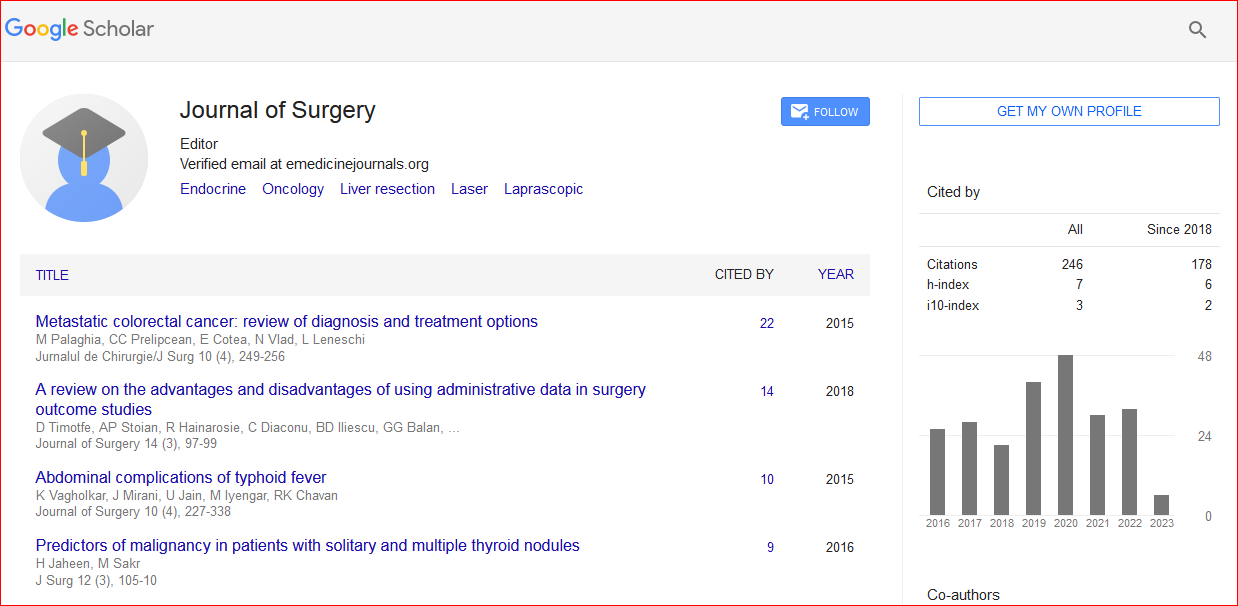
Journal of Surgery received 288 citations as per Google Scholar report