Short Communication - (2025) Volume 10, Issue 5
Received: 01-Sep-2025, Manuscript No. PE-26-179313;
Editor assigned: 03-Sep-2025, Pre QC No. P-179313;
Reviewed: 17-Sep-2025, QC No. Q-179313;
Revised: 22-Sep-2025, Manuscript No. R-179313;
Published:
29-Sep-2025
, DOI: 10.37421/2472-1042.2025.10.310
Citation: Okorie, Chinedu. ”Fixed-Dose Combinations: Better Outcomes, Lower Costs.” Pharmacoeconomics 10 (2025):310.
Copyright: © 2025 Okorie C. This is an open-access article distributed under the terms of the Creative Commons Attribution License, which permits unrestricted use, distribution and reproduction in any medium, provided the original author and source are credited.
Fixed-dose combination (FDC) therapies have emerged as a significant advancement in chronic disease management, offering multifaceted pharmacoeconomic advantages that warrant detailed exploration. These benefits are often realized through enhanced patient adherence, a critical factor in treatment success across various chronic conditions. By simplifying treatment regimens, FDCs can alleviate the burden on patients, potentially leading to improved long-term health outcomes and a more cost-effective healthcare system [1].
The successful implementation of FDCs has been particularly evident in the management of hypertension. Studies have shown that FDCs can lead to superior blood pressure control compared to single-agent therapies. This improved efficacy translates into a reduced incidence of serious cardiovascular events, thereby decreasing the long-term healthcare costs associated with managing these complications and improving overall patient well-being [2].
In the realm of diabetes mellitus, specifically type 2 diabetes, FDCs have demonstrated considerable promise. By combining different classes of oral antidiabetic agents or incorporating incretin mimetics, these therapies can achieve superior glycemic control. This enhanced control is crucial for preventing the myriad of diabetes-related complications, which in turn reduces both direct medical expenditures and broader societal costs [3].
Respiratory diseases, such as chronic obstructive pulmonary disease (COPD), also stand to benefit significantly from the adoption of FDCs. Inhaler therapies that combine multiple bronchodilators or bronchodilators with inhaled corticosteroids can streamline the treatment process for patients. This simplification often leads to improved adherence, fewer disease exacerbations, and a consequent reduction in hospitalizations and overall healthcare expenditures [4].
To fully appreciate the pharmacoeconomic value of FDCs, a robust data-driven approach is essential. This involves gathering comprehensive information on patient adherence rates, detailed clinical outcomes, and patterns of healthcare resource utilization. Real-world evidence is particularly vital in validating the economic benefits that are often initially observed in controlled clinical trials, providing a more accurate reflection of their impact in routine clinical practice [5].
The strategic integration of FDCs into established treatment guidelines can play a pivotal role in optimizing healthcare resource allocation. By promoting standardized care pathways and reducing the complexity of prescribing, FDCs can contribute to a more efficient use of resources and a potential reduction in overall healthcare costs, benefiting both providers and payers [6].
When conducting pharmacoeconomic evaluations of FDCs, it is imperative to consider a broad spectrum of costs. Beyond direct medical expenses, indirect costs, such as lost productivity due to illness, must also be taken into account. The improvements in adherence and treatment efficacy often associated with FDCs can significantly mitigate these indirect costs, thereby enhancing their overall economic value to society [7].
The patient perspective is a cornerstone of any comprehensive pharmacoeconomic assessment. FDCs have the potential to substantially enhance patient satisfaction and improve their overall quality of life. This is primarily achieved by simplifying medication routines, reducing pill burden, and minimizing the cognitive load associated with managing complex treatment regimens, all of which contribute to their perceived economic value [8].
Cost-utility analyses, employing metrics such as Quality-Adjusted Life Years (QALYs), are frequently utilized to assess the economic efficiency of FDCs. Therapies that demonstrate a favorable incremental cost-effectiveness ratio (ICER) are more likely to be deemed cost-effective by healthcare decision-makers, providing a standardized framework for comparing different treatment options [9].
Furthermore, the pharmacoeconomic impact of FDCs extends to their role in the global fight against antimicrobial resistance. By ensuring appropriate dosing and improving adherence to prescribed antimicrobial regimens, FDCs can help prevent the development of resistant pathogens. This, in turn, can reduce the substantial economic burden associated with treating untreatable infections and preserve the efficacy of existing antimicrobial agents [10].
Fixed-dose combination (FDC) therapies represent a significant paradigm shift in the management of chronic diseases, offering a compelling array of pharmacoeconomic advantages. A primary benefit lies in their potential to substantially improve patient adherence to prescribed treatment regimens. This enhanced adherence is crucial for achieving optimal therapeutic outcomes and can lead to a reduction in healthcare resource utilization, as fewer complications and exacerbations require medical intervention. Ultimately, the simplification of treatment protocols facilitated by FDCs contributes to better health outcomes and a more cost-effective approach to managing chronic conditions [1].
The application of FDCs in hypertension management has yielded demonstrably positive results. Studies consistently indicate improved blood pressure control when patients utilize FDC therapies compared to those on single-pill regimens. This enhanced efficacy is directly linked to a reduced incidence of cardiovascular events, a major driver of healthcare costs. Consequently, the long-term economic benefits are substantial, stemming from lower expenditures associated with managing the sequelae of uncontrolled hypertension [2].
In the context of type 2 diabetes mellitus, FDCs have emerged as a valuable therapeutic option. These combinations, which may involve multiple oral antidiabetic agents or an oral agent with an incretin mimetic, have proven effective in achieving superior glycemic control. This improved metabolic control is paramount in preventing or delaying the onset of numerous diabetes-related complications, thereby reducing both direct medical costs and the broader economic impact on society [3].
The management of respiratory diseases, including COPD, has also been positively impacted by the introduction of FDCs. Specifically, FDC inhalers that combine bronchodilators and/or corticosteroids streamline the patient's daily medication routine. This simplification fosters improved adherence, which is vital for disease control. The resultant decrease in disease exacerbations and hospitalizations leads to a direct reduction in healthcare expenditures [4].
A robust evaluation of the pharmacoeconomic value of FDCs is contingent upon the availability of reliable data. Key metrics include patient adherence rates, clinical effectiveness data, and patterns of healthcare resource consumption. Real-world evidence plays an indispensable role in corroborating the economic advantages initially identified in controlled clinical trials, offering a pragmatic perspective on their impact [5].
The strategic incorporation of FDCs into clinical practice guidelines can significantly enhance the efficiency of healthcare resource allocation. By promoting standardized treatment protocols and simplifying prescription practices, FDCs contribute to a reduction in the overall complexity of care delivery. This streamlining effect has the potential to lower overall healthcare costs by optimizing the use of available resources [6].
When assessing the economic impact of FDCs, it is critical to adopt a holistic approach that encompasses both direct medical costs and indirect costs. Indirect costs, such as those related to lost productivity due to illness, can be substantial. FDCs, by improving adherence and treatment efficacy, can effectively mitigate these indirect costs, thereby amplifying their overall economic benefit [7].
From a patient-centric perspective, FDCs offer significant advantages that contribute to their pharmacoeconomic value. The simplification of medication schedules can lead to increased patient satisfaction and an improved quality of life. By reducing the burden of managing multiple medications, FDCs empower patients to better adhere to their treatment, indirectly contributing to positive economic outcomes [8].
Cost-utility analysis represents a common methodological framework for evaluating the economic merits of FDCs. This approach, which often quantizes benefits in terms of Quality-Adjusted Life Years (QALYs), allows for a standardized comparison of different interventions. FDCs that demonstrate a favorable incremental cost-effectiveness ratio (ICER) are generally considered a valuable investment for healthcare systems [9].
Furthermore, FDCs play a crucial role in addressing the growing challenge of antimicrobial resistance. By promoting appropriate drug use and ensuring patient adherence to prescribed regimens, FDCs can help to prevent the emergence and spread of resistant pathogens. This contributes to reducing the substantial economic burden associated with untreatable infections and preserving the effectiveness of vital antimicrobial therapies [10].
Fixed-dose combination (FDC) therapies offer significant pharmacoeconomic advantages by enhancing patient adherence, reducing healthcare utilization, and simplifying treatment regimens, leading to better health outcomes and cost-effectiveness. In hypertension, FDCs improve blood pressure control and reduce cardiovascular events. For diabetes, they provide superior glycemic control and fewer complications. Respiratory disease management benefits from streamlined treatment and reduced exacerbations. Robust data on adherence, clinical outcomes, and resource utilization are crucial for evaluation, with real-world evidence validating clinical trial findings. Integrating FDCs into guidelines optimizes resource allocation. Beyond direct costs, FDCs mitigate indirect costs like productivity losses. Patient satisfaction and quality of life are enhanced through simplified medication routines. Cost-utility analyses, using metrics like QALYs, assess their economic efficiency. FDCs also combat antimicrobial resistance by ensuring appropriate dosing and adherence.
None
None
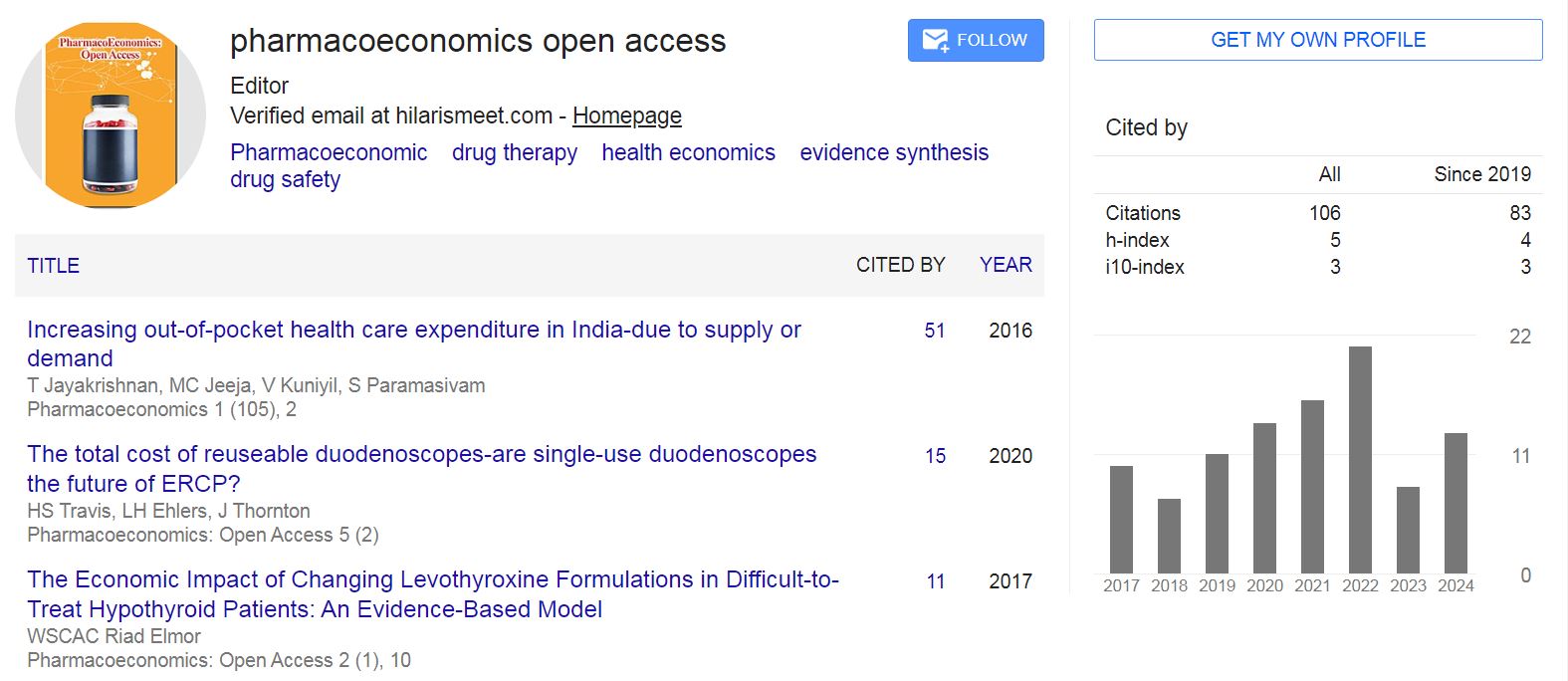
Pharmacoeconomics: Open Access received 106 citations as per Google Scholar report