Short Communication - (2025) Volume 10, Issue 5
Received: 01-Oct-2025, Manuscript No. jomp-26-185129;
Editor assigned: 03-Oct-2025, Pre QC No. P-185129;
Reviewed: 17-Oct-2025, QC No. Q-185129;
Revised: 22-Oct-2025, Manuscript No. R-185129;
Published:
29-Oct-2025
, DOI: 10.37421/2576-3857.2025.10.331
Citation: Nakamura, Kenji. ”Ferroptosis: A Promising Cancer Therapy Strategy.” J Oncol Med and Pract 10 (2025):331.
Copyright: © 2025 Nakamura K. This is an open-access article distributed under the terms of the Creative Commons Attribution License, which permits unrestricted use, distribution and reproduction in any medium, provided the original author and source are credited.
Ferroptosis, a meticulously regulated form of programmed cell death intricately linked to iron-dependent lipid peroxidation, is emerging as a profoundly promising avenue for the development of novel cancer therapies. This phenomenon, characterized by the accumulation of lipid peroxides, presents a distinct modality for inducing cell death that can be exploited to target cancerous cells selectively [1].
The molecular underpinnings of ferroptosis involve a complex interplay of iron metabolism, lipid peroxidation cascades, and the cellular antioxidant defense systems, all of which are critical for maintaining cellular homeostasis [1].
One of the key mechanisms through which ferroptosis can be therapeutically induced is by targeting the cystine-glutamate antiporter system xc-. Inhibition of this system leads to a depletion of intracellular glutathione, a crucial cofactor for the enzyme glutathione peroxidase 4 (GPX4), thereby sensitizing cells to ferroptosis [2].
GPX4 itself is recognized as a master regulator of ferroptosis, as it detoxifies lipid hydroperoxides, and its inhibition is a primary strategy to trigger this cell death pathway [5].
The central role of iron metabolism in ferroptosis cannot be overstated. Cellular iron homeostasis is tightly regulated, and any disruption in this balance can lead to the excessive accumulation of labile iron, a key driver of lipid peroxidation and subsequent ferroptosis [3].
Therefore, understanding and manipulating iron dynamics within cancer cells is a critical aspect of developing effective ferroptosis-based therapies [3].
Beyond iron, the lipidomic landscape plays a pivotal role in ferroptosis. Specifically, the metabolism of polyunsaturated fatty acids (PUFAs) by lipoxygenases (LOXs) generates lipid hydroperoxides, which are the hallmark of ferroptosis [4].
Strategies aimed at manipulating these lipid peroxidation pathways, or enhancing the sensitivity of cancer cells to their effects, are actively being explored for therapeutic benefit [4].
Cellular antioxidant defense systems are intrinsically linked to the ferroptosis pathway. These systems, including enzymes like GPX4 and regulatory pathways such as the Nrf2 pathway, work to counteract oxidative stress and prevent ferroptosis [6].
Therapeutic interventions that can modulate or overcome the activity of these antioxidant defenses can thereby sensitize cancer cells to ferroptosis-inducing agents [6].
Nanomedicine is increasingly being recognized for its potential to revolutionize ferroptosis-based cancer therapies. Nanoparticle-based delivery systems can be engineered to enhance the efficacy of ferroptosis inducers, improve their targeted delivery to tumor sites, and reduce systemic toxicity, ultimately leading to better therapeutic outcomes [7].
A significant challenge in cancer therapy is the development of resistance to various treatment modalities, including ferroptosis-inducing agents. Understanding the mechanisms by which cancer cells evade ferroptosis and developing strategies to overcome this resistance is paramount for successful clinical application [8].
This involves targeting the specific regulators of ferroptosis that are often dysregulated in resistant tumors [8].
Combination therapies hold immense promise for enhancing the efficacy of ferroptosis-based treatments. Combining ferroptosis inducers with conventional chemotherapy agents has demonstrated synergistic effects, leading to greater cancer cell death than either treatment alone [9].
Such combinatorial approaches can also be crucial in overcoming drug resistance [9].
The epigenetic regulation of ferroptosis is an emerging and vital area of research. Epigenetic modifications can influence the expression of genes critical for ferroptosis, thereby modulating cellular sensitivity. Targeting these epigenetic mechanisms offers novel avenues for sensitizing cancer cells and treating difficult-to-treat cancers [10].
In conclusion, ferroptosis represents a dynamic and multifaceted cell death pathway with significant therapeutic potential in oncology. Its intricate molecular regulation, encompassing iron metabolism, lipid peroxidation, and antioxidant defenses, offers numerous targets for intervention. Advances in nanomedicine and combinatorial strategies further enhance its promise, while addressing resistance mechanisms remains a key focus for future development [1, 2, 3, 4, 5, 6, 7, 8, 9, 10].
Ferroptosis, a regulated form of cell death driven by iron-dependent lipid peroxidation, is a compelling target for cancer therapy due to its ability to induce selective cancer cell death. The review by Chen et al. [1] provides a comprehensive exploration of the intricate molecular pathways governing ferroptosis, including the critical roles of iron metabolism, lipid peroxidation, and the cellular antioxidant defense systems. It highlights how dysregulation of these pathways contributes to cancer development and how targeting them can lead to effective therapeutic strategies, with a particular emphasis on emerging approaches like small molecule inducers, combination therapies, and nanomedicine to overcome resistance and improve patient outcomes [1].
Huang et al. [2] delve into the specific induction of ferroptosis through the inhibition of the cystine-glutamate antiporter system xc-, a mechanism that has shown promise in overcoming resistance to existing chemotherapy and targeted therapies in various cancers. Their work examines upstream regulators like GPX4 and downstream consequences, underscoring ferroptosis's potential as a standalone or combinatorial treatment modality, and also touches upon diagnostic and predictive markers essential for its clinical application [2].
The crucial link between iron metabolism and ferroptosis is thoroughly examined by Li et al. [3].
Their research offers a comprehensive overview of cellular iron homeostasis and the consequences of its disruption, which can trigger ferroptosis. They discuss specific iron-chelating agents and iron-containing compounds that can be leveraged to induce ferroptosis in cancer cells, while also considering the challenges and opportunities in developing iron-targeted ferroptosis inducers [3].
Zhang et al. [4] focus on the lipidomic landscape and its importance in ferroptosis. They highlight key lipid peroxidation pathways, including the role of polyunsaturated fatty acids (PUFAs) and their metabolism by lipoxygenases (LOXs). Their study discusses how manipulating these lipid pathways can enhance ferroptosis sensitivity in cancer cells, paving the way for new therapeutic strategies, and reviews methods for detecting lipid peroxidation products, crucial for monitoring treatment efficacy [4].
Wang et al. [5] concentrate on glutathione peroxidase 4 (GPX4), a central regulator of ferroptosis. They detail how GPX4, a selenoenzyme, detoxifies lipid hydroperoxides, thereby preventing ferroptosis. The research investigates various strategies to inhibit GPX4, both small molecule inhibitors and genetic approaches, to induce ferroptosis in cancer cells, and discusses the potential of targeting GPX4 in combination with other therapies for enhanced efficacy [5].
Chen et al. [6] explore the role of cellular antioxidant systems in ferroptosis, particularly focusing on how the interplay between reactive oxygen species (ROS) and lipid peroxidation can be therapeutically manipulated. They discuss the implications of targeting antioxidant pathways, such as the Nrf2 pathway, to sensitize cancer cells to ferroptosis-inducing agents, providing a foundation for developing novel combination therapies that leverage these mechanisms [6].
Fei Wang et al. [7] highlight the transformative potential of nanomedicine in ferroptosis-based cancer therapy. They evaluate the use of nanoparticles to enhance the efficacy and reduce the toxicity of ferroptosis-inducing agents. Their work discusses various nanocarrier systems designed for targeted delivery to cancer cells and controlled release of these agents, aiming for improved therapeutic outcomes, covering both inorganic and organic nanoparticle approaches [7].
Jia Li et al. [8] address the significant clinical challenge of therapeutic resistance in cancer treatment, specifically focusing on ferroptosis resistance. They examine how cancer cells develop resistance and explore strategies to overcome it, including modulating iron levels or inhibiting antioxidant enzymes to re-sensitize tumors to ferroptosis induction, and also review the genetic underpinnings of this resistance [8].
Chao Li et al. [9] investigate the synergistic anticancer effects observed when ferroptosis inducers, such as erastin and RSL3, are combined with conventional chemotherapy agents. Their research demonstrates enhanced cancer cell death through these combinatorial treatments, highlighting their potential to improve efficacy and overcome drug resistance in various cancer types by exploiting synergistic molecular mechanisms [9].
Ling Li et al. [10] examine the emerging field of epigenetic regulation of ferroptosis, which holds significant therapeutic implications. They review how epigenetic modifications, like DNA methylation and histone modifications, can influence the expression of ferroptosis-related genes. The authors discuss how targeting these epigenetic mechanisms could be a novel strategy to modulate ferroptosis sensitivity in cancer cells, offering new therapeutic avenues for difficult-to-treat cancers [10].
Ferroptosis, a form of cell death driven by iron-dependent lipid peroxidation, presents a promising therapeutic strategy for cancer. Research highlights that targeting iron metabolism, lipid peroxidation pathways, and antioxidant defenses can induce selective cancer cell death. Key regulators like GPX4 and the cystine-glutamate antiporter system xc- are central to ferroptosis induction. Strategies to overcome therapeutic resistance and enhance treatment efficacy include the use of small molecule inducers, combination therapies with chemotherapy, and the application of nanomedicine for targeted delivery. Epigenetic modifications are also being explored as a means to modulate ferroptosis sensitivity. Overall, ferroptosis offers a multifaceted approach to cancer treatment with significant potential for improved patient outcomes.
None
None
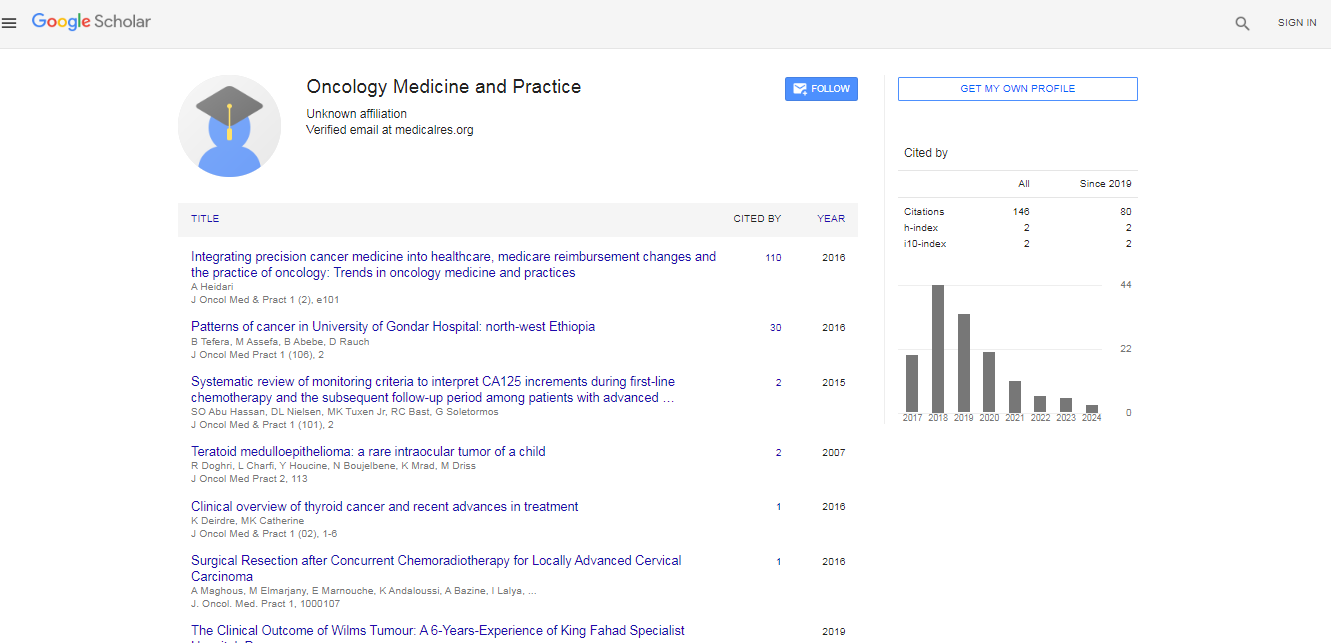
Journal of Oncology Medicine & Practice received 142 citations as per Google Scholar report