Commentary - (2025) Volume 9, Issue 5
Received: 01-Sep-2025, Manuscript No. jchd-26-185707;
Editor assigned: 03-Sep-2025, Pre QC No. P-185707;
Reviewed: 17-Sep-2025, QC No. Q-185707;
Revised: 22-Sep-2025, Manuscript No. R-185707;
Published:
29-Sep-2025
, DOI: 10.37421/2684-6020.2024.9.263
Citation: Papadopoulou, Sandra. ”Family Impacts of Coronary
Heart Disease: Resilience.” J Coron Heart Dis 09 (2025):263.
Copyright: © 2025 Papadopoulou S. This is an open-access article distributed under the terms of the Creative Commons Attribution License, which permits unrestricted use,
distribution and reproduction in any medium, provided the original author and source are credited.
Coronary heart disease (CHD) profoundly impacts families, extending far beyond the individual patient and creating significant emotional burdens for caregivers and family members, manifesting as anxiety, depression, and stress [1].
Economically, these families face escalating healthcare costs, potential loss of income due to patient or caregiver absences from work, and enduring financial strain [1].
Socially, relationships can become strained, with increased caregiving demands often leading to isolation and a reduction in social engagement for family members [1].
Children are particularly vulnerable to the effects of CHD, experiencing emotional distress, behavioral changes, and potentially long-term psychological consequences [1].
Caregiver burden in the context of CHD is substantial, with spouses and partners frequently bearing the majority of caregiving responsibilities, which can lead to physical exhaustion, emotional distress, and a decline in their own health [2].
Practical challenges encompass managing medications, monitoring symptoms, coordinating medical appointments, and providing physical assistance to the patient [2].
The psychological toll on caregivers can include heightened anxiety, depression, and feelings of isolation [2].
The psychosocial impact of living with a parent diagnosed with CHD is significant for children, who may experience increased anxiety, fear of loss, and a heightened sense of responsibility [3].
Alterations in family dynamics, such as parental absence due to illness or caregiver stress, can negatively affect a child's emotional development and academic performance [3].
Marital and relationship dynamics are often severely tested by a CHD diagnosis, with the stress of the illness, altered roles, and new responsibilities potentially leading to conflict, reduced intimacy, and communication breakdowns within couples [4].
Conversely, some couples find that the experience can foster increased closeness and mutual support, highlighting the varied ways relationships adapt [4].
Financial strain represents a significant and often overlooked consequence for families managing CHD. Direct medical expenses, rehabilitation costs, and indirect expenses such as lost wages, travel, and home modifications can impose substantial financial burdens, leading to stress, anxiety, and difficult decisions regarding healthcare access and family expenditures [5].
The psychological distress experienced by family members of individuals with CHD is multifaceted, encompassing anticipatory grief, fear of recurrence, and the emotional toll of witnessing a loved one's suffering [6].
High levels of anxiety and depression are commonly reported among family members, which can detrimentally impact their overall quality of life [6].
Social isolation can emerge as a significant consequence for families navigating the challenges of CHD. Caregivers may curtail their social activities to accommodate their responsibilities, leading to a diminished social support network [7].
Family members might also withdraw due to the emotional burden of the illness or a perceived stigma associated with chronic health conditions [7].
The impact of CHD on siblings of affected individuals is an emerging area of concern. Siblings may experience anxiety, guilt, and a sense of responsibility, particularly if they are young, and their family lives and parental attention may be disrupted [8].
Promoting family resilience in the face of CHD involves cultivating adaptive coping mechanisms, fostering open communication, and effectively utilizing available social support systems [9].
Empowering families with comprehensive knowledge about the disease, its treatment, and self-care strategies can enhance their capacity to navigate these challenges [9].
The role of healthcare professionals in supporting families affected by CHD is paramount. Providing thorough patient and family education, facilitating communication between family members and the healthcare team, and offering referrals to psychosocial support services are essential components of effective care [10].
A family-centered approach ensures that the needs of all family members are addressed, contributing to improved patient outcomes and enhanced family well-being [10].
Coronary heart disease (CHD) exerts a profound influence on families, extending well beyond the individual diagnosed with the condition. This impact is multifaceted, encompassing significant emotional burdens such as anxiety, depression, and stress for caregivers and other family members who must navigate the complexities of the illness [1].
Economically, families often face substantial increases in healthcare costs, coupled with potential loss of income due to either the patient's or the caregiver's inability to work, leading to long-term financial strain [1].
Socially, existing relationships can become strained as the increased demands on caregivers may result in social isolation and a reduction in their engagement with broader social networks [1].
Children within these families are particularly vulnerable, susceptible to experiencing emotional distress, observable behavioral changes, and potential long-term psychological effects stemming from the presence of CHD [1].
Caregiver burden within the context of CHD is a significant issue. Spouses and partners often assume the primary responsibility for caregiving, which can lead to profound physical exhaustion, emotional distress, and a noticeable decline in their own health and well-being [2].
The practical aspects of caregiving present numerous challenges, including the meticulous management of medications, continuous monitoring of symptoms, coordination of frequent medical appointments, and the provision of essential physical assistance to the patient [2].
The psychological toll on these caregivers is substantial, often manifesting as pervasive anxiety, depressive symptoms, and a sense of profound isolation [2].
For children, the psychosocial impact of having a parent diagnosed with CHD is considerable. They may experience heightened levels of anxiety, a persistent fear of loss, and an inappropriate sense of responsibility that can affect their development [3].
Changes in established family dynamics, such as a parent's absence due to illness or the general stress experienced by the primary caregiver, can have a detrimental effect on a child's emotional development and academic performance [3].
Marital and broader relationship dynamics within couples are frequently tested when a CHD diagnosis occurs. The inherent stress of managing the illness, alongside the necessary adjustments in roles and responsibilities, can precipitate conflict, diminish intimacy, and lead to significant communication breakdowns between partners [4].
Conversely, some couples report a paradoxical outcome, experiencing increased closeness and a strengthening of mutual support, demonstrating the diverse ways relationships can adapt to such a crisis [4].
Financial strain represents a significant and often underestimated consequence for families dealing with CHD. The cumulative costs associated with direct medical care, rehabilitation expenses, and indirect costs, such as lost wages, travel expenses for appointments, and necessary home modifications, can create substantial financial burdens for the family [5].
This can consequently lead to increased stress, anxiety, and difficult choices regarding healthcare access and the allocation of family resources [5].
The psychological distress experienced by family members of individuals diagnosed with CHD is characterized by its multifaceted nature. This distress can include anticipatory grief, a pervasive fear of the illness recurring, and the emotional toll associated with witnessing a loved one's suffering [6].
It is common for family members to experience high levels of anxiety and depression, which significantly impacts their overall quality of life [6].
Social isolation can emerge as a substantial consequence for families impacted by CHD. Caregivers, in particular, may find themselves reducing their social activities to accommodate their caregiving responsibilities, which can lead to a weakening of their social support network [7].
Family members might also withdraw from social interactions due to the emotional burden of the illness or a perceived social stigma associated with chronic health conditions [7].
The impact of CHD on siblings of affected individuals is an area that is increasingly gaining attention. Siblings may contend with anxiety, feelings of guilt, and a sense of responsibility, particularly if they are young and less equipped to understand the implications of the illness [8].
They may also experience disruptions in their usual family life and a perceived reduction in parental attention [8].
Fostering resilience within families facing CHD involves several key elements, including the cultivation of adaptive coping mechanisms, the maintenance of open and honest communication channels, and the effective utilization of available social support systems [9].
Empowering family members with comprehensive knowledge about the disease, its treatment protocols, and self-care strategies can significantly enhance their ability to navigate the inherent challenges [9].
Healthcare professionals play an indispensable role in supporting families affected by CHD. Their responsibilities include providing comprehensive education to both patients and their families, facilitating effective communication between family members and the healthcare team, and offering timely referrals to essential psychosocial support services [10].
Adopting a family-centered approach to care ensures that the unique needs of all family members are considered, ultimately leading to improved patient outcomes and enhanced overall family well-being [10].
Coronary heart disease (CHD) significantly impacts families emotionally, economically, and socially. Caregivers often experience substantial burdens, including physical exhaustion and psychological distress such as anxiety and depression. Children and siblings may face emotional difficulties and disruptions in family dynamics. Financial strain is a common consequence due to medical costs and lost income. Relationships can be tested, sometimes leading to conflict, while other couples find increased closeness. Social isolation is also a concern for families managing CHD. Promoting family resilience through coping mechanisms, communication, and support is vital. Healthcare professionals play a crucial role in providing education, facilitating communication, and offering psychosocial support within a family-centered care framework.
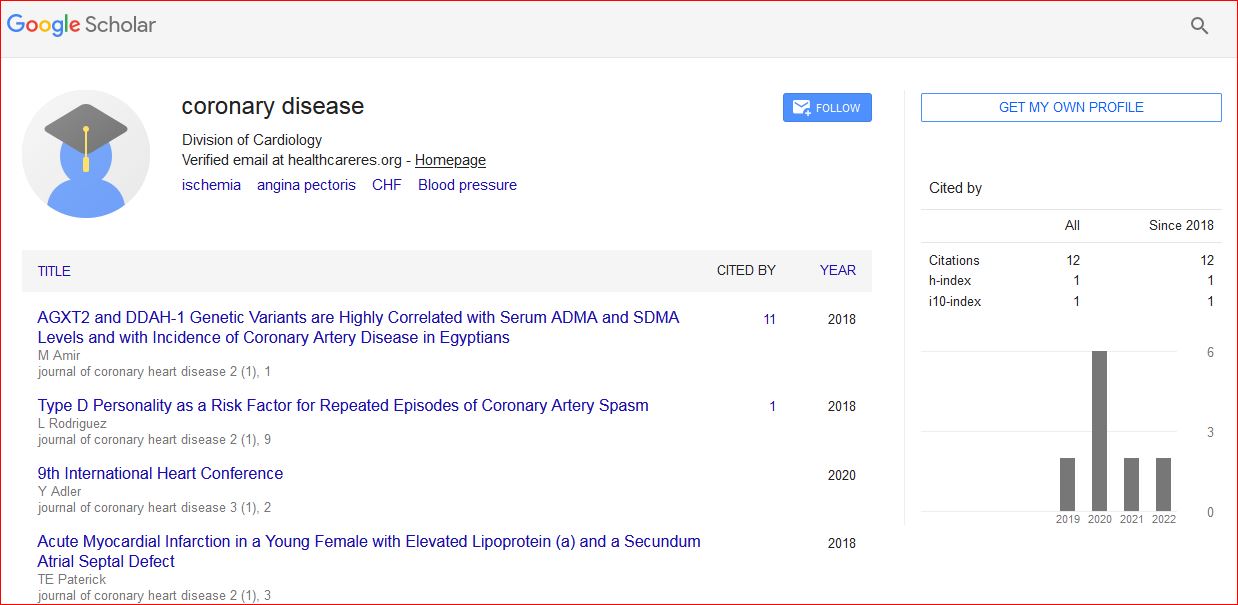
Journal of Coronary Heart Diseases received 15 citations as per Google Scholar report