Opinion - (2025) Volume 9, Issue 6
Received: 01-Dec-2025, Manuscript No. ahbs-26-182570;
Editor assigned: 03-Dec-2025, Pre QC No. P-182570;
Reviewed: 17-Dec-2025, QC No. Q-182570;
Revised: 22-Dec-2025, Manuscript No. R-182570;
Published:
29-Dec-2025
, DOI: 10.37421/2952-8097.2025.9.348
Citation: Kim, Daniel. ”Exotic Animal Welfare: Captive Life,
Health, and Ethics.” J Anim Health Behav Sci 09 (2025):348.
Copyright: © 2025 Kim D. This is an open-access article distributed under the terms of the Creative Commons Attribution License, which permits unrestricted use, distribution
and reproduction in any medium, provided the original author and source are credited.
The intricate relationship between captive environments and the well-being of wild animals in zoos and exotic animal facilities is a critical area of study, encompassing environmental influences, social interactions, and individual physiological responses [1].
A significant challenge within these settings is the prevalence of stress-related issues, such as stereotypic behaviors, heightened aggression, and weakened immune systems, often exacerbated by insufficient enrichment, unnatural social structures, or inadequate living spaces [1].
Recognizing and addressing these concerns necessitates a deep understanding of ethology and a comprehensive approach to animal welfare [1].
The design of enclosures plays a pivotal role in the psychological health of zoo inhabitants, with environmental complexity, opportunities for natural foraging behaviors, and the provision of secure retreats proving instrumental in mitigating abnormal repetitive actions and fostering more naturalistic activity patterns [2].
Evidence-based recommendations are increasingly being developed to enhance existing enclosures and guide the design of new ones to better meet the innate behavioral needs of diverse species [2].
The field of exotic animal medicine presents unique diagnostic and therapeutic hurdles due to the limited availability of specialized tools and established protocols compared to those for domestic animals [3].
This underscores the paramount importance of veterinary expertise specifically in wildlife medicine, coupled with advanced diagnostic imaging and laboratory techniques for effective disease management [3].
Ethical considerations also come into play, particularly when determining the scope of medical intervention for animals that may not be suitable candidates for extensive treatment [3].
Social housing in zoos introduces a distinct set of behavioral and health considerations. Research into primate groups, for instance, highlights the dynamics of social bond formation and maintenance, and how group composition can directly influence stress levels and the frequency of inter-individual aggression [4].
Successful group management and overall welfare hinge on meticulous attention to social compatibility and the equitable distribution of resources [4].
Specific to avian species, nutritional requirements in captive exotic birds are a focal point, with common deficiencies often observed in managed populations [5].
Maintaining balanced diets, utilizing species-appropriate supplements, and understanding the profound impact of dietary imbalances on feather health, immune function, and reproductive success are crucial for optimal well-being [5].
Beyond the immediate enclosure, the influence of public viewing on the behavior and stress levels of captive animals is a significant factor [6].
Studies across various species indicate that while some animals adapt to human presence, others display heightened vigilance, avoidance tactics, or even aggressive responses [6].
Strategies for designing visitor areas that minimize disturbance while preserving educational value are thus essential [6].
The welfare implications of reintroduction programs for captive-bred exotic animals are complex, particularly concerning the acquisition of essential survival skills and behavioral adaptations for life in the wild [7].
Ensuring success requires thorough pre-release training, judicious site selection, and consistent post-release monitoring to maximize the chances of survival and integration into natural habitats [7].
Recognizing and effectively managing pain in exotic animals is a critical component of their care, yet it poses considerable challenges [8].
Current methodologies for pain assessment, including observational scales, physiological markers, and pharmacological approaches, are reviewed, emphasizing the difficulty in discerning subtle signs of discomfort in non-domesticated species and the subsequent need for specialized pain management protocols [8].
The application of positive reinforcement training techniques offers a promising avenue for improving husbandry and veterinary procedures in zoo animals [9].
Such training can significantly reduce the reliance on chemical restraint, minimize stress during handling, and elevate the overall welfare of animals undergoing routine care, with practical examples illustrating its efficacy across diverse species [9].
Finally, the ethical dimensions of keeping and exhibiting exotic animals are under constant scrutiny, raising questions about whether zoos can adequately meet the complex welfare needs of all species [10].
Institutions bear moral obligations to prioritize animal well-being over public display, advocating for enhanced transparency and accountability in their management practices [10].
The multifaceted challenges associated with housing wild animals in zoos and exotic animal facilities are deeply rooted in the interplay of environmental factors, social dynamics, and individual physiology [1].
Common afflictions such as stereotypic behaviors, aggression, and compromised immune function are frequently linked to inadequate environmental enrichment, suboptimal social groupings, and insufficient spatial resources, highlighting the critical need for species-specific management informed by ethological research and a holistic view of animal welfare [1].
Furthermore, the physical design of enclosures has a profound impact on the psychological well-being of zoo animals. Research consistently demonstrates that environmental complexity, opportunities for natural foraging, and the availability of safe refuges can substantially decrease abnormal repetitive behaviors and encourage more natural activity patterns, thereby providing evidence-based recommendations for enriching existing spaces and designing new ones that better align with species' innate behavioral needs [2].
In the realm of exotic animal medicine, significant obstacles arise in the diagnosis and treatment of common diseases due to the comparative scarcity of diagnostic tools and treatment protocols available for these species versus domestic animals [3].
This necessitates a high level of veterinary expertise in wildlife medicine, advanced diagnostic imaging capabilities, and sophisticated laboratory techniques for effective patient management, alongside careful consideration of the ethical implications surrounding treatment decisions for animals that may not be candidates for intensive medical intervention [3].
Social housing within zoo environments introduces a unique set of behavioral and health considerations. Studies focusing on primate groups, for example, investigate the dynamics of social bond formation and maintenance, as well as the influence of group composition on stress levels and inter-individual aggression, suggesting that careful evaluation of social compatibility and adequate resource provision are vital for successful group management and overall welfare [4].
Nutritional management is another critical area, particularly for captive exotic birds, where common deficiencies are frequently observed [5].
The importance of balanced diets, the strategic use of species-appropriate supplements, and a thorough understanding of how dietary imbalances affect feather condition, immune function, and reproductive success are paramount for promoting optimal health, with practical guidelines available for formulating effective diets [5].
The impact of public viewing on the behavioral patterns and stress indicators of captive animals is a subject of ongoing investigation [6].
Studies reveal that while some species habituate well to human presence, others exhibit increased vigilance, avoidance behaviors, or even aggressive displays, leading to recommendations for designing viewing areas that minimize disturbance while still facilitating educational opportunities for visitors [6].
Reintroduction programs for captive-bred exotic animals present a distinct set of welfare challenges, primarily concerning the animals' preparedness with necessary survival skills and behavioral adaptations for wild environments [7].
Maximizing the success of these conservation endeavors relies on comprehensive pre-release training, meticulous site selection, and diligent post-release monitoring to ensure animals can thrive in their natural habitats [7].
Assessing and managing pain in exotic animals is an essential but often difficult aspect of their care [8].
The paper reviews current methodologies, including observational scales, physiological indicators, and pharmacological interventions, while underscoring the inherent difficulties in recognizing subtle signs of discomfort in non-domesticated species and the critical need for species-specific pain management protocols to ensure their well-being [8].
Positive reinforcement training has emerged as a valuable technique for husbandry and veterinary procedures involving zoo animals [9].
This approach can substantially reduce the need for chemical restraint, minimize stress during handling, and ultimately improve the overall welfare of animals undergoing routine medical or care-related interventions, with practical training techniques applicable to a wide range of species [9].
Finally, the ethical considerations surrounding the care and exhibition of exotic animals are a subject of continuous debate, questioning the capacity of zoos to fully address the complex welfare needs of all species [10].
Institutions are morally obligated to prioritize animal well-being over public display, and there is a strong advocacy for increased transparency and accountability in zoo management practices to ensure the highest standards of care [10].
This collection of research explores various facets of exotic animal welfare in zoos and captive facilities. It highlights the significant impact of environmental design, social dynamics, and nutrition on animal health and behavior, addressing issues like stereotypic behaviors, stress, and compromised immune function. The studies also delve into the challenges of exotic animal medicine, pain assessment, and the ethical considerations of animal exhibition. Furthermore, the importance of positive reinforcement training for husbandry and veterinary care, as well as the complexities of reintroduction programs and visitor impact, are discussed. Overall, the research emphasizes the need for species-specific management, ethological understanding, and a holistic approach to ensuring the well-being of captive wild animals.
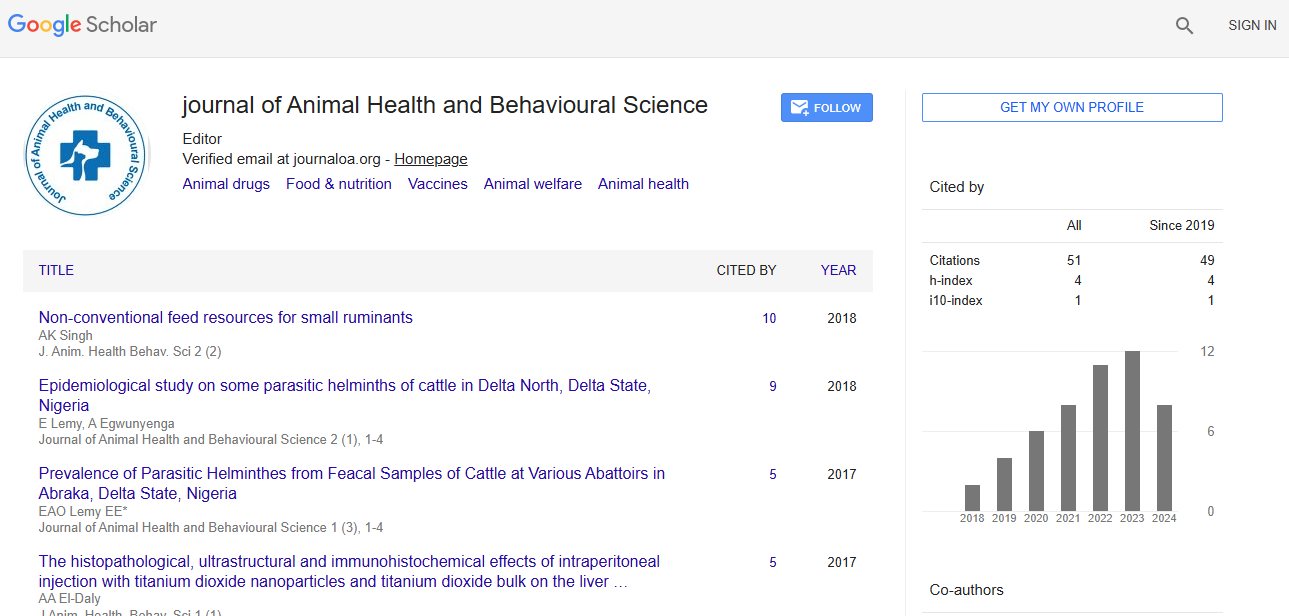
Journal of Animal Health and Behavioural Science received 38 citations as per Google Scholar report