Brief Report - (2025) Volume 10, Issue 3
Received: 02-Jun-2025, Manuscript No. jomp-26-185086;
Editor assigned: 04-Jun-2025, Pre QC No. P-185086;
Reviewed: 18-Jun-2025, QC No. Q-185086;
Revised: 23-Jun-2025, Manuscript No. R-185086;
Published:
30-Jun-2025
, DOI: 10.37421/2576-3857.2025.10.304
Citation: Ali, Fatima Ben. ”Exosomes Drive Breast Cancer Metastasis: Therapeutic Targets.” J Oncol Med and Pract 10 (2025):304.
Copyright: © 2025 Ali B. Fatima This is an open-access article distributed under the terms of the Creative Commons Attribution License, which permits unrestricted use, distribution and reproduction in any medium, provided the original author and source are credited.
Exosomes, fundamental components of intercellular communication, have emerged as critical players in the complex landscape of breast cancer metastasis. These nanoscale extracellular vesicles are not merely passive carriers of cellular debris; rather, they actively orchestrate a cascade of events that facilitates tumor cell dissemination and the establishment of secondary tumors. Their ability to transport a diverse cargo, encompassing proteins, lipids, and nucleic acids, allows them to profoundly influence both the tumor cells themselves and the surrounding microenvironment. This pervasive role in mediating cell-to-cell signaling underscores their growing recognition as a significant factor in the progression of breast cancer and a compelling subject for therapeutic intervention. Specifically, exosomes have been implicated in the intricate process of priming the pre-metastatic niche, a specialized microenvironment that is prepared to receive and support incoming cancer cells before they even arrive. This preparation involves complex remodeling of the local tissue, making it more conducive to tumor growth and survival. Beyond their role in niche preparation, exosomes are instrumental in driving the migratory and invasive capabilities of breast cancer cells. They achieve this by delivering specific molecular signals that can induce profound cellular changes. These signals can promote cytoskeletal rearrangements, leading to increased cell motility, and can also trigger the breakdown of tissue barriers, enabling cancer cells to penetrate surrounding tissues and enter the bloodstream or lymphatic system. This invasive potential is a hallmark of metastatic cancer and a major contributor to patient morbidity and mortality. The epithelial-mesenchymal transition (EMT), a critical developmental process that cancer cells co-opt to gain migratory and invasive properties, is significantly influenced by exosomal content. By delivering specific regulatory molecules, exosomes can induce or enhance EMT in recipient cancer cells, further fueling their metastatic drive. This transition allows cancer cells to shed their epithelial characteristics, becoming more mobile and resistant to apoptosis. Furthermore, the intricate interplay between cancer cells and the immune system is significantly modulated by exosomes. In the context of metastasis, exosomes can act as immunosuppressive agents, shielding tumor cells from immune surveillance and allowing them to evade destruction by immune cells such as cytotoxic T lymphocytes and natural killer cells. This immune evasion is crucial for the survival and growth of disseminated tumor cells, which would otherwise be eliminated by a healthy immune response. By creating an immunosuppressive microenvironment, exosomes facilitate the establishment of a pre-metastatic niche that is not only physically prepared but also immunologically permissive for tumor growth. This dual action of niche preparation and immune modulation highlights the multifaceted role of exosomes in the metastatic cascade. The specific molecular cargo within exosomes dictates their functional outcomes. Among the most extensively studied are exosomal microRNAs (miRNAs), short non-coding RNA molecules that can regulate gene expression in recipient cells. Certain miRNAs carried by breast cancer cell-derived exosomes have been identified as key mediators of metastasis. These miRNAs can target genes involved in various cellular processes, including angiogenesis, immune suppression, and cell survival, thereby contributing to the formation of a pre-metastatic niche and promoting tumor progression. For instance, miR-21 and miR-155 are frequently found in breast cancer exosomes and have been shown to influence critical pathways that support metastasis. Proteins packaged within exosomes also play a pivotal role in directing metastatic tropism, the preferential spread of cancer to specific organs. Exosomes released from highly metastatic breast cancer cells often carry distinct surface proteins that can interact with endothelial cells in distant organs. These interactions facilitate the process of extravasation, where cancer cells exit the bloodstream and penetrate the tissue of the target organ, initiating the formation of secondary tumors. This organ-specific targeting mediated by exosomal proteins is a complex phenomenon that contributes to the characteristic patterns of metastasis observed in breast cancer. Long non-coding RNAs (lncRNAs) are another class of nucleic acids found within exosomes that contribute to the metastatic process. These longer RNA molecules, which do not encode proteins, can act as potent regulators of gene expression. Exosome-mediated transfer of specific lncRNAs has been shown to promote epithelial-mesenchymal transition (EMT) in breast cancer cells. By reprogramming recipient cells, these exosomal lncRNAs can enhance their migratory and invasive capabilities, which are critical steps in the metastatic cascade. This highlights the sophisticated mechanisms by which exosomes can influence cellular plasticity and promote cancer progression. Lipids are also integral components of exosomes and have been implicated in regulating breast cancer cell migration and invasion. Specific lipid species carried within exosomes can activate signaling pathways in recipient cells, leading to alterations in the cell's cytoskeleton and consequently increasing its motility. These lipid-mediated signals contribute to the overall ability of cancer cells to move through tissues and metastasize. The composition of exosomal lipids can thus be a key determinant of a cell's metastatic potential and the efficiency with which it can spread. Beyond promoting direct tumor cell dissemination, exosomes also exert a significant influence on the immune microenvironment at pre-metastatic sites. They can actively modulate immune cell function, promoting immune tolerance and thereby facilitating tumor cell survival. By suppressing the activity of immune cells like cytotoxic T lymphocytes and natural killer cells in common metastatic sites such as the bone marrow and lungs, exosomes create a conducive environment for tumor cells to establish and grow without being effectively targeted by the host immune system. The remodeling of the extracellular matrix (ECM) is another crucial aspect of metastasis that is influenced by exosomes. The ECM provides structural support to tissues but can also present a physical barrier to migrating cancer cells. Exosomes contain enzymes and signaling molecules that can degrade and reorganize ECM components. This remodeling process creates pathways through the ECM, facilitating cancer cell migration and invasion. This activity is essential for cancer cells to break away from the primary tumor and navigate through surrounding tissues. Considering the multifaceted roles of exosomes in promoting breast cancer metastasis, targeting exosome biogenesis and secretion presents a promising therapeutic strategy. By interfering with the cellular machinery responsible for the formation and release of exosomes, it may be possible to significantly inhibit the dissemination of metastatic cells and their pro-metastatic cargo. Such an approach could offer a novel way to disrupt the metastatic cascade and improve patient outcomes. Furthermore, research has begun to elucidate the specific interactions between exosomes and the bone microenvironment, which is a common site for breast cancer metastasis. Exosomes released by breast cancer cells can communicate with bone cells, influencing processes such as osteoclast differentiation and bone resorption. This interaction can create an osteolytic environment that is favorable for the establishment and progression of bone metastases, highlighting the complex organ-specific mechanisms at play. This comprehensive understanding of exosomal involvement in breast cancer metastasis, from cellular communication and immune modulation to niche preparation and ECM remodeling, highlights their potential as both diagnostic markers and therapeutic targets. The diverse cargo and signaling capabilities of exosomes position them as central regulators of the metastatic cascade, making them a critical area of ongoing research and clinical exploration.
Exosomes, recognized as key mediators of intercellular communication, play a profound and multifaceted role in the progression of breast cancer metastasis. These nano-sized vesicles are laden with a diverse cargo of biomolecules, including proteins, lipids, and nucleic acids, which they deliver to recipient cells, thereby influencing a wide array of cellular processes that promote tumor spread. Their ability to interact with and modify the tumor microenvironment, as well as distant organs, makes them central players in the complex cascade of metastatic disease. The initial step in this cascade often involves the preparation of a receptive niche, known as the pre-metastatic niche, which is meticulously engineered by exosomes to support the arrival and growth of circulating tumor cells. This intricate process involves significant remodeling of the local tissue architecture and composition. Exosomes actively facilitate the migratory and invasive potential of breast cancer cells, enabling them to detach from the primary tumor and infiltrate surrounding tissues. This is achieved through the delivery of specific signaling molecules that can induce profound changes in cell behavior, such as enhanced motility and the breakdown of tissue barriers. The epithelial-mesenchymal transition (EMT), a critical cellular reprogramming event that endows cancer cells with migratory and invasive characteristics, is significantly influenced by exosomal factors. By delivering specific regulatory molecules, exosomes can trigger or amplify EMT in cancer cells, thereby enhancing their metastatic capabilities. This plasticity is a hallmark of aggressive cancers. The immune system's response to cancer is also significantly impacted by exosomes. In the context of metastasis, exosomes can act as potent immunosuppressors, creating an environment that shields tumor cells from immune surveillance. This immune evasion is crucial for the survival and establishment of disseminated tumor cells, allowing them to escape destruction by immune effector cells like cytotoxic T lymphocytes and natural killer cells. By suppressing immune activity at potential metastatic sites, exosomes contribute to the formation of an immunologically permissive pre-metastatic niche, further aiding tumor progression. This delicate balance of immune modulation is a key factor in successful metastasis. Among the most important components carried by exosomes are microRNAs (miRNAs). These small non-coding RNA molecules can directly regulate gene expression in recipient cells by binding to messenger RNA targets. Exosomal miRNAs secreted by breast cancer cells have been shown to play significant roles in promoting metastasis by targeting genes involved in processes such as angiogenesis, immune suppression, and cell survival. Specific miRNAs, such as miR-21 and miR-155, are frequently identified in breast cancer exosomes and are known to support the formation of the pre-metastatic niche and enhance tumor progression. Their specific targets dictate the functional outcomes. Exosomal proteins are also critical for dictating metastatic tropism, the tendency of cancer to spread to specific organs. Exosomes released by highly metastatic breast cancer cells often carry unique surface proteins that can bind to specific receptors on endothelial cells in distant organs. This interaction facilitates the extravasation process, allowing cancer cells to exit the bloodstream and establish secondary tumors in these target sites. This organ-specific targeting mechanism underscores the sophisticated communication networks that govern cancer spread. Long non-coding RNAs (lncRNAs) are another class of exosome-packaged nucleic acids that contribute to breast cancer metastasis. These longer RNA molecules play regulatory roles in gene expression. Exosome-mediated transfer of specific lncRNAs has been shown to promote epithelial-mesenchymal transition (EMT) in recipient breast cancer cells. By reprograming cellular pathways, these exosomal lncRNAs enhance the migratory and invasive capabilities of cancer cells, which are essential for their dissemination. This highlights the diverse regulatory functions of exosomal RNA. Exosomal lipids, while perhaps less studied than nucleic acids or proteins, also contribute to the metastatic process. Specific lipid species within exosomes can activate signaling pathways in recipient cells, leading to cytoskeletal rearrangements and increased cell motility. These lipid-mediated signals play a role in regulating the migration and invasion of breast cancer cells, contributing to their ability to spread throughout the body. The specific lipid composition can therefore influence metastatic potential. Exosomes also exert influence on the immune landscape at pre-metastatic sites, contributing to immune tolerance. They can suppress the activity of key immune cells, such as cytotoxic T lymphocytes and natural killer cells, which are responsible for eliminating cancer cells. This immune suppression is particularly important in common sites of breast cancer metastasis, like the bone marrow and lungs, where it allows tumor cells to survive and proliferate without significant immune intervention. The extracellular matrix (ECM) is a complex network of proteins and other molecules that provides structural support to tissues. Exosomes play a role in remodeling the ECM to facilitate cancer cell migration and invasion. Exosome-associated enzymes and signaling molecules can degrade and reorganize ECM components, thereby creating pathways that enable cancer cells to move through tissues and metastasize. This enzymatic activity is crucial for breaking down physical barriers. Given the extensive involvement of exosomes in promoting breast cancer metastasis, targeting exosome biogenesis and secretion represents a promising therapeutic avenue. By inhibiting the production or release of these vesicles, it may be possible to significantly reduce the dissemination of cancer cells and their metastatic cargo. This strategy aims to disrupt the entire metastatic cascade at its source. Furthermore, the interaction between breast cancer cells and the bone microenvironment, a common metastatic site, is significantly mediated by exosomes. These vesicles can induce changes in bone cells, leading to increased bone resorption and the creation of an environment that favors the growth of osteolytic bone metastases. This cross-talk highlights the organ-specific mechanisms of exosome action. In summary, exosomes are critical regulators of breast cancer metastasis, influencing everything from niche preparation and immune evasion to direct promotion of cell migration and invasion. Their diverse cargo and ability to communicate across cellular and tissue boundaries make them a central focus of research aimed at developing novel therapeutic strategies to combat this deadly disease.
Exosomes are vital in breast cancer metastasis, mediating intercellular communication by carrying proteins, lipids, and nucleic acids. They prime the pre-metastatic niche, enhance tumor cell migration and invasion, facilitate epithelial-mesenchymal transition (EMT), and contribute to immune evasion. Exosomal microRNAs like miR-21 and miR-155 target genes involved in angiogenesis and immune suppression. Exosomal proteins dictate metastatic tropism by interacting with endothelial cells in distant organs. Long non-coding RNAs (lncRNAs) promote EMT, while lipids activate signaling pathways for cell motility. Exosomes also modulate immune cells, suppressing cytotoxic T lymphocytes and natural killer cells, and remodel the extracellular matrix (ECM) to facilitate tumor spread. Targeting exosome biogenesis and secretion offers a potential therapeutic strategy to inhibit metastasis. Communication between breast cancer cells and the bone microenvironment via exosomes promotes osteolytic metastasis. Understanding exosomal signaling pathways provides potential therapeutic targets to disrupt the metastatic cascade.
None
None
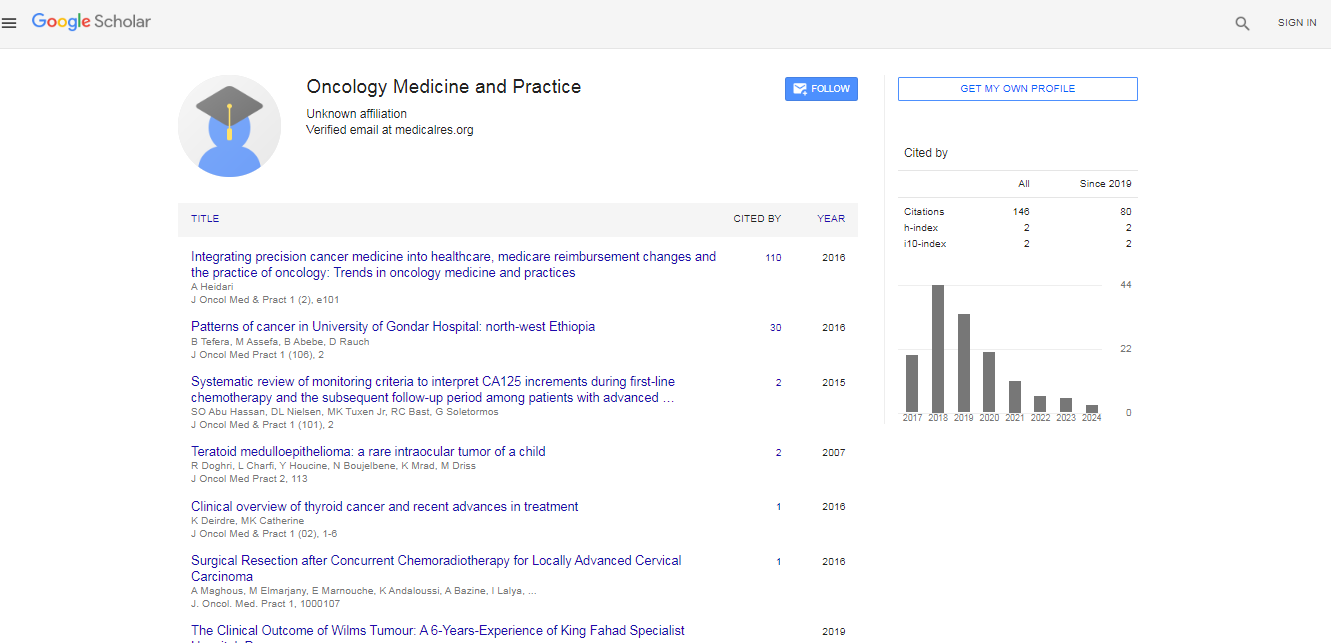
Journal of Oncology Medicine & Practice received 142 citations as per Google Scholar report