Perspective - (2025) Volume 9, Issue 4
Received: 01-Jul-2025, Manuscript No. hps-26-184472;
Editor assigned: 03-Jul-2025, Pre QC No. P-184472;
Reviewed: 17-Jul-2025, QC No. Q-184472;
Revised: 22-Jul-2025, Manuscript No. R-184472;
Published:
29-Jul-2025
, DOI: 10.37421/2573-4563.2025.9.356
Citation: Dupont, Clara J. ”Exocrine Pancreatic Insufficiency: Management and Future Therapies.” J Hepatol Pancreat Sci 09 (2025):356.
Copyright: © 2025 Dupont J. Clara This is an open-access article distributed under the terms of the Creative Commons Attribution License, which permits unrestricted use, distribution and reproduction in any medium, provided the original author and source are credited.
Exocrine Pancreatic Insufficiency (EPI) represents a significant clinical challenge, characterized by the pancreas's inability to produce or secrete adequate digestive enzymes. Current therapeutic paradigms primarily rely on enzyme replacement therapy (ERT) to mitigate maldigestion and malabsorption, thereby improving nutritional status and quality of life for affected individuals. This review provides a comprehensive overview of EPI, commencing with an exploration of the current landscape of ERT and its limitations, followed by a detailed examination of emerging therapeutic avenues poised to revolutionize patient care [1].
The efficacy of existing pancreatic enzyme replacement therapy (PERT) in managing maldigestion associated with EPI is thoroughly assessed, with a particular emphasis on critical factors such as patient adherence to prescribed regimens and the optimization of enzyme dosing strategies. This critical evaluation also addresses various barriers that can impede the effectiveness of PERT, including but not limited to, the prohibitive cost of treatment and inherent variability in the quality of commercially available enzyme products [2].
Within the complex interplay of gastrointestinal health, the role of the gut microbiome in the pathogenesis and progression of EPI is increasingly recognized. Alterations in the microbial composition, commonly referred to as dysbiosis, are frequently observed in EPI patients and can significantly exacerbate nutrient malabsorption and compromise overall gut health, underscoring the potential for targeted interventions [3].
Beyond conventional ERT, significant research efforts are being directed towards identifying and developing pharmacological agents that can augment pancreatic exocrine function or enhance nutrient absorption through mechanisms independent of exogenous enzyme supplementation. This includes the investigation of compounds designed to stimulate endogenous pancreatic enzyme secretion, improve bile acid circulation essential for fat digestion, or modulate intestinal motility patterns [4].
The transformative potential of regenerative medicine, with a specific focus on stem cell-based therapies, is also being explored as a means to restore impaired pancreatic exocrine function. Although still in its nascent stages for EPI, ongoing research into pancreatic progenitor cells and their capacity for differentiation offers a promising pathway towards achieving a functional cure for the condition [5].
The accurate and timely diagnosis of EPI remains a cornerstone of effective management, yet current diagnostic tools often present limitations in sensitivity and specificity, leading to delayed identification and potentially adverse patient outcomes. The profound impact of delayed diagnosis on disease progression and the attainment of optimal nutritional status necessitates advancements in diagnostic methodologies [6].
The long-term consequences of untreated or inadequately managed EPI can be severe and multifaceted, encompassing the development of micronutrient deficiencies, metabolic bone disease, and significant growth impairments in pediatric populations. Emphasizing timely and comprehensive management is crucial for preventing these debilitating complications and substantially enhancing the quality of life for individuals living with EPI [7].
A fundamental understanding of the pathophysiology underlying EPI is essential for the development of targeted and effective therapeutic strategies. This includes elucidating the intricate mechanisms responsible for pancreatic acinar cell dysfunction and the subsequent impairment of enzyme secretion. Furthermore, exploring the intricate interplay of genetic and environmental factors that contribute to the etiology of EPI provides a critical foundation for comprehending the rationale behind novel therapeutic interventions currently under investigation [8].
The development of novel therapeutic agents for EPI is fraught with considerable challenges, stemming from the inherent complexity of pancreatic exocrine function and the inherent difficulties in translating promising preclinical findings into successful clinical applications. Addressing these hurdles necessitates the implementation of robust clinical trial designs and the identification of reliable biomarkers to accurately gauge the efficacy of emerging treatments [9].
From a patient-centered perspective, the lived experience of EPI significantly impacts daily life and overall quality of life. Shared decision-making between patients and healthcare providers, coupled with enhanced patient support and accessible information regarding treatment options, including both established ERT and novel therapeutic avenues, is paramount for empowering individuals in their management journey [10].
Exocrine Pancreatic Insufficiency (EPI) is a condition characterized by a deficiency in pancreatic exocrine enzymes, leading to impaired digestion and nutrient absorption. This review delves into the current therapeutic strategies for managing EPI, focusing on enzyme replacement therapy (ERT) and exploring novel approaches that hold promise for the future. The importance of ERT in alleviating EPI symptoms and improving nutritional status is highlighted, setting the stage for a discussion on emerging therapeutic avenues. These novel strategies encompass microbiome modulation, pharmacological interventions targeting pancreatic secretion, and the potential of regenerative medicine, aiming to offer a comprehensive overview for clinicians and researchers in hepatology and pancreatic science [1].
The assessment of pancreatic enzyme replacement therapy (PERT) for managing maldigestion in EPI extends to a critical examination of patient adherence and optimal dosing strategies, factors that profoundly influence treatment outcomes. Furthermore, the review meticulously discusses prevalent barriers to effective PERT, such as the substantial cost of treatment and the observed variability in the quality of enzyme preparations, underscoring the need for personalized approaches and enhanced patient education to maximize therapeutic benefits and address unmet needs in EPI management [2].
The intricate relationship between the gut microbiome and EPI is a focal point, with the review exploring how interventions aimed at modulating the microbiome could serve as a viable therapeutic strategy. Evidence indicates that dysbiosis is a common finding in EPI patients, contributing to impaired nutrient absorption and compromised gut health. Consequently, interventions like probiotics, prebiotics, and fecal microbiota transplantation are discussed as potential adjuncts or alternatives to ERT, with the goal of restoring gut homeostasis and ameliorating EPI-related symptoms [3].
The exploration of pharmacological agents for EPI management extends beyond conventional ERT, focusing on compounds that can either enhance pancreatic exocrine function or improve nutrient absorption through distinct mechanisms. This involves investigating agents that stimulate pancreatic enzyme secretion, facilitate bile acid circulation crucial for digestion, or modulate intestinal motility. The review critically evaluates the potential benefits and inherent limitations of these pharmaceutical interventions in the comprehensive management of EPI [4].
The application of regenerative medicine, particularly stem cell therapy, for the restoration of pancreatic exocrine function in EPI is a rapidly evolving area of research. Although still in its early developmental stages for EPI, ongoing investigations into pancreatic progenitor cells and their differentiation capabilities offer significant promise for developing a functional cure. The review addresses the inherent challenges associated with cell delivery, engraftment, and ensuring long-term efficacy, alongside important ethical considerations that accompany such advanced therapeutic modalities [5].
Advances in the diagnosis of EPI are crucial for timely intervention, yet the review highlights the limitations of current diagnostic tools, emphasizing the urgent need for more sensitive and specific biomarkers. The significant impact of delayed diagnosis on patient outcomes and nutritional status is underscored, prompting a discussion on emerging diagnostic techniques, including advanced imaging modalities and genetic profiling, as promising future directions for improved EPI detection [6].
The long-term health implications of untreated or inadequately managed EPI are profound and wide-ranging, affecting various physiological systems. These consequences include the development of critical micronutrient deficiencies, the onset of metabolic bone disease, and impaired growth and development in children. The review strongly emphasizes the indispensable role of timely and effective management strategies in preventing these serious complications and significantly improving the overall quality of life for individuals affected by EPI [7].
A thorough understanding of the pathophysiology of EPI is fundamental to developing effective treatments. This involves an in-depth examination of the mechanisms that lead to pancreatic acinar cell dysfunction and the impairment of digestive enzyme secretion. The review also discusses the contribution of both genetic predispositions and environmental factors to the development of EPI, thereby providing a foundational context for comprehending the rationale behind the emerging therapeutic interventions currently under investigation [8].
The development of novel therapeutic strategies for EPI presents a complex landscape marked by significant challenges. These challenges stem from the intricate nature of pancreatic exocrine function and the inherent difficulties encountered in translating promising preclinical findings into clinically effective treatments. The review underscores the critical need for robust and well-designed clinical trials, along with the identification of reliable biomarkers, to accurately assess the efficacy and safety of these novel therapeutic agents [9].
From a patient-centered perspective, the review highlights the profound impact of EPI symptoms on daily life and overall quality of life. It strongly advocates for a collaborative approach, emphasizing shared decision-making between patients and clinicians, and calls for improved patient support systems and greater access to comprehensive information regarding all available treatment options, including established ERT and emerging therapeutic innovations [10].
This collection of reviews offers a comprehensive examination of Exocrine Pancreatic Insufficiency (EPI), covering its current management and future therapeutic directions. Enzyme Replacement Therapy (ERT) remains a cornerstone, with discussions on optimizing its efficacy, addressing barriers like cost and product variability, and improving patient adherence. Emerging strategies are explored, including the modulation of the gut microbiome to restore balance, pharmacological interventions aimed at enhancing pancreatic secretion or nutrient absorption, and the promising, yet early-stage, potential of regenerative medicine through stem cell therapy. The importance of accurate and timely diagnosis using improved biomarkers and advanced techniques is emphasized. Long-term complications of untreated EPI, such as micronutrient deficiencies and bone disease, are detailed, highlighting the necessity of effective management. The underlying pathophysiology, including genetic and environmental factors, is discussed as a basis for new therapies. Challenges in developing these novel treatments, including robust clinical trial designs, are acknowledged. Finally, a patient-centric perspective underscores the impact of EPI on quality of life and the need for shared decision-making and improved patient support.
None
None
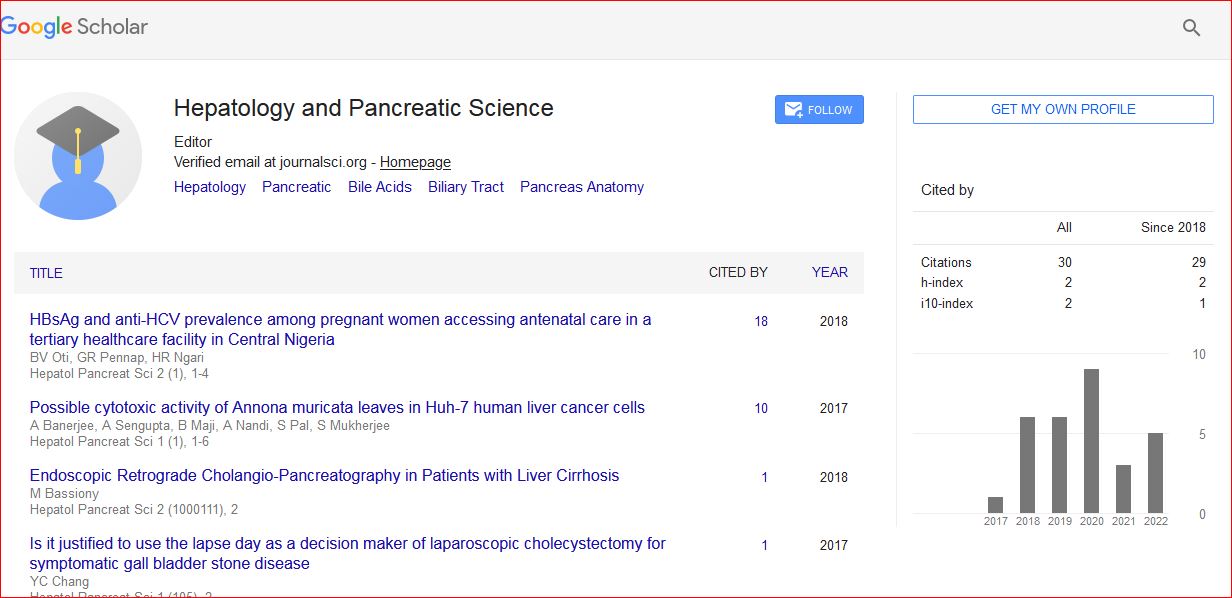
Hepatology and Pancreatic Science received 34 citations as per Google Scholar report