Commentary - (2025) Volume 14, Issue 4
Received: 01-Jul-2025, Manuscript No. jmmd-26-184693;
Editor assigned: 03-Jul-2025, Pre QC No. P-184693;
Reviewed: 17-Jul-2025, QC No. Q-184693;
Revised: 22-Jul-2025, Manuscript No. R-184693;
Published:
29-Jul-2025
, DOI: 10.37421/2161-0703.2025.14.537
Citation: Ribeiro, Ana. ”Evaluating Rapid Diagnostic Tests for Better Outcomes.” J Med Microb Diagn 14 (2025):537.
Copyright: © 2025 Ribeiro A. This is an open-access article distributed under the terms of the Creative Commons Attribution License, which permits unrestricted use, distribution and reproduction in any medium, provided the original author and source are credited.
Rapid diagnostic tests (RDTs) are indispensable tools in the management of infectious diseases, offering prompt results that significantly influence clinical decisions and public health strategies. Their accurate and reliable performance is paramount, necessitating rigorous evaluation protocols to ensure clinical utility across diverse healthcare settings. This review emphasizes the critical role of robust validation studies for RDTs, encompassing crucial metrics such as sensitivity, specificity, predictive values, and operational characteristics. When subjected to proper evaluation and implemented effectively, RDTs have the potential to substantially enhance patient outcomes and bolster outbreak control measures [1].
The rapid evolution of infectious disease threats, exemplified by the COVID-19 pandemic, has spurred accelerated development and deployment of RDTs. Evaluating these tests during a pandemic presents unique challenges, demanding rapid yet stringent assessment methodologies to gauge performance against evolving pathogen strains and varying clinical manifestations. The importance of real-world data collection and continuous post-market surveillance cannot be overstated in the ongoing assessment of RDTs' effectiveness [2].
Point-of-care testing (POCT), facilitated by RDTs, is revolutionizing infectious disease diagnostics by bringing laboratory-level capabilities directly to the patient's bedside. This shift necessitates specific evaluation metrics tailored to POCT RDTs, including ease of use, turnaround time, and their direct impact on patient management. Successful POCT implementation hinges not only on test performance but also on effective training, robust quality assurance, and seamless integration into established clinical workflows, particularly in resource-limited settings [3].
The evaluation of RDTs for specific endemic diseases, such as malaria, requires a nuanced understanding of local disease epidemiology and the test's intended application. This involves a multifaceted approach, progressing from initial laboratory bench testing to comprehensive field trials. A key consideration is assessing performance across a spectrum of parasite densities and diverse patient populations. Furthermore, challenges like counterfeit RDTs and the imperative for stringent regulatory oversight must be addressed to ensure the reliability of these vital diagnostic tools [4].
Beyond viral and parasitic infections, bacterial infectious diseases also stand to benefit immensely from the application of RDTs. Publications focusing on the evaluation of RDTs for bacterial bloodstream infections highlight their crucial role in guiding timely and appropriate antibiotic therapy. Such evaluations detail the essential performance characteristics for clinical utility, including rapid pathogen identification and the detection of resistance markers, underscoring their impact on antimicrobial stewardship programs [5].
Complementing clinical performance, the economic evaluation of RDTs is a critical determinant of their widespread adoption. Analyzing the cost-effectiveness of implementing RDTs for various infectious diseases involves considering factors such as test cost, healthcare worker time, and downstream treatment expenses. Evidence suggests that RDTs can represent a highly cost-effective diagnostic strategy, especially in regions where traditional laboratory diagnostics are either inaccessible or subject to significant delays [6].
The impact of RDTs on antimicrobial resistance stewardship is a growing area of focus. By enabling rapid pathogen identification, RDTs facilitate prompt and targeted antibiotic selection, thereby mitigating the overuse of broad-spectrum agents. Evaluation frameworks in this domain assess the influence on antibiotic prescribing patterns and the long-term development of antimicrobial resistance within communities [7].
Ensuring the consistent quality and reliable performance of RDTs is of paramount importance. Essential elements of quality assurance and quality control for RDTs in infectious disease diagnostics encompass the entire lifecycle, from manufacturing to end-user implementation. This necessitates standardized evaluation protocols and continuous monitoring to maintain the integrity and accuracy of these critical diagnostic tools [8].
The evaluation of RDTs for neglected tropical diseases (NTDs) presents distinct challenges owing to their endemic nature and the wide array of causative pathogens. Specific considerations include performance under varying environmental conditions and the direct impact on disease surveillance and control programs. Crucially, community engagement throughout the evaluation process is vital for successful implementation and sustained impact [9].
Finally, the regulatory landscape governing RDTs plays a pivotal role in guaranteeing their safety and efficacy. Examining the regulatory pathways and requirements for approving RDTs for infectious diseases is essential. This involves understanding the responsibilities of regulatory bodies in setting performance standards, evaluating submitted data, and conducting post-market surveillance. Harmonizing these regulatory processes globally is key to facilitating access to dependable RDTs worldwide [10].
Rapid diagnostic tests (RDTs) are pivotal for managing infectious diseases, offering swift results that guide clinical decisions and public health interventions. Their evaluation is critical to ensure accuracy, reliability, and clinical utility in diverse settings, considering factors like sensitivity, specificity, predictive values, and operational characteristics. Properly evaluated and implemented RDTs can significantly improve patient outcomes and outbreak control [1].
The development and deployment of RDTs for emerging infectious diseases, such as COVID-19, have seen remarkable acceleration. Evaluating these tests during a pandemic highlights the need for rapid yet rigorous protocols to assess performance against evolving viral strains and varying clinical presentations. Real-world data collection and post-market surveillance are identified as crucial components for ongoing RDT assessment [2].
Point-of-care testing (POCT) enabled by RDTs transforms infectious disease diagnostics, bringing laboratory capabilities closer to the patient. Evaluating POCT RDTs involves metrics such as ease of use, turnaround time, and impact on patient management. Successful POCT implementation relies on test performance, effective training, quality assurance, and integration into clinical workflows, especially in resource-limited settings [3].
Evaluating RDTs for specific pathogens like malaria requires a deep understanding of disease epidemiology and intended use. This involves a multifaceted approach, from laboratory testing to field trials, assessing performance across different parasite densities and patient populations. Challenges related to counterfeit RDTs and the need for regulatory oversight are also addressed [4].
RDTs are also highly beneficial for bacterial infectious diseases. Evaluating RDTs for detecting bacterial bloodstream infections emphasizes their role in guiding antibiotic therapy. This requires assessing performance characteristics for rapid pathogen and resistance marker identification, impacting antimicrobial stewardship programs [5].
The economic evaluation of RDTs is as important as their clinical performance. Analyzing cost-effectiveness involves factors like test cost, healthcare worker time, and downstream treatment costs. RDTs can be a cost-effective diagnostic tool, particularly where traditional laboratory diagnostics are inaccessible or delayed [6].
The impact of RDTs on antimicrobial resistance stewardship is significant. By providing rapid pathogen identification, RDTs enable timely and appropriate antibiotic selection, reducing broad-spectrum agent misuse. Evaluation frameworks consider effects on antibiotic prescribing patterns and the development of resistance [7].
Ensuring consistent quality and performance of RDTs is paramount. Essential elements of quality assurance and control cover manufacturing to end-user implementation, emphasizing standardized evaluation protocols and ongoing monitoring for reliability [8].
Evaluating RDTs for neglected tropical diseases (NTDs) presents unique challenges due to their endemic nature and pathogen diversity. Specific considerations include performance in diverse environmental conditions and impact on disease surveillance. Community engagement in the evaluation process is also highlighted [9].
The regulatory landscape for RDTs is crucial for ensuring safety and efficacy. Examining regulatory pathways and requirements involves assessing performance standards, evaluation submissions, and post-market surveillance. Harmonization of regulatory processes globally facilitates access to reliable RDTs [10].
Rapid diagnostic tests (RDTs) are crucial for infectious disease management, enabling swift clinical decisions and public health interventions. Their evaluation is paramount for accuracy and reliability, encompassing sensitivity, specificity, and operational characteristics. RDTs improve patient outcomes and outbreak control. The COVID-19 pandemic accelerated RDT development, highlighting the need for rapid yet rigorous evaluation protocols and continuous post-market surveillance. Point-of-care testing (POCT) using RDTs brings diagnostics closer to patients, requiring evaluation of ease of use and turnaround time. Specific disease evaluations, like for malaria, necessitate understanding epidemiology and field performance. RDTs also benefit bacterial infections by guiding antibiotic therapy and impacting antimicrobial stewardship. Economic evaluations show RDTs can be cost-effective. Quality assurance and regulatory oversight are essential for consistent performance and global access. Evaluating RDTs for neglected tropical diseases presents unique challenges, emphasizing the need for environmental considerations and community engagement.
None
None
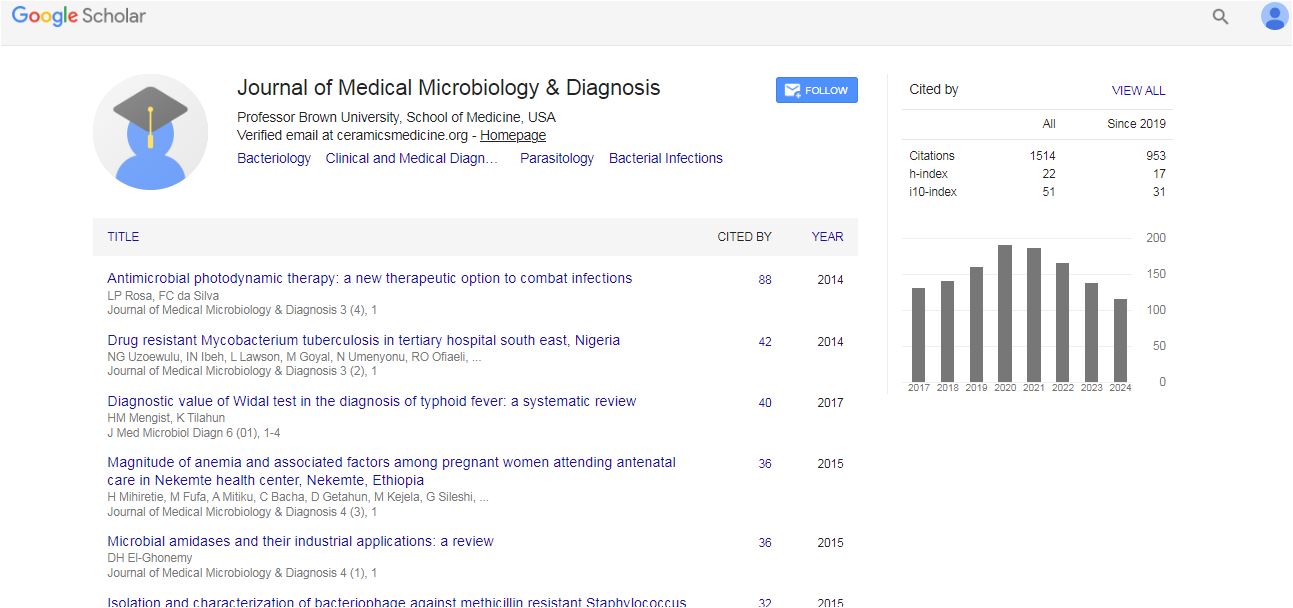
Medical Microbiology & Diagnosis received 14 citations as per Google Scholar report