Perspective - (2025) Volume 10, Issue 5
Received: 01-Oct-2025, Manuscript No. jcct-26-183272;
Editor assigned: 03-Oct-2025, Pre QC No. P-183272;
Reviewed: 17-Oct-2025, QC No. Q-183272;
Revised: 22-Oct-2025, Manuscript No. R-183272;
Published:
29-Oct-2025
, DOI: 10.37421/2577-0535.2025.9.335
Citation: Bolton, Andrew K. ”Ethical Considerations in First-in- Human Oncology Trials.” J Cancer Clin Trials 10 (2025):335.
Copyright: © 2025 Bolton K. Andrew This is an open-access article distributed under the terms of the Creative Commons Attribution License, which permits unrestricted use, distribution and reproduction in any medium, provided the original author and source are credited.
First-in-human (FIH) oncology trials represent a pivotal stage in the development of novel cancer therapies, demanding meticulous attention to ethical considerations to safeguard patient well-being and advance scientific understanding. These trials are crucial for evaluating the safety and preliminary efficacy of new treatments, but they inherently involve treating patients with agents that have limited or no prior human exposure [1].
Ensuring robust patient safety through rigorous dose escalation schemes, comprehensive toxicity monitoring, and well-defined stopping rules is a paramount ethical imperative in these early-phase studies [1].
The informed consent process for FIH trials must be exceptionally thorough, clearly articulating the experimental nature of the treatment, potential risks and benefits, and the patient's unassailable right to withdraw at any time [1].
Balancing the potential for a breakthrough therapy with the inherent risks of novel agents is a central ethical challenge, necessitating careful patient selection and a multidisciplinary approach to decision-making [1].
Furthermore, the equitable access to these critical trials and the responsible use of limited patient populations for scientific advancement are paramount considerations that shape the ethical landscape of FIH oncology research [1].
Dose escalation strategies in early-phase oncology trials are ethically charged, requiring a delicate balance between identifying the maximum tolerated dose (MTD) and minimizing patient risk through carefully designed protocols [2].
While traditional designs like the 3+3 and modified Fibonacci methods have been employed, newer adaptive statistical approaches, such as Bayesian optimal interval (BOIN) designs and continual reassessment methods (CRMs), offer enhanced statistical efficiency and the potential for improved patient outcomes by dynamically adjusting dose levels based on observed toxicity data [2].
The ethical imperative in dose escalation is to move away from overly conservative approaches that might delay critical discoveries while upholding patient safety as the absolute priority [2].
Informed consent in FIH oncology trials demands exceptional clarity and comprehensiveness, ensuring that patients fully understand the investigational nature of the drug, the potential for unforeseen toxicities, and the possibility that the treatment may not be effective [3].
The consent process should foster a genuine dialogue, allowing ample opportunity for questions and confirming comprehension, transcending the mere act of signing a document [3].
Issues such as the ethical implications of using placebos in early trials, the potential for off-label use of approved drugs within investigational settings, and the profound implications for future treatment decisions are critical ethical points that must be openly addressed [3].
Patient safety in FIH oncology trials is of utmost importance and necessitates multifaceted strategies that encompass vigilant monitoring for adverse events, the establishment of clear toxicity grading systems, and the implementation of robust data safety monitoring boards (DSMBs) [4].
The ethical responsibility extends to the design of trials that can swiftly identify and mitigate potential harms, often requiring frequent clinical assessments, laboratory tests, and imaging studies [4].
The strategic use of biomarkers to predict toxicity or response can also contribute ethically by optimizing patient selection and minimizing unnecessary exposure to potentially harmful agents [4].
The ethical challenges associated with selecting patients for FIH oncology trials are inherently complex and require careful consideration of multiple factors [5].
Eligibility criteria should prioritize patients with limited or no alternative treatment options, while simultaneously assessing their overall health status and their capacity to tolerate potential toxicities [5].
A meticulous weighing of the risk-benefit ratio is essential, and patients should not be enrolled in trials solely because they have a particularly challenging-to-treat cancer [5].
Maintaining transparency regarding trial eligibility and the underlying rationale for selection criteria is an ethical necessity that upholds patient autonomy [5].
Ethical frameworks for FIH oncology trials must rigorously incorporate the fundamental principles of justice and equity, ensuring that opportunities for participation are accessible to diverse populations and that the benefits derived from research are distributed broadly [6].
Significant ethical hurdles persist, including the pervasive concern of therapeutic misconception, where patients might erroneously perceive experimental treatments as guaranteed cures [6].
Concerted efforts to educate patients and the broader public about the true nature of clinical research are therefore essential for cultivating trust and ensuring truly informed participation [6].
The introduction of novel agents in FIH oncology trials brings with it unique ethical considerations pertaining to the drug development process and the oversight provided by regulatory bodies [7].
Institutional Review Boards (IRBs) and ethics committees shoulder a critical responsibility in meticulously scrutinizing trial protocols to guarantee patient well-being [7].
The ethical obligation to report adverse events promptly and transparently to regulatory authorities and other investigators stands as a cornerstone of responsible and ethical research conduct [7].
The ethical considerations surrounding data sharing and intellectual property within FIH oncology trials are of increasing significance and complexity [8].
A delicate balance must be struck between the imperative for open access to research findings, which aims to accelerate scientific progress, and the necessity of protecting intellectual property rights for drug developers, creating an inherent ethical dilemma [8].
Ensuring that all data, irrespective of whether the findings are positive or negative, are reported and made accessible is fundamentally crucial for cultivating a comprehensive understanding of novel therapeutic agents [8].
When FIH oncology trials involve vulnerable populations, such as individuals with diminished decision-making capacity, the ethical requirements for consent and protection are significantly amplified [9].
In such circumstances, surrogate consent, assent from the patient whenever feasible, and rigorous oversight by ethics committees are indispensable for safeguarding their best interests [9].
Proactive measures to mitigate the potential for coercion or undue influence are paramount to ensure the ethical integrity of research involving these populations [9].
The ethical implications of employing placebos in FIH oncology trials remain a subject of considerable debate and ethical scrutiny [10].
While placebos can be instrumental in isolating the specific effects of the investigational drug, their use in patients confronting serious or life-threatening conditions like cancer raises significant ethical concerns about potentially withholding beneficial treatment [10].
Ethical justifications for the use of placebos typically rely on the absence of a proven effective standard of care, the presence of a robust scientific rationale for the trial's design, and a thoroughly executed informed consent process that explicitly addresses the employment of a placebo [10].
First-in-human (FIH) oncology trials are critical for advancing cancer treatment, but they are accompanied by significant ethical considerations that demand careful navigation and adherence [1].
Key insights derived from ethical analysis revolve around the paramount importance of ensuring robust patient safety through the implementation of rigorous dose escalation schemes, comprehensive monitoring for emergent toxicity, and the establishment of well-defined stopping rules to protect participants [1].
The informed consent process in these trials must be exceptionally thorough and transparent, clearly articulating the experimental nature of the treatment, the potential spectrum of risks and benefits, and unequivocally affirming the patient's unassailable right to withdraw from the trial at any point without penalty [1].
A central ethical challenge lies in the delicate balancing act between the potential for a life-altering breakthrough therapy and the inherent, often unknown, risks associated with novel investigational agents, necessitating meticulous patient selection and a comprehensive, multidisciplinary approach to all critical decision-making processes [1].
Furthermore, the principles of equitable access to these potentially life-saving trials and the responsible stewardship of limited patient populations for the advancement of scientific knowledge are paramount ethical considerations that guide the conduct of FIH oncology research [1].
Dose escalation strategies employed in early-phase oncology trials are inherently ethically charged, requiring a continuous and careful balance between the objective of identifying the maximum tolerated dose (MTD) and the overriding imperative to minimize patient risk throughout the study [2].
While traditional dose-finding designs such as the modified Fibonacci and the 3+3 designs have been widely utilized, the advent of newer, more statistically efficient adaptive methods, including Bayesian optimal interval (BOIN) designs and continual reassessment methods (CRMs), offers the potential for improved patient outcomes by enabling more dynamic and responsive adjustments to dose levels based on accumulating toxicity data [2].
The ethical imperative driving the evolution of these designs is to transition away from overly conservative approaches that may unnecessarily delay the discovery and development of promising new therapies, while steadfastly ensuring that patient safety remains the absolute and unwavering priority [2].
Informed consent in the context of FIH oncology trials requires an exceptionally high degree of clarity and comprehensiveness, ensuring that patients are fully apprised of the investigational status of the drug, the potential for unforeseen and unknown toxicities, and the distinct possibility that the treatment may ultimately prove to be ineffective [3].
The consent process itself should be facilitated as a genuine dialogue, providing ample opportunities for patients to ask questions and ensuring their comprehension, rather than merely serving as a procedural step involving the signing of a document [3].
Crucial ethical points that must be explicitly addressed include the complex issues surrounding the use of placebos in early-stage trials, the potential for the off-label administration of approved drugs within an investigational context, and the profound implications that participation may have for patients' future treatment decisions [3].
Ensuring patient safety in FIH oncology trials is a paramount ethical concern that mandates the implementation of multifaceted strategies designed to protect participants from harm [4].
These strategies encompass vigilant and systematic monitoring for any adverse events, the establishment of clear and standardized systems for grading toxicity, and the robust functioning of data safety monitoring boards (DSMBs) tasked with independent oversight [4].
The ethical responsibility of the research team extends to the careful design of trials that possess the capacity to rapidly identify and effectively mitigate potential harms, a goal often achieved through frequent clinical assessments, detailed laboratory testing, and comprehensive imaging studies [4].
The judicious use of biomarkers, aimed at predicting individual patient toxicity or response, can also play a significant ethical role in optimizing patient selection and minimizing the unnecessary exposure of participants to potentially harmful investigational agents [4].
The ethical challenges inherent in selecting patients for FIH oncology trials are multifaceted and require careful deliberation [5].
Selection criteria should prioritize individuals with limited or no viable alternative treatment options, while also taking into full consideration their overall health status and their ability to withstand potential toxicities [5].
A thorough and objective weighing of the risk-benefit ratio is indispensable, and the ethically sound principle dictates that patients should not be enrolled in trials solely based on the presence of a particularly difficult-to-treat cancer [5].
Maintaining transparency regarding the specific trial eligibility criteria and the underlying scientific and ethical rationale for these criteria is an ethical necessity that fosters trust and respects patient autonomy [5].
Ethical frameworks guiding FIH oncology trials must be firmly grounded in the fundamental principles of justice and equity, ensuring that opportunities for participation are made accessible to diverse patient populations and that the benefits derived from the research are shared broadly across society [6].
Persistent concerns regarding therapeutic misconception, where patients may erroneously equate experimental treatments with guaranteed cures, represent a significant ongoing ethical hurdle that requires careful management [6].
Sustained efforts to comprehensively educate patients and the public about the true nature and inherent uncertainties of clinical research are therefore essential for cultivating trust and ensuring that participation is genuinely informed and voluntary [6].
The introduction and investigation of novel agents in FIH oncology trials introduce a unique set of ethical considerations specifically related to the intricacies of drug development and the critical role of regulatory oversight [7].
Institutional Review Boards (IRBs) and ethics committees are indispensable components of the ethical infrastructure, playing a crucial role in meticulously scrutinizing trial protocols to uphold and protect patient well-being [7].
The ethical obligation to promptly and transparently report all adverse events to relevant regulatory bodies and the broader investigative community stands as a fundamental cornerstone of responsible and ethical research conduct [7].
The ethical considerations pertaining to data sharing and intellectual property in the context of FIH oncology trials are becoming increasingly important and complex [8].
A critical ethical dilemma emerges from the necessity to balance the imperative for open access to research findings, which is vital for accelerating scientific progress, with the need to protect the intellectual property rights of drug developers [8].
Ensuring that all collected data, encompassing both positive and negative findings, are rigorously reported and made accessible is fundamentally crucial for developing a comprehensive and accurate understanding of new therapeutic agents [8].
When FIH oncology trials involve vulnerable populations, such as individuals with diminished decision-making capacity, the ethical requirements concerning consent and protection are significantly amplified and demand heightened vigilance [9].
In such sensitive situations, the ethical protocols mandate the use of surrogate consent when appropriate, the solicitation of assent from the patient whenever possible, and rigorous oversight by dedicated ethics committees to safeguard their best interests [9].
Proactive and diligent measures must be implemented to actively mitigate the potential for coercion or undue influence, thereby upholding the ethical integrity of research involving these populations [9].
The ethical implications associated with the use of placebos in FIH oncology trials continue to be a subject of ongoing debate and careful ethical consideration [10].
While placebos can serve a valuable scientific purpose by helping to isolate the specific therapeutic effect of the investigational drug, their administration to patients facing serious or life-threatening conditions like cancer raises substantial ethical concerns regarding the potential withholding of potentially beneficial treatment [10].
Ethical justifications for the use of placebos are typically contingent upon the absence of a readily available and proven effective standard of care, the existence of a robust scientific rationale underpinning the trial's design, and the successful completion of a thorough informed consent process that explicitly addresses and clarifies the use of a placebo [10].
First-in-human (FIH) oncology trials are crucial for developing new cancer treatments but raise significant ethical concerns. Key ethical considerations include ensuring patient safety through rigorous dose escalation, comprehensive monitoring, and clear stopping rules. Informed consent must be thorough, explaining the experimental nature, risks, benefits, and the right to withdraw. Balancing potential breakthroughs with inherent risks necessitates careful patient selection and multidisciplinary decision-making. Equitable access and responsible use of patient populations are also paramount. Dose escalation strategies must balance identifying maximum tolerated dose with minimizing risk, with adaptive designs offering potential improvements. Patient safety requires vigilant monitoring, clear toxicity grading, and data safety monitoring boards. Ethical patient selection prioritizes those with limited options while considering health status, and transparency in selection criteria is vital. Justice and equity in trial access and benefit sharing are essential, alongside efforts to combat therapeutic misconception. Regulatory oversight by IRBs and ethics committees is crucial, as is prompt reporting of adverse events. Data sharing and intellectual property present complex ethical dilemmas. Trials involving vulnerable populations require amplified ethical safeguards, including surrogate consent and rigorous oversight. The use of placebos in oncology trials raises ethical questions about withholding treatment, with justifications based on the absence of standard care and robust consent processes.
None
None
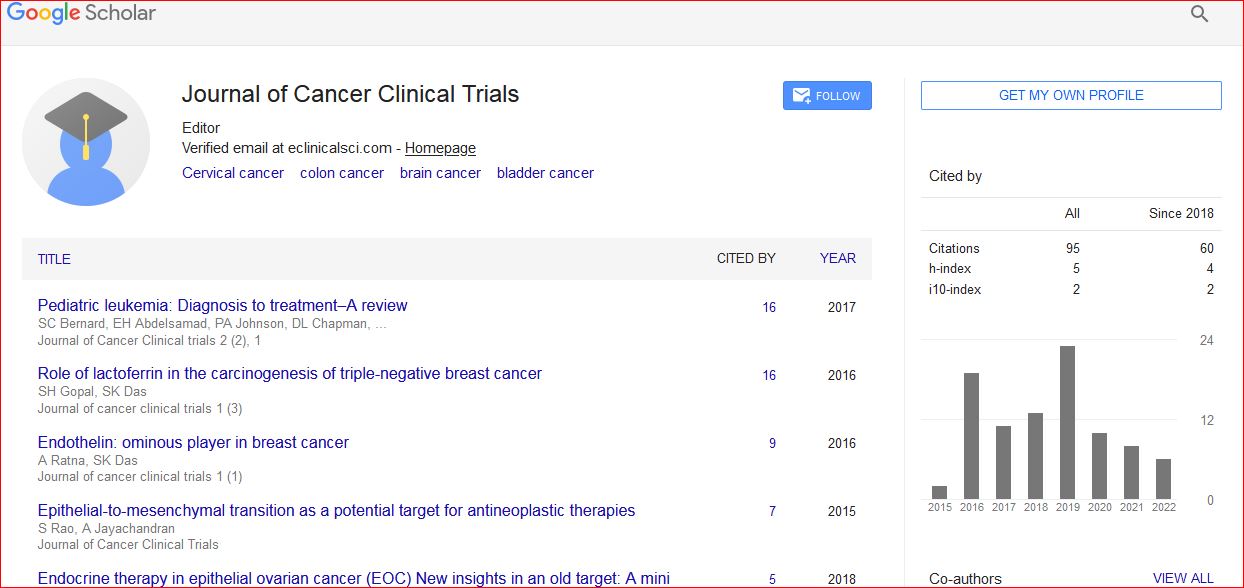
Journal of Cancer Clinical Trials received 95 citations as per Google Scholar report