Commentary - (2025) Volume 9, Issue 6
Received: 03-Dec-2025, Manuscript No. jcre-26-187230;
Editor assigned: 06-Dec-2025, Pre QC No. P-187230;
Reviewed: 20-Dec-2025, QC No. Q-187230;
Revised: 24-Dec-2025, Manuscript No. R-187230;
Published:
31-Dec-2025
, DOI: 10.37421/2795-6172.2025.9.360
Citation: Weber, Felix. 'Epilepsy Management: Anticonvulsant Therapies and Personalized Medicine.' J Clin Res 09 (2025):360
Copyright: © 2025 Weber F. This is an open-access article distributed under the terms of the Creative Commons Attribution License, which permits unrestricted use, distribution and reproduction in any medium, provided the original author and source are credited.
The field of epilepsy management has seen significant advancements, with a growing focus on comparing the efficacy and safety of various anticonvulsant medications to tailor treatments for individual patients. Comparative studies are crucial for understanding the nuances of different drugs, including their impact on seizure reduction, adverse event profiles, and overall quality of life, thereby supporting personalized medicine approaches in epilepsy care [1].
Investigating the complex interplay of pharmacokinetic and pharmacodynamic interactions among commonly prescribed anticonvulsants is paramount. Understanding how drug combinations influence treatment outcomes, including the potential for therapeutic failures and toxicity management, is vital for optimizing care in intricate epilepsy cases [2].
Real-world settings provide invaluable data on the long-term effectiveness and tolerability of epilepsy medications. Studies examining sustained efficacy and safety profiles over extended periods contribute significantly to the established role of certain drugs in managing conditions like partial-onset seizures [3].
The impact of adjunctive therapies on seizure control and quality of life in specific patient populations, such as adolescents with refractory epilepsy, is an area of active research. Demonstrating significant improvements in seizure frequency and quality of life domains highlights the utility of these therapies in challenging cases [4].
As the landscape of epilepsy treatment evolves, meta-analyses play a critical role in consolidating data from multiple studies. These analyses offer comprehensive overviews of comparative effectiveness, guiding the selection of agents with improved tolerability and efficacy profiles, particularly for conditions like focal epilepsy [5].
Cognitive function is a significant concern for individuals with epilepsy, and research into the effects of different anticonvulsant regimens on cognitive abilities is essential. Exploring potential differences in their impact on memory, attention, and executive function helps in optimizing treatment to preserve or enhance cognitive performance [6].
Real-world effectiveness and tolerability studies of newer antiepileptic drugs, such as brivaracetam, as add-on therapy are crucial. Findings supporting their efficacy in reducing seizure frequency with a favorable safety profile are particularly important for patients who have not responded well to prior treatments [7].
Evaluating the utility of specific anticonvulsant agents, like eslicarbazepine acetate, in both monotherapy and adjunctive settings for focal epilepsy is key. Evidence of efficacy in achieving seizure freedom and a manageable side effect profile solidifies their position as valuable treatment options [8].
Pharmacological advancements in epilepsy treatment continue to emerge, with a focus on novel anticonvulsant mechanisms and their clinical applications. Discussions on emerging therapies and future directions in personalized epilepsy management are vital for the ongoing development of effective treatment strategies [9].
Beyond the pharmacological aspects, the psychosocial dimensions of epilepsy significantly influence patient well-being. Studies examining the impact of stigma and social support on quality of life, and the need for integrated care approaches, underscore the holistic nature of epilepsy management [10].
Comparative studies are indispensable in the ongoing effort to refine epilepsy management by contrasting the efficacy and safety of diverse anticonvulsant medications. These investigations aim to elucidate differences in seizure reduction rates, adverse event profiles, and the impact on patients' quality of life, thereby furnishing clinicians with essential data for the selection of optimal treatment strategies and the advancement of personalized medicine in epilepsy care [1].
The exploration of pharmacokinetic and pharmacodynamic interactions among frequently prescribed anticonvulsants is fundamental to understanding how combinations affect treatment outcomes and potential side effects. This research is critical for preventing therapeutic failures and effectively managing toxicity in patients with complex epilepsy presentations [2].
Real-world studies provide a unique perspective on the long-term effectiveness and tolerability of antiepileptic drugs. By examining sustained efficacy and safety profiles over several years, these investigations contribute valuable insights into the established roles of medications in managing conditions such as partial-onset seizures [3].
Research focusing on the influence of adjunctive therapies on seizure control and quality of life, particularly in specific demographics like adolescents with refractory epilepsy, is vital. Evidence of significant improvements in seizure frequency and various quality of life domains indicates the potential utility of these treatments in challenging patient groups [4].
Meta-analyses serve as powerful tools for synthesizing data from numerous studies, offering a comprehensive overview of the comparative effectiveness of different anticonvulsant generations. This evidence-based guidance assists in selecting agents that offer superior tolerability and efficacy, especially for conditions like focal epilepsy [5].
Understanding the effects of various anticonvulsant regimens on cognitive function in adults with epilepsy is a critical area of investigation. By exploring differences in impacts on memory, attention, and executive function, treatment can be optimized to safeguard or enhance cognitive abilities [6].
Real-world assessments of brivaracetam as an add-on therapy for focal epilepsy have demonstrated its effectiveness in reducing seizure frequency with a favorable safety profile. These findings are particularly relevant for patients who have shown limited response to levetiracetam [7].
The evaluation of agents like eslicarbazepine acetate, in both monotherapy and adjunctive roles for focal epilepsy, highlights their therapeutic value. Their efficacy in achieving seizure freedom, coupled with a manageable side effect profile, positions them as important options in the treatment armamentarium [8].
Advancements in the pharmacological treatment of epilepsy are continuously being made, with a focus on novel mechanisms of action and their clinical applications. Future directions in personalized epilepsy management and emerging therapies are integral to the ongoing progress in this field [9].
Beyond the strictly medical aspects, the impact of psychosocial factors such as stigma and social support on the quality of life for individuals with epilepsy is significant. Recognizing these influences necessitates integrated care approaches that address the comprehensive well-being of patients [10].
This compilation of research delves into the multifaceted aspects of epilepsy management, highlighting advancements in anticonvulsant therapies. It covers comparative studies on the efficacy and safety of different medications, the critical role of pharmacokinetic and pharmacodynamic interactions, and the long-term real-world effectiveness of treatments like lacosamide and brivaracetam. The research also explores the impact of adjunctive therapies such as perampanel, the comparative effectiveness of newer versus older anticonvulsants, and the cognitive effects of various drug regimens. Furthermore, it examines specific agents like eslicarbazepine acetate and discusses broader pharmacological advancements and the crucial influence of psychosocial factors like stigma and social support on patient quality of life. The collective findings underscore the move towards personalized medicine and integrated care approaches in addressing the complexities of epilepsy.
None
None
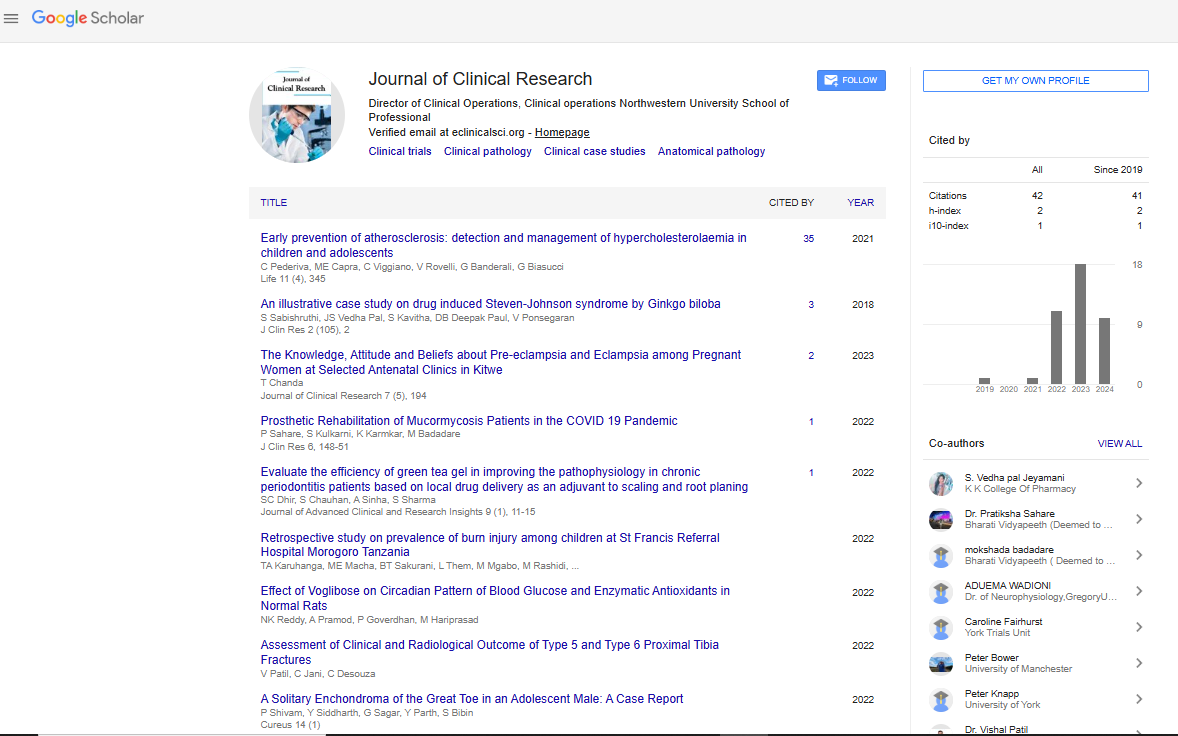
Journal of Clinical Research received 11 citations as per Google Scholar report