Short Communication - (2025) Volume 14, Issue 6
Received: 01-Nov-2025, Manuscript No. pbt-25-178168;
Editor assigned: 03-Nov-2025, Pre QC No. P-178168;
Reviewed: 17-Nov-2025, QC No. Q-178168;
Revised: 24-Nov-2025, Manuscript No. R-178168;
Published:
29-Nov-2025
, DOI: 10.37421/2167-7689.2025.14.517
Citation: Tanaka, Yuki. ”Ensuring Pharmaceutical Product Quality: A Comprehensive Approach.” Pharmaceut Reg Affairs 14 (2025):517.
Copyright: © 2025 Tanaka Y. This is an open-access article distributed under the terms of the Creative Commons Attribution License, which permits unrestricted use, distribution and reproduction in any medium, provided the original author and source are credited.
Ensuring the highest standards of pharmaceutical product quality is a fundamental imperative within the healthcare industry. This article delves into the critical role of stringent quality control measures, examining their application throughout the entire drug lifecycle, from the meticulous assessment of raw materials to the final release of finished products. Advanced analytical techniques and unwavering adherence to regulatory guidelines are highlighted as essential components for guaranteeing the safety, efficacy, and consistency of pharmaceutical goods. The foundational pillars of pharmaceutical quality, namely Good Manufacturing Practices (GMP) and robust data integrity, are further emphasized as indispensable elements [1].
The pharmaceutical industry is continuously evolving, and a comprehensive review of its quality systems reveals a significant shift towards proactive quality assurance. This encompasses the application of Quality by Design (QbD) principles, which fundamentally alter the approach from merely testing products to intrinsically building quality into the manufacturing process from its inception. The review details the implementation of risk management strategies and the utilization of process analytical technology (PAT) for the real-time monitoring and control of critical process parameters, ultimately fostering the development of more robust and reliable pharmaceutical products [2].
Central to modern pharmaceutical quality control is the implementation of advanced analytical technologies. Techniques such as chromatography, mass spectrometry, and various spectroscopic methods are instrumental in enabling the precise identification, accurate quantification, and thorough impurity profiling of both active pharmaceutical ingredients and finished drug products. The validation of these analytical methods is also a crucial aspect, ensuring their reliability and suitability for their intended analytical purposes [3].
Data integrity stands as a cornerstone of pharmaceutical quality control and is inextricably linked to regulatory compliance. This discussion explores the critical requirements necessary for maintaining reliable, accurate, and complete data throughout the entire pharmaceutical lifecycle. It addresses the unique challenges presented by electronic record-keeping, underscores the importance of comprehensive audit trails, and elucidates the profound implications of data manipulation for both product quality and patient safety. Strategies for establishing and implementing robust data governance frameworks are also presented [4].
The rigorous development and validation of analytical methods are absolutely essential for guaranteeing the reliability of pharmaceutical quality control testing. This publication provides detailed guidance on the key aspects of method validation, including specificity, linearity, accuracy, precision, and robustness, all of which are mandated by regulatory agencies. The emphasis is placed on the necessity of well-documented and scientifically sound validation protocols to adequately support product release decisions [5].
Focusing on the initial stages of production, the quality control of pharmaceutical raw materials is of paramount importance. This section details the essential testing parameters and regulatory expectations for incoming materials, encompassing critical attributes such as identity, purity, potency, and microbial limits. The significance of thorough supplier qualification and the implementation of robust incoming material inspection programs are underscored as vital measures for preventing the introduction of substandard or counterfeit ingredients into the manufacturing process [6].
Stability testing represents a crucial component of pharmaceutical quality control, playing a vital role in ensuring that drug products consistently maintain their quality, efficacy, and safety throughout their designated shelf life. This paper outlines the fundamental principles of stability testing, including the strategic design of stability studies, the selection of appropriate storage conditions, and the application of precise analytical methods for the assessment of potential degradation products. The impact of packaging on overall product stability is also thoroughly discussed [7].
The role of pharmacopoeias and comprehensive regulatory guidelines is instrumental in establishing and rigorously maintaining pharmaceutical quality standards. These authoritative documents provide essential specifications for drug substances and products, define acceptable analytical methods, and outline critical quality control procedures. Strict adherence to pharmacopoeial standards and overarching regulatory requirements, such as those set forth by the FDA and EMA, is presented as an indispensable prerequisite for achieving global market access [8].
The application of Process Analytical Technology (PAT) is actively transforming pharmaceutical manufacturing by facilitating real-time monitoring and precise control of critical process parameters. This paper explores how various PAT tools, including spectroscopic and process imaging technologies, can be effectively integrated into existing quality control strategies to ensure consistent product quality and significantly reduce the occurrence of batch failures. The distinct advantages of a PAT-driven approach for enhancing process understanding and overall manufacturing efficiency are thoroughly discussed [9].
This article addresses the inherent challenges and outlines the best practices associated with pharmaceutical quality risk management. It strongly emphasizes the importance of adopting a systematic and proactive approach to identify, assess, and diligently control potential risks that could adversely impact product quality. The discussion encompasses the application of various risk assessment tools and techniques, the seamless integration of risk management principles into existing quality systems, and the continuous improvement of risk mitigation strategies throughout the entire product lifecycle [10].
Ensuring the paramount quality of pharmaceutical products necessitates a multifaceted approach that spans the entirety of the drug's lifecycle. This involves rigorous quality control measures, commencing with the thorough assessment of raw materials and extending to the final release of manufactured drugs. The integration of sophisticated analytical techniques alongside strict adherence to regulatory mandates is fundamental to guaranteeing product safety, efficacy, and consistency. Crucially, Good Manufacturing Practices (GMP) and the principle of data integrity serve as the bedrock upon which pharmaceutical quality is built and maintained [1].
The landscape of pharmaceutical quality systems is in constant flux, with a discernible trend towards embracing Quality by Design (QbD) principles. This paradigm shift moves beyond retrospective product testing to a proactive strategy of embedding quality directly into the manufacturing process from its earliest stages. Key to this approach are the strategic application of risk management and the deployment of process analytical technology (PAT) for continuous monitoring and control of critical process parameters, ultimately yielding more resilient and dependable pharmaceutical products [2].
Advanced analytical technologies are indispensable tools in contemporary pharmaceutical quality control. Techniques such as chromatography, mass spectrometry, and spectroscopy are vital for the precise identification, accurate quantification, and comprehensive impurity profiling of pharmaceutical ingredients and finished products. Furthermore, the rigorous validation of these analytical methods is essential to confirm their reliability and appropriateness for their intended analytical applications [3].
Data integrity is an indispensable element of pharmaceutical quality control and regulatory adherence. Maintaining accurate, reliable, and complete data throughout the pharmaceutical lifecycle presents unique challenges, particularly with the widespread adoption of electronic record-keeping. This article examines the critical requirements for data integrity, the significance of audit trails, and the potential consequences of data manipulation on product quality and patient safety, while also proposing strategies for robust data governance [4].
The meticulous development and validation of analytical methods are critical prerequisites for ensuring the dependability of pharmaceutical quality control testing. This publication provides essential guidance on the core components of method validation, including specificity, linearity, accuracy, precision, and robustness, as mandated by regulatory bodies. The importance of well-documented and scientifically sound validation protocols is stressed to support informed product release decisions [5].
The quality control of pharmaceutical raw materials is a critical early step in ensuring the integrity of the entire supply chain. Essential testing parameters and regulatory expectations for incoming materials, such as identity, purity, potency, and microbial limits, are detailed. The necessity of rigorous supplier qualification and comprehensive inspection programs for raw materials is highlighted as a key preventative measure against the incorporation of substandard or counterfeit components [6].
Stability testing is a vital cornerstone of pharmaceutical quality control, ensuring that drug products retain their intended quality, efficacy, and safety over their entire shelf life. This paper outlines the fundamental principles governing stability testing, including the appropriate design of stability studies, the selection of suitable storage conditions, and the analytical methodologies used to detect degradation products. The influence of packaging on product stability is also carefully considered [7].
Pharmacopoeias and regulatory guidelines play a pivotal role in establishing and upholding pharmaceutical quality standards. These authoritative sources provide critical specifications for drug substances and products, define appropriate analytical methodologies, and outline essential quality control procedures. Compliance with these pharmacopoeial standards and regulatory requirements, such as those enforced by the FDA and EMA, is indispensable for gaining access to global markets [8].
Process Analytical Technology (PAT) is significantly revolutionizing pharmaceutical manufacturing by enabling real-time oversight and control of critical process parameters. This article investigates how PAT tools, including spectroscopy and advanced imaging techniques, can be seamlessly integrated into quality control frameworks to ensure consistent product quality and minimize batch failures. The advantages offered by a PAT-driven methodology in terms of enhanced process understanding and manufacturing efficiency are thoroughly explored [9].
This article addresses the inherent complexities and best practices within pharmaceutical quality risk management. It underscores the imperative of a systematic methodology for identifying, assessing, and controlling potential risks that could compromise product quality. The discussion covers a range of risk assessment tools and techniques, the integration of risk management into overarching quality systems, and the ongoing refinement of risk mitigation strategies throughout the product lifecycle [10].
Ensuring the paramount quality of pharmaceutical products necessitates a multifaceted approach that spans the entirety of the drug's lifecycle. This involves rigorous quality control measures, commencing with the thorough assessment of raw materials and extending to the final release of manufactured drugs. The integration of sophisticated analytical techniques alongside strict adherence to regulatory mandates is fundamental to guaranteeing product safety, efficacy, and consistency. Crucially, Good Manufacturing Practices (GMP) and the principle of data integrity serve as the bedrock upon which pharmaceutical quality is built and maintained [1].
The landscape of pharmaceutical quality systems is in constant flux, with a discernible trend towards embracing Quality by Design (QbD) principles. This paradigm shift moves beyond retrospective product testing to a proactive strategy of embedding quality directly into the manufacturing process from its earliest stages. Key to this approach are the strategic application of risk management and the deployment of process analytical technology (PAT) for continuous monitoring and control of critical process parameters, ultimately yielding more resilient and dependable pharmaceutical products [2].
Advanced analytical technologies are indispensable tools in contemporary pharmaceutical quality control. Techniques such as chromatography, mass spectrometry, and spectroscopy are vital for the precise identification, accurate quantification, and comprehensive impurity profiling of pharmaceutical ingredients and finished products. Furthermore, the rigorous validation of these analytical methods is essential to confirm their reliability and appropriateness for their intended analytical applications [3].
Data integrity is an indispensable element of pharmaceutical quality control and regulatory adherence. Maintaining accurate, reliable, and complete data throughout the pharmaceutical lifecycle presents unique challenges, particularly with the widespread adoption of electronic record-keeping. This article examines the critical requirements for data integrity, the significance of audit trails, and the potential consequences of data manipulation on product quality and patient safety, while also proposing strategies for robust data governance [4].
The meticulous development and validation of analytical methods are critical prerequisites for ensuring the dependability of pharmaceutical quality control testing. This publication provides essential guidance on the core components of method validation, including specificity, linearity, accuracy, precision, and robustness, as mandated by regulatory bodies. The importance of well-documented and scientifically sound validation protocols is stressed to support informed product release decisions [5].
The quality control of pharmaceutical raw materials is a critical early step in ensuring the integrity of the entire supply chain. Essential testing parameters and regulatory expectations for incoming materials, such as identity, purity, potency, and microbial limits, are detailed. The necessity of rigorous supplier qualification and comprehensive inspection programs for raw materials is highlighted as a key preventative measure against the incorporation of substandard or counterfeit components [6].
Stability testing is a vital cornerstone of pharmaceutical quality control, ensuring that drug products retain their intended quality, efficacy, and safety over their entire shelf life. This paper outlines the fundamental principles governing stability testing, including the appropriate design of stability studies, the selection of suitable storage conditions, and the analytical methodologies used to detect degradation products. The influence of packaging on product stability is also carefully considered [7].
Pharmacopoeias and regulatory guidelines play a pivotal role in establishing and upholding pharmaceutical quality standards. These authoritative sources provide critical specifications for drug substances and products, define appropriate analytical methodologies, and outline essential quality control procedures. Compliance with these pharmacopoeial standards and regulatory requirements, such as those enforced by the FDA and EMA, is indispensable for gaining access to global markets [8].
Process Analytical Technology (PAT) is significantly revolutionizing pharmaceutical manufacturing by enabling real-time oversight and control of critical process parameters. This article investigates how PAT tools, including spectroscopy and advanced imaging techniques, can be seamlessly integrated into quality control frameworks to ensure consistent product quality and minimize batch failures. The advantages offered by a PAT-driven methodology in terms of enhanced process understanding and manufacturing efficiency are thoroughly explored [9].
This article addresses the inherent complexities and best practices within pharmaceutical quality risk management. It underscores the imperative of a systematic methodology for identifying, assessing, and controlling potential risks that could compromise product quality. The discussion covers a range of risk assessment tools and techniques, the integration of risk management into overarching quality systems, and the ongoing refinement of risk mitigation strategies throughout the product lifecycle [10].
Ensuring pharmaceutical product quality is paramount, involving stringent quality control measures throughout the drug lifecycle, from raw material assessment to finished product release. This includes advanced analytical techniques, adherence to regulatory guidelines, and foundational pillars like Good Manufacturing Practices (GMP) and data integrity. The industry is embracing Quality by Design (QbD) principles, shifting focus to building quality into manufacturing processes and utilizing Process Analytical Technology (PAT) for real-time monitoring. Robust data integrity is crucial for regulatory compliance, while validated analytical methods ensure testing reliability. Quality control of raw materials and stability testing are vital for supply chain integrity and product shelf-life. Pharmacopoeias and regulatory guidelines set essential standards for global market access. Effective quality risk management is essential for identifying, assessing, and controlling potential risks throughout the product lifecycle.
None
None
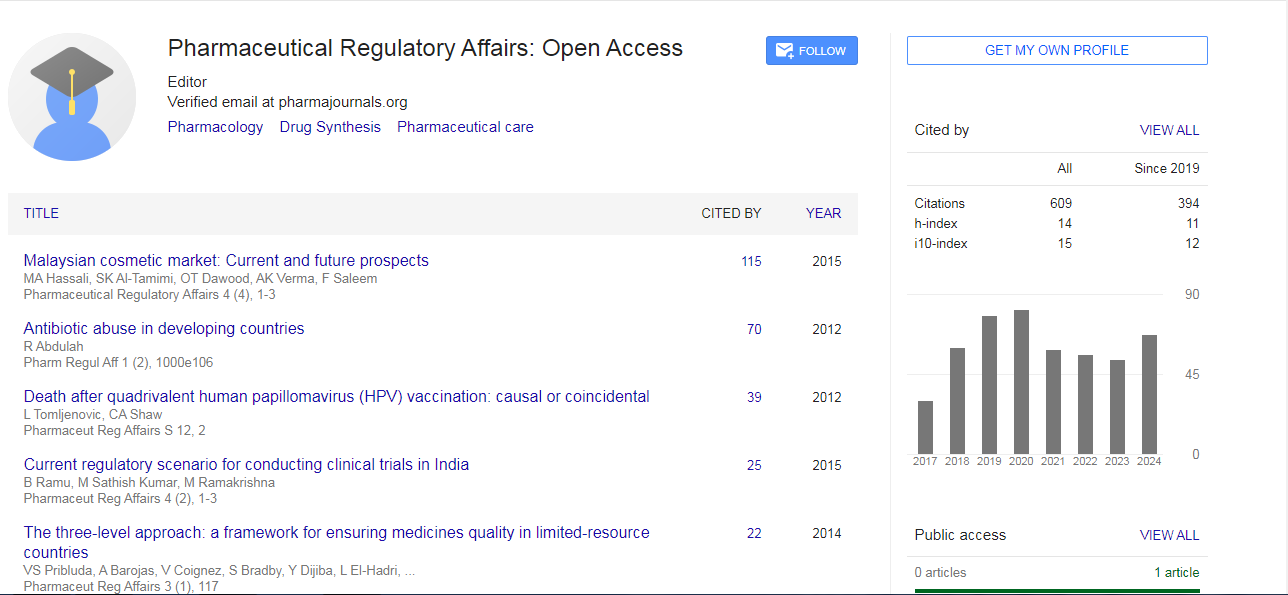
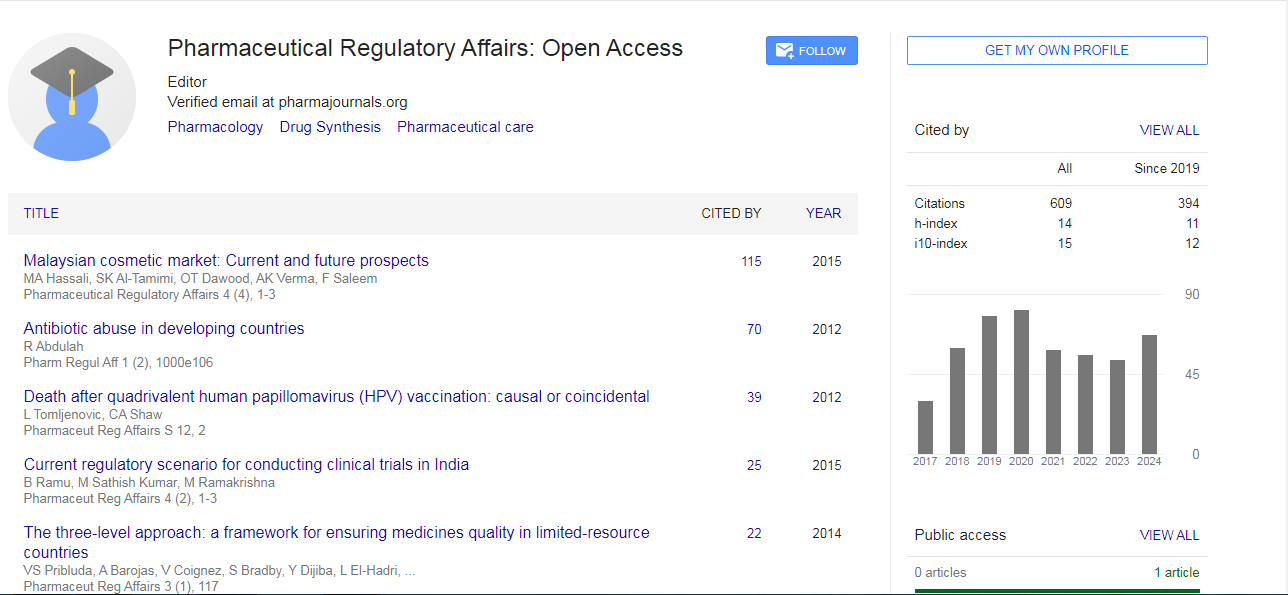
Pharmaceutical Regulatory Affairs: Open Access received 533 citations as per Google Scholar report