Brief Report - (2025) Volume 10, Issue 4
Received: 01-Jul-2025, Manuscript No. apn-26-179135;
Editor assigned: 03-Jul-2025, Pre QC No. P-179135;
Reviewed: 14-Jul-2025, QC No. Q-179135;
Revised: 22-Jul-2025, Manuscript No. R-179135;
Published:
29-Jul-2025
, DOI: 10.37421/2573-0347.2025.10.438
Citation: Kim, Noah. âEnhancing Nursing Care: Evidence-Based Practice for Better Outcomes.â J Adv Practice Nurs 10 (2025):438.
Copyright: © 2025 Kim N. This is an open-access article distributed under the terms of the Creative Commons Attribution License, which permits unrestricted use, distribution
and reproduction in any medium, provided the original author and source are credited.
Evidence-based practice (EBP) has emerged as a cornerstone of modern healthcare, fundamentally transforming how nursing care is delivered and how patient outcomes are achieved. This approach emphasizes the integration of the best available research evidence with clinical expertise and patient values to guide healthcare decisions. In nursing, the direct incorporation of evidence-based practices is paramount for enhancing the quality of patient care by ensuring that interventions are not only effective but also safe and patient-centered. Nurses play a critical role in this process, actively appraising research and translating findings into their daily clinical decision-making, which ultimately leads to improved patient outcomes and more efficient healthcare delivery. Despite its evident benefits, the implementation of EBP faces numerous barriers, necessitating a strategic and comprehensive approach to overcome them. [1] The successful adoption of evidence-based practice within nursing is intrinsically linked to the prevailing organizational culture. A supportive environment that values continuous learning and improvement is essential for fostering the sustained implementation of EBP. Leadership commitment is a vital component, providing the necessary resources and strategic direction to embed EBP into the fabric of the organization. Furthermore, accessible resources, such as updated literature and research databases, empower nurses to engage with evidence effectively. Nursing professional development initiatives also play a crucial role, equipping nurses with the skills and knowledge required to understand and apply research findings, thereby improving patient safety and clinical effectiveness. [2] In critical care settings, the impact of evidence-based interventions on patient outcomes is particularly profound. A synthesis of current research highlights specific EBP strategies that have demonstrated significant positive effects. For instance, early mobilization protocols have been shown to accelerate patient recovery times, while delirium prevention protocols effectively reduce complications. These interventions, when rigorously applied, contribute to a more efficient and effective recovery process for critically ill patients. The importance of interprofessional collaboration is also strongly emphasized, as a multidisciplinary approach is often necessary for the successful implementation and optimization of these evidence-based strategies. [3] The advancement of nursing's contribution to overall healthcare quality is critically dependent on the integration of research utilization and evidence-based practice. This process can be viewed as a continuum, progressing from basic awareness of research findings to their full integration into clinical practice. Nurses encounter various facilitators and barriers at each stage of this continuum, influencing their ability to adopt new evidence. Understanding these dynamics is crucial for developing effective strategies to promote research utilization. Ongoing education and robust support systems are indispensable for nurses navigating this journey and contributing to quality improvement initiatives. [4] Nurses frequently encounter challenges in critically appraising research and subsequently applying the findings to their clinical practice. To address this, practical strategies and tools have been developed to assist nurses in effectively evaluating the quality and relevance of research evidence. By enhancing their skills in critical appraisal, nurses can build greater confidence and competence in their ability to engage with and implement evidence-based practice. The role of mentorship is also explored as a valuable component in this developmental process, providing guidance and support to nurses as they refine their EBP skills. [5] The influence of evidence-based practice extends beyond clinical outcomes to encompass patient satisfaction. Studies indicate that adherence to evidence-based guidelines in nursing care is associated with improved patient experiences. This includes enhanced communication between nurses and patients, leading to a greater understanding of care plans and treatments. Consequently, patients report a heightened sense of trust in the healthcare provided. The findings underscore the importance of fostering a patient-centered approach within the framework of EBP to maximize positive patient perceptions and experiences. [6] Technology and informatics are increasingly recognized as powerful facilitators for the adoption and implementation of evidence-based nursing practice. Electronic health records (EHRs) and clinical decision support systems provide nurses with immediate access to patient information and evidence-based recommendations. Online databases and digital resources further enable nurses to efficiently search for and retrieve relevant research findings. This technological integration streamlines the process of accessing and applying evidence, ultimately leading to improvements in the quality of care and a reduction in clinical errors. [7] The development and implementation of clinical practice guidelines grounded in robust evidence are fundamental for standardizing patient care and optimizing outcomes. This process involves a systematic review of available research to create clear, actionable recommendations for nursing practice. Key aspects of guideline development include engaging relevant stakeholders, conducting rigorous evidence synthesis, and ensuring that the recommendations are practical and easily integrated into daily workflows. Addressing the challenges associated with guideline implementation is equally important to ensure their effective utilization in clinical settings. [8] Exploring the lived experiences of nurses as they transition to evidence-based practice provides valuable insights into the practical realities of EBP implementation. Qualitative studies reveal key facilitators, such as strong leadership support and effective peer collaboration, which significantly contribute to successful adoption. Conversely, barriers like time constraints and a lack of perceived relevance can impede progress. Understanding these experiences is crucial for developing targeted support mechanisms that better assist nurses throughout their EBP journey. [9] Nursing education plays a pivotal role in cultivating a robust culture of evidence-based practice among future healthcare professionals. Curricula at both undergraduate and postgraduate levels can be strategically designed to equip aspiring nurses with the essential knowledge and skills needed to critically appraise research, effectively integrate evidence into their practice, and actively contribute to the generation of new knowledge. Emphasizing the importance of lifelong learning ensures that nurses remain adept at staying current with evolving evidence throughout their careers. [10]
Evidence-based nursing is a critical framework that ensures patient care is grounded in the most current and relevant scientific evidence, leading to enhanced quality and effectiveness. This approach mandates that nurses actively engage in the critical appraisal of research findings and subsequently integrate these insights into their daily clinical decision-making processes. The ultimate goal is to achieve improved patient outcomes and more streamlined healthcare delivery. Recognizing and addressing the various barriers that hinder the widespread implementation of evidence-based practice (EBP) is essential for its successful and sustainable integration into nursing. [1] The successful implementation of evidence-based practice within the nursing profession is significantly influenced by the overarching organizational culture. A supportive and growth-oriented environment is imperative for fostering the sustained adoption of EBP. Strong leadership commitment is a primary driver, providing the necessary resources, strategic vision, and encouragement for nurses to engage with evidence. Furthermore, ensuring that nurses have ready access to comprehensive resources, including up-to-date research literature and appropriate technologies, empowers them to effectively utilize evidence in their practice, thereby improving patient safety and clinical outcomes. [2] In the demanding environment of critical care, the application of evidence-based interventions has demonstrated a marked improvement in patient outcomes. Research reviews have identified specific EBP strategies, such as the early mobilization of patients and the implementation of standardized delirium prevention protocols, that contribute to significantly reduced patient recovery times and a decrease in the incidence of complications. The collaborative efforts of interprofessional teams are frequently highlighted as a crucial element in the successful execution and sustained impact of these evidence-based approaches. [3] Advancing the quality of healthcare delivered by nursing hinges on the seamless integration of research utilization and the principles of evidence-based practice. This integration can be conceptualized as a progressive continuum, starting with nurses' basic awareness of research and culminating in its full assimilation into their clinical routines. Nurses encounter a spectrum of facilitators and barriers that influence their ability to adopt new evidence at different points along this continuum. Consequently, ongoing education and comprehensive support systems are vital for enabling nurses to effectively utilize research and contribute to quality improvement. [4] Nurses often face considerable challenges when attempting to critically appraise research studies and subsequently translate those findings into their direct patient care. To mitigate these difficulties, various practical strategies and dedicated tools have been developed to assist nurses in rigorously evaluating the quality and clinical applicability of research evidence. By honing these critical appraisal skills, nurses can cultivate increased confidence and competence in their engagement with and application of evidence-based practice. The role of mentorship is also recognized as a valuable support mechanism throughout this developmental process. [5] The positive impact of evidence-based practice on the overall patient experience, particularly concerning patient satisfaction, is a significant area of study. Evidence suggests that when nurses consistently adhere to evidence-based guidelines in their care delivery, patients report improved experiences. This often manifests as enhanced communication between the care provider and the patient, leading to a clearer understanding of health status and treatment plans. Ultimately, this contributes to a greater sense of trust and confidence in the healthcare being received. [6] Technology and informatics are increasingly recognized as indispensable tools in facilitating the widespread adoption and effective implementation of evidence-based nursing practice. Systems such as electronic health records (EHRs) and sophisticated clinical decision support tools provide nurses with direct and timely access to relevant patient data and evidence-based recommendations. Moreover, the availability of online databases and digital resources allows for more efficient searching and retrieval of research findings, thereby streamlining the integration of evidence into clinical workflows and contributing to improved care quality and error reduction. [7] The systematic development of clinical practice guidelines that are firmly rooted in strong evidence is a fundamental requirement for standardizing the delivery of patient care and optimizing health outcomes. This process involves a meticulous review of existing research to formulate clear and actionable recommendations for nursing practice. Essential components of guideline development include the active engagement of relevant stakeholders, a thorough synthesis of the evidence, and the formulation of practical recommendations. Addressing the inherent challenges associated with the implementation of these guidelines is paramount to their successful utilization. [8] Investigating the lived experiences of nurses as they navigate the transition to evidence-based practice offers profound insights into the practical facilitators and barriers encountered. Qualitative research highlights key enabling factors, such as robust leadership support and effective peer collaboration, which are instrumental in the successful adoption of EBP. Conversely, obstacles such as time constraints and a perceived lack of relevance can impede progress. Understanding these individual experiences is crucial for developing more effective support systems for nurses engaged in EBP. [9] Nursing education serves as a foundational pillar in cultivating a pervasive culture of evidence-based practice among future generations of healthcare professionals. Nursing curricula at both undergraduate and postgraduate levels can be intentionally structured to equip students with the critical skills necessary for appraising research, integrating evidence into practice, and contributing to the expansion of nursing knowledge. Fostering an understanding of the importance of lifelong learning is essential to ensure nurses remain current with evolving evidence throughout their careers. [10]
Evidence-based practice (EBP) is crucial for enhancing nursing care quality and patient outcomes by integrating research, clinical expertise, and patient values. Successful implementation requires a supportive organizational culture, leadership commitment, and access to resources. EBP strategies, such as early mobilization and delirium prevention in critical care, significantly improve patient recovery. Nurses' critical appraisal skills are essential, supported by practical tools and mentorship. Adherence to EBP guidelines positively impacts patient satisfaction through improved communication and trust. Technology, including EHRs and clinical decision support, facilitates EBP adoption. Developing and implementing evidence-based clinical practice guidelines is key to standardizing care. Qualitative studies reveal facilitators like leadership support and barriers like time constraints in EBP implementation. Nursing education plays a vital role in equipping future nurses with EBP skills, emphasizing lifelong learning.
None
None
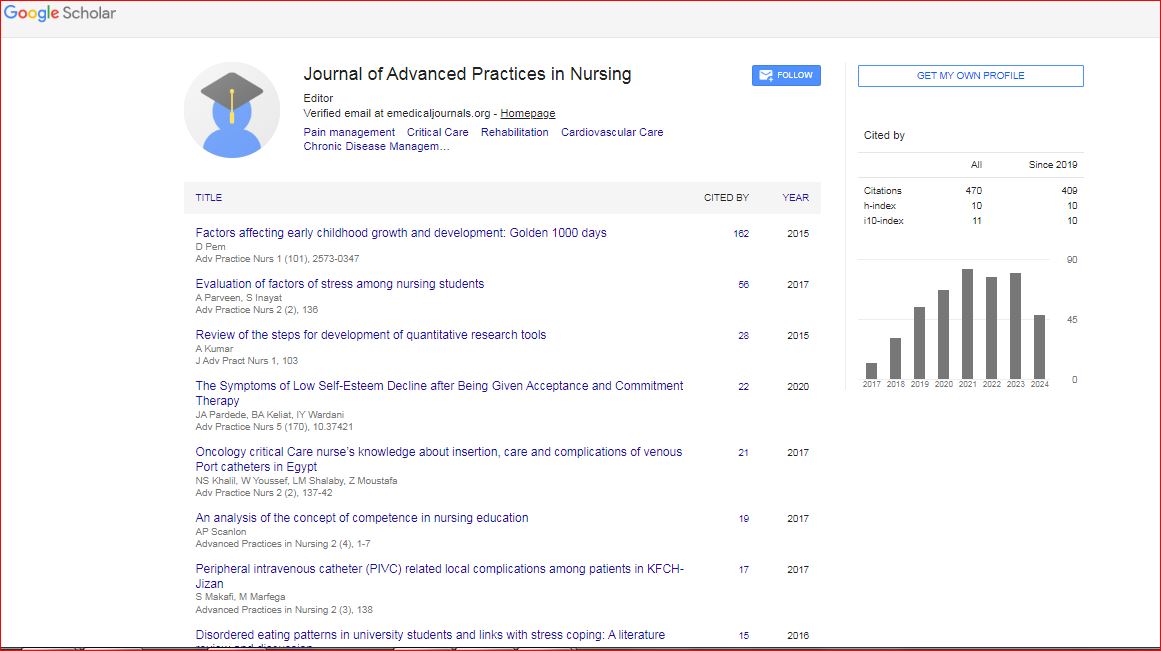
Journal of Advanced Practices in Nursing received 410 citations as per Google Scholar report