Short Communication - (2025) Volume 11, Issue 5
Received: 01-Oct-2025, Manuscript No. cdp-26-185482;
Editor assigned: 03-Oct-2025, Pre QC No. P-185482;
Reviewed: 17-Oct-2025, QC No. Q-185482;
Revised: 22-Oct-2025, Manuscript No. R-185482;
Published:
29-Oct-2025
, DOI: 10.37421/2572-0791.2025.11.203
Citation: Stein, Laura. ”Emotion Regulation Difficulties: Key to Depression Recovery.” Clin Depress 11 (2025):203.
Copyright: © 2025 Stein L. This is an open-access article distributed under the terms of the Creative Commons Attribution License, which permits unrestricted use, distribution and reproduction in any medium, provided the original author and source are credited.
Individuals grappling with depression frequently encounter profound difficulties in regulating their emotions. This often manifests as a struggle to manage the intensity and duration of emotional responses, leading to protracted periods of negative affect or disproportionately strong reactions to stressors. These challenges can significantly exacerbate depressive symptoms and hinder social functioning, underscoring the need for targeted interventions. Understanding the neurobiological and psychological underpinnings of these emotional regulation challenges is crucial for developing effective treatment strategies [1].
Impaired cognitive reappraisal, a fundamental emotion regulation strategy, is a common feature observed in individuals experiencing depression. Patients often find it challenging to reinterpret negative situations in a less threatening light, a cognitive process that contributes to the persistence of negative mood states. This difficulty has been linked to alterations in the activity of the prefrontal cortex, highlighting a distinct neural basis for this observed deficit [2].
Emotional suppression, another frequently employed emotion regulation strategy, can also prove maladaptive in the context of depression. While individuals may use suppression to avoid experiencing negative emotions, excessive use can paradoxically lead to increased physiological arousal and poorer emotional outcomes over time. This can, in turn, contribute to the chronicity of depressive episodes, creating a cycle of emotional distress [3].
The difficulties in emotion regulation observed in depression are intricately linked to deficits in both top-down control mechanisms orchestrated by the prefrontal cortex and bottom-up processing governed by limbic structures such as the amygdala. This disrupted interplay between higher-level cognitive control and more primitive emotional centers results in heightened sensitivity to negative stimuli and an impaired capacity to modulate emotional responses [4].
Promising therapeutic avenues for improving emotion regulation skills in individuals with depression include mindfulness-based interventions. By fostering present-moment awareness and encouraging a non-judgmental observation of emotional experiences, these therapies can equip patients with valuable tools to better navigate and manage their affective states. This approach offers a novel perspective on managing emotional reactivity [5].
Deficits in emotion regulation are recognized as a core feature of depression, and they are strongly associated with an increased risk of relapse. Consequently, interventions specifically designed to target and ameliorate these emotional difficulties are considered essential for achieving long-term recovery and improving the overall quality of life for individuals affected by depression [6].
A significant emotion regulation deficit frequently observed in depression is the inability to tolerate distress. This can impel individuals to engage in maladaptive coping behaviors, including substance use or self-harm, as attempts to escape unbearable emotional states. Addressing distress tolerance is therefore identified as a critical and essential therapeutic target in the treatment of depression [7].
Interpersonal difficulties are a prevalent characteristic of depression, and these challenges are often compounded by poor emotion regulation. When individuals struggle to express their emotions appropriately or to accurately understand the emotional cues of others, it can strain social relationships, ultimately leading to social isolation and further exacerbating depressive symptoms [8].
Skills derived from Dialectical Behavior Therapy (DBT), particularly those focusing on emotion regulation, have demonstrated considerable efficacy in reducing depressive symptoms and enhancing overall functioning. These core DBT skills include improving distress tolerance, enhancing emotion regulation capabilities, and fostering interpersonal effectiveness, providing a structured approach to emotional management [9].
The intricate interplay between rumination, a cognitive process characterized by repetitive negative thinking, and emotional dysregulation is central to a comprehensive understanding of depression. Ruminative thinking has the capacity to amplify negative emotions, thereby creating a self-perpetuating vicious cycle that proves exceptionally difficult to break, maintaining the depressive state [10].
Individuals experiencing depression frequently struggle with regulating their emotions. This difficulty is characterized by challenges in managing the intensity and duration of their emotional responses. Such struggles can lead to prolonged periods of negative affect or exaggerated reactions to stressful events. These emotional regulation deficits can significantly worsen depressive symptoms and negatively impact social functioning. Therefore, understanding the neurobiological and psychological factors contributing to these challenges is paramount for developing effective treatment strategies [1].
A key emotion regulation strategy that is often impaired in depression is cognitive reappraisal. Patients with depression commonly find it difficult to reframe negative situations in a less threatening light. This cognitive inflexibility contributes to the maintenance and persistence of negative mood states. Neuroimaging studies have indicated that this deficit is associated with altered activity in the prefrontal cortex, highlighting a neural basis for this specific difficulty [2].
Another common emotion regulation strategy that can be maladaptive in depression is emotional suppression. While individuals may employ suppression as a way to avoid unpleasant emotions, excessive use of this strategy can paradoxically lead to increased physiological arousal. This can result in poorer emotional outcomes over time and may contribute to the prolonged duration or chronicity of depressive episodes [3].
The difficulties in emotion regulation associated with depression are rooted in a complex interplay between neural systems. Specifically, there are deficits in top-down control mediated by the prefrontal cortex, as well as impairments in bottom-up processing involving limbic structures such as the amygdala. This disrupted communication between these brain regions leads to heightened sensitivity to negative stimuli and an diminished capacity to effectively modulate emotional responses [4].
Mindfulness-based interventions have emerged as a promising approach for enhancing emotion regulation skills in individuals with depression. These interventions cultivate present-moment awareness and encourage a non-judgmental observation of emotions. By promoting these skills, mindfulness-based therapies equip patients with practical tools to better manage their affective experiences and reduce emotional reactivity [5].
Difficulties in emotion regulation are considered a core diagnostic feature of depression. Furthermore, these deficits are significantly linked to an increased risk of experiencing relapse after periods of remission. Consequently, interventions specifically designed to address and improve emotion regulation capacities are vital for promoting sustained recovery and enhancing the overall quality of life for individuals affected by depression [6].
A significant emotion regulation deficit in depression is the impaired ability to tolerate distress. This deficit can drive individuals to engage in maladaptive coping mechanisms, such as substance abuse or self-harm, as they seek to escape overwhelming negative emotional states. Therefore, therapeutic interventions aimed at improving distress tolerance are considered a critical target in the management of depression [7].
Interpersonal challenges are frequently encountered by individuals with depression, and these difficulties are often exacerbated by poor emotion regulation. Problems in expressing emotions appropriately or in understanding the emotional signals of others can strain relationships. This can lead to social withdrawal and isolation, which in turn can worsen depressive symptoms [8].
Dialectical Behavior Therapy (DBT) offers a set of skills, particularly those related to emotion regulation, that have proven effective in reducing depressive symptoms and improving overall psychosocial functioning. Key DBT skills that address emotional dysregulation include those for distress tolerance, emotion regulation, and interpersonal effectiveness, offering a comprehensive framework for therapeutic change [9].
The relationship between rumination, characterized by persistent negative thinking, and emotional dysregulation is a central aspect of understanding depression. Rumination can amplify negative emotions, creating a self-sustaining cycle that is challenging to interrupt. This reciprocal relationship between rumination and emotional dysregulation plays a significant role in maintaining and deepening depressive states [10].
Depression is characterized by significant difficulties in emotion regulation, impacting an individual's ability to manage emotional intensity and duration. These challenges often involve impaired cognitive reappraisal and maladaptive emotional suppression, leading to persistent negative affect and increased physiological arousal. Neural disruptions in prefrontal and limbic systems contribute to heightened sensitivity to negative stimuli. Strategies like mindfulness-based interventions and Dialectical Behavior Therapy (DBT) show promise in improving these deficits. Poor emotion regulation is linked to increased relapse risk, maladaptive coping behaviors, and strained interpersonal relationships. The interplay between rumination and emotional dysregulation creates a detrimental cycle that sustains depressive symptoms. Addressing these emotion regulation difficulties is crucial for effective treatment and long-term recovery.
None
None
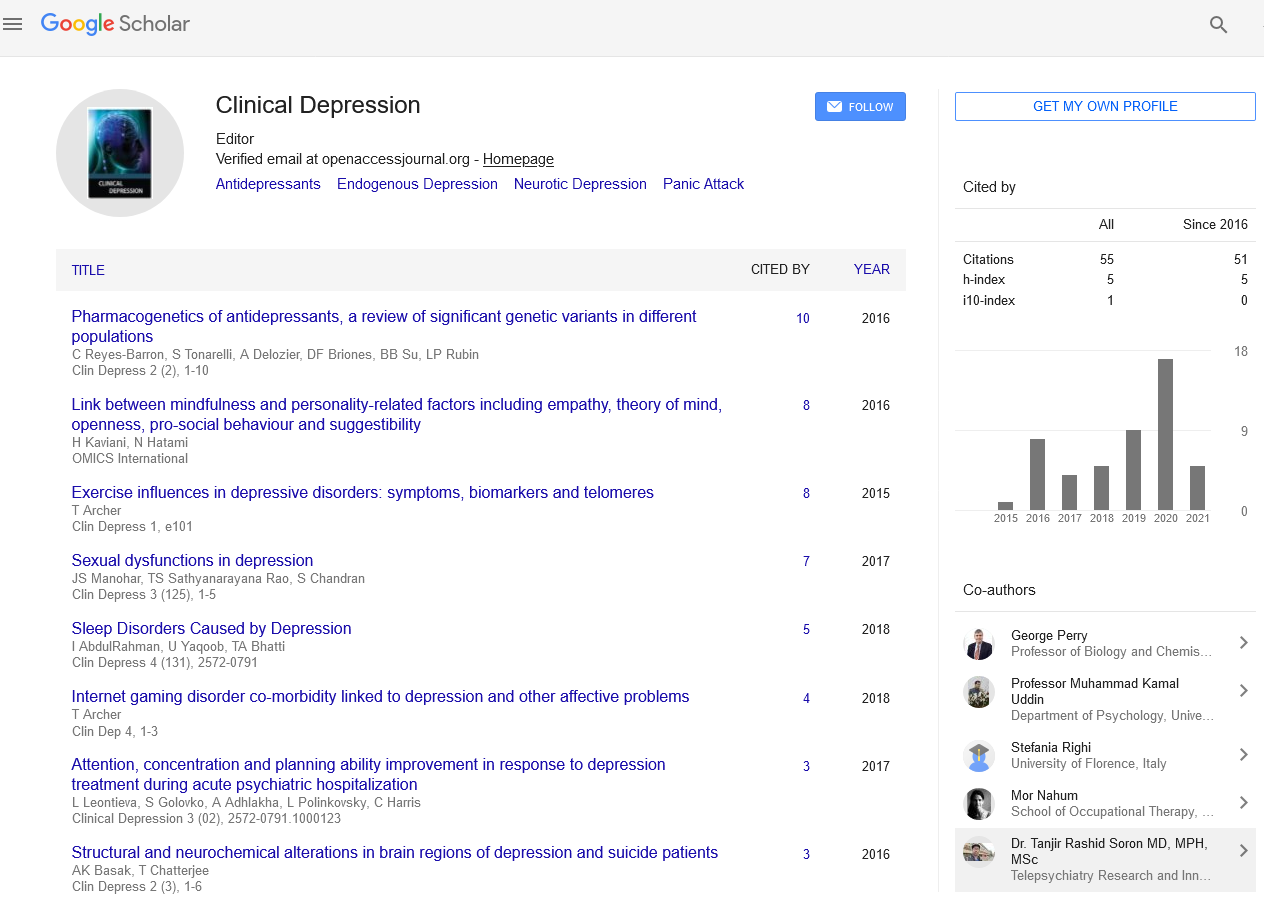
Clinical Depression received 89 citations as per Google Scholar report