Short Communication - (2025) Volume 14, Issue 3
Received: 02-Jun-2025, Manuscript No. jhoa-26-187790;
Editor assigned: 04-Jun-2025, Pre QC No. P-187790;
Reviewed: 18-Jun-2025, QC No. Q-187790;
Revised: 23-Jun-2025, Manuscript No. R-187790;
Published:
30-Jun-2025
, DOI: 10.37421/2167-1095.2025.14.520
Citation: Ndlovu, Thabo. ”Elderly Hypertension: Causes, Management, and Patient Care.” J Hypertens 14 (2025):520.
Copyright: © 2025 Ndlovu T. This is an open-access article distributed under the terms of the Creative Commons Attribution License, which permits unrestricted use, distribution and reproduction in any medium, provided the original author and source are credited.
Hypertension stands as a significant and escalating public health challenge, particularly within the global elderly population. The high prevalence observed in this demographic is influenced by a confluence of factors including the inherent physiological changes associated with aging, cumulative lifestyle choices, and the frequent presence of multiple comorbidities. Addressing this necessitates robust screening protocols, effective management strategies, and tailored public health interventions to mitigate cardiovascular risks and enhance the quality of life for older adults [1].
In a specific South African context, a study has meticulously examined the demographic and clinical characteristics of elderly individuals diagnosed with hypertension. This research has pinpointed key contributing factors such as obesity, diabetes mellitus, and a documented history of cardiovascular disease as being significantly correlated with an elevated prevalence of hypertension in this age cohort. The findings emphatically underscore the critical importance of considering localized socioeconomic conditions and the intricacies of regional health systems when formulating strategies for hypertension management among the elderly [2].
The physiological underpinnings of age-related hypertension are intricate, primarily involving mechanisms such as arterial stiffening and the progressive decline of endothelial function. These age-induced vascular alterations directly contribute to elevated blood pressure levels and, consequently, an increased susceptibility to serious cardiovascular complications in older individuals. Understanding these mechanisms opens avenues for potential therapeutic targets and lifestyle modifications aimed at ameliorating these age-associated vascular changes [3].
Lifestyle choices exert a profound influence on the prevalence and severity of hypertension in elderly individuals. Research investigating factors like diet, physical activity levels, and smoking habits has provided compelling evidence that adopting healthier lifestyle patterns can substantially reduce the risk and impact of hypertension in this population. This evidence strongly advocates for the implementation of community-based programs designed to promote healthy aging and thereby prevent and manage hypertension effectively [4].
Current guidelines and best practices for managing hypertension in the elderly emphasize the critical need for individualized treatment approaches. This perspective acknowledges the complexities introduced by factors such as medication adherence challenges, the prevalent issue of polypharmacy, and the specific management requirements of isolated systolic hypertension commonly seen in older adults. A patient-centered approach, coupled with consistent and diligent monitoring, is paramount for optimizing therapeutic outcomes [5].
Socioeconomic disparities play a crucial role in the prevalence of hypertension among elderly populations, with a particular vulnerability noted in low- and middle-income countries. Individuals belonging to lower socioeconomic strata often face amplified risks stemming from restricted access to healthcare services, inadequate nutritional intake, and elevated levels of chronic stress. These findings strongly suggest the necessity for equitable health policies that actively address and rectify these systemic disparities [6].
The interplay between genetic predispositions and environmental factors is increasingly recognized as a significant contributor to the development of hypertension in older adults. Research in this domain is exploring the role of specific gene polymorphisms in modulating blood pressure regulation, and how modifiable lifestyle choices can influence these inherent genetic risks. This emerging area of research highlights the growing importance of personalized risk assessment and intervention strategies [7].
Comorbidities such as diabetes mellitus, chronic kidney disease, and dyslipidemia significantly complicate the management of hypertension in the elderly. The complex interplay between these co-existing conditions profoundly impacts overall cardiovascular risk. Consequently, there is a pronounced emphasis on the adoption of integrated care models and holistic management strategies for elderly patients who present with multiple concurrent health issues [8].
Physical activity and regular exercise are recognized as vital components in both the prevention and management of hypertension among older adults. A growing body of evidence substantiates the efficacy of consistent, moderate-intensity exercise in reducing blood pressure and enhancing overall cardiovascular health. This supports the development and implementation of exercise programs specifically tailored to the needs and capabilities of the elderly population [9].
The pharmacological treatment of hypertension in the elderly involves a careful consideration of various therapeutic agents. Comparative analyses are crucial for evaluating the efficacy and safety profiles of different drug classes, taking into account individual patient characteristics such as age, the presence of comorbidities, and the likelihood of adverse drug reactions. Such research aims to equip clinicians with the evidence needed to select the most appropriate antihypertensive medications for older adults, thereby optimizing treatment outcomes [10].
Hypertension presents a significant and growing public health concern, especially within the elderly demographic worldwide. This article provides an in-depth exploration of the high prevalence of hypertension in older adults, examining the contributing factors. These include the physiological changes intrinsically linked to the aging process, lifestyle choices that individuals make, and the presence of underlying comorbidities. A critical emphasis is placed on the necessity for effective screening methodologies, robust management strategies, and public health initiatives specifically designed for older adults to effectively reduce associated cardiovascular risks and improve their overall well-being [1].
This study specifically investigates the demographic and clinical profiles of elderly individuals afflicted with hypertension within the unique context of South Africa. It meticulously identifies several key factors, including obesity, diabetes, and a pre-existing history of cardiovascular disease, as being significantly associated with a higher prevalence of hypertension in this particular age group. The findings derived from this research strongly reinforce the importance of taking into account local socioeconomic conditions and the prevailing health system structures when addressing the management of hypertension in elderly populations [2].
The article delves into the physiological mechanisms that are considered fundamental to the development of age-related hypertension. Central to these mechanisms are the processes of arterial stiffening and the impairment of endothelial function. It meticulously explains how these age-related vascular changes contribute to the elevation of blood pressure and, in turn, heighten the risk of experiencing cardiovascular complications among older individuals. Furthermore, the review touches upon potential therapeutic targets and viable lifestyle modifications that could be instrumental in managing these age-associated changes in the vascular system [3].
This particular research effort focuses on thoroughly investigating the impact that various lifestyle factors have on the prevalence of hypertension among elderly individuals. Key factors examined include dietary habits, the level of physical activity, and the habit of smoking. The study offers substantial evidence demonstrating that adopting healthier lifestyle choices can lead to a significant reduction in both the risk and the severity of hypertension within this population segment. Consequently, the research strongly advocates for the development and implementation of community-based programs that actively promote healthy aging, thereby serving as a preventative and managerial measure against hypertension [4].
The article critically reviews the most current guidelines and established best practices pertaining to the management of hypertension specifically in older adults. A central theme throughout this review is the crucial importance of adopting individualized treatment approaches. It thoroughly discusses the inherent challenges associated with ensuring medication adherence, managing polypharmacy, and effectively addressing the condition of isolated systolic hypertension, which is frequently observed in the elderly. The paramount importance of a patient-centered care philosophy, combined with regular and systematic monitoring, is consistently highlighted as essential for successful outcomes [5].
This study rigorously explores the intricate relationship between an individual's socioeconomic status and the prevalence of hypertension observed within elderly populations. This examination places a particular focus on low- and middle-income countries, where the impact of such disparities can be more pronounced. The research suggests that individuals with lower socioeconomic standing are often exposed to greater health risks, primarily due to limited access to essential healthcare services, the prevalence of poor nutritional standards, and higher levels of daily stress. These findings strongly underscore the urgent need for the implementation of equitable health policies that aim to systematically address and mitigate these significant health disparities [6].
The article provides an in-depth examination of the complex interplay between genetic predispositions and environmental influences in the etiology of hypertension among the elderly. It elaborates on the specific roles that certain gene polymorphisms may play in affecting the body's ability to regulate blood pressure. Furthermore, it discusses how modifiable lifestyle choices can significantly influence and potentially mitigate these inherent genetic susceptibilities. This research underscores the increasing necessity for personalized risk assessment tools and tailored intervention strategies to effectively manage hypertension in older adults [7].
This review concentrates on evaluating the substantial impact that various comorbidities, including but not limited to diabetes mellitus, chronic kidney disease, and dyslipidemia, have on the effective management of hypertension in elderly patients. It meticulously highlights the complex and often synergistic interplay between these prevalent chronic conditions and their significant influence on an individual's overall cardiovascular risk profile. The article strongly advocates for the adoption of integrated care models and comprehensive, holistic management strategies for elderly patients grappling with multiple co-existing health issues [8].
The article investigates the specific and significant role that physical activity and engagement in regular exercise play in both the prevention and the effective management of hypertension within the elderly population. It presents a substantial body of evidence that strongly supports the considerable efficacy of consistently engaging in moderate-intensity exercise in achieving lower blood pressure levels and improving overall cardiovascular health. The authors subsequently provide practical, actionable recommendations for the design and implementation of exercise programs that are specifically tailored to the unique needs and capabilities of older adults [9].
This study undertakes a thorough evaluation of the comparative effectiveness of various pharmacological agents employed in the treatment of hypertension among elderly patients. It systematically compares the efficacy and safety profiles of different classes of antihypertensive drugs, critically considering influential factors such as the patient's age, the presence of comorbidities, and the potential for adverse side effects. The overarching aim of this research is to provide valuable guidance to clinicians, enabling them to make informed decisions when selecting appropriate antihypertensive medications for older adults, thereby optimizing treatment outcomes and improving patient well-being [10].
Hypertension is a significant health concern in the elderly, influenced by aging, lifestyle, and comorbidities. This collection of research highlights the high prevalence of hypertension in older adults globally and in specific regions like South Africa. It explores the physiological mechanisms behind age-related hypertension, such as arterial stiffening, and emphasizes the role of lifestyle factors like diet and exercise in prevention and management. The studies also address the impact of socioeconomic disparities and genetic predispositions on hypertension risk. Furthermore, the challenges and best practices in managing hypertension in the elderly, including the influence of comorbidities and the comparative analysis of pharmacological treatments, are discussed. A patient-centered approach and tailored interventions are consistently recommended to improve outcomes and quality of life for older adults with hypertension.
None
None
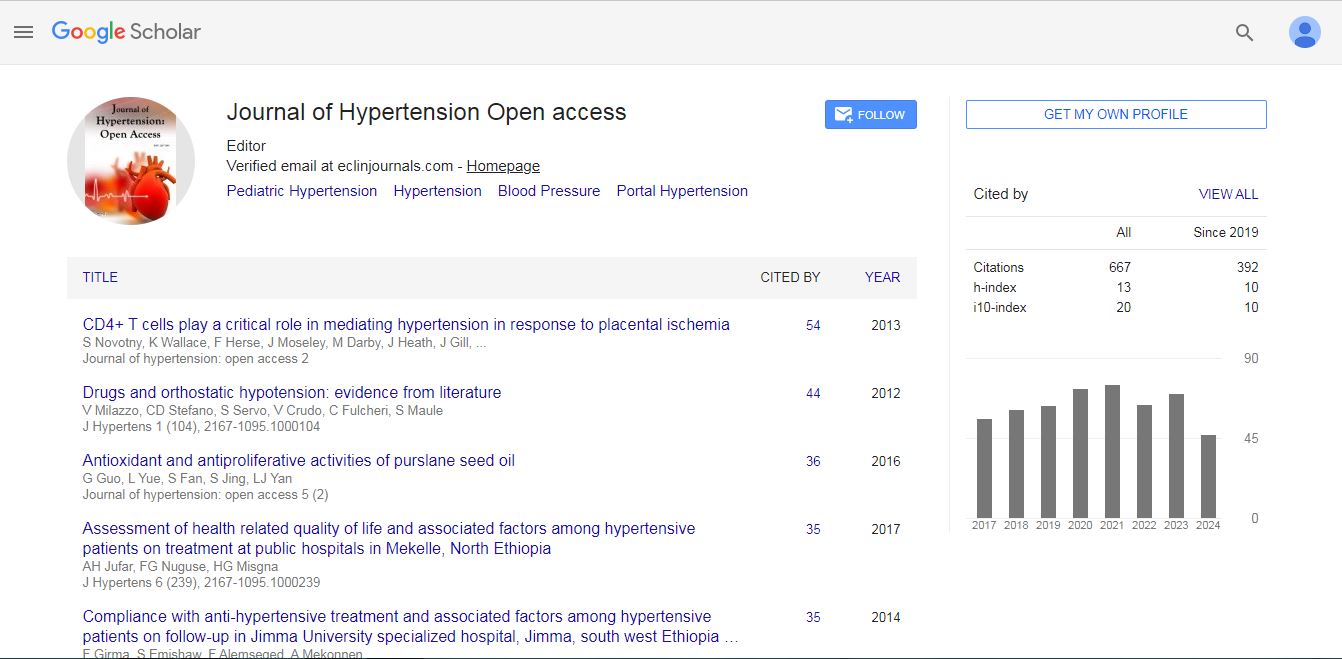
Journal of Hypertension: Open Access received 614 citations as per Google Scholar report