Opinion - (2025) Volume 10, Issue 4
Received: 01-Jul-2025, Manuscript No. PE-26-179292;
Editor assigned: 03-Jul-2025, Pre QC No. P-179292;
Reviewed: 17-Jul-2025, QC No. Q-179292;
Revised: 22-Jul-2025, Manuscript No. R-179292;
Published:
29-Jul-2025
, DOI: 10.37421/2472-1042.2025.10.294
Citation: Fischer, Hannah. ”Economic Burden of Adverse Drug Reactions.” Pharmacoeconomics 10 (2025):294.
Copyright: © 2025 Fischer H. This is an open-access article distributed under the terms of the Creative Commons Attribution License, which permits unrestricted use, distribution and reproduction in any medium, provided the original author and source are credited.
Adverse drug reactions (ADRs) and medication errors represent a significant and often underestimated burden on healthcare systems globally, leading to substantial economic costs and adverse patient outcomes. These events encompass a wide spectrum of issues, from minor side effects to severe, life-threatening complications. Understanding and quantifying these economic impacts is crucial for developing effective mitigation strategies and ensuring the efficient allocation of healthcare resources. This review aims to consolidate and analyze existing research on the economic burden associated with ADRs and medication errors across various healthcare settings. Initial investigations into the economic ramifications of medication-related harm have highlighted the direct medical expenses incurred due to extended hospital stays, additional diagnostic procedures, and necessary treatments. These direct costs represent a tangible portion of the overall burden, reflecting the immediate financial strain placed on healthcare providers and payers. The complexities in accurately capturing these costs often stem from fragmented data and the difficulty in attributing specific expenditures solely to medication errors or ADRs. Beyond direct medical expenses, the indirect costs associated with ADRs and medication errors are equally significant, though often harder to quantify. These include lost productivity for patients and their caregivers, as well as the long-term impact on quality of life. The ripple effect of a single medication error can extend far beyond the initial incident, impacting individuals, families, and the broader economy. Recognizing these indirect costs provides a more comprehensive picture of the true economic toll. Methodologies for quantifying these financial burdens have evolved over time, incorporating various approaches such as retrospective cohort studies, systematic reviews, and meta-analyses. These studies employ sophisticated statistical models to estimate costs associated with increased healthcare utilization, such as additional physician visits, emergency room admissions, and prolonged hospitalizations. The precision of these estimates relies heavily on the quality and comprehensiveness of the data analyzed. Preventable adverse drug events (ADEs) in hospital settings have been a particular focus of research due to the concentration of vulnerable patients and the complexity of medication management. Studies in this area have quantified the financial impact of longer lengths of stay, increased diagnostic testing, and the need for subsequent treatments directly attributable to ADEs. These findings underscore the critical importance of robust medication safety protocols within acute care environments. Furthermore, the economic consequences of medication errors extend beyond inpatient settings, significantly impacting outpatient care. Research in this domain has examined costs related to unscheduled physician visits, emergency room admissions, and the management of complications arising from outpatient medication errors. The accessibility and convenience of outpatient care can sometimes mask the cumulative financial impact of frequent, small-scale errors. Technological advancements in healthcare, such as computerized physician order entry (CPOE) systems, have been evaluated for their cost-effectiveness in mitigating ADEs. These systems, equipped with built-in drug interaction alerts, aim to prevent errors at the point of prescribing. While initial investments in such technologies can be substantial, their ability to reduce ADEs and associated healthcare costs suggests a positive return on investment. The aging population presents unique challenges regarding medication management, with polypharmacy and associated medication-related problems contributing to increased healthcare utilization and costs. Elderly patients often manage multiple chronic conditions, leading to complex medication regimens that elevate the risk of drug interactions, ADRs, and medication errors. Identifying cost-saving strategies for this demographic is paramount. The broader issue of antibiotic resistance, exacerbated by inappropriate antibiotic use and subsequent adverse events, also carries a significant economic burden. The increased treatment costs, prolonged hospital stays, and higher mortality rates associated with resistant infections highlight the economic imperative of effective antimicrobial stewardship programs. Finally, the role of pharmacists in preventing medication errors, particularly during transitions of care, has been economically evaluated. Pharmacist-led interventions, such as medication reconciliation, have demonstrated the potential to reduce hospital readmissions and emergency department visits, leading to considerable cost savings for the healthcare system. This emphasizes the value of interdisciplinary collaboration in medication safety.
The economic burden associated with adverse drug reactions (ADRs) and medication errors is substantial, impacting healthcare systems and patient well-being. These events lead to increased direct medical expenses, including costs for additional treatments and prolonged hospital stays, as well as indirect costs such as lost productivity. Methodologies for quantifying these burdens involve analyzing healthcare utilization, direct expenditures, and indirect economic consequences across different healthcare settings. Research has meticulously quantified the financial implications of preventable adverse drug events (ADEs) within hospital environments. These studies frequently report increased lengths of hospital stay, the necessity for additional diagnostic tests, and the subsequent treatments required due to ADEs. The findings consistently suggest that implementing comprehensive medication safety programs, which may include sophisticated electronic health record systems with built-in decision support, can yield significant cost savings and improve patient safety. Moving beyond inpatient settings, the economic ramifications of medication errors in outpatient environments have also been a critical area of investigation. This research focuses on quantifying the costs associated with unexpected physician visits, emergency room admissions, and the management of complications arising from medication errors that occur outside of the hospital. The studies underscore the importance of patient education and the integral role of pharmacists in mitigating these errors and their associated financial burdens. Technological solutions, such as computerized physician order entry (CPOE) systems, have been the subject of cost-effectiveness analyses aimed at reducing adverse drug events. These systems often incorporate drug interaction alerts designed to prevent prescribing errors. While the initial investment in CPOE technology can be considerable, studies have shown that it is often offset by a reduction in ADEs and the associated healthcare expenditures, ultimately leading to a positive return on investment for healthcare organizations. In the context of an aging population, the economic consequences of polypharmacy and related medication-related problems are a significant concern. Elderly patients who manage multiple medications are at a higher risk of experiencing drug interactions, ADRs, and medication errors. This complex situation often leads to increased healthcare utilization and costs, prompting investigations into effective management strategies like deprescribing, which has been identified as a potential cost-saving measure. The pervasive issue of antibiotic resistance, driven in part by inappropriate antibiotic use and subsequent adverse events, presents a considerable economic challenge globally. The financial burden includes increased treatment costs, extended hospital stays, and higher mortality rates associated with infections caused by resistant bacteria. Consequently, antimicrobial stewardship programs are recognized as vital economic interventions. Pharmacist-led interventions have been evaluated for their economic benefits, particularly in preventing medication errors during critical transitions of care. Studies focusing on medication reconciliation services have demonstrated a reduction in hospital readmissions and emergency department visits, translating into significant cost savings for healthcare systems. This highlights the economic value of pharmacists' expertise. The economic implications of patient non-adherence to prescribed medications are far-reaching. Non-adherence can lead to treatment failures, increased healthcare utilization, and the exacerbation of chronic diseases. Research in this area emphasizes that strategies designed to enhance medication adherence, such as patient support programs and simplified medication regimens, can offer substantial economic advantages by improving health outcomes and reducing overall healthcare costs. Specific drug classes known to carry higher risks, such as anticoagulants and antidiabetics, have been the focus of studies examining the economic impact of their associated adverse drug reactions. These investigations provide detailed cost breakdowns and highlight the substantial savings that can be achieved through targeted pharmacovigilance and proactive risk management interventions for high-risk medications. Finally, the cost-effectiveness of pharmacist interventions aimed at reducing medication errors in pediatric populations has been explored. By identifying specific error types and their associated costs, these studies demonstrate that proactive pharmacist involvement can not only improve patient safety but also lead to a reduction in healthcare expenditures for this vulnerable patient group.
Adverse drug reactions (ADRs) and medication errors impose a substantial economic burden on healthcare systems, encompassing direct medical costs and indirect expenses like lost productivity. Studies have quantified these impacts in hospital and outpatient settings, highlighting the financial strain of increased healthcare utilization and treatment complications. Technological interventions, such as computerized physician order entry, and pharmacist-led initiatives are being investigated for their cost-effectiveness in reducing errors and improving patient outcomes. The economic consequences of polypharmacy in the elderly and antibiotic resistance also contribute significantly to overall healthcare expenditures. Strategies to enhance medication adherence and targeted pharmacovigilance for high-risk medications are crucial for mitigating these costs and improving the efficiency of healthcare delivery.
None
None
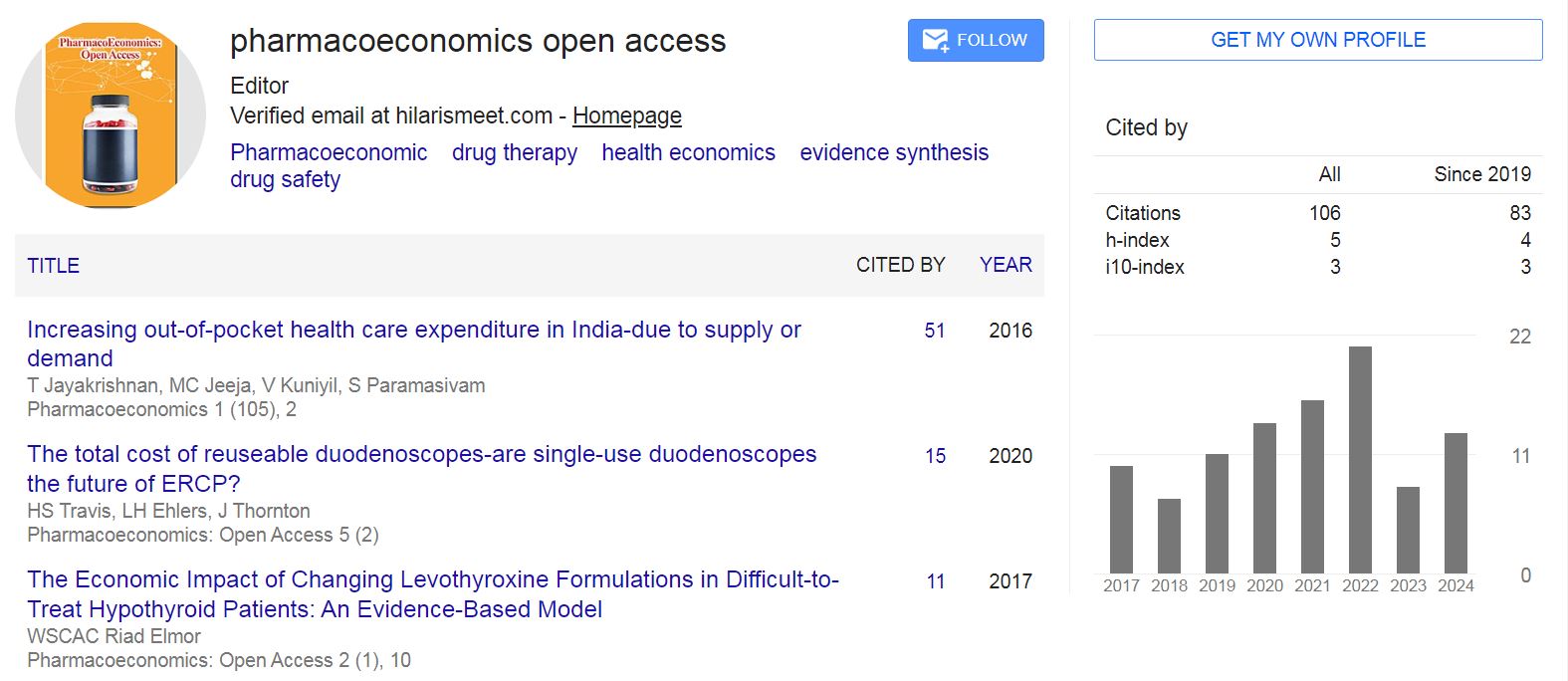
Pharmacoeconomics: Open Access received 106 citations as per Google Scholar report