Brief Report - (2025) Volume 14, Issue 2
Received: 02-Apr-2025, Manuscript No. jnc-25-166191;
Editor assigned: 04-Apr-2025, Pre QC No. P-166191;
Reviewed: 16-Apr-2025, QC No. Q-166191;
Revised: 23-Apr-2025, Manuscript No. R-166191;
Published:
30-Apr-2025
, DOI: 10.37421/2167-1168.2025.14.702
Citation: Nesef, Anwar. “Early Signs, Better Outcomes: The Role of Nurses in Preventing Mental Health Crises.” J Nurs Care 14 (2025): 702.
Copyright: © 2025 Nesef A. This is an open-access article distributed under the terms of the Creative Commons Attribution License, which permits unrestricted use, distribution and reproduction in any medium, provided the original author and source are credited.
Mental health crises are often unpredictable, but many are preceded by subtle changes in behavior, mood, or cognitive function that, if recognized early, could lead to interventions that prevent escalation. These crises, whether they involve severe anxiety, depression, suicidal thoughts, or psychosis, can have profound effects on individuals and their families and often result in emergency room visits, hospitalizations, or even fatalities. In healthcare settings, nurses are frequently the first professionals to interact with patients and the most consistently involved in ongoing patient care, putting them in a unique position to identify early signs of distress and intervene before a full mental health crisis occurs. Nurses, by virtue of their continuous patient interaction, are adept at noticing changes in behavior or mood that may signal the onset of a mental health crisis. This may include shifts in a patientâ??s speech patterns, body language, or emotional state, which can be key indicators of deteriorating mental health. In addition to their observational skills, nurses have the training to conduct mental health assessments, provide supportive communication and foster a therapeutic environment that encourages patients to open up about their feelings and concerns. Their presence in both hospital and outpatient settings enables them to build rapport with patients over time, allowing them to notice even subtle changes in a patientâ??s well-being that others might miss [2].
One of the most critical roles nurses play in preventing mental health crises is their ability to act as advocates for patients. Nurses are often the bridge between the patient and other members of the healthcare team, such as physicians, psychiatrists and social workers. When nurses identify early signs of a mental health crisis, they can escalate care appropriately, ensuring that patients receive the right interventions at the right time. This proactive approach not only improves patient outcomes but can also reduce the burden on emergency and psychiatric services by addressing issues before they reach a crisis point. Furthermore, nurses can provide valuable education and support to patients and their families. By fostering awareness of mental health issues and available resources, nurses help reduce the stigma often associated with seeking help for mental health concerns. In many cases, nurses may help patients develop coping strategies or connect them with mental health resources, such as counseling services or community-based support groups that can further prevent the escalation of mental health issues into a crisis. Despite the crucial role they play, nurses often face challenges in identifying and addressing mental health concerns, including time constraints, insufficient training in mental health care and limited access to specialized resources. This is particularly true in environments where mental health issues are not always prioritized or when patients may be reluctant to discuss their mental health struggles [3].
Nevertheless, the role of nurses in preventing mental health crises is an essential part of the healthcare system. With increased awareness, training and support, nurses can continue to be the frontline defenders in recognizing early signs of mental distress, improving care and ultimately preventing mental health crises from escalating. To further empower nurses in this role, healthcare systems must prioritize integrating mental health training into both initial nursing education and ongoing professional development. This includes equipping nurses with advanced skills in mental health assessment, crisis intervention techniques and trauma-informed care. Simulation training and interdisciplinary workshops that allow nurses to practice responding to various mental health scenarios can build confidence and competence. Moreover, incorporating routine mental health screenings into standard nursing assessments especially for high-risk populations such as the elderly, adolescents, or individuals with chronic illnesses can help normalize conversations around mental well-being and improve early detection. By reinforcing mental health as a fundamental component of overall health, nurses can more easily advocate for timely interventions and reinforce a holistic model of care. Institutional support is also essential in enabling nurses to respond effectively to emerging mental health concerns. Hospitals, clinics and community health centers should implement clear protocols and provide accessible pathways for escalating mental health issues when necessary [4].
This includes having mental health professionals available for consultation, streamlining referrals and ensuring nurses have immediate access to support when dealing with complex or high-risk cases. Additionally, promoting nurse well-being and addressing workplace stress is vital; nurses who are emotionally supported and psychologically safe are more likely to provide empathetic, attentive care to others. Through a combination of education, structural support and a culture that values mental health, nurses can continue to serve as vital protectors of emotional wellness, preventing crises and fostering long-term mental health resilience in the communities they serve. Community engagement and interdisciplinary collaboration further enhance nursesâ?? ability to prevent mental health crises. Nurses working in schools, public health departments and community clinics are in key positions to identify at-risk individuals outside of traditional hospital settings, often before symptoms escalate. These partnerships also allow nurses to connect patients with culturally relevant, accessible mental health resources tailored to their specific needs. As trusted members of both the healthcare system and the community, nurses can advocate for mental health awareness initiatives, organize screenings and participate in outreach programs that destigmatize mental illness and promote early intervention. In doing so, they help create a proactive, community-centered approach to mental health care that reduces the incidence and severity of mental health crises [5].
Google Scholar Cross Ref Indexed at
Google Scholar Cross Ref Indexed at
Google Scholar Cross Ref Indexed at
Google Scholar Cross Ref Indexed at
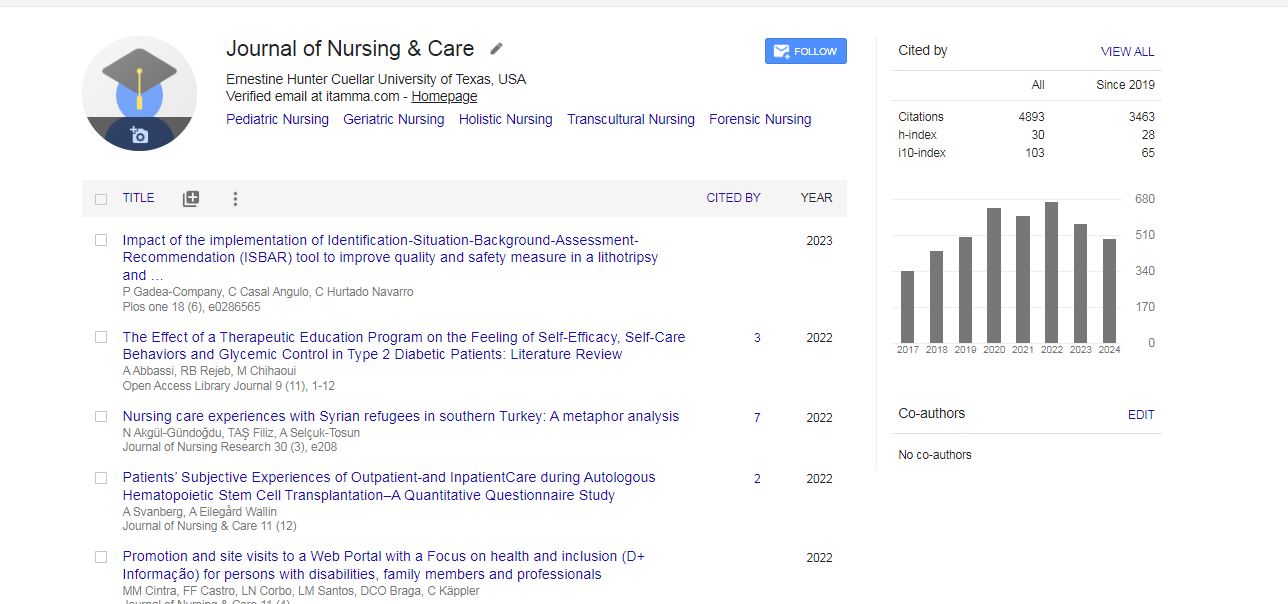
Journal of Nursing & Care received 4230 citations as per Google Scholar report