Opinion - (2025) Volume 14, Issue 3
Received: 02-Jun-2025, Manuscript No. jeom-26-188171;
Editor assigned: 04-Jun-2025, Pre QC No. P-188171;
Reviewed: 18-Jun-2025, QC No. Q-188171;
Revised: 23-Jun-2025, Manuscript No. R-188171;
Published:
30-Jun-2025
, DOI: 10.37421/2169-026X.2025.14.534
Citation: Papadopoulos, George. ”Drivers of Employee Motivation, Commitment, and Loyalty.” J Entrepren Organiz Manag 14 (2025):534.
Copyright: © 2025 Papadopoulos G. This is an open-access article distributed under the terms of the Creative Commons Attribution License, which permits unrestricted use, distribution and reproduction in any medium, provided the original author and source are credited.
The dynamic landscape of modern organizations necessitates a deep understanding of the factors that drive employee motivation and foster organizational commitment. This research synthesizes insights from several studies to illuminate these crucial relationships, beginning with an examination of leadership styles within entrepreneurial settings. Transformational leadership, characterized by inspirational motivation and intellectual stimulation, has been shown to significantly enhance employee engagement and commitment. Entrepreneurs can unlock higher levels of dedication by cultivating a culture of psychological empowerment [1].
Organizational culture plays a pivotal role in retaining talent. A supportive and innovative environment, where employees feel valued and encouraged to take initiative, deepens their sense of belonging and dedication. Shared values and effective communication are key to building strong organizational commitment in dynamic business environments [2].
Employee recognition programs, particularly within small and medium-sized enterprises, have a substantial impact on motivation and commitment. Timely and meaningful recognition, extending beyond monetary rewards, significantly boosts job satisfaction and loyalty, advocating for tailored strategies that align with individual contributions [3].
The importance of work-life balance in fostering employee motivation and organizational commitment is evident. Organizations that prioritize work-life integration through flexible arrangements and supportive policies experience higher employee retention and engagement, making it a strategic imperative for sustained success [4].
Authentic leadership, by promoting transparency and ethical behavior, empowers employees, which in turn strengthens their commitment to the organization. Cultivating authenticity in leadership is identified as a powerful driver of employee dedication, with psychological empowerment acting as a key mediator [5].
Servant leadership demonstrates a strong positive correlation with employee motivation and commitment. This style, which prioritizes employee growth and well-being, cultivates trust and loyalty, making it particularly beneficial in entrepreneurial environments requiring strong team cohesion [6].
Organizational justice, encompassing procedural, distributive, and interactional fairness, is critical in shaping employee motivation and commitment. Perceptions of fairness are fundamental to building trust and enhancing employees' willingness to commit, making fair practices non-negotiable [7].
The impact of transformational leadership extends to employee resilience. Inspirational leaders who foster a positive work environment can significantly enhance resilience, thereby strengthening commitment and offering a dual benefit in navigating challenges and retaining talent [8].
Finally, employee engagement is paramount in entrepreneurial ventures. Creating an environment where employees feel valued, heard, and have growth opportunities leads to high engagement, which directly translates into stronger organizational commitment, signifying a deeper connection to the organization's mission [9].
The intricate relationship between leadership styles and employee motivation within entrepreneurial settings is a critical area of focus. Transformational leadership, by inspiring and intellectually stimulating employees, has been demonstrably linked to increased engagement and organizational commitment. Entrepreneurs who prioritize fostering a culture of psychological empowerment are better positioned to cultivate higher levels of dedication and performance from their teams [1].
In parallel, the influence of organizational culture on employee commitment cannot be overstated. A supportive and innovative environment is paramount for talent retention. When employees perceive that their contributions are valued and they are encouraged to take initiative, their sense of belonging and dedication to the organization deepens. The research underscores the vital role of shared values and effective communication in forging robust organizational commitment, especially within rapidly evolving business landscapes [2].
Furthermore, the impact of employee recognition programs on motivation and commitment, particularly within the context of small and medium-sized enterprises, warrants careful consideration. It has been observed that recognition, when delivered in a timely and meaningful manner and extending beyond mere monetary incentives, significantly enhances job satisfaction and loyalty. The study advocates for the development and implementation of tailored recognition strategies that accurately reflect and reward individual employee contributions, thereby cultivating a more committed workforce [3].
The critical role of work-life balance in nurturing both employee motivation and organizational commitment is explored through a comprehensive review. The findings consistently indicate that organizations actively prioritizing work-life integration, through the provision of flexible work arrangements and supportive policies, tend to experience superior levels of employee retention and engagement. This research emphasizes that achieving a healthy work-life balance is not merely an employee benefit but a fundamental strategic imperative for ensuring sustained organizational success [4].
An examination into the mediating effect of employee psychological empowerment on the association between authentic leadership and organizational commitment reveals significant insights. Authentic leaders, by championing transparency and ethical conduct, empower their employees. This empowerment, in turn, serves to fortify employees' commitment to the organization. The findings strongly suggest that fostering authenticity in leadership practices is a potent catalyst for enhancing employee dedication [5].
Investigating the influence of servant leadership on employee motivation and commitment reveals a strong and consistent positive correlation. This leadership paradigm, which places a premium on the growth and overall well-being of employees, effectively fosters an environment of trust and loyalty. The study highlights that by actively serving their teams, leaders can cultivate a workforce characterized by high commitment and motivation, a dynamic particularly advantageous in entrepreneurial contexts where robust team cohesion is indispensable [6].
The critical role of organizational justice in shaping both employee motivation and commitment is thoroughly investigated. The research demonstrates that employees' perceptions of fairness across procedural, distributive, and interactional justice domains are foundational elements for cultivating trust and significantly enhancing their willingness to commit to their organization. The findings strongly suggest that the consistent implementation of fair practices is a non-negotiable prerequisite for fostering a dedicated and engaged workforce [7].
An exploration into the impact of transformational leadership on employee resilience and organizational commitment yields noteworthy results. It has been found that leaders who exhibit transformational qualities, characterized by their ability to inspire and foster a positive work environment, can significantly bolster employee resilience. This enhanced resilience, in turn, leads to a strengthening of employees' commitment to the organization. The research underscores the dual advantages offered by such leadership, proving beneficial both in navigating periods of adversity and in retaining valuable talent [8].
The examination of the link between employee engagement and organizational commitment within the specific context of entrepreneurial ventures concludes that fostering an environment where employees feel genuinely valued, their voices are heard, and opportunities for professional growth are readily available is paramount for achieving high levels of engagement. This elevated engagement directly translates into more profound and enduring organizational commitment. The study emphasizes that engagement transcends mere job satisfaction, representing a deeper, more meaningful connection to the organization's overarching mission [9].
Finally, the influence of job embeddedness on employee motivation and organizational commitment is thoroughly analyzed. Job embeddedness, defined as the extent of an employee's connection to their job and their broader community, is identified as a significant predictor of sustained motivation and unwavering loyalty. The research posits that organizations can effectively enhance employee commitment by actively supporting employees' social and professional integration within both the workplace and the wider community [10].
This compilation of research highlights key drivers of employee motivation and organizational commitment across various business contexts. Transformational and servant leadership styles are shown to significantly boost engagement and dedication through inspiration, empowerment, and prioritizing employee well-being. A supportive and innovative organizational culture, coupled with effective employee recognition programs, fosters a sense of value and belonging, leading to increased loyalty. Work-life balance is identified as a critical factor for retention and engagement, while authentic leadership, through transparency and ethical behavior, empowers employees and strengthens their commitment. Organizational justice, ensuring fairness in all practices, is fundamental to building trust and commitment. Furthermore, employee engagement, cultivated through feeling valued and having growth opportunities, directly translates to stronger commitment, especially in entrepreneurial ventures. Job embeddedness, encompassing an employee's connection to their job and community, also proves to be a significant predictor of sustained motivation and loyalty.
None
None
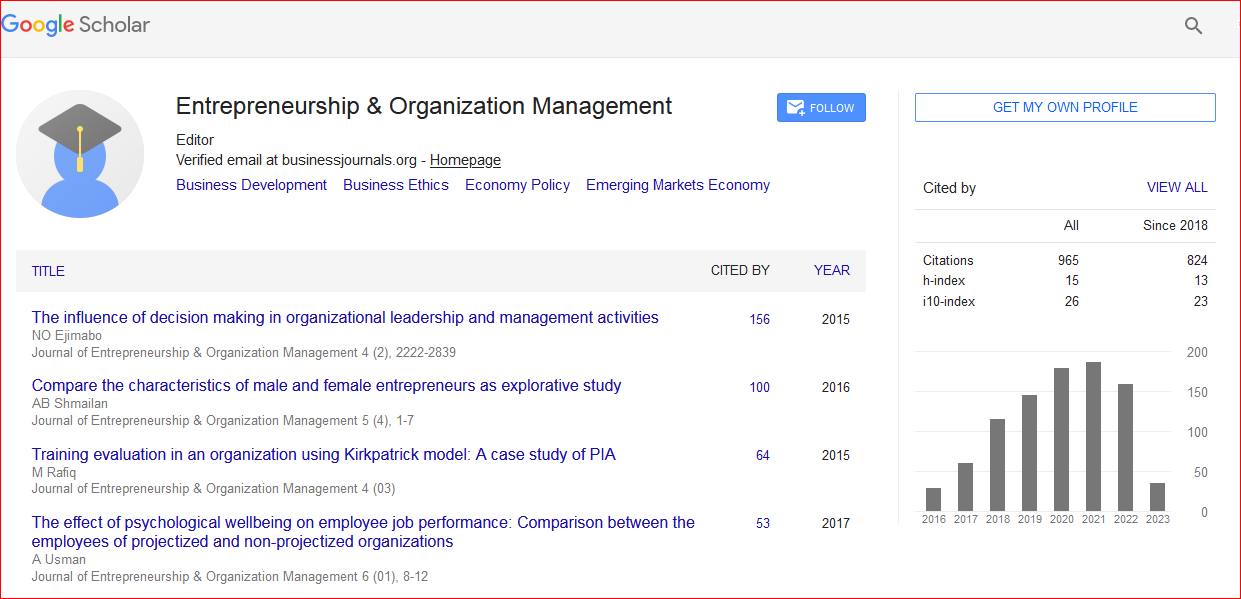
Entrepreneurship & Organization Management received 1115 citations as per Google Scholar report